Artwork
Allegory of Mother Earth
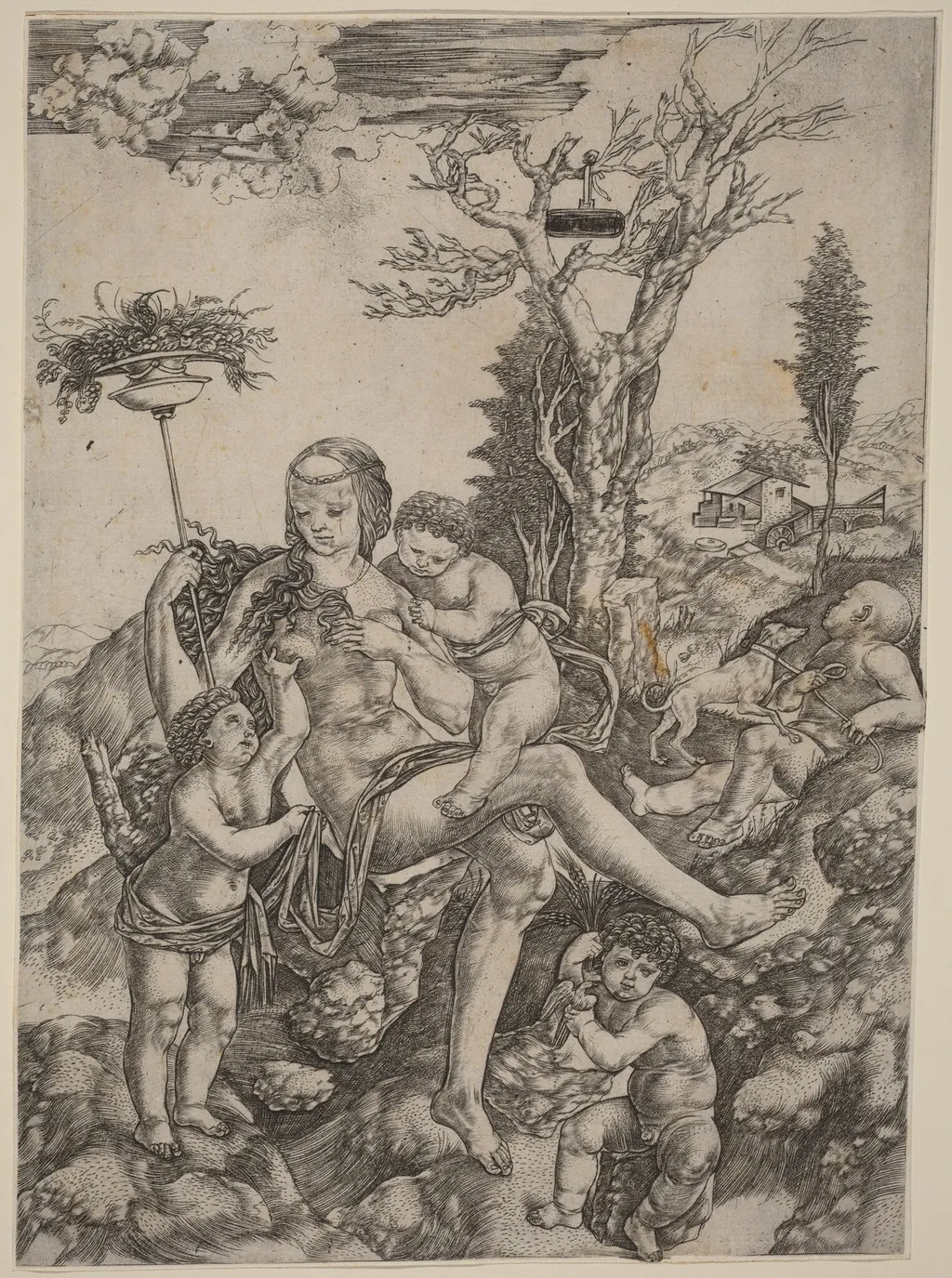
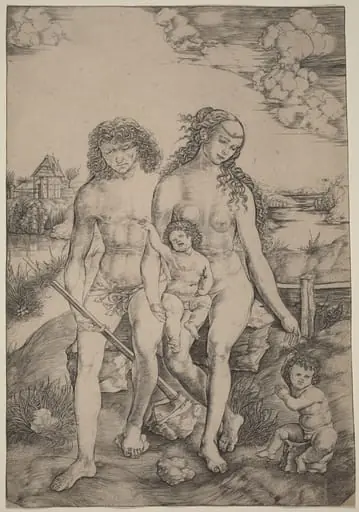
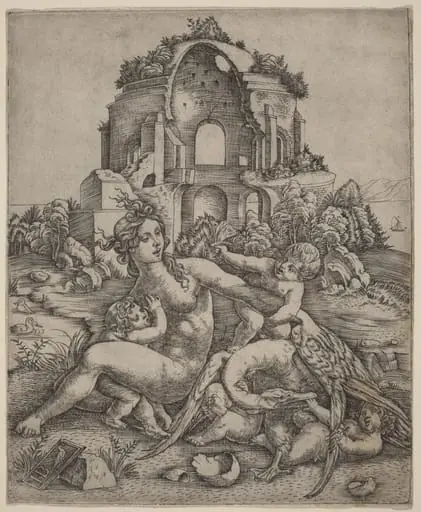
Allegory of Mother Earth is an ink print by the Renaissance artist Cristofano Robetta. It dates from 1498 and is held in the collection of the National Gallery of Art.
About this work
Overview
Created in 1498, the engraving titled *Allegory of Mother Earth* is the work of Florentine goldsmith and printmaker Cristofano Robetta. Executed in the fine‑line engraving technique, the image presents a serene female figure surrounded by four cherubic figures within a pastoral setting, embodying an allegorical treatment of nature and myth.
Subject & Meaning
The central female figure is interpreted as a personification of Mother Earth, holding a bowl of fruit that suggests abundance. The surrounding cherubs engage in playful gestures—one holds a plant, another interacts with a dog—reinforcing themes of fertility, growth, and the harmonious relationship between humanity and the natural world.
Technique & Style
Robetta employs meticulous cross‑hatching to render texture and depth, characteristic of the “fine manner” engraving style of the late 15th century. The delicate line work delineates the flowing drapery, foliage, and distant landscape, creating a layered visual effect that guides the eye across the composition.
History & Provenance
Robetta was active in the transition between the 1400s and early 1500s, a period when engravers often reproduced paintings that have not survived. This print serves as a documentary record of an otherwise lost visual source, preserving the composition for later audiences.
Context
The work belongs to the broader Renaissance interest in allegory, where symbolic figures conveyed moral and philosophical ideas. Engravings like this circulated among educated patrons, spreading Renaissance iconography beyond the confines of painted panels and frescoes.
Artist & collection

Artist
Cristofano Robetta (1462 – 1535) was an Italian artist, goldsmith, and engraver. Robetta was a Florentine "who made some rich, intricate engravings in the fine manner". He often made engravings which replicated…