Artwork
Putti Playing
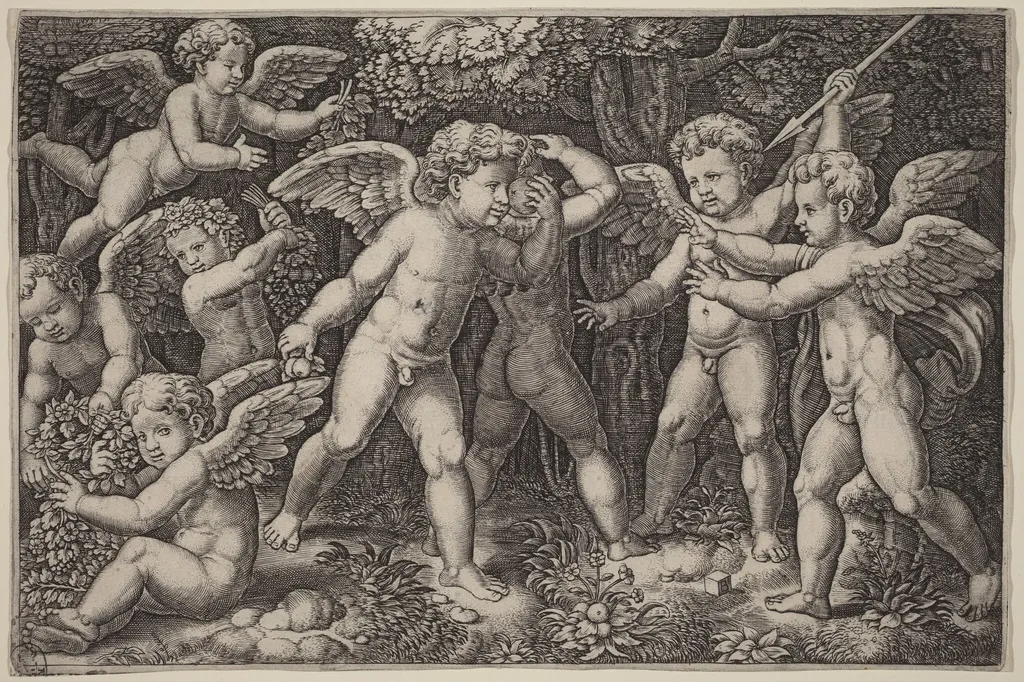
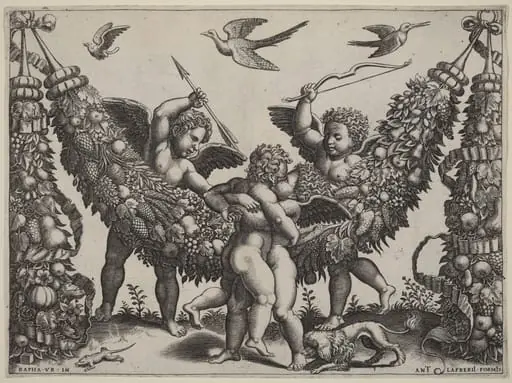
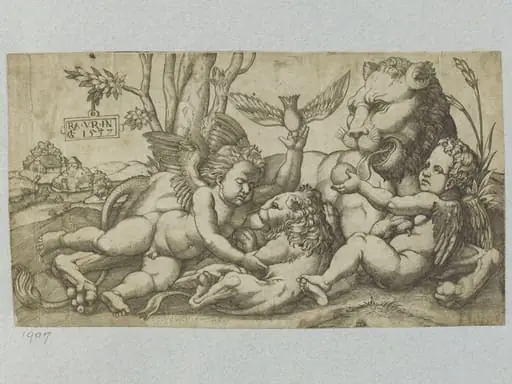
Putti Playing is an ink print by the Renaissance artist Master of the Die. It dates from 1522 and is held in the collection of the National Gallery of Art.
About this work
Overview
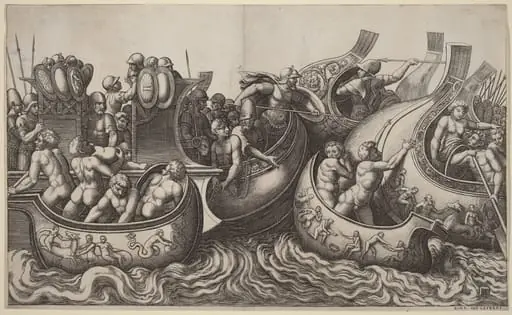
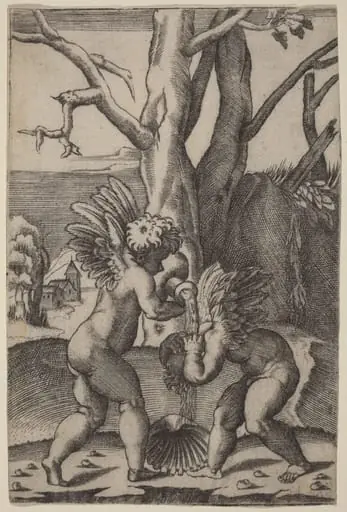
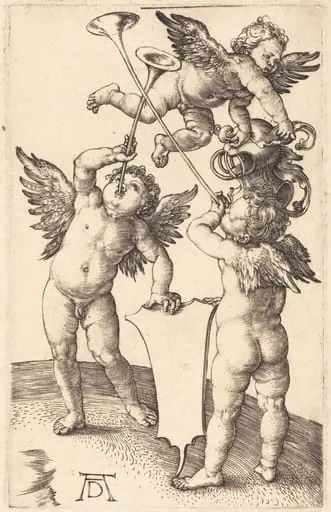
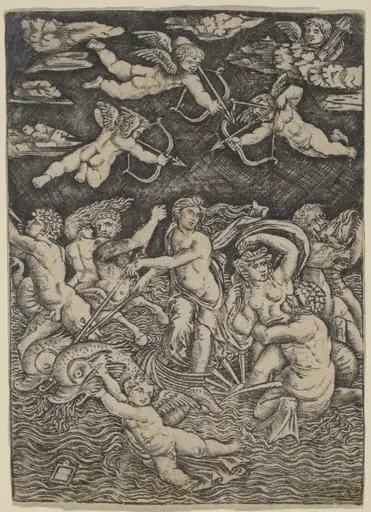
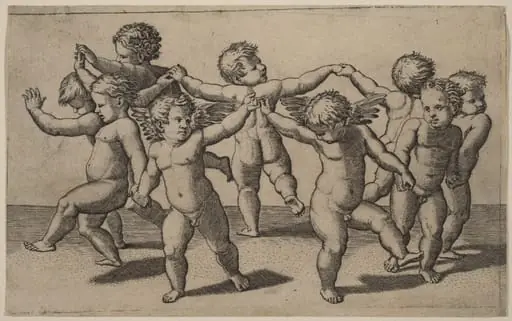
Putti Playing is a 1522 engraving by the Master of the Die, featuring a group of cherubs in a classical setting, characterized by dynamic poses and intricate details.
Subject & Meaning
The subject of Putti Playing focuses on the lively interaction of multiple putti (cherubs), conveying a sense of youthful energy and playfulness within a Renaissance-inspired context.
Technique & Style
The engraving showcases meticulous attention to detail, evident in the rendering of clothing folds and hair textures. The style aligns with Renaissance influences, particularly reflecting the artistic lineage of Raphael, through the Master of the Die's training under Marcantonio Raimondi.
History & Provenance
Created in 1522, the work is attributed to the Master of the Die, an unidentified Italian printmaker active from 1525 to 1560, recognizable by their signature small die mark. Despite the early creation date, the artist's activity peak started three years after the work's creation.
Context
Putti Playing exemplifies the Renaissance practice of incorporating putti in artworks for decorative and thematic purposes, highlighting the era's emphasis on classical motifs and vibrant depictions of life.
Legacy
As a work by the Master of the Die, Putti Playing contributes to the understanding of mid-16th-century Italian printmaking, illustrating the dissemination of Raphael's style through Marcantonio Raimondi's pupils.
Artist & collection

Artist
Master of the Die (fl. 1525–1560) was an Italian engraver and printmaker. His year of birth and death are unknown. The identity of the Master of the Die is uncertain. He was given this name because he signed his prints…