Artwork
Triton and Nymph
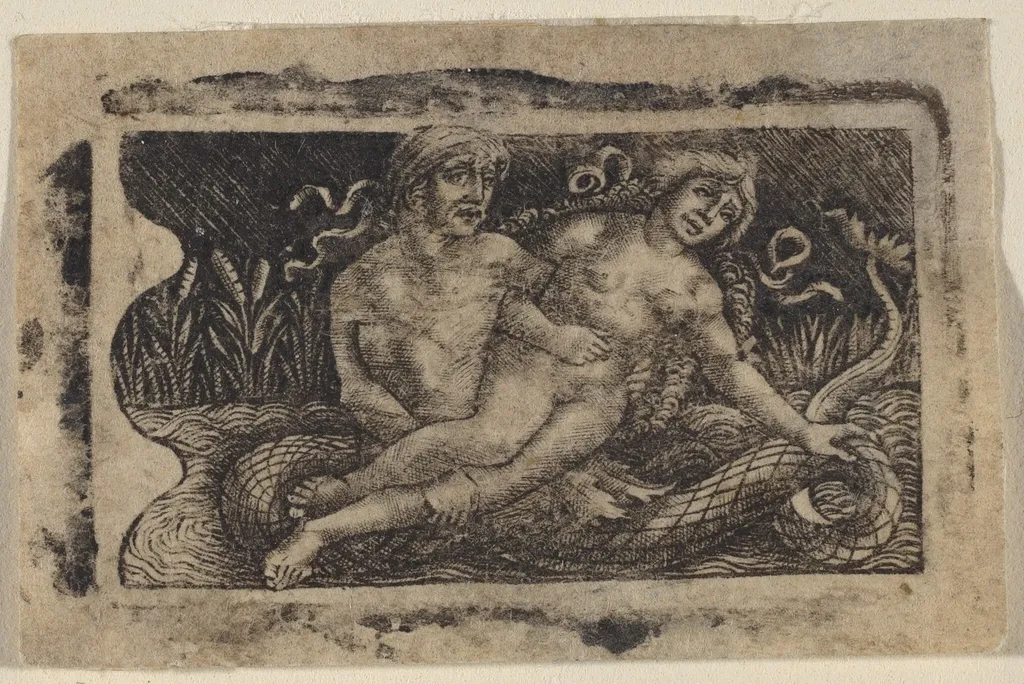
Triton and Nymph is a print by the Renaissance artist Francesco Francia. It dates from 1500 and is held in the collection of the National Gallery of Art.
About this work
Overview
Around the turn of the 16th century Francesco Francia, also known as Francesco Raibolini, produced a niello print titled *Triton and Nymph*. The work presents a mythological tableau in which a bearded, muscular sea figure with a shell headdress shares a watery setting with a leaning woman holding an infant, framed by foliage and swirling water.
Subject & Meaning
The composition draws on classical mythology, pairing Triton—a son of Poseidon often depicted as a merman—with a nymph, a minor nature deity. Their intimate interaction, highlighted by the woman's tender gesture toward the child, suggests themes of protection, fertility, and the harmonious link between sea and land spirits.
Technique & Style
Francia employed the niello process, a metalworking method in which a dark alloy of lead, copper, and silver is melted and pressed into engraved lines on a metal plate. The resulting deep black strokes contrast with the lighter metal surface, giving the image a stark, incised appearance that emphasizes contour over color.
History & Provenance
Born in Bologna, Francia pursued a career that spanned painting, goldsmithing, and medal design before assuming the role of director of the city’s mint. The *Triton and Nymph* print reflects his expertise in metalwork and likely originated within the mint’s workshop, where niello techniques were routinely applied to official and decorative objects.
Context
The early 1500s saw a flourishing of Renaissance interest in antiquity, with artists frequently adapting mythological subjects for decorative prints. Francia’s dual identity as painter and goldsmith placed him at the intersection of visual arts and applied crafts, allowing him to experiment with the niello medium beyond its conventional use in jewelry and seals.
Artist & collection
Artist
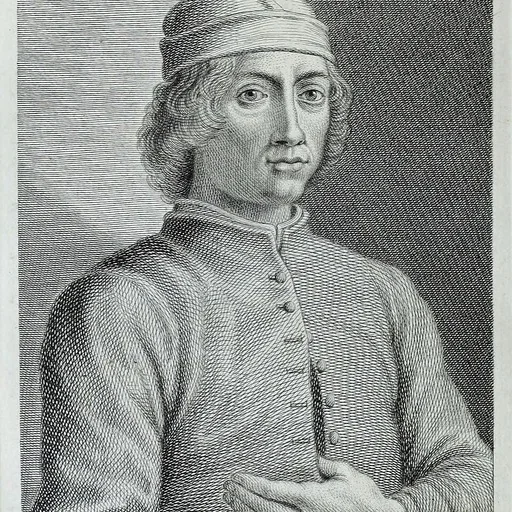
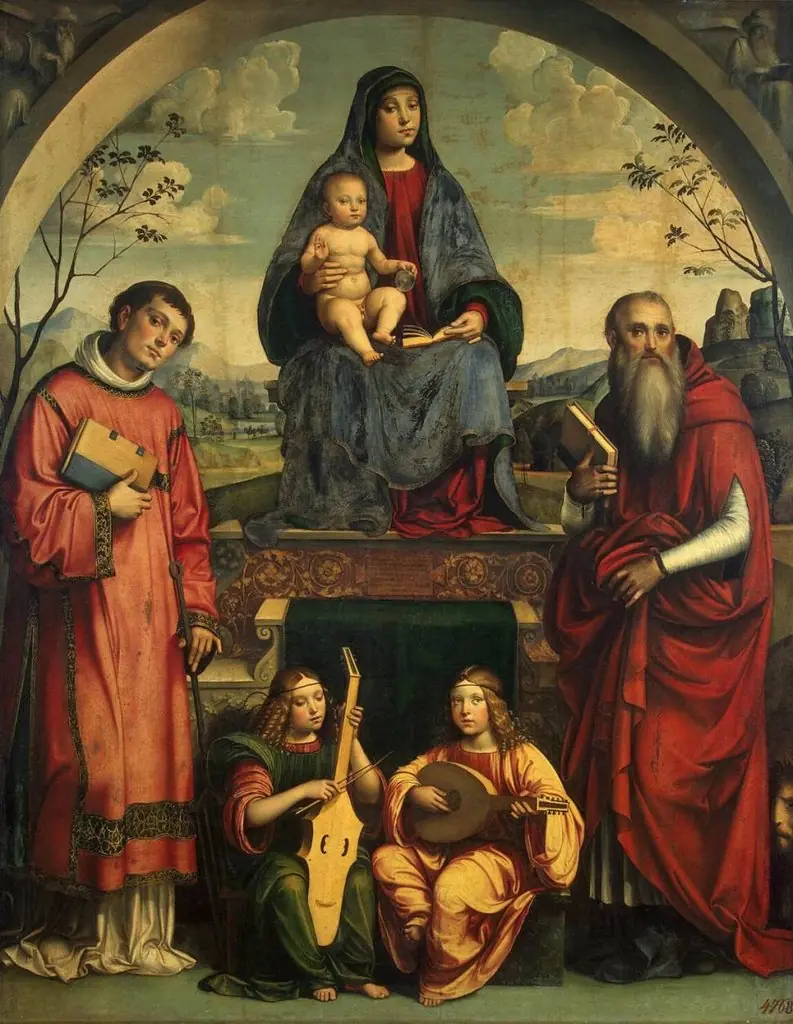
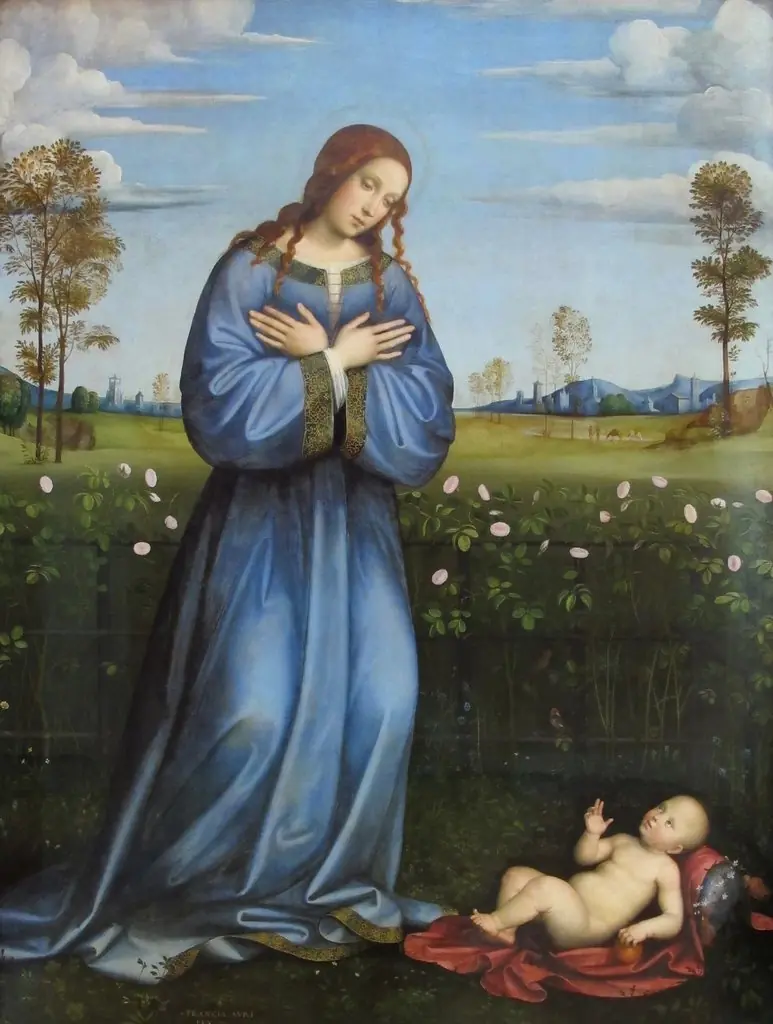
Francesco Francia, whose real name was Francesco Raibolini (1447 – 5 January 1517), was an Italian painter, goldsmith, and medallist from Bologna, who was also director of the city mint.

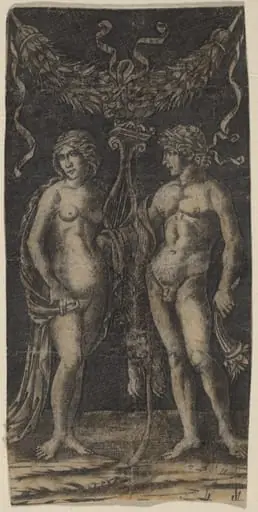 Hercules and Deianira
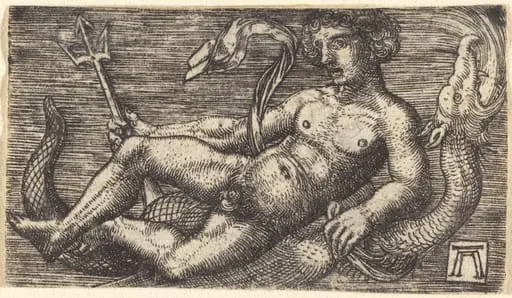 Neptune on a Sea Monster
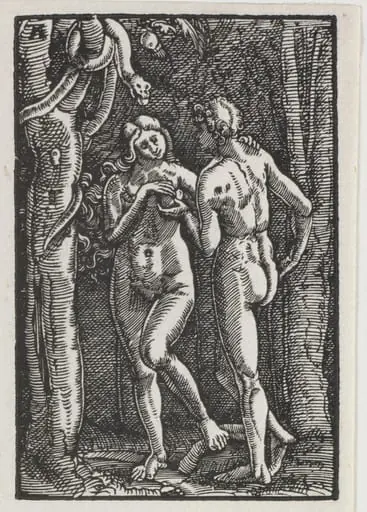 The Fall and Redemption of Man: Adam and Eve Eating the Forbidden Fruit
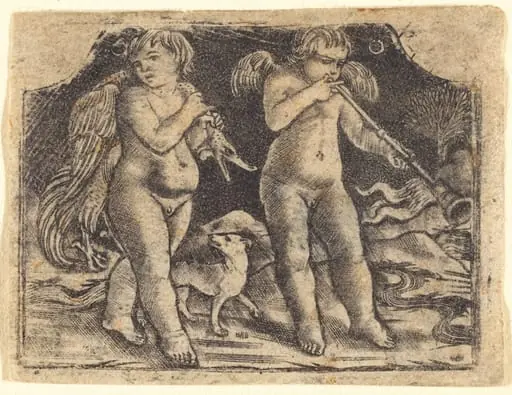 Cupid carrying a fowl accompanied by a dog, and another cupid playing a trumpet
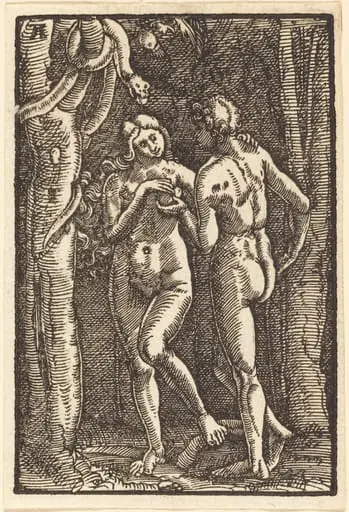 The Fall of Man
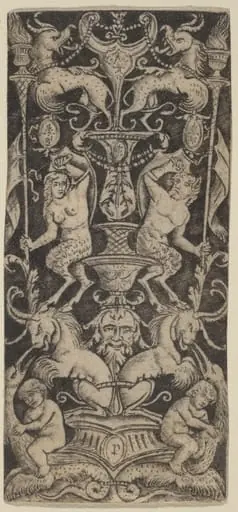 Panel of Ornament with Two Naked Children on Monstrous Beasts
 Cross Panel with Vine in Center and Tritons' Couple
 The Capture of Troy