Artwork
Three Cupids and a Bear
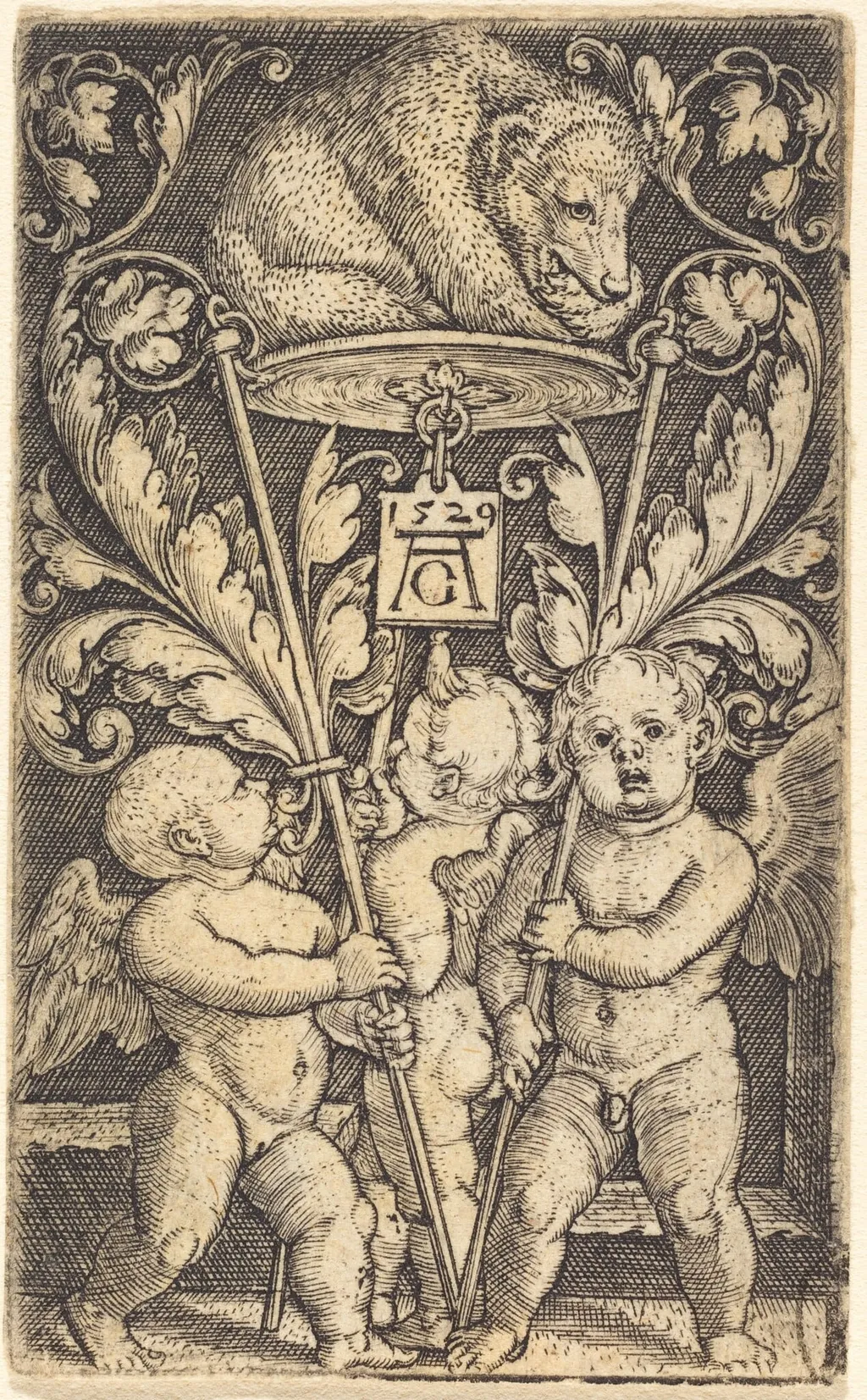
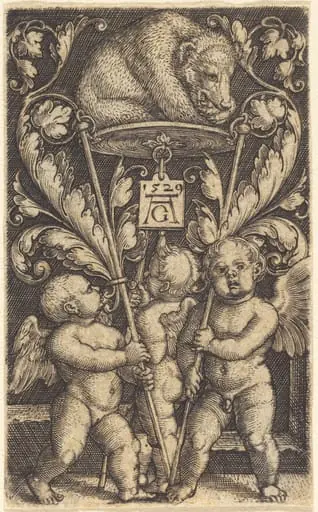
Three Cupids and a Bear is a print by the Northern Renaissance artist Heinrich Aldegrever. It dates from 1529 and is held in the collection of the National Gallery of Art.
About this work
Overview
Working in the tradition of Albrecht Dürer, he specialized in intricate metal engravings rather than painting.
Heinrich Aldegrever, a German engraver active in the early 16th century, produced *Three Cupids and a Bear* in 1529 as part of a group of small-scale prints known as the Little Masters. Working in the tradition of Albrecht Dürer, he specialized in intricate metal engravings rather than painting. This work exemplifies his technical precision and interest in combining mythological motifs with naturalistic detail, rendered on a compact scale suitable for private collection.
Subject & Meaning
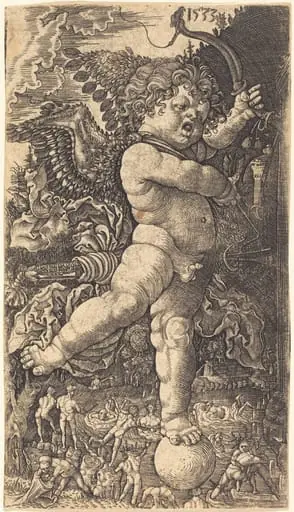
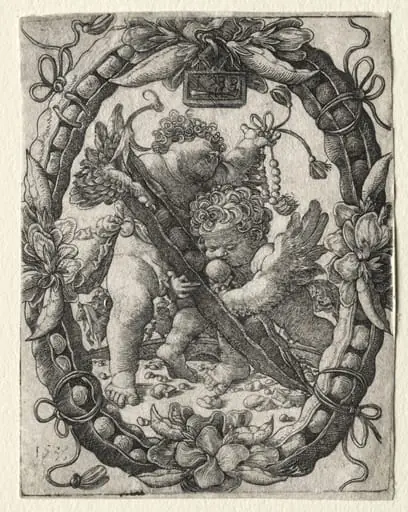
The print portrays three nude putti entwined with a bear, one drawing a miniature bow toward its ear. The bear’s placid expression contrasts with the playful aggression of the figures, suggesting a tension between innocence and wildness. Though not tied to a specific myth, the scene evokes Northern Renaissance fascination with nature, childhood, and allegorical juxtapositions—blending the domesticated and the untamed in a single intimate moment.
Technique & Style
Aldegrever executed the image using fine-line engraving on copper, a method allowing for delicate textures and sharp contours. His meticulous hatching and cross-hatching define fur, skin, and foliage with remarkable clarity. The composition is tightly contained, emphasizing detail over grandeur. He signed the plate with his initials, a common practice among engravers of the time to assert authorship in an era of reproductive print culture.
History & Provenance
Created in 1529 during Aldegrever’s active years in Paderborn, the print circulated among collectors in the German-speaking regions and beyond. Its survival in multiple impressions indicates moderate demand. The National Gallery of Art in Washington holds one of the known impressions, contributing to its scholarly accessibility. No earlier records of ownership are documented, but its presence in institutional collections confirms its enduring recognition among print historians.
Context
Aldegrever worked in the wake of Dürer’s influence, during a period when Northern European artists increasingly turned to small, finely detailed engravings for private patrons. The blending of classical putti with a naturalistic bear reflects a broader Renaissance interest in combining pagan imagery with observed wildlife. Such prints often served as decorative objects or moralizing allegories, appealing to humanist tastes without overt religious content.
Legacy
Though Aldegrever’s reputation faded after the 16th century, his technical skill and distinctive compositions have been reassessed in modern print scholarship. *Three Cupids and a Bear* remains a representative example of the Little Masters’ contribution to printmaking, illustrating how intimate imagery could convey complex visual narratives. It continues to be studied for its fusion of whimsy and craftsmanship, offering insight into early modern European visual culture.
Artist & collection

Artist
Heinrich Aldegrever or Aldegraf was a German painter and engraver. He was one of the "Little Masters", the group of German artists making small old master prints in the generation after Albrecht Dürer.