Artwork
Decorative Panels
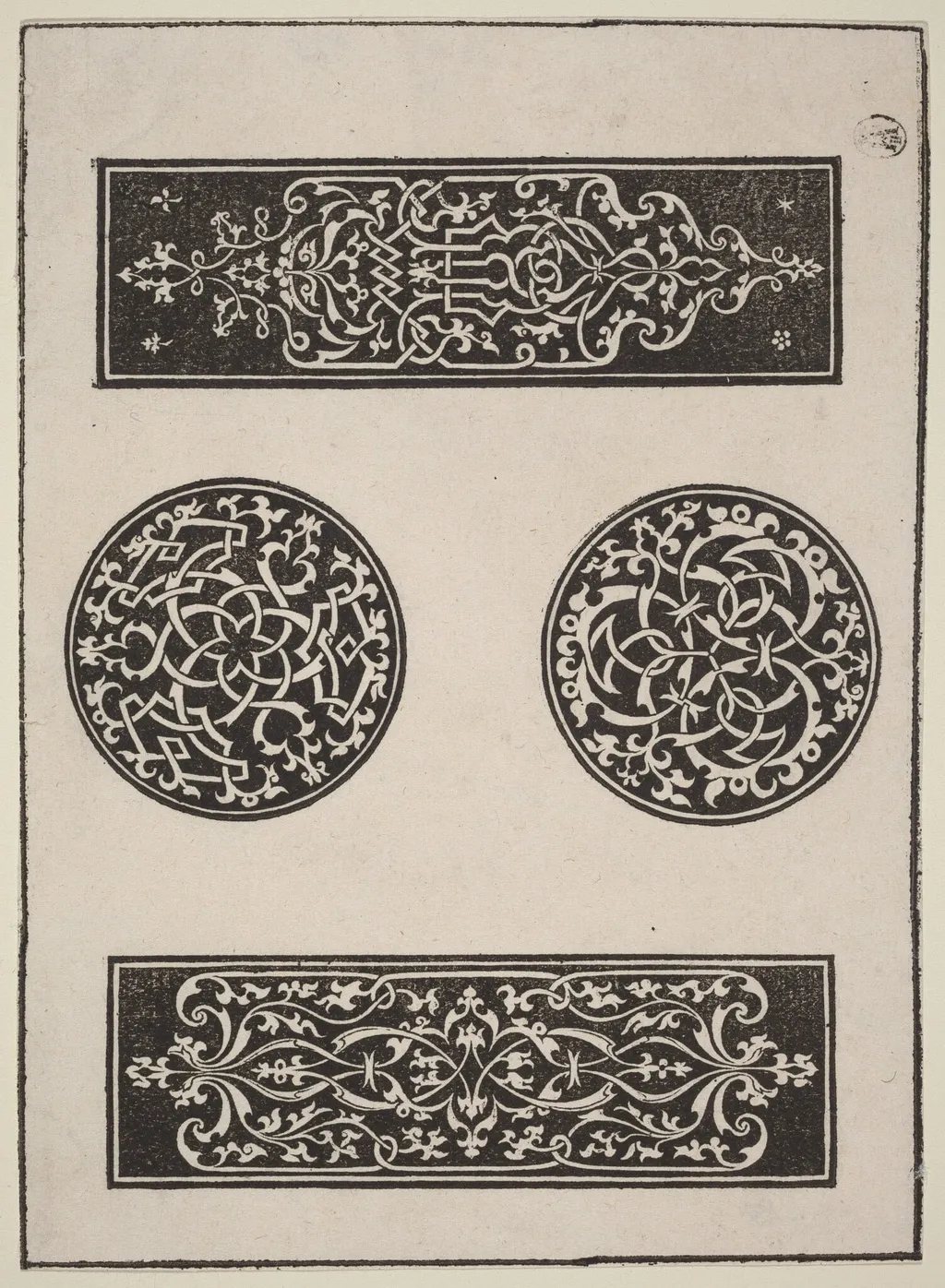
Decorative Panels is an ink print by the Renaissance artist Peter Flötner. It dates from 1546 and is held in the collection of the National Gallery of Art.
About this work
Overview
Peter Flötner’s Decorative Panels, executed as a woodcut on laid paper in 1546, present a trio of monochrome designs. The work consists of a narrow, ornamental band topped with swirling motifs and star-like forms, a pair of circular panels densely filled with minute curls and dots, and a broader lower band echoing the upper pattern.
Subject & Meaning
The panels function as decorative motifs rather than narrative scenes, employing repetitive geometric and vegetal elements that reflect the Renaissance interest in ornamental design for architectural and manuscript embellishment.
Technique & Style
Carved from a single wood block, the image was inked and pressed onto laid paper, producing crisp, high‑contrast lines. The precision of the incised lines and the uniformity of the repeating patterns exemplify the meticulous craftsmanship characteristic of early German woodcut printing.
History & Provenance
Created in the mid‑sixteenth century, the print is attributed to Flötner, a German artist known for his work in metal and wood. The piece survives as a rare example of his printed ornamental designs, documented in early catalogues of his oeuvre.
Context
During the 1540s, decorative woodcuts were commonly used to supply pattern books for craftsmen and designers. Flötner’s panels align with this tradition, offering a visual repertoire for appliqué, textiles, and architectural ornamentation.
Artist & collection


 Oblong Ornament Panel
 Ornament
 Ornament for Dagger Sheath
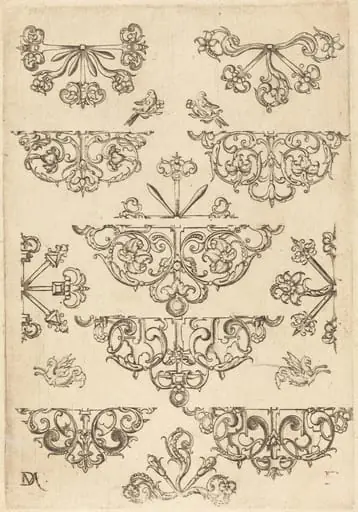 Twelve Studs
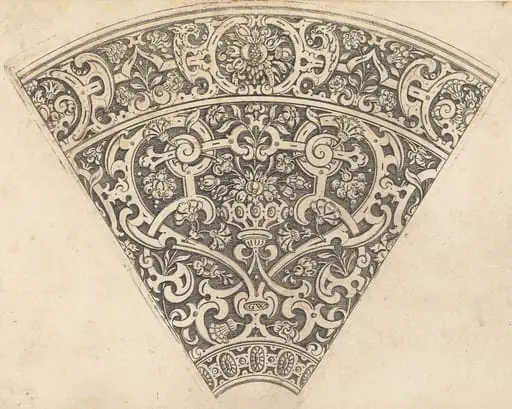 Goblet Design
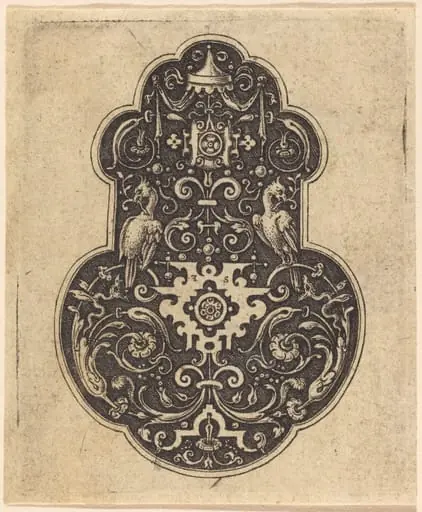 Arabesque Designs
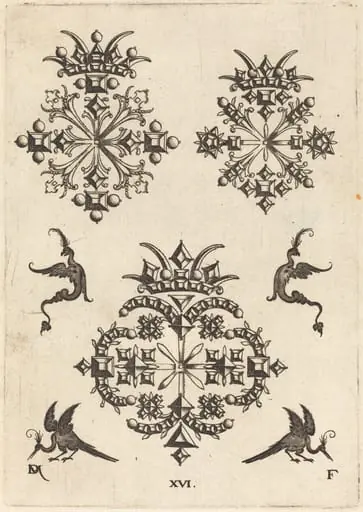 Three Brooches with Fantasy Birds at Left, Right, and Bottom
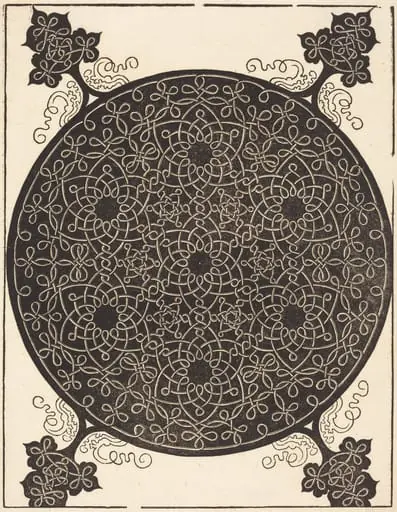 The Sixth Knot (combining seven small systems of knots with black centers)
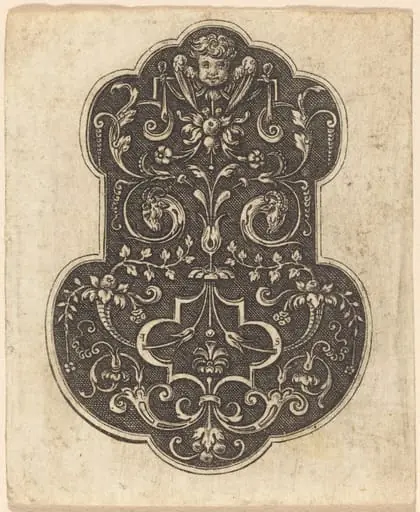 Cherub
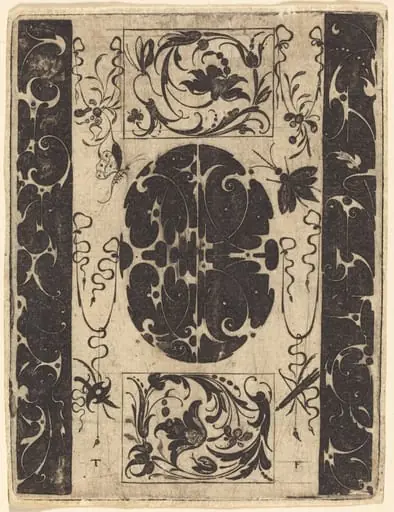 Ornament
 Ornament Panel: Three Children Blowing Horns
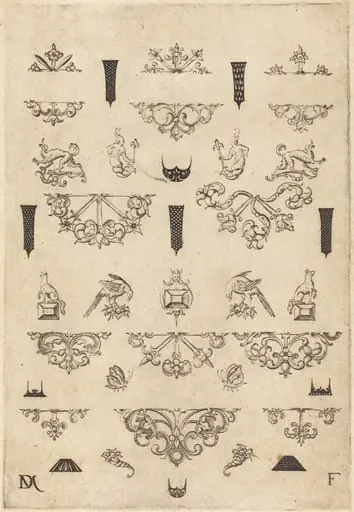 Eleven Different Studs and Twenty-Three Ornaments