Artwork
Ornament for Dagger Sheath
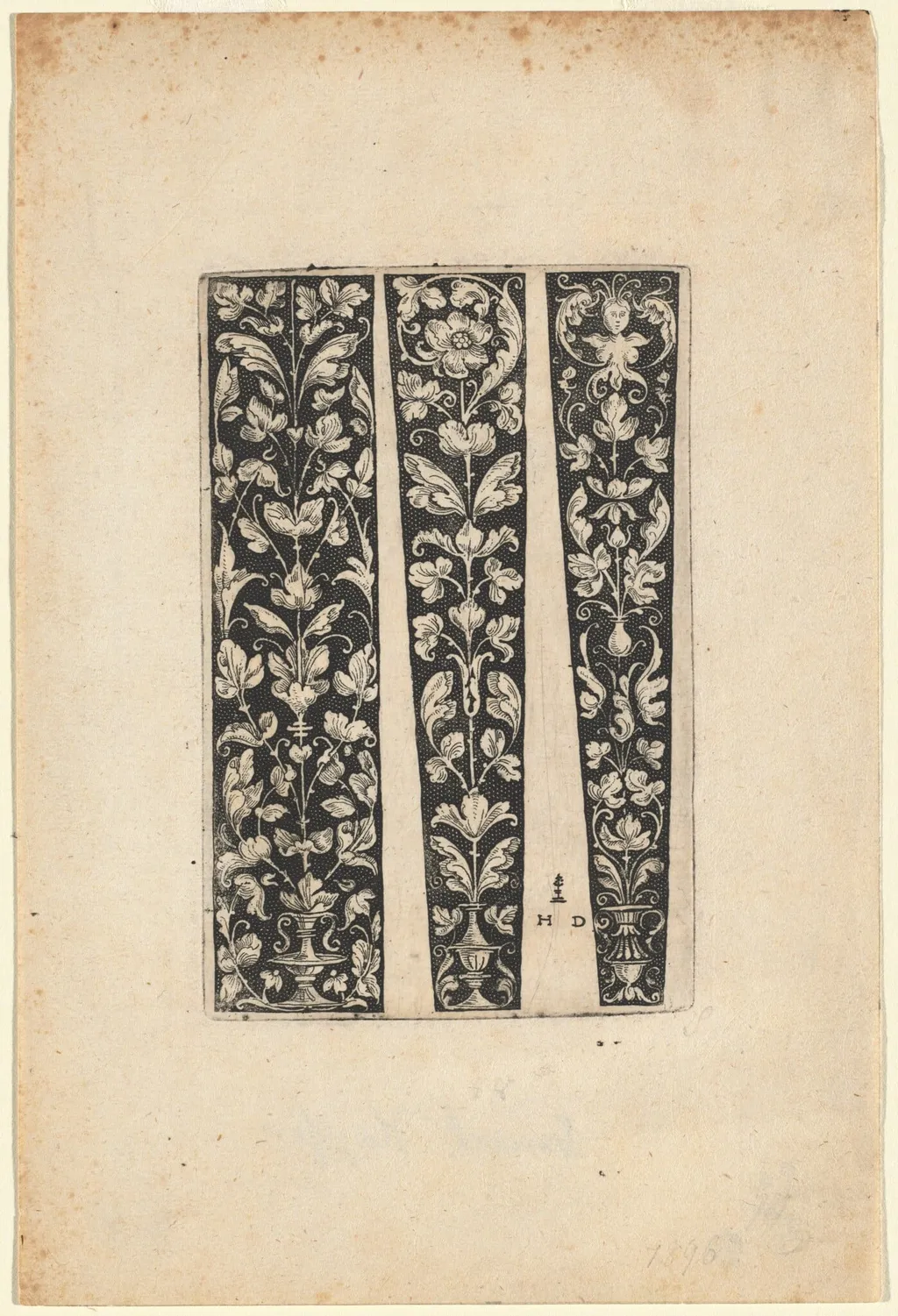
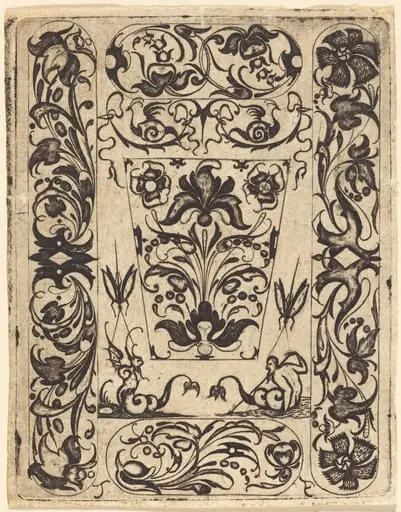
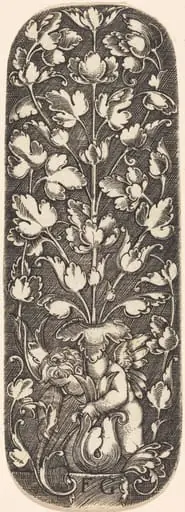
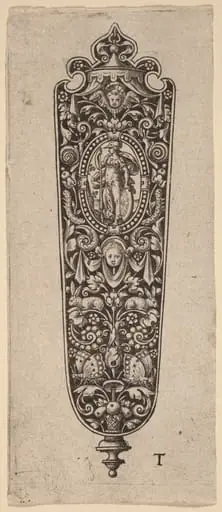
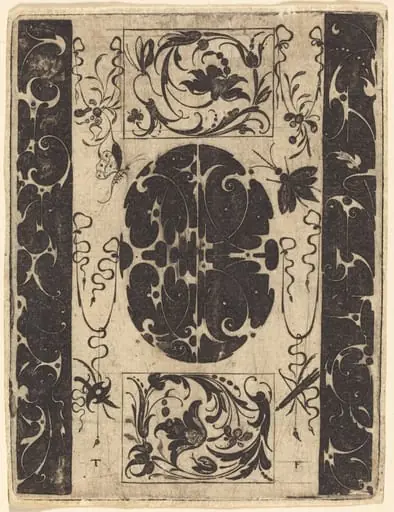
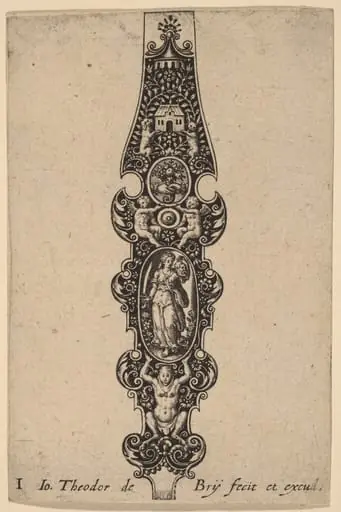
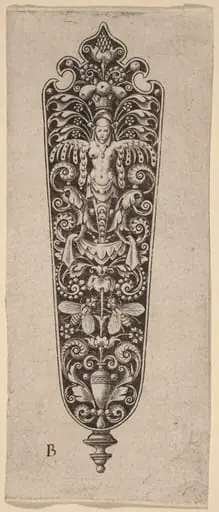
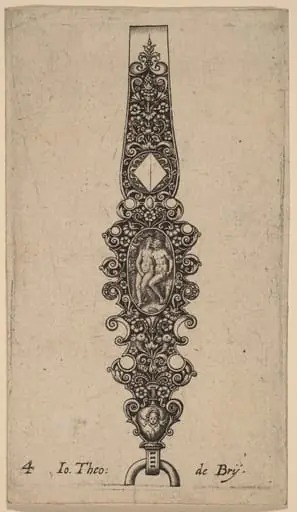
Ornament for Dagger Sheath is an ink print by the Renaissance artist Daniel Hopfer. It dates from 1515 and is held in the collection of the National Gallery of Art.
About this work
Overview
Created around 1515 by Daniel Hopfer, this iron etching was designed as a decorative template for a dagger sheath.
Created around 1515 by Daniel Hopfer, this iron etching was designed as a decorative template for a dagger sheath. Unlike later copper etchings, Hopfer’s use of iron reflects his background in armor-making. The plate was treated with acid to etch lines, then inked and pressed onto paper. Its small scale and functional intent suggest it was a working model, not a finished artwork for public display.
Subject & Meaning
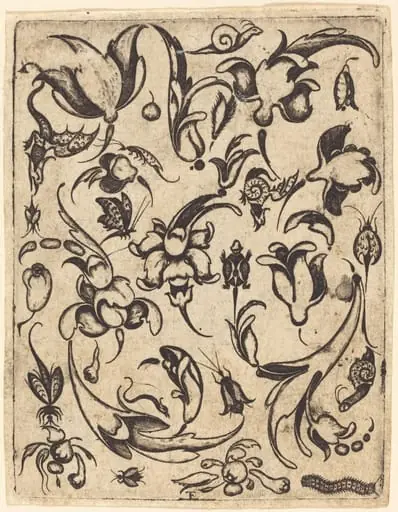
The design features flowing vines and blossoms arranged in a continuous curve, mirroring the shape of a sheath. These organic motifs were common in Renaissance decorative arts, symbolizing growth and refinement. The pattern likely served as a guide for craftsmen in metalwork or engraving, translating Hopfer’s linear style into three-dimensional ornamentation on weaponry or luxury items.
Technique & Style
Hopfer employed open biting, a method allowing acid to eat deeply into the iron plate, creating bold, uneven lines. The resulting print shows sharp contours with slight ink bleed at the edges, a byproduct of the material’s texture and the printing process. The aesthetic resembles woodcut in its clarity but retains the fluidity unique to etched metal, distinguishing it from both engraving and relief printing.
History & Provenance
Hopfer, based in Augsburg, was among the first to use etching commercially in northern Europe. His iron plates were practical extensions of his armor workshop, repurposing metallurgical knowledge for printmaking. This piece likely circulated among artisans as a design source, contributing to the spread of Renaissance ornament across guilds. No early ownership records survive, but similar plates are held in European collections linked to armor and decorative arts traditions.
Context
In early 16th-century Germany, printmaking was becoming a tool for disseminating visual ideas beyond the elite. Hopfer’s etchings bridged fine art and craft, offering reproducible patterns to armorers, goldsmiths, and woodworkers. His choice of iron—cheap and durable—reflected a pragmatic approach, contrasting with the more refined copper plates adopted later by artists like Dürer.
Legacy
Hopfer’s experimentation with iron etching laid groundwork for the medium’s evolution, even as copper eventually became standard. His work demonstrated that prints could function as design blueprints, expanding printmaking’s role beyond fine art. Though largely forgotten in later centuries, his techniques influenced the integration of print culture into artisanal practices across Europe.
Artist & collection

Artist
Daniel Hopfer (c. 1470 – 1536) was a German artist who is widely believed to have been the first to use etching in printmaking, at the end of the 15th century. He also worked in woodcut. Although his etchings were…

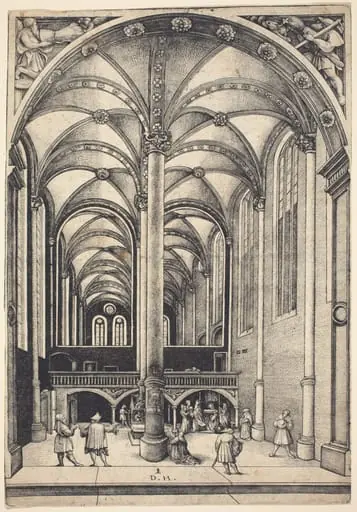 Interior of the Church of Saint Maria Magdalena with the Parable of the Offering of the Widow
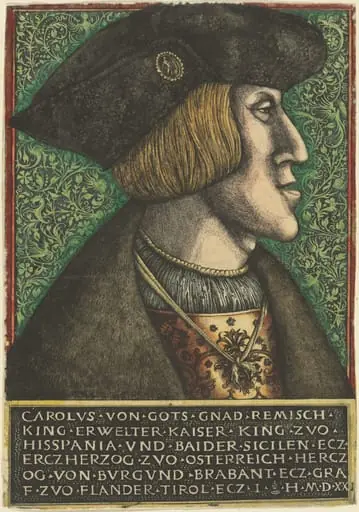 Emperor Charles V
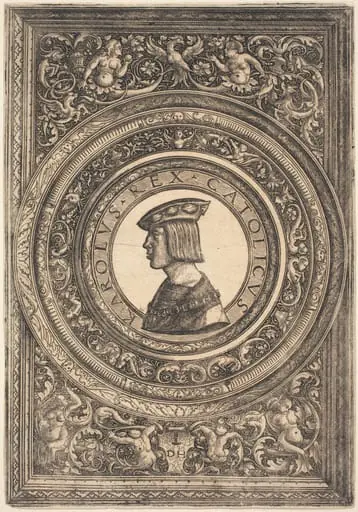 Emperor Charles V
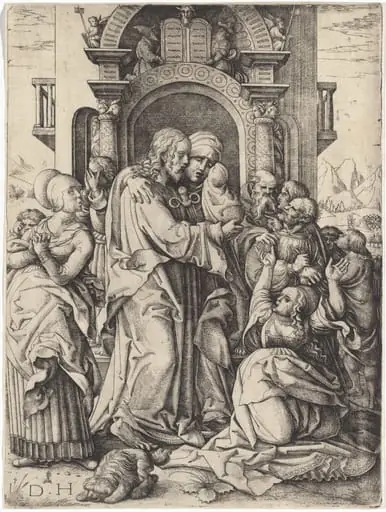 The Virgin Mary Taking Leave of Christ
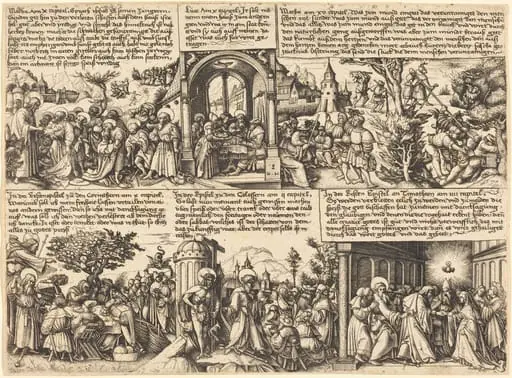 Jesus Christ Giving the Mission to the Apostles and Other New Testament Scenes
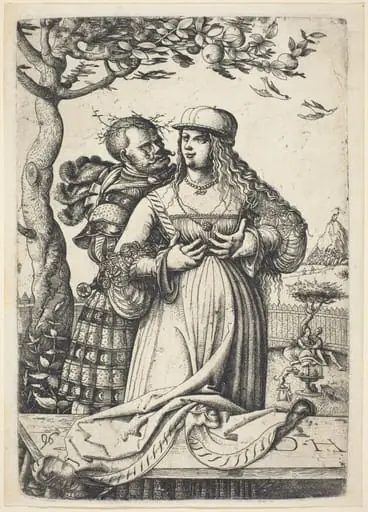 Soldier Embracing a Woman
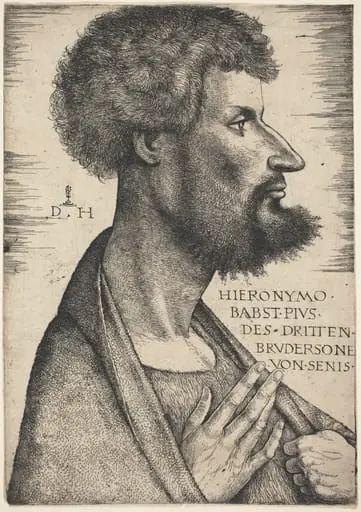 Girolamo da Siena
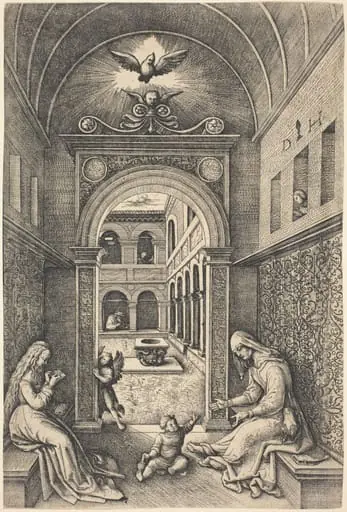 The Virgin and Child with Saint Anne by a Portal