Artwork
Arabesque Designs
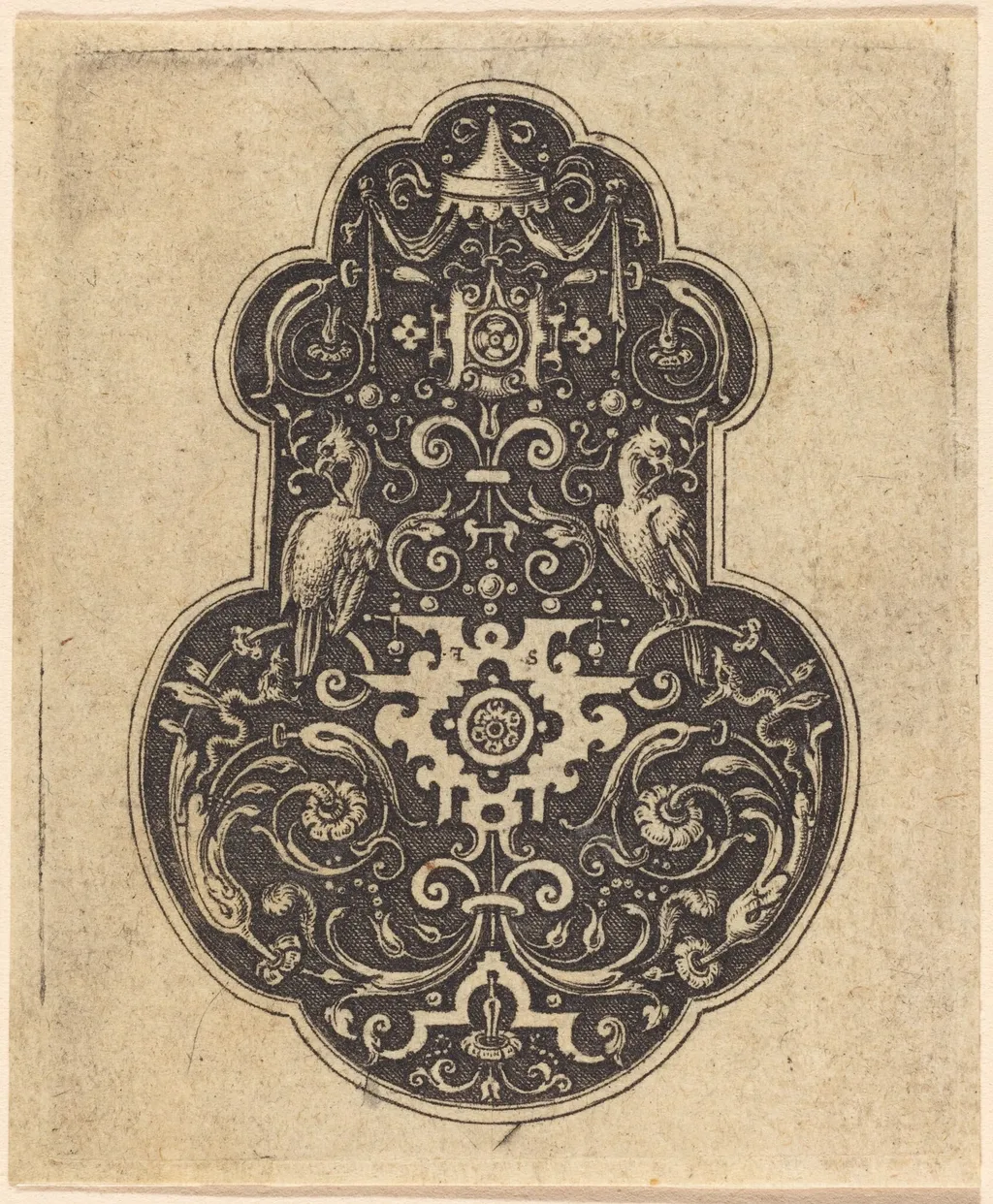
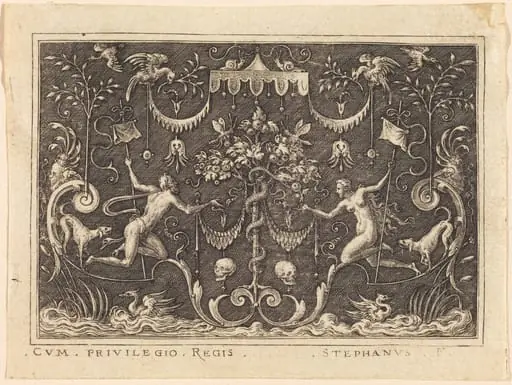
Arabesque Designs is an ink print by the Renaissance artist Etienne Delaune. It dates from 1551 and is held in the collection of the National Gallery of Art. Created in 1551 by Étienne Delaune, this engraving is a black-and-white decorative pattern composed of intricate, interwoven lines.
About this work
Overview
Created in 1551 by Étienne Delaune, this engraving is a black-and-white decorative pattern composed of intricate, interwoven lines.
Created in 1551 by Étienne Delaune, this engraving is a black-and-white decorative pattern composed of intricate, interwoven lines. It features swirling vegetal forms, minute geometric motifs, and two stylized birds perched at the upper edge. Designed as a print, it was produced by incising the composition into a metal plate and transferring it to paper through pressure, enabling multiple reproductions for use in ornamentation.
Subject & Meaning
The composition centers on a large, radiating floral motif surrounded by dense arabesques—continuous, flowing lines derived from Islamic and Renaissance decorative traditions. The birds at the top may symbolize vigilance or serve as framing devices. No narrative is present; instead, the work emphasizes rhythm, symmetry, and ornamental harmony, reflecting its function as a model for applied arts rather than a standalone image.
Technique & Style
Delaune employed fine-line engraving to achieve precision and density, using tiny incised strokes to build texture and depth without shading. The style is meticulously controlled, with repetitive, interlacing elements that create visual complexity through repetition rather than variation. This technique allowed for sharp, repeatable impressions suitable for transferring designs onto ceramics, textiles, and metalwork.
History & Provenance
Produced in France during the mid-16th century, the print was likely part of a series of decorative patterns circulated among artisans and craftsmen. Delaune, trained as a goldsmith and engraver, worked within a network of designers supplying motifs to workshops across Europe. The work’s survival in multiple impressions suggests its utility and popularity in artisanal circles of the period.
Context
This engraving emerged during a time when Renaissance artists increasingly drew from classical, Islamic, and Gothic sources to develop new ornamental vocabularies. Arabesques were widely adopted in decorative arts as symbols of refinement and cosmopolitan taste. Delaune’s work reflects the demand for standardized, transferable designs that could be adapted across media and geographic regions.
Legacy
Delaune’s engravings influenced generations of decorative artists, particularly in France and the Low Countries. His patterns were reprinted and adapted well into the 17th century, forming part of the visual lexicon of European ornament. Though not widely exhibited today, his prints remain referenced in studies of Renaissance design systems and the transmission of artistic motifs across crafts.
Artist & collection


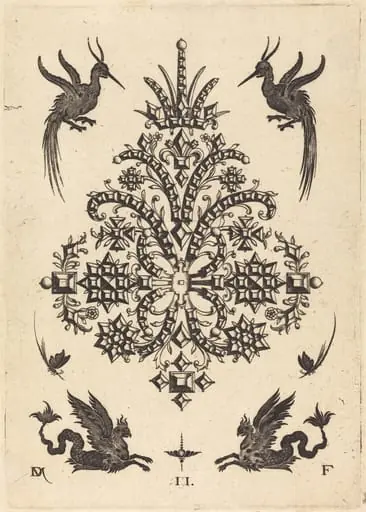 Brooch with Tablestones and Winged Griffins Above and at Bottom
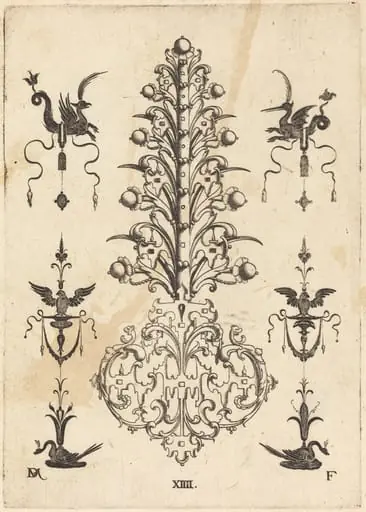 Hyacinth-Shaped Brooch with Winged Animals at Top and Crouching Swans at Bottom
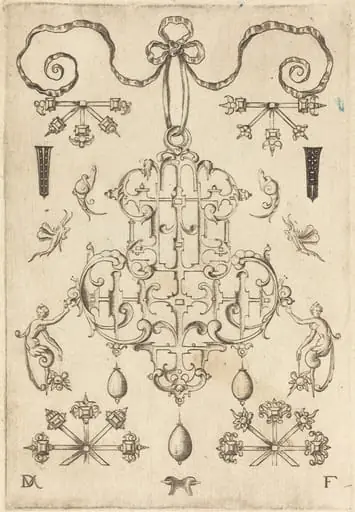 Large Pendant with Three Drops Below
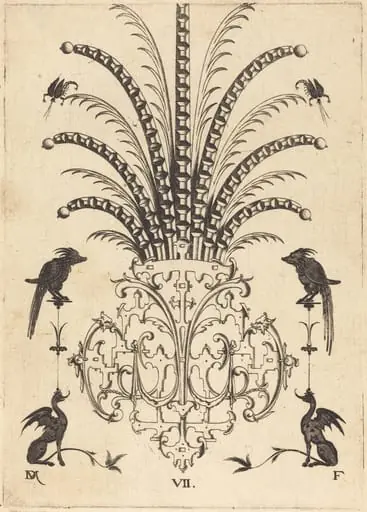 Brooch with Table-Stones, Flying Scorpions at Top, and Dogs at Bottom
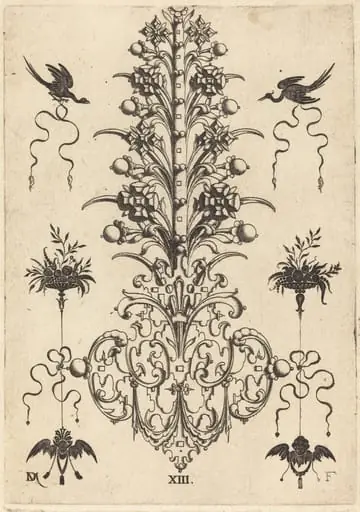 Hyacinth-Shaped Brooch with Birds at Top and Devil's- and Angel's-Head at Bottom
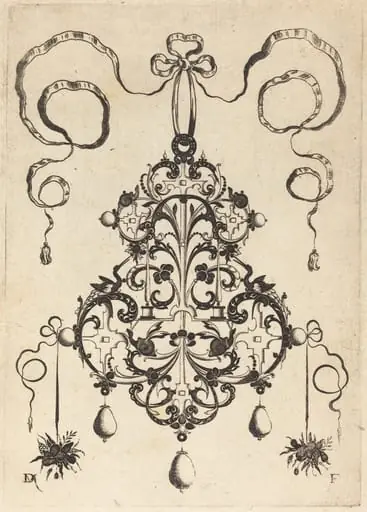 Large Pendant, Lower Left and Right Two Bunches of Grass and Fruit
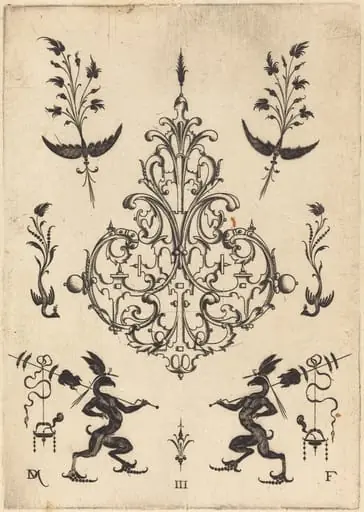 Brooch with Sprigs at Top and Griffins with Trophies at Bottom
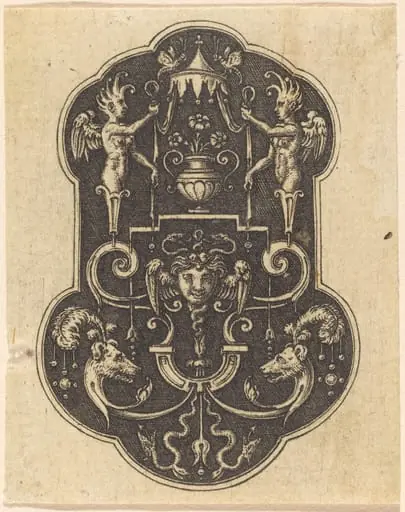 Head of Medusa
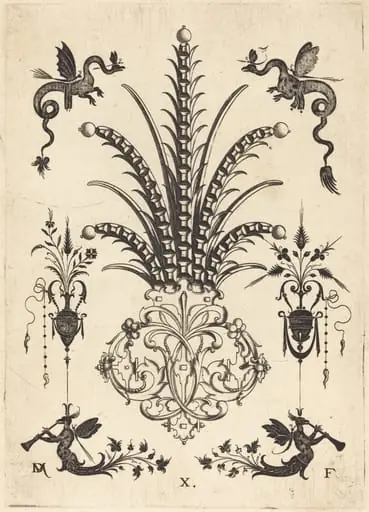 Brooch with Table-Stones, Dragons at Top, andWinged Monsters Blowing Horns at Bottom