Artwork
Oblong Ornament Panel
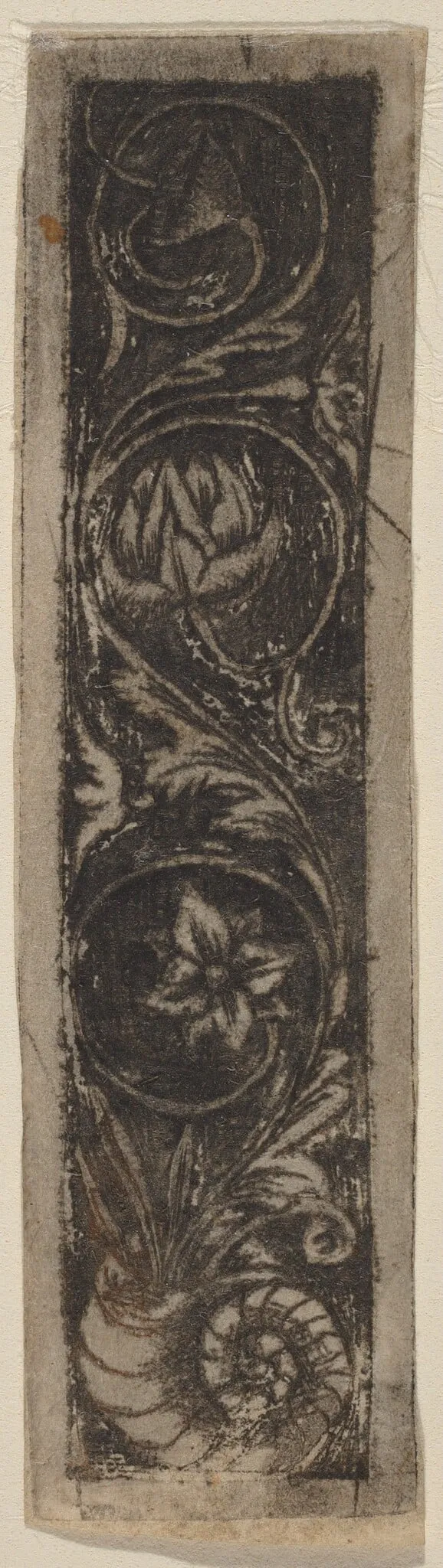
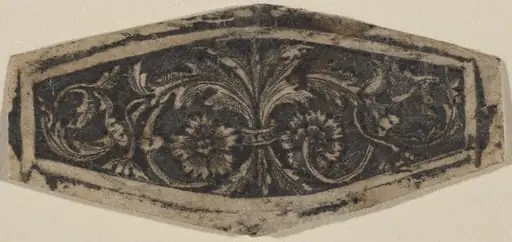
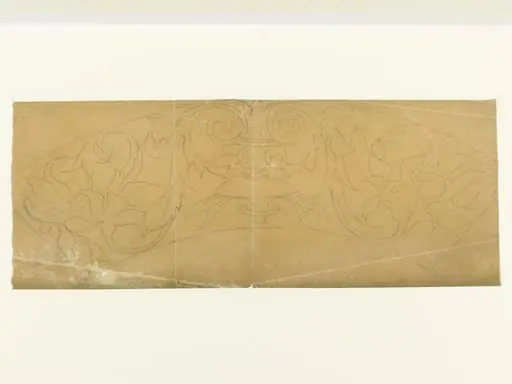
Oblong Ornament Panel is a print by the Renaissance artist Italian 15th Century. It dates from 1480 and is held in the collection of the National Gallery of Art. This narrow, elongated panel is a niello print, a technique involving inlaid black metallic alloy on a metal surface to create contrast.
About this work
Overview
This narrow, elongated panel is a niello print, a technique involving inlaid black metallic alloy on a metal surface to create contrast. Its form suggests it was once part of a larger decorative object, possibly a plate or jewelry component. The surface exhibits signs of age—uneven edges, subtle wear—and the dark, matte background enhances the luminous, intricate patterns etched into it.
Subject & Meaning
These organic forms, repeated in rhythmic sequence, reflect a decorative tradition rooted in medieval and Renaissance metalwork.
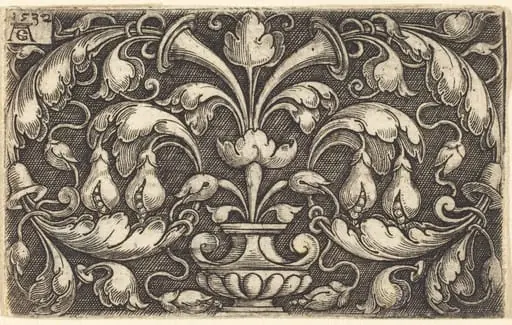
The design features three rounded compartments filled with stylized foliage and minute floral motifs. These organic forms, repeated in rhythmic sequence, reflect a decorative tradition rooted in medieval and Renaissance metalwork. The absence of figural elements suggests an emphasis on natural ornamentation, possibly symbolizing growth, continuity, or the harmony of nature in domestic or personal adornment.
Technique & Style
Created using niello, the panel employs a dark metallic inlay to form detailed patterns against a lighter metal ground. The swirling, linear quality of the leaves and flowers mimics engraved metalwork, while the high contrast between light and dark elements evokes chiaroscuro. The surface lacks polish, preserving a matte, tactile texture that enhances its aged, handcrafted appearance.
History & Provenance
Niello decoration was widely used in Europe from the late Middle Ages through the 17th century, particularly on religious and secular metal objects. This panel likely originated in a workshop producing small decorative items for elite households. Its worn condition and irregular edges suggest prolonged use or exposure, though its specific origin and prior ownership remain undocumented.
Context
In its time, such panels were often integrated into jewelry, caskets, or tableware as ornamental accents. The preference for abstract botanical motifs aligns with broader trends in European decorative arts, where nature-inspired patterns conveyed refinement without overt symbolism. The use of niello, though labor-intensive, was valued for its durability and visual depth in intimate, handheld objects.
Legacy
Though niello fell out of common use after the 18th century, this panel exemplifies the technical precision and aesthetic restraint of pre-industrial metal decoration. It survives as a quiet testament to the craftsmanship devoted to small-scale ornament, influencing later revivals in Arts and Crafts movements that sought to revive hand-engraved metalwork traditions.
Artist & collection

Artist
This anonymous Italian engraver from the 1490s carved images that could be peeled apart like paper dolls—each knot in the "First Knot" print was cut from a single sheet so you could lift the loops right off the page.





![The Destruction of the Egyptian Idols [verso], by Italian 15th Century](https://artifactworldgallery.com/img/italian-15th-century--the-destruction-of-the-egyptian-idols-verso--646d3c2b8098cfee-w320.webp)
![The Flight into Egypt [recto], by Italian 15th Century](https://artifactworldgallery.com/img/italian-15th-century--the-flight-into-egypt-recto--8f4d5275d7f90f98-w320.webp)