Artwork
Three Brooches with Fantasy Birds at Left, Right, and Bottom
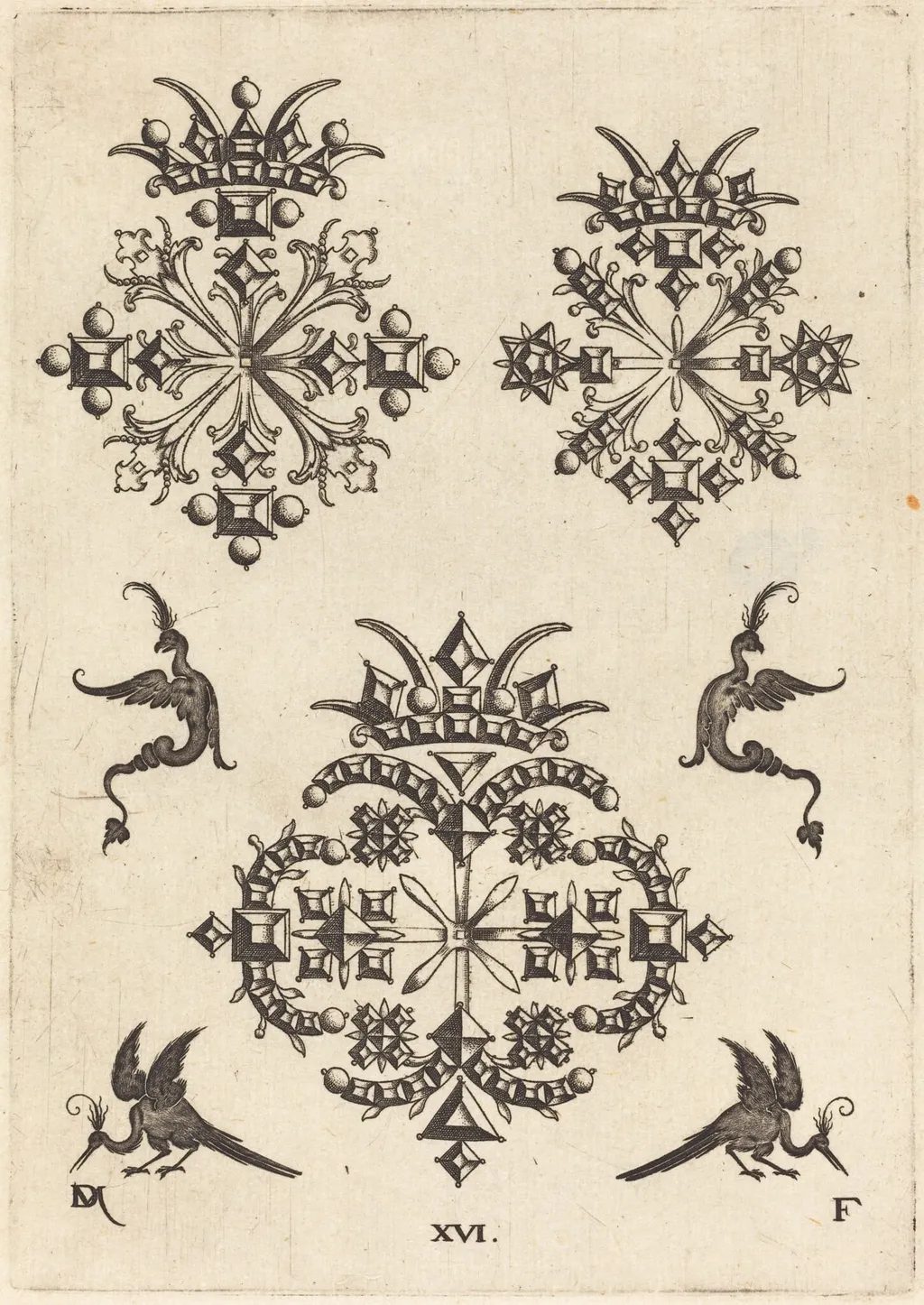
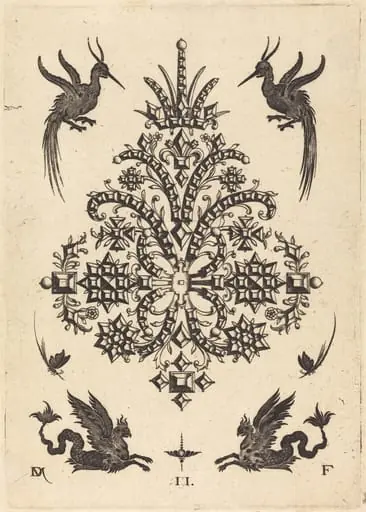
Three Brooches with Fantasy Birds at Left, Right, and Bottom is an ink print by the Renaissance artist Daniel Mignot. It dates from 1596 and is held in the collection of the National Gallery of Art.
About this work
Overview
Created in 1596 by Daniel Mignot, this engraving presents three elaborate brooch designs arranged in a triangular composition.
Created in 1596 by Daniel Mignot, this engraving presents three elaborate brooch designs arranged in a triangular composition. Each brooch features a central floral motif adorned with swirling foliage, diamond shapes, and small circular elements. The design is framed by stylized avian figures at the left, right, and lower edges, their forms elongated and fantastical, suggesting mythic rather than natural inspiration.
Subject & Meaning
The brooches depicted are not functional objects but idealized templates for ornamental jewelry. The inclusion of fantastical birds—curved-tailed, feathered, and otherworldly—elevates the designs beyond mere decoration, hinting at symbolic associations with beauty, transformation, or celestial realms. These creatures reflect Renaissance fascination with blending nature and imagination in decorative arts.
Technique & Style
Executed as an engraving, the work relies on fine incised lines to render intricate detail. Mignot’s precision in rendering floral volutes, geometric accents, and feathered bird forms demonstrates mastery of the burin tool. The style aligns with late 16th-century Northern European ornament books, where symmetry, repetition, and fantastical elements were used to guide artisans in metalwork and jewelry design.
History & Provenance
The engraving originates from a period when printed pattern books circulated among goldsmiths and craftsmen across Europe. While no specific early ownership record is documented, such prints were commonly used as design references in workshops. Mignot’s work likely served as a commercial template, disseminating fashionable motifs to regional artisans seeking to emulate elite aesthetics.
Context
In the late 1500s, engraved pattern books were essential tools for artisans, offering standardized designs for jewelry, metalwork, and textiles. The fusion of botanical and mythical elements in Mignot’s brooches reflects broader Renaissance trends that blended naturalism with allegory. These designs catered to a growing market for luxury goods among the urban elite, who sought refined personal adornment.
Legacy
Mignot’s engraving contributes to a broader tradition of printed ornament that influenced European decorative arts into the 17th century. Though not widely known today, such works preserved and transmitted design vocabularies across regions and generations. Their survival offers insight into the collaborative, iterative nature of craftsmanship before industrial standardization.
Artist & collection


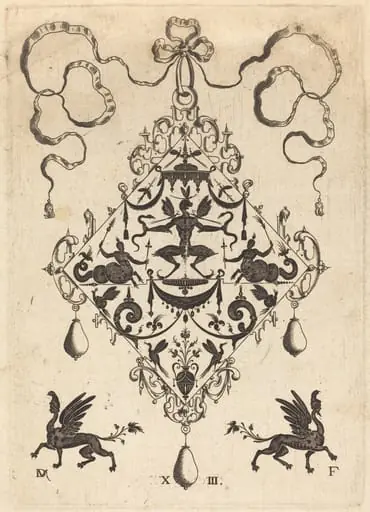 Large Pendant, Winged Fantasy Creature Holding Two Snakes
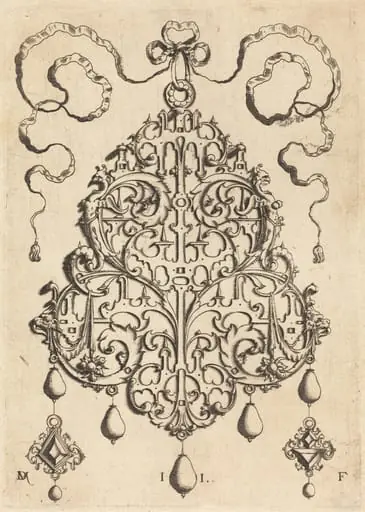 Large Strapwork Pendant with Two Hangers as Earrings at Left and Right
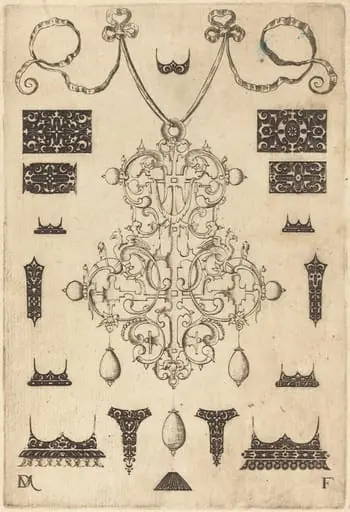 Large Pendant with Three Drops Below, Surrounded by Fifteen Different Studs
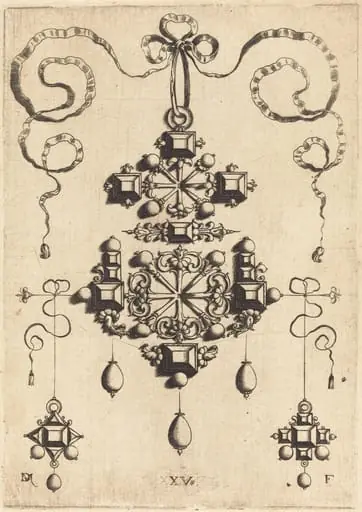 Pendant with Two Double Crosses, Surrounded by Four Diamond-Shaped Stones, Five Table-Stones, and Thirteen Pearls
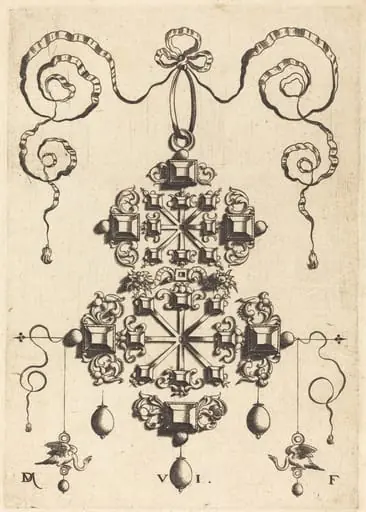 Large Pendant with Two Double Crosses, Surrounded by Six Large and Sixteen Small Table-Stones
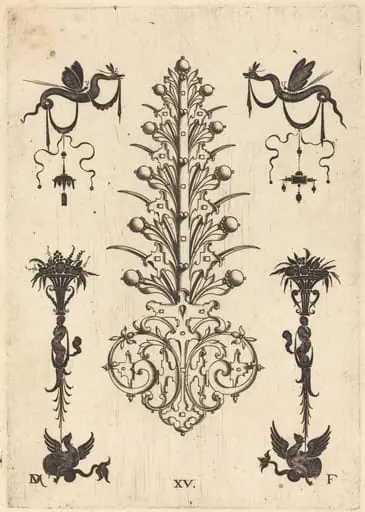 Hyacinth-Shaped Brooch with Winged Snakes at Top and Winged Animals at Bottom
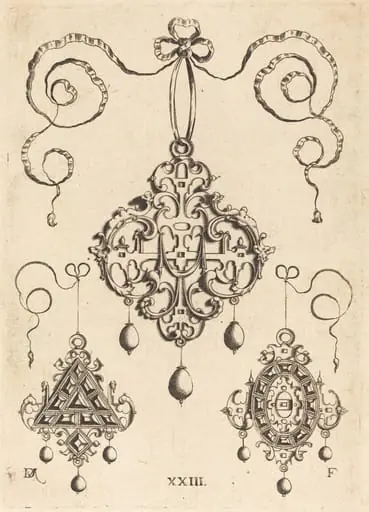 Three Strapwork Pendants, The Lower Ones Triangular and Oval
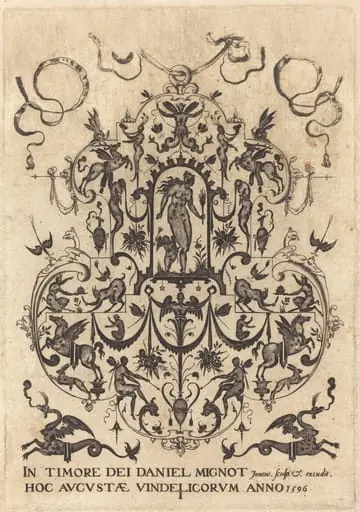 Title Page: Large Pendant, Venus and Amor at Centre
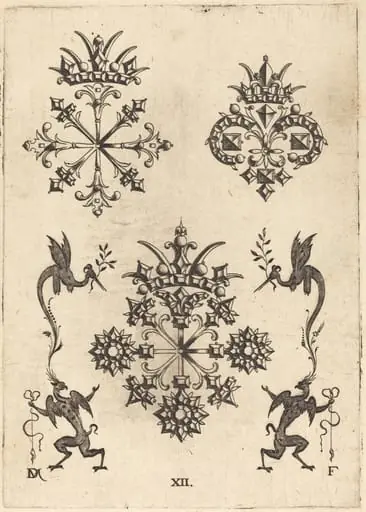 Three Brooches with Winged Snakes at Left and Right and Winged Griffins at Bottom
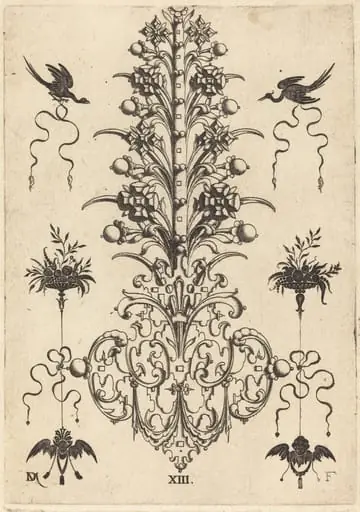 Hyacinth-Shaped Brooch with Birds at Top and Devil's- and Angel's-Head at Bottom
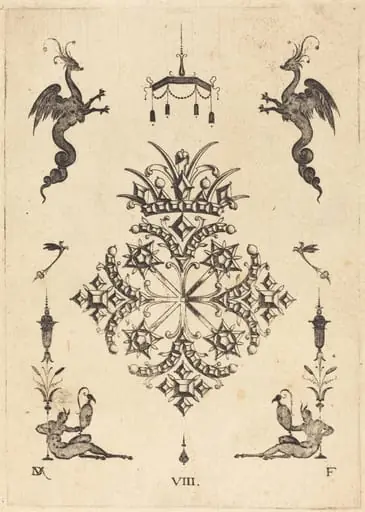 Brooch with Fantasy Animals at Top and Fauns with Vases at Bottom
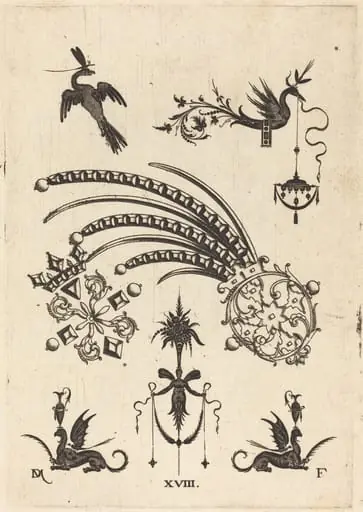 Two Brooches with Bird and Winged Snake at Top and Griffins with Vases at Bottom
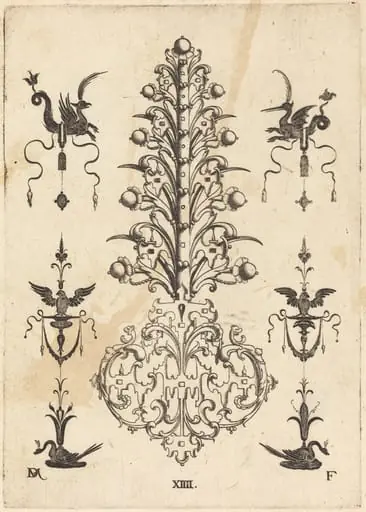 Hyacinth-Shaped Brooch with Winged Animals at Top and Crouching Swans at Bottom
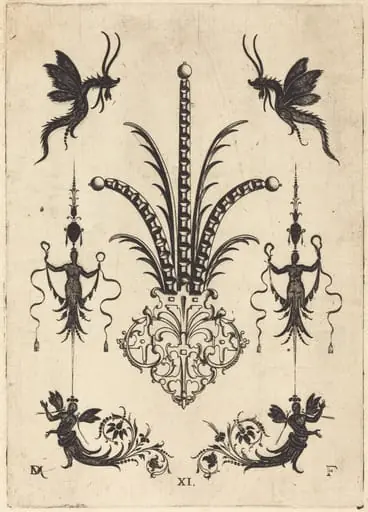 Brooch with Table-Stones, Winged Animals at Top, and Winged Human Beings at Bottom
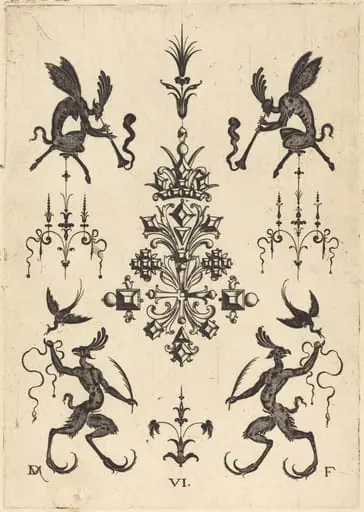 Brooch with Winged Fauns Blowing Trumpets at Top and Fantasy Creatures with Birds at Bottom
 Brooch with Tablestones and Winged Griffins Above and at Bottom
 Two Brooches with Dragon and Insects at Top and Human Beings with Snake-like Tails atBottom