Artwork
Ficedula, The Bullfinch
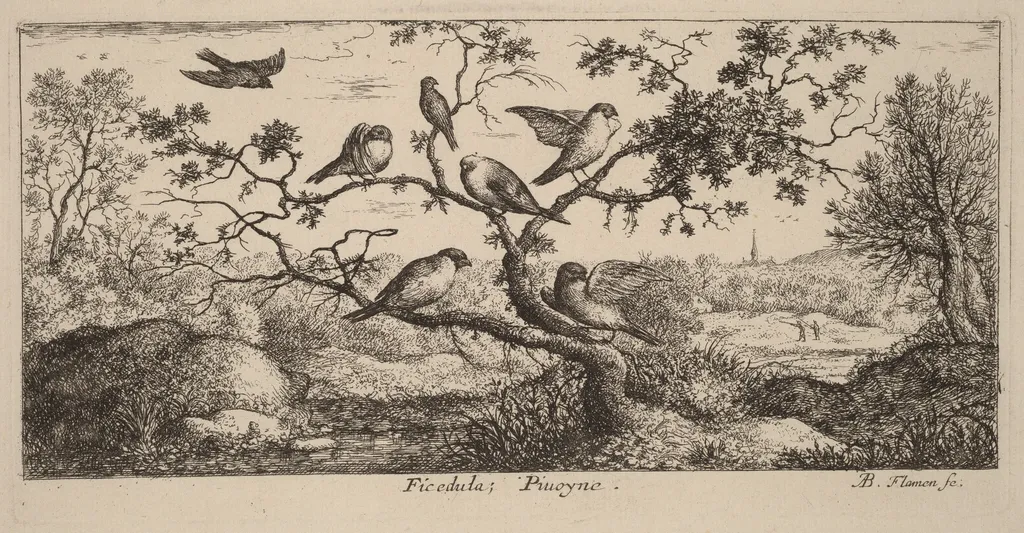
Ficedula, The Bullfinch is an ink print by the Baroque artist Albert Flamen. It dates from 1644 and is held in the collection of the National Gallery of Art.
About this work
Overview
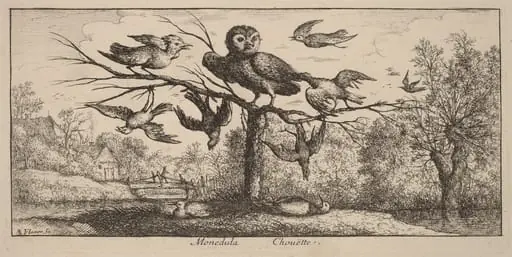
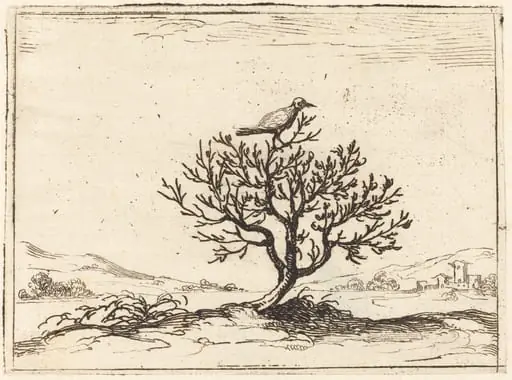
Created in 1644, this etching by the Flemish artist Albert Flamen depicts a bullfinch, known scientifically as *Ficedula*. Executed on laid paper, the print presents a small, leaf‑less tree surrounded by several birds in various poses, set against a distant village scene with a church spire and rolling hills.
Subject & Meaning
The central figure is a bullfinch, identified in the inscription as *Ficedula; Piouyoyne*, a reference to the bird’s characteristic call. The surrounding avian companions and the modest landscape suggest a naturalistic observation of rural fauna, emphasizing the bird’s place within its environment.
Technique & Style
Flamen employed traditional etching methods, incising fine lines into a metal plate that were then filled with ink. The resulting prints display crisp, precise outlines that render feathers, twigs, and distant architectural elements with high contrast against the paper’s laid texture.
History & Provenance
Albert Flamen worked primarily in Paris as an illustrator for printed publications in the mid‑17th century. This work exemplifies his contribution to the visual culture of the period, serving both decorative and documentary purposes within contemporary books and pamphlets.
Context
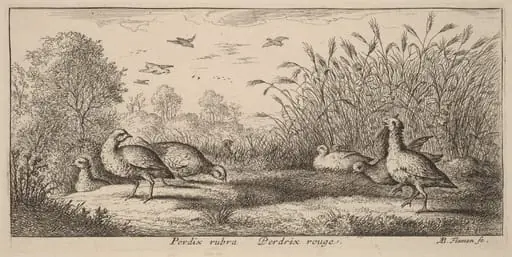
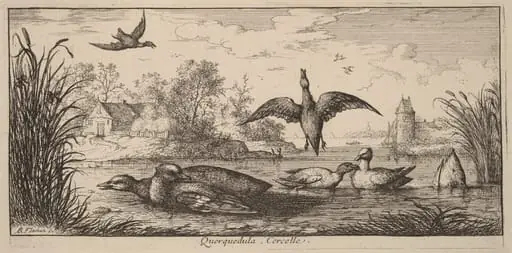
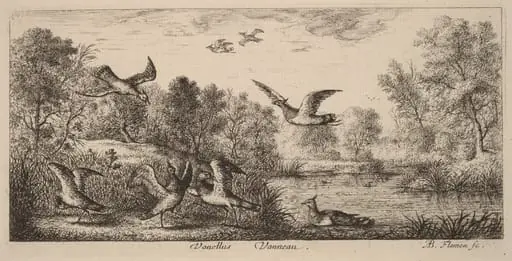
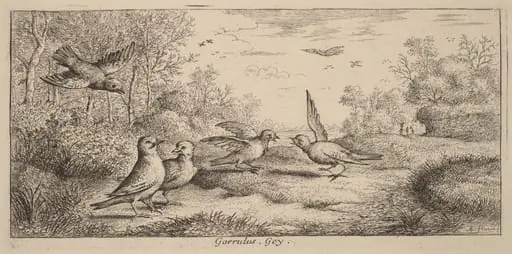
During the 1600s, detailed natural studies were common in printed media, reflecting a growing interest in cataloguing wildlife. Flamen’s etching aligns with this trend, providing a visual record of a specific bird species alongside a stylised rural backdrop.
Artist & collection
Artist
Albert Flamen (c. 1620 – after 1669) was a Flemish engraver, painter, and tapestry designer. He was active in Paris, where he worked mainly as an illustrator on numerous publications.