Artwork
Ortygometra, The Rail
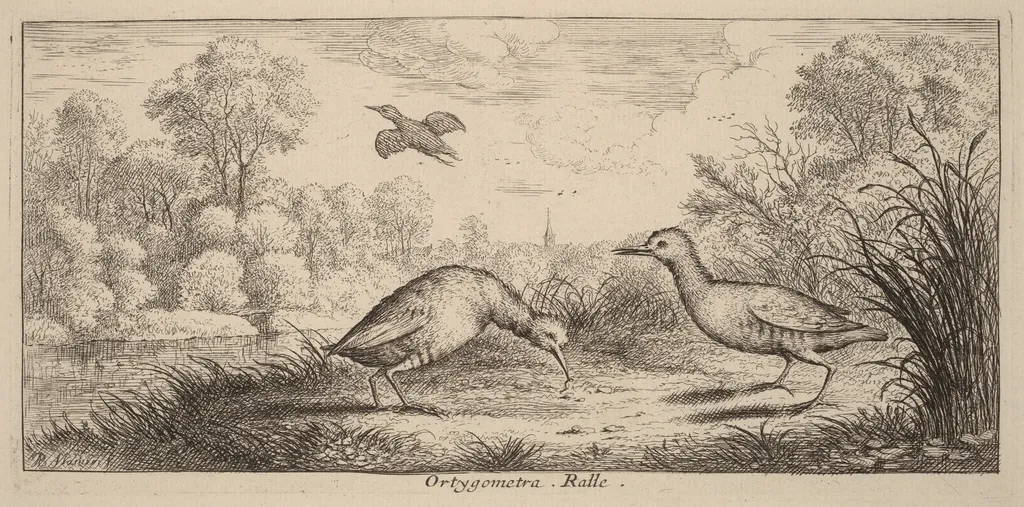
Ortygometra, The Rail is an ink print by the Baroque artist Albert Flamen. It dates from 1644 and is held in the collection of the National Gallery of Art.
About this work
Overview
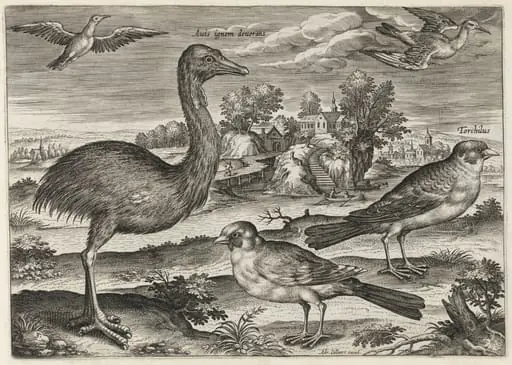
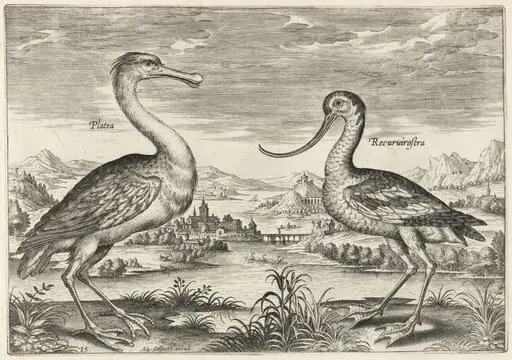
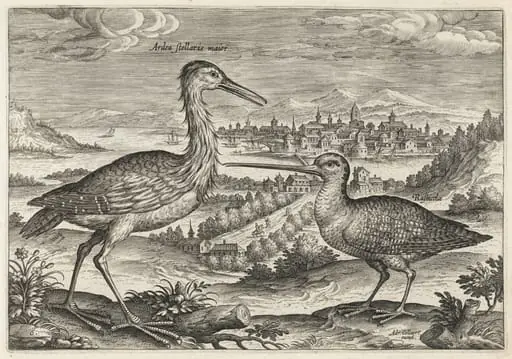
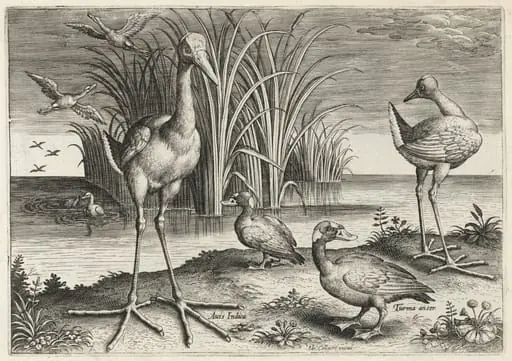
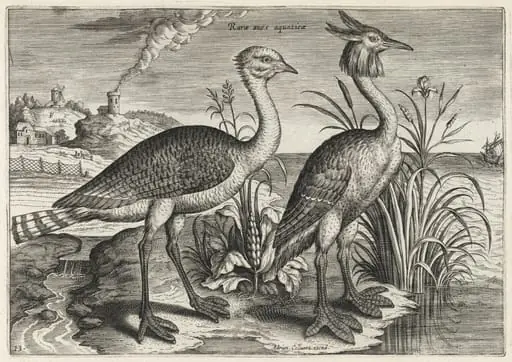
Ortygometra, The Rail, a 1644 etching on laid paper by Flemish artist Albert Flamen, showcases the artist's meticulous detail in a naturalistic scene featuring two rails in a marshy environment.
Subject & Meaning
The etching depicts two rails, one grounded with a bent neck and the other in flight, set against a detailed backdrop of trees, bushes, shallow water, and reeds. The scientific naming (*Ortygometra, The Rail*) at the bottom highlights the work's attention to natural specificity.
Technique & Style
Flamen employed the etching process to achieve fine-line details, rendering each feather and leaf with precision. This technique, involving carving images into metal plates, allowed for the intricate, high-contrast black-and-white drawing.
History & Provenance
Created in 1644 by Albert Flamen, a Flemish artist active in Paris, known for contributions to various media including engravings, paintings, tapestry designs, and illustrations for publications.
Context
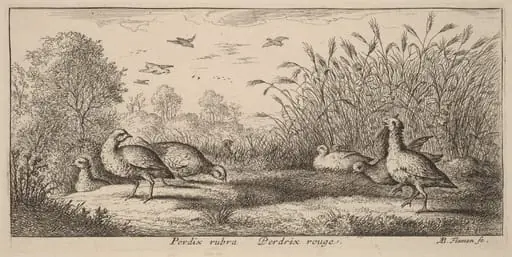
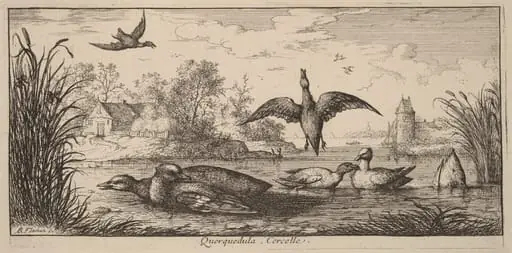
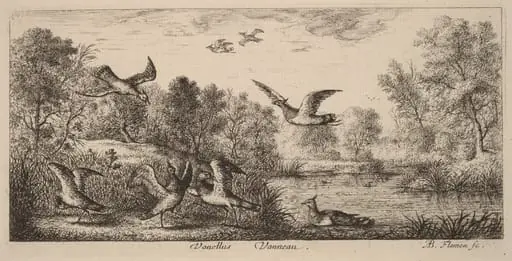
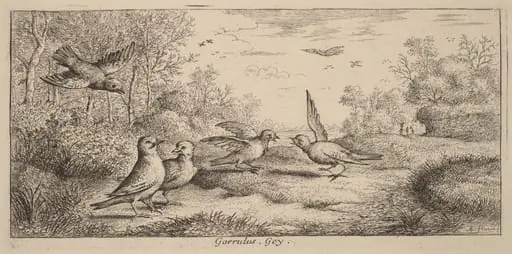
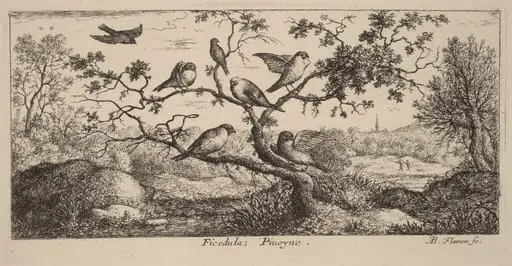
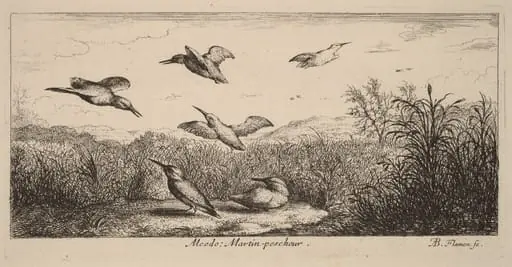
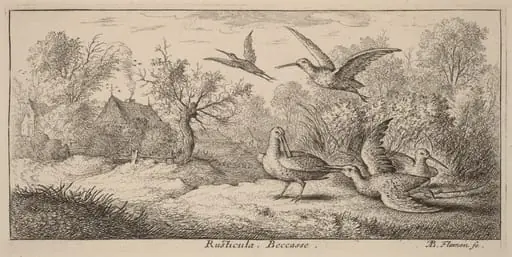
Part of a broader 17th-century European tradition of detailed natural history illustrations, *Ortygometra, The Rail* reflects the era's growing interest in accurate botanical and zoological depiction.
Legacy
While specific legacy details of *Ortygometra, The Rail* are not highlighted, it contributes to the broader legacy of 17th-century etching techniques and natural history art, influencing subsequent generations of naturalist artists.
Artist & collection
Artist
Albert Flamen (c. 1620 – after 1669) was a Flemish engraver, painter, and tapestry designer. He was active in Paris, where he worked mainly as an illustrator on numerous publications.