Artwork
Querpedula, The Teal
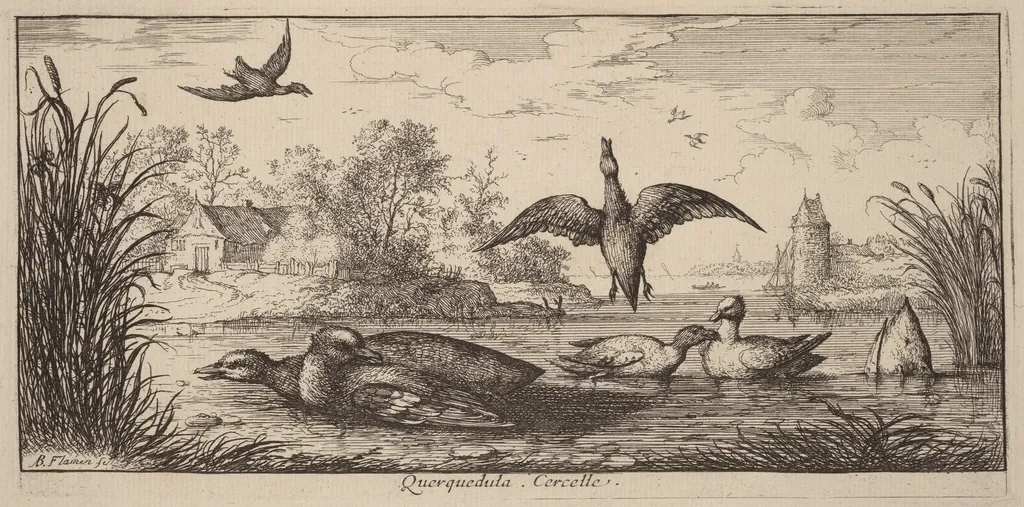
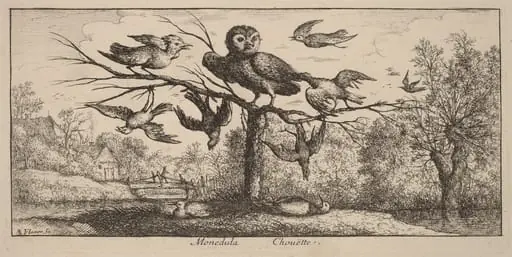
Querpedula, The Teal is an ink print by the Baroque artist Albert Flamen. It dates from 1644 and is held in the collection of the National Gallery of Art.
About this work
Overview
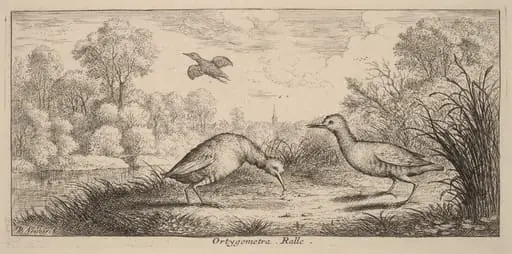
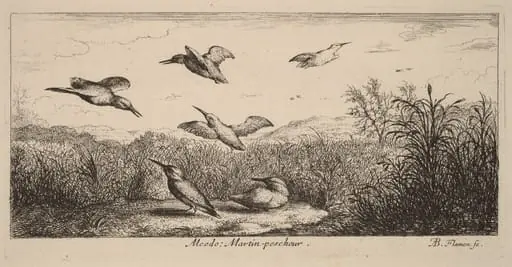
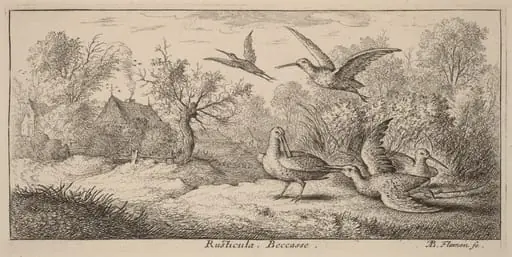
Created in 1644, *Querpedula, The Teal* is an etching on laid paper by the Flemish artist Albert Flamen. Executed during his Parisian period, the print depicts a tranquil waterside scene populated by waterfowl and a modest village, rendered with the precise line work typical of early‑modern book illustration.
Subject & Meaning
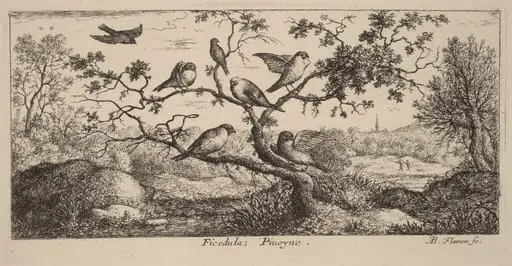
The composition centers on a shallow pond framed by reeds, where several ducks glide and one prepares for flight. A solitary bird arches overhead, while a distant settlement with a church steeple anchors the horizon. The tranquil setting reflects the era’s interest in natural observation and the quiet charm of rural life.
Technique & Style
Flamen employed the etching process, incising fine lines into a copper plate that were then transferred to laid paper. The delicate hatching captures feather texture, water ripples, and foliage, producing a sense of movement within a restrained Baroque aesthetic. The linear precision aligns with the detailed illustration standards of contemporary printed works.
History & Provenance
Albert Flamen, known primarily as an illustrator for printed books, likely produced this image as part of a larger natural‑history or travel volume popular in mid‑17th‑century France. The print’s survival in museum collections attests to its role in disseminating visual knowledge through the burgeoning print market of the period.
Artist & collection
Artist
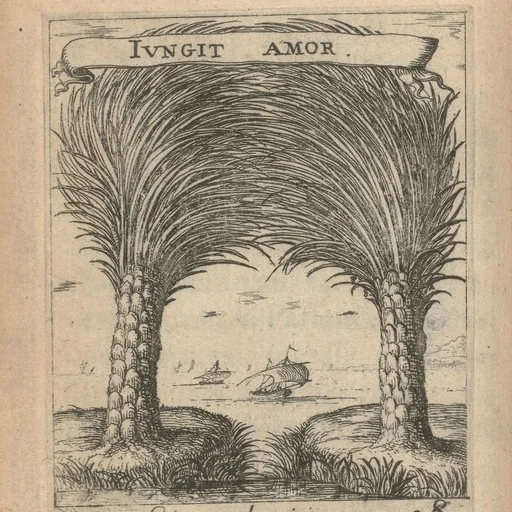
Albert Flamen (c. 1620 – after 1669) was a Flemish engraver, painter, and tapestry designer. He was active in Paris, where he worked mainly as an illustrator on numerous publications.