Artwork
Vanellus, The Lapwing
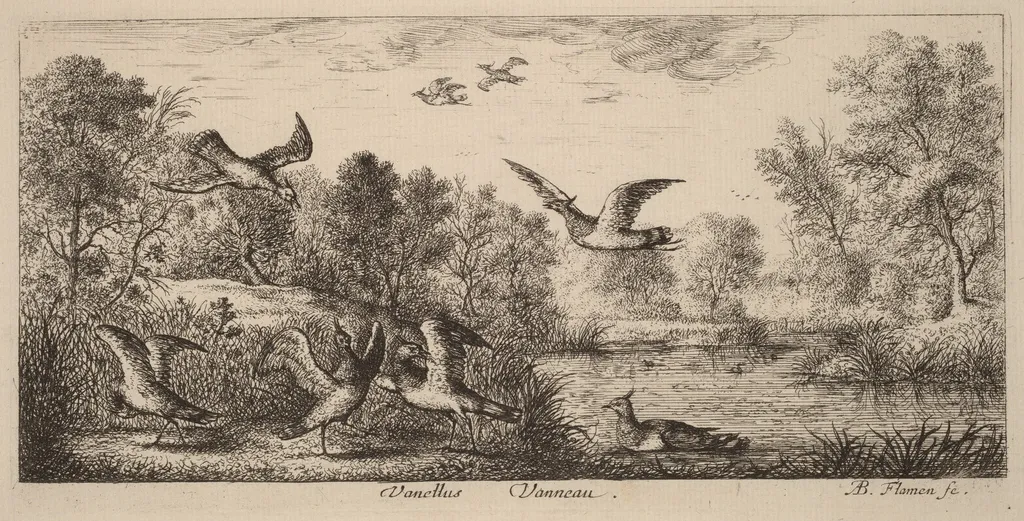
Vanellus, The Lapwing is an ink print by the Baroque artist Albert Flamen. It dates from 1644 and is held in the collection of the National Gallery of Art.
About this work
Overview
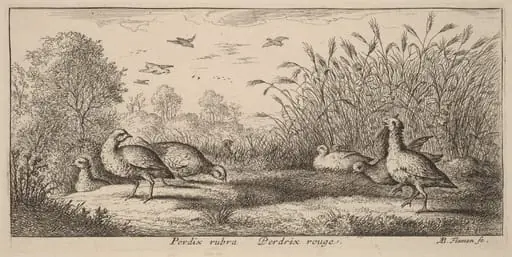
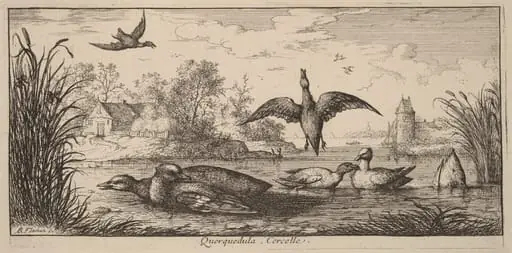
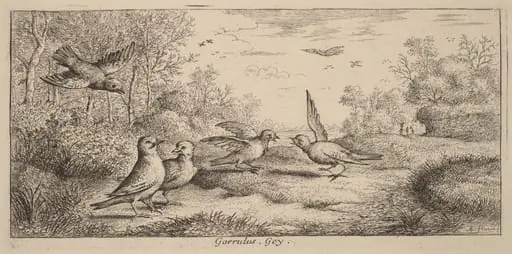
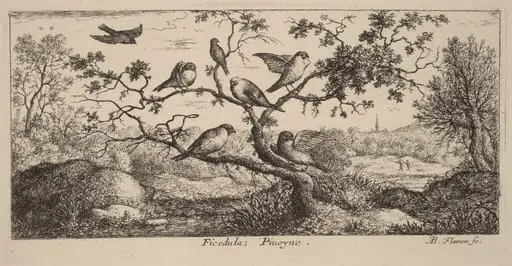
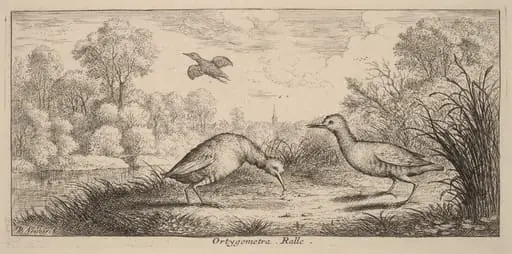
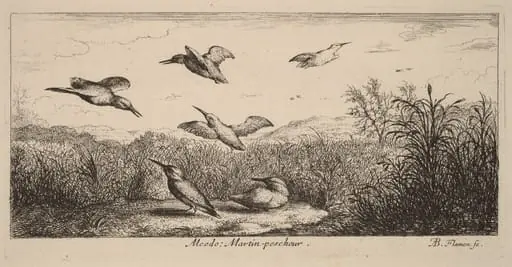
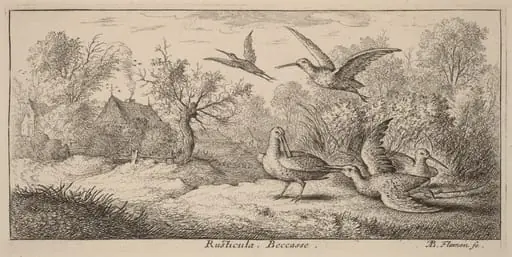
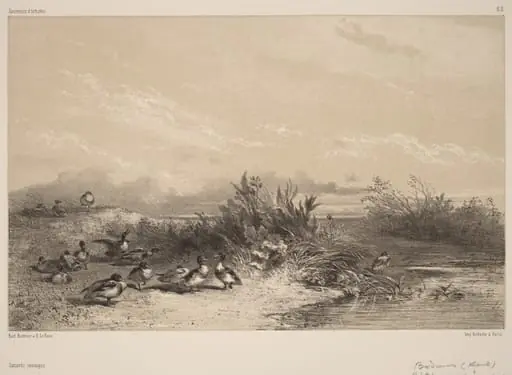
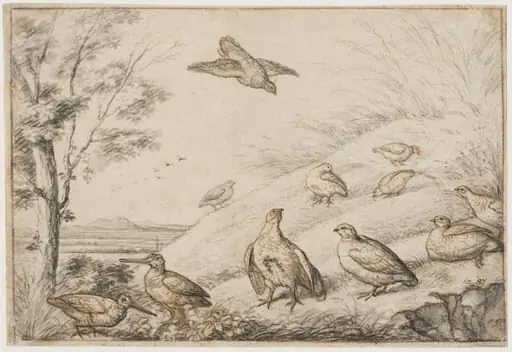
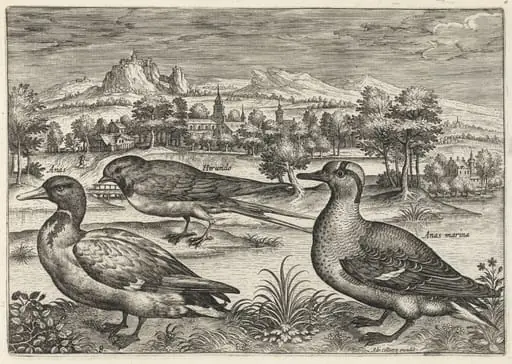
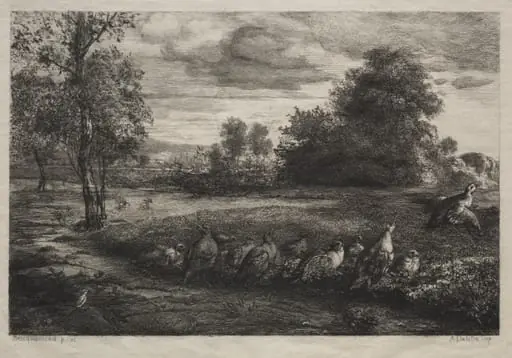
Vanellus, The Lapwing is an etching on laid paper created by Flemish artist Albert Flamen in 1644. The print captures a serene wetland scene, featuring lapwings in various states of movement amidst a detailed natural environment.
Subject & Meaning
The subject of the etching is the lapwing, a wading bird, depicted in a habitat of tall reeds, bushes, and a small stream. The birds are shown both in flight and on the ground, conveying a sense of alertness and natural behavior.
Technique & Style
Flamen employed fine, detailed linework, characteristic of his illustrative style, to render textures such as feathers and water ripples. The etching technique, involving acid-etched metal plates, was well-suited to achieve these intricate details.
History & Provenance
Created in 1644, Vanellus, The Lapwing is a product of Flamen's time in Paris, where he worked primarily as an illustrator for publications. Specific provenance details are not provided.
Context
As a Flemish artist in Paris, Flamen's work reflects the cross-cultural exchange of artistic techniques during the 17th century. The etching aligns with the period's interest in detailed, realistic illustrations of natural subjects.
Legacy
While specific legacy details of Vanellus, The Lapwing are not provided, it contributes to the broader understanding of 17th-century etching techniques and the illustrative work of Flemish artists in Paris during that era.
Artist & collection
Artist
Albert Flamen (c. 1620 – after 1669) was a Flemish engraver, painter, and tapestry designer. He was active in Paris, where he worked mainly as an illustrator on numerous publications.