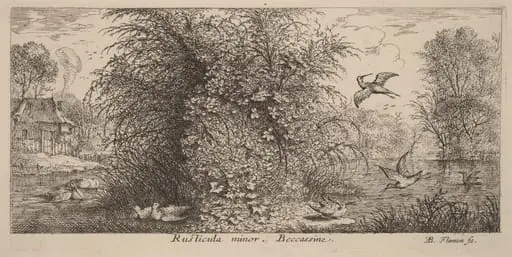
Artwork
Rusticula, The Woodcock
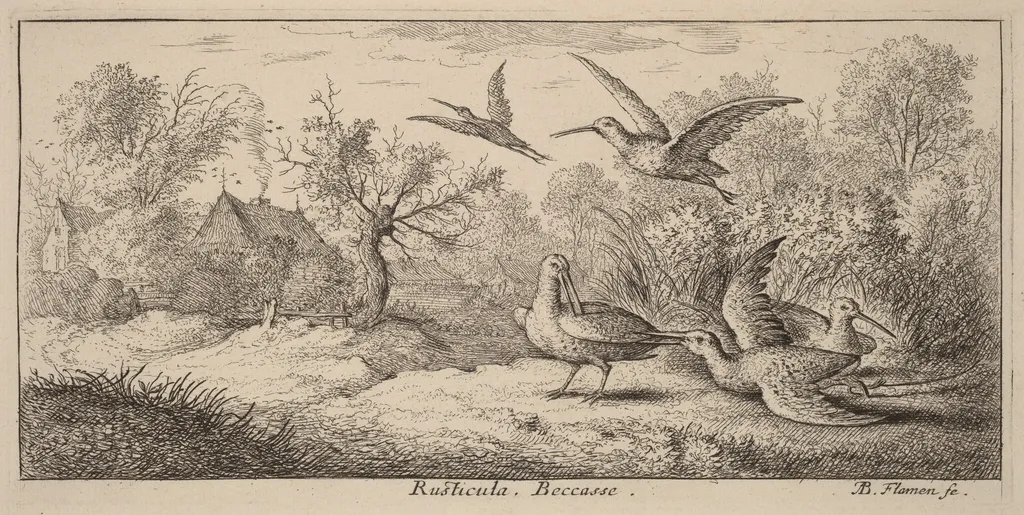
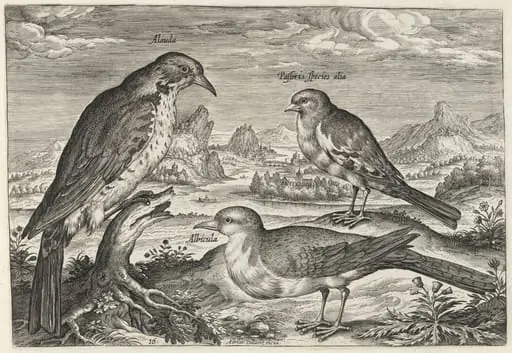
Rusticula, The Woodcock is an ink print by the Baroque artist Albert Flamen. It dates from 1644 and is held in the collection of the National Gallery of Art.
About this work
Overview
Rendered in black ink on laid paper, the work captures a solitary woodcock in a quiet wetland setting.
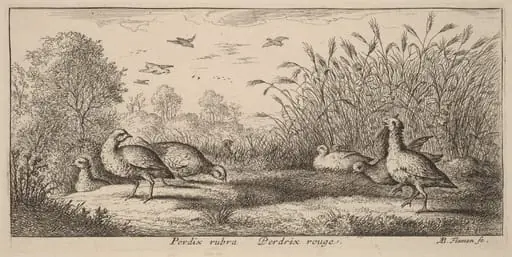
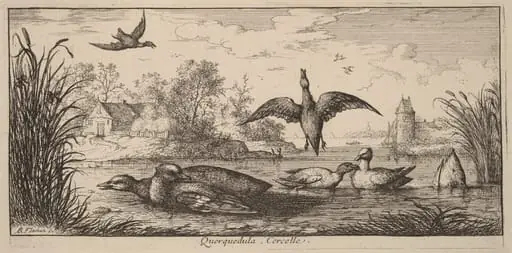
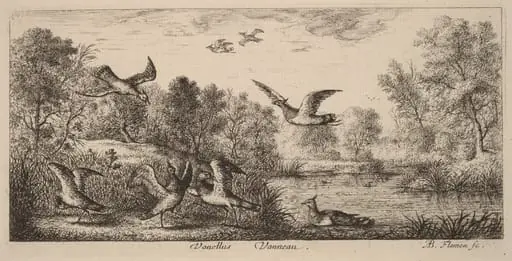
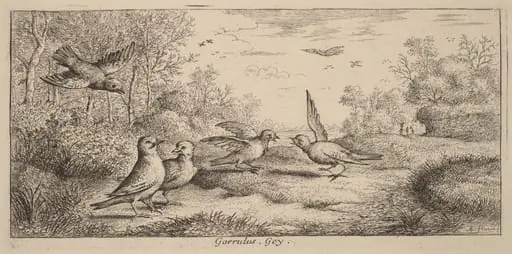
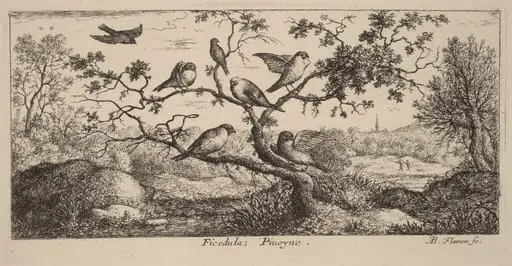
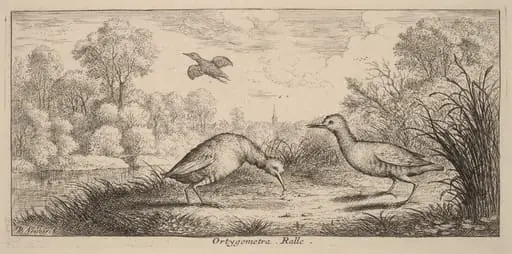
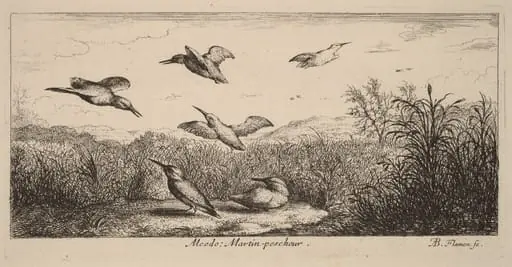
Albert Flamen, a Flemish artist active in Paris during the 1640s, produced this etching as part of a series of naturalistic illustrations for printed publications. Rendered in black ink on laid paper, the work captures a solitary woodcock in a quiet wetland setting. Its precise linework and attention to texture reflect Flamen’s training in both engraving and tapestry design, aligning with the period’s demand for detailed botanical and zoological imagery in illustrated books.
Subject & Meaning
The woodcock, a migratory game bird, is depicted in a moment of stillness, its long beak lowered as if probing the mud for food. Two other birds glide above a modest hut and sparse trees, suggesting a rural, unpopulated landscape. The scene avoids symbolism or narrative, instead presenting the bird as a subject of observation, consistent with 17th-century natural history interests that valued accurate depiction over allegory.
Technique & Style
Flamen employed etching to achieve fine, controlled lines that define each feather, blade of grass, and ripple in the water. The use of laid paper, with its subtle chain lines, enhances the tactile quality of the image. His style is methodical and restrained, avoiding dramatic contrasts in favor of delicate gradations. This precision reflects the influence of Northern European print traditions and the scientific impulse to document nature with fidelity.
History & Provenance
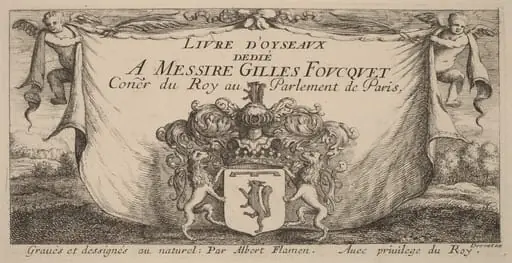
Created in 1644, the print was likely produced for inclusion in a published work on birds or rural life, common in mid-17th-century Parisian publishing. Flamen’s illustrations were distributed through booksellers and collectors, though the original volume containing this plate has not been definitively identified. The print survives in a limited number of impressions, preserved in institutional collections focused on early modern natural history imagery.
Context
During the Baroque era, detailed natural studies gained popularity among scholars and collectors, supported by advances in printing technology. Flamen’s work fits within a broader trend of artists contributing to illustrated encyclopedias and field guides. His focus on birds and wetland environments mirrors contemporary European efforts to classify and understand the natural world, often driven by curiosity rather than religious or mythological frameworks.
Legacy
Flamen’s etchings, including this one, are now valued as historical records of 17th-century ornithological observation and printmaking technique. While not widely known today, his work contributed to the visual language of natural history illustration, influencing later artists who sought to combine scientific accuracy with aesthetic restraint. The print remains a quiet example of how print culture bridged art and empirical study in early modern Europe.
Artist & collection
Artist
Albert Flamen (c. 1620 – after 1669) was a Flemish engraver, painter, and tapestry designer. He was active in Paris, where he worked mainly as an illustrator on numerous publications.