Artwork
Adult and Two Children
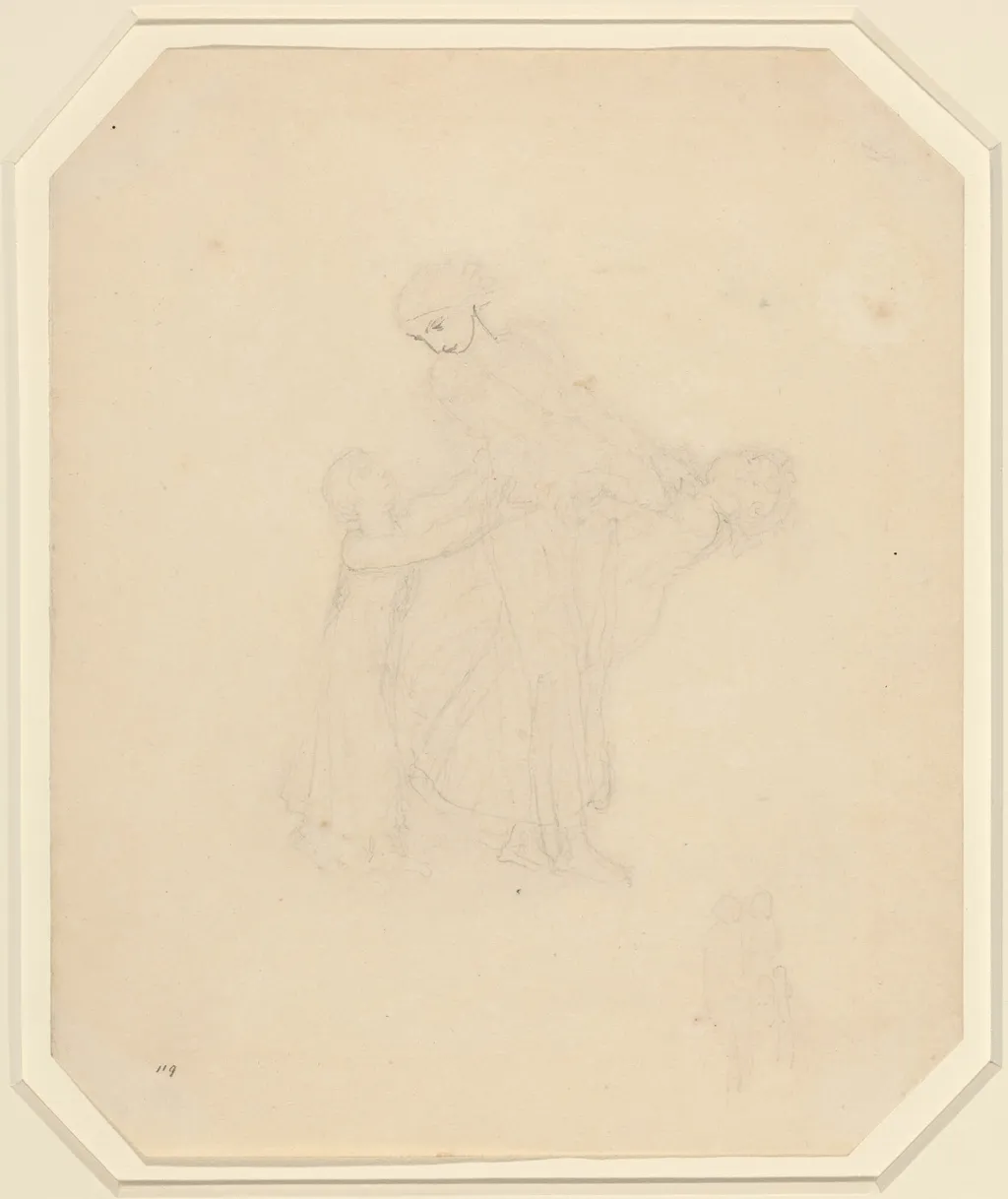
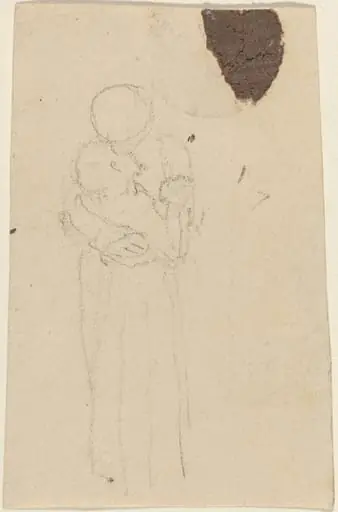
Adult and Two Children is a graphite drawing by the Romanticist artist John Flaxman. It dates from 1790 and is held in the collection of the National Gallery of Art.
About this work
Overview
It belongs to a body of work that reflects his deep immersion in Neoclassical ideals, prioritizing clarity and formal economy.
Created in 1790, this drawing by John Flaxman combines graphite with pen and gray ink to form a quiet, linear composition. It belongs to a body of work that reflects his deep immersion in Neoclassical ideals, prioritizing clarity and formal economy. Though primarily known as a sculptor, Flaxman’s drawings were central to his artistic practice, serving as studies and independent works that bridged design and finished sculpture.
Subject & Meaning
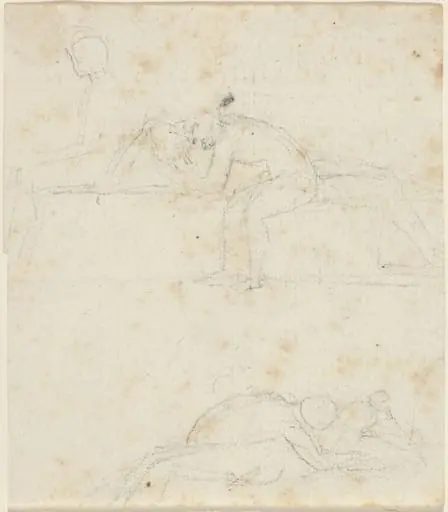
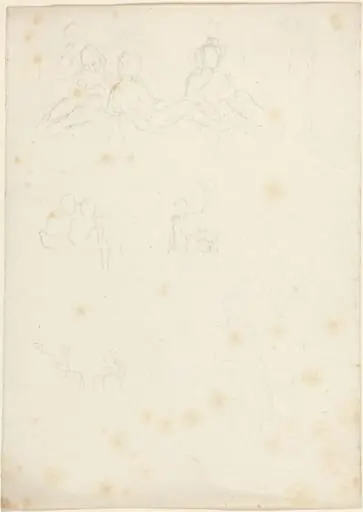
The drawing depicts an adult figure flanked by two children, rendered without narrative detail or emotional flourish. The figures are arranged in a balanced, almost sculptural grouping, suggesting familial or protective bonds. Flaxman avoids theatricality, instead focusing on universal human forms, aligning with Neoclassical interests in timeless, idealized relationships rather than specific stories.
Technique & Style
Flaxman employs precise, unmodulated lines to define form, relying on contour rather than shading to suggest volume. The use of graphite and gray ink creates a tonal harmony, while the pen work maintains a disciplined, almost architectural precision. His style, refined during years of illustrating classical texts, favors clarity and restraint, minimizing texture and atmospheric effect.
History & Provenance
Executed during Flaxman’s mature period, the drawing stems from his time in Rome, where exposure to ancient art and Renaissance draftsmanship profoundly influenced his approach. Though its early ownership is undocumented, it aligns with a larger group of his graphic works that circulated among collectors and patrons interested in Neoclassical aesthetics, particularly those connected to Wedgwood and literary circles.
Context
In late 18th-century Britain, Flaxman stood at the intersection of industrial design, literary illustration, and fine art. His drawings, including this one, were part of a broader revival of classical forms, supported by Enlightenment ideals and the growing interest in antiquity. Unlike contemporaries who emphasized color or drama, Flaxman’s linear style offered a quiet alternative rooted in intellectual discipline.
Legacy
Flaxman’s drawings, including this work, helped define a visual language for Neoclassicism in Britain and beyond. His emphasis on line over color influenced generations of illustrators and sculptors, particularly in the design of funerary monuments and book engravings. Though less celebrated than his sculptures, his graphic work remains a vital record of how classical ideals were translated into intimate, personal compositions.
Artist & collection
Artist
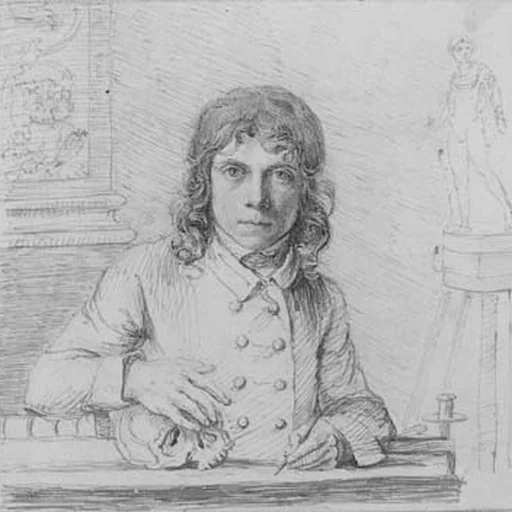
John Flaxman (6 July 1755 – 7 December 1826) was an English sculptor and draughtsman who was a leading figure in British and European Neoclassicism.

 Two Figures Embracing
 Woman Patting a Dog
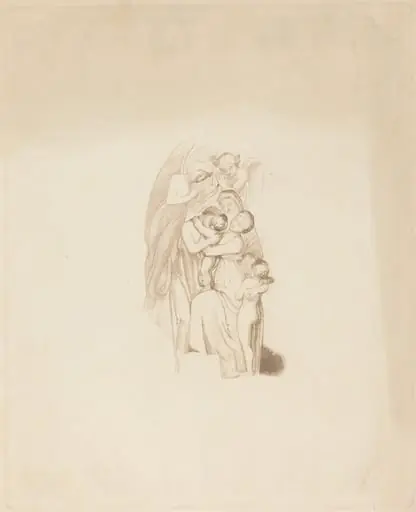 Holy Family? with Angels
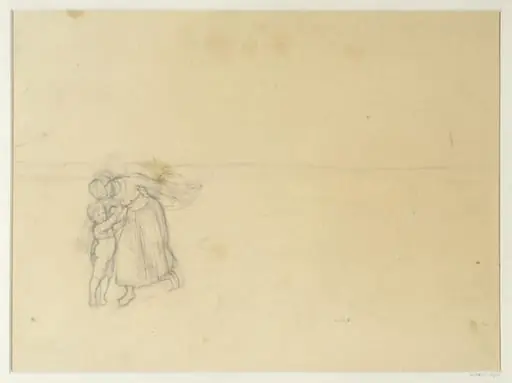 The Right of Way
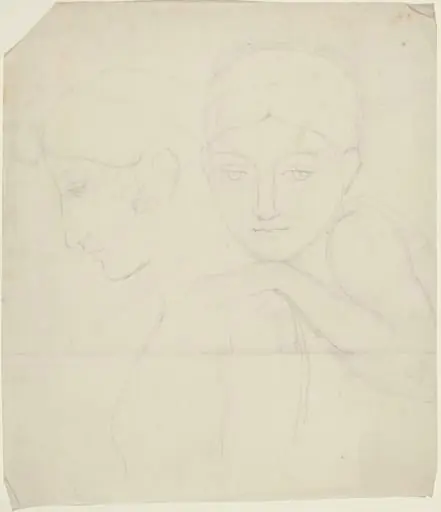 Two Women's Heads
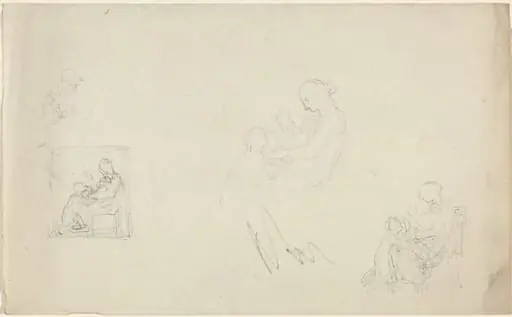 Four Studies of a Seated Woman with Children at Her Feet (Sketches for the Monument to Lady FitzHarris?)
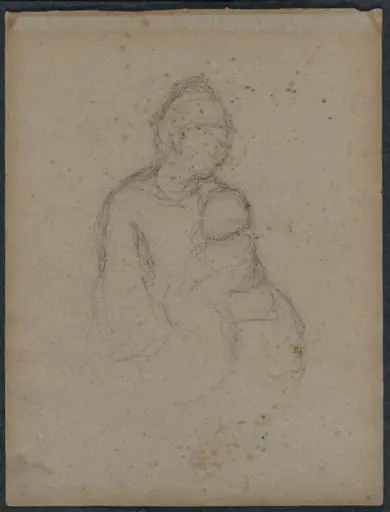 Mother and Child (recto)
![The Fitting [verso], by Mary Cassatt](https://artifactworldgallery.com/img/mary-cassatt--the-fitting-verso--4cb02e56cd7f05bd-w320.webp) The Fitting [verso]
The Fitting [verso]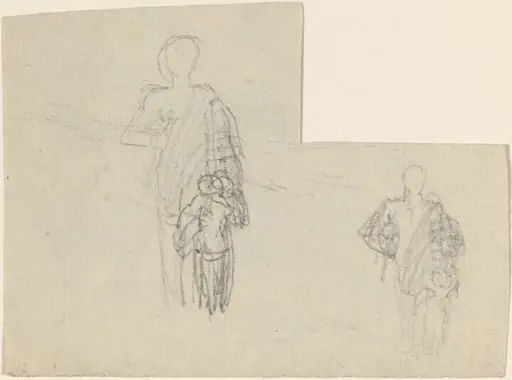 Two Studies of Standing Figure and Child
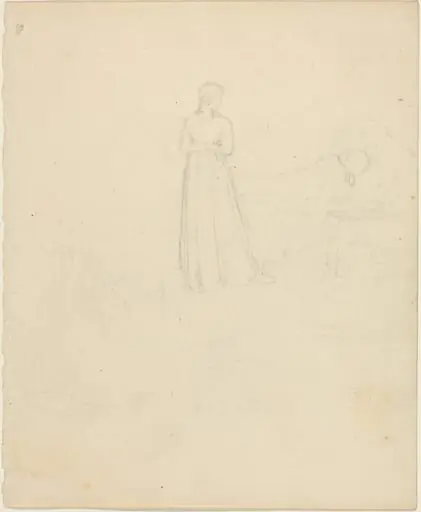 Standing Female Figure Looking at Reclining and Seated Figures