Artwork
Two Women's Heads
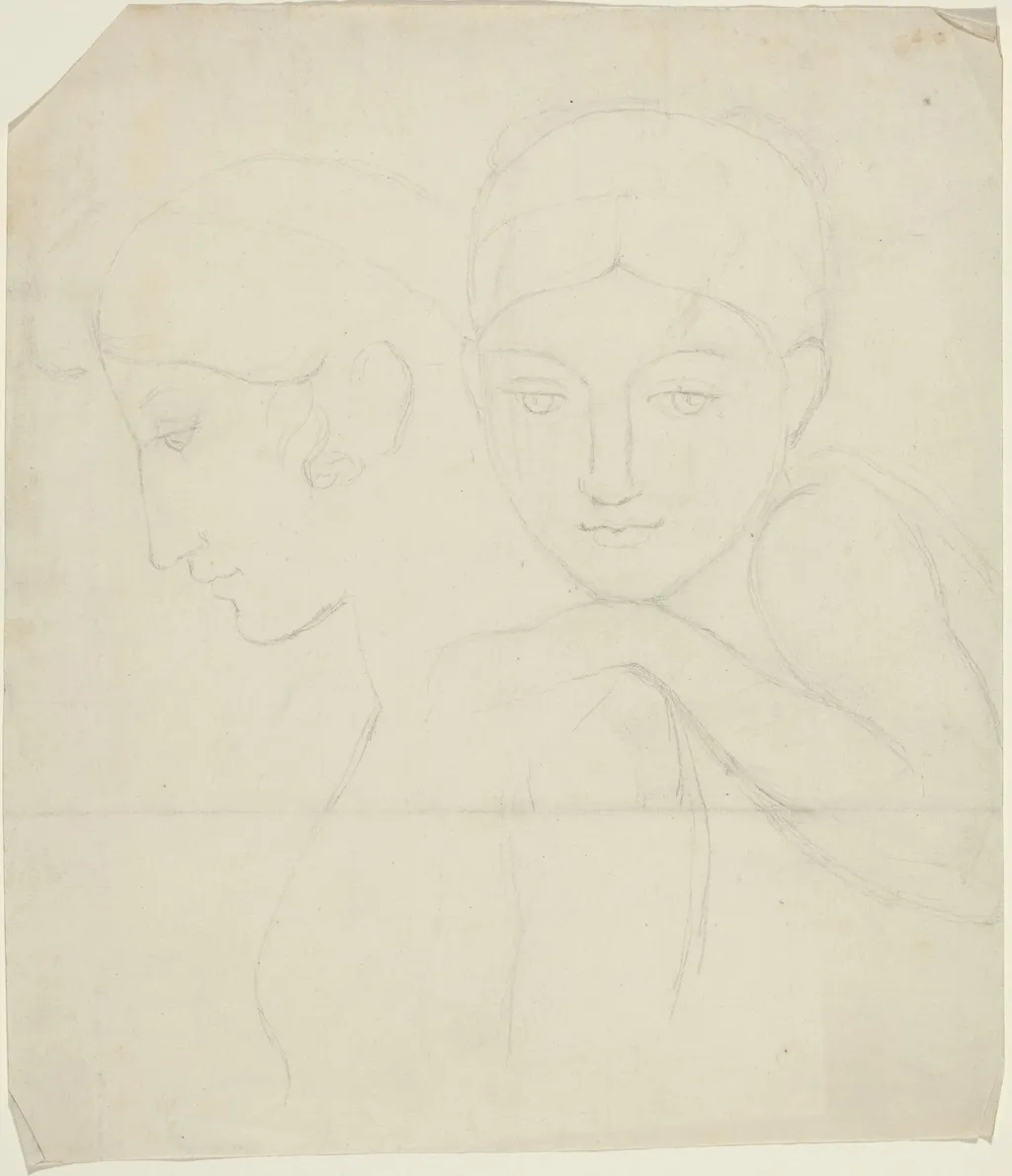
Two Women's Heads is a graphite drawing by the Romanticist artist John Flaxman. It dates from 1790 and is held in the collection of the National Gallery of Art.
About this work
Overview
John Flaxman’s drawing *Two Women’s Heads* is executed in graphite on laid paper and dates to around 1790. The work presents a study of two nude female heads positioned in dialogue, rendered with restrained line work that emphasizes form over detail.
Subject & Meaning
The composition features one profile view and one slightly turned forward, the heads meeting eye‑to‑eye. The simplicity of the lines suggests a focus on the basic contours of hair, face, and neck, inviting contemplation of classical ideals of beauty and proportion.
Technique & Style
Flaxman employs a light, economical graphite stroke, allowing the texture of the laid paper to remain visible. The drawing exemplifies the Neoclassical preference for clarity and order, using minimal shading to define volume while maintaining a sense of restraint.
History & Provenance
Created during a prolific period when Flaxman was producing funerary monuments and book illustrations, the piece reflects his training in Wedgwood’s pottery workshops and his subsequent development in Rome. It is now part of the collection of the National Gallery of Art in Washington.
Context
The work aligns with the broader Neoclassical movement of the late 18th century, which sought to revive the aesthetic principles of antiquity. Flaxman’s drawing demonstrates his engagement with these ideals through a disciplined approach to line and form.
Artist & collection
Artist
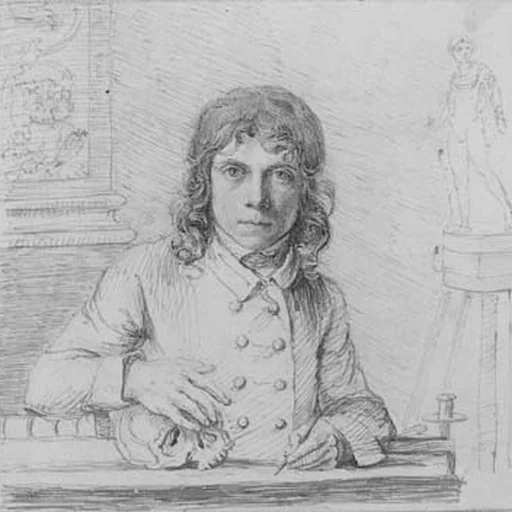
John Flaxman (6 July 1755 – 7 December 1826) was an English sculptor and draughtsman who was a leading figure in British and European Neoclassicism.

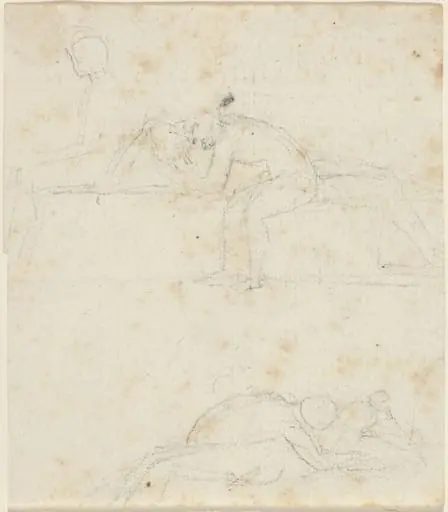
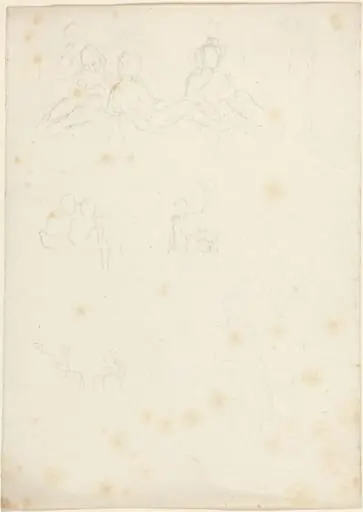
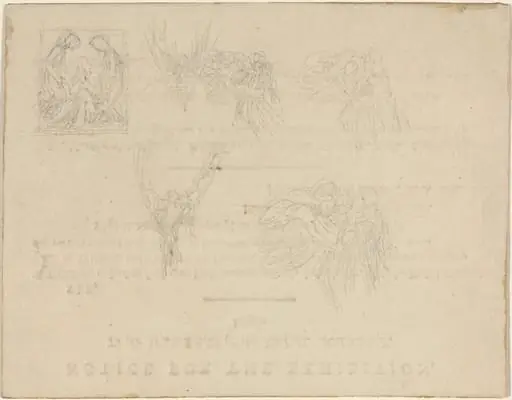
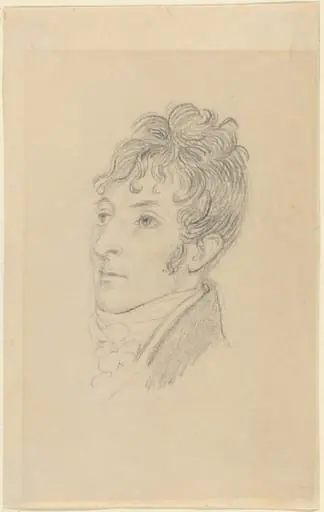
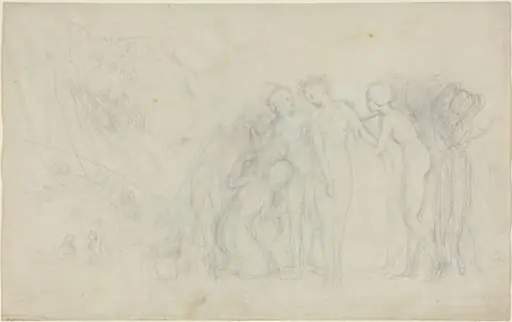
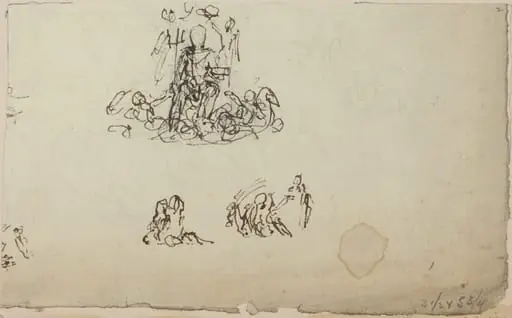
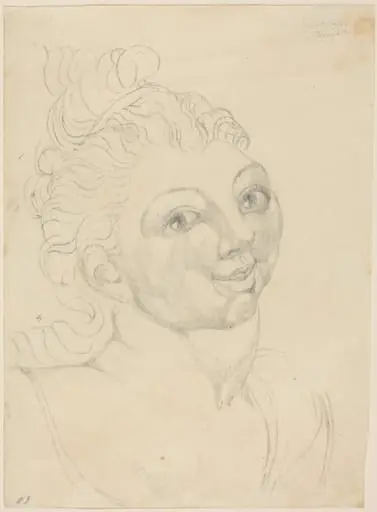 Wat Tyler's Daughter
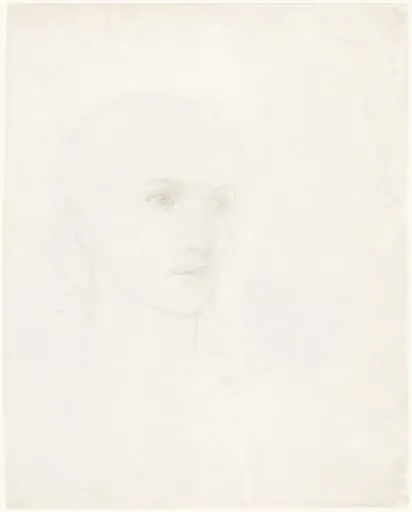 Head of a Woman
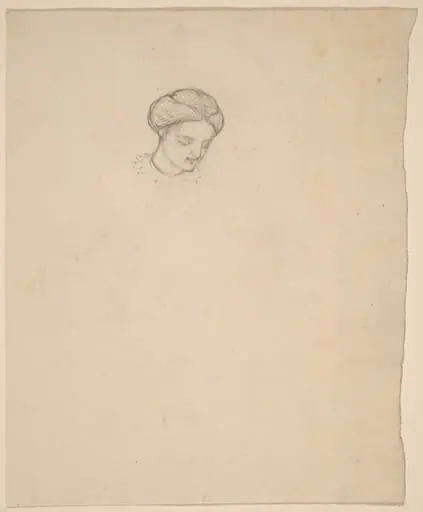 Study of a Girl's Head
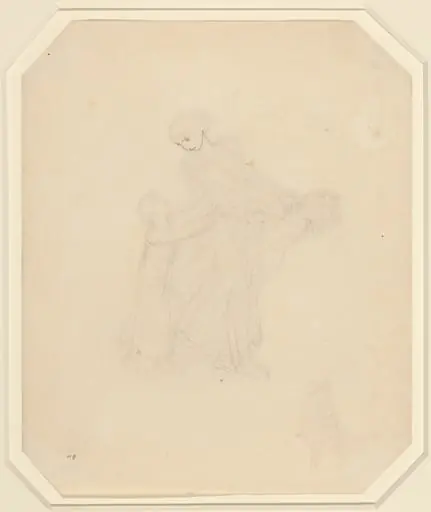 Adult and Two Children
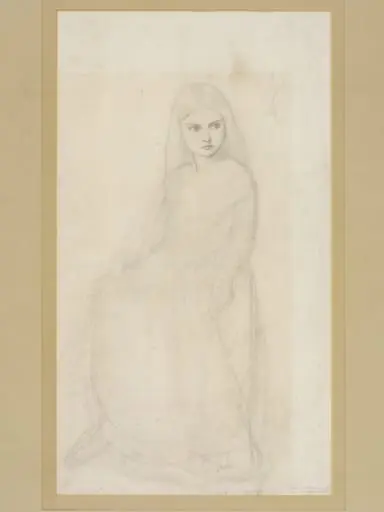 Drawing of a dancing girl: study for 'The Borgia Family', a watercolour at Tullie House Museum, Carlisle
![The Fitting [verso], by Mary Cassatt](https://artifactworldgallery.com/img/mary-cassatt--the-fitting-verso--4cb02e56cd7f05bd-w320.webp) The Fitting [verso]
The Fitting [verso]![Sheet of Studies, including Warrior with Child [recto and verso], by John Flaxman](https://artifactworldgallery.com/img/john-flaxman--sheet-of-studies-including-warrior-with-child-recto-and-vers--5c5dd1ec083169b5-w320.webp) Sheet of Studies, including Warrior with Child [recto and verso]
Sheet of Studies, including Warrior with Child [recto and verso]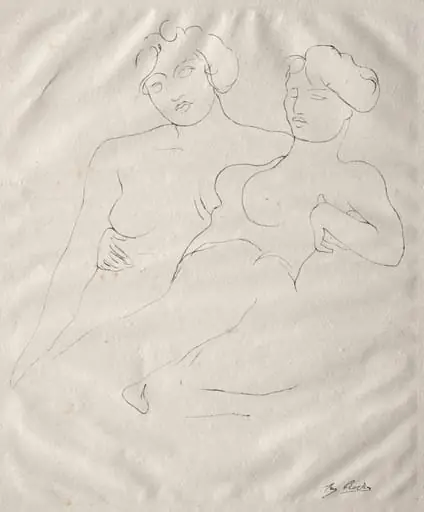 Two Figures
![Standing Figure [verso], by James McNeill Whistler](https://artifactworldgallery.com/img/james-mcneill-whistler--standing-figure-verso--3089b1e67635ba44-w320.webp) Standing Figure [verso]
Standing Figure [verso]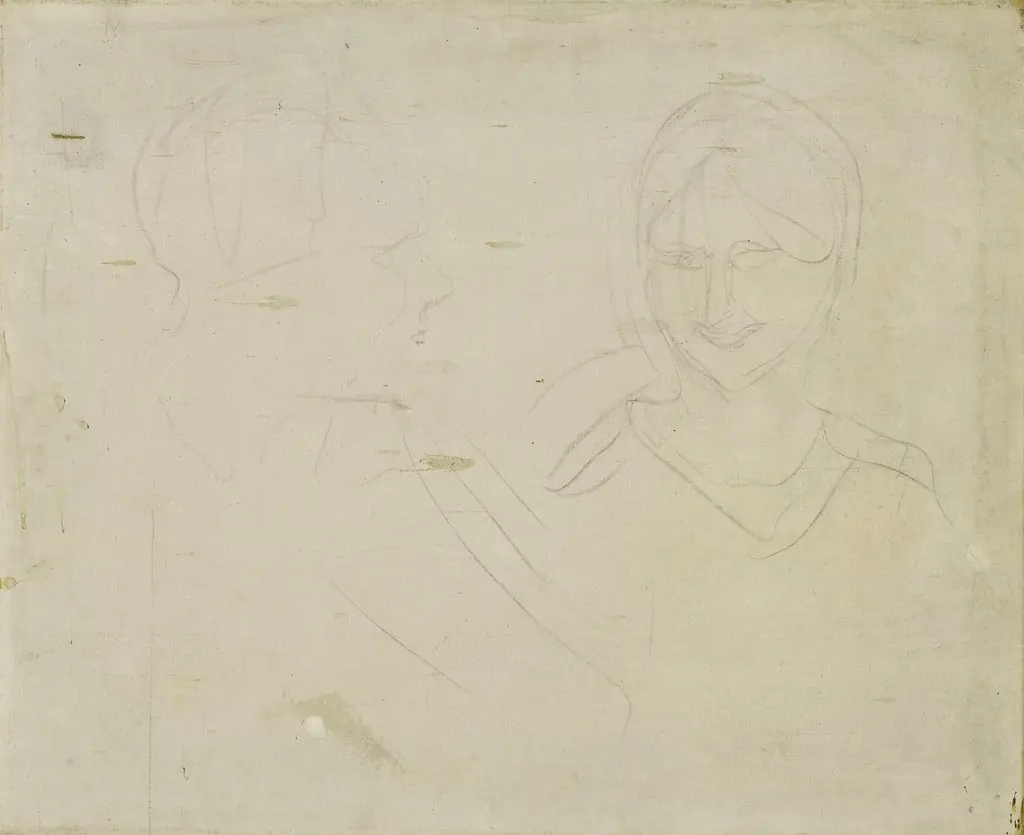 Two Heads