Artwork
Group of Figures
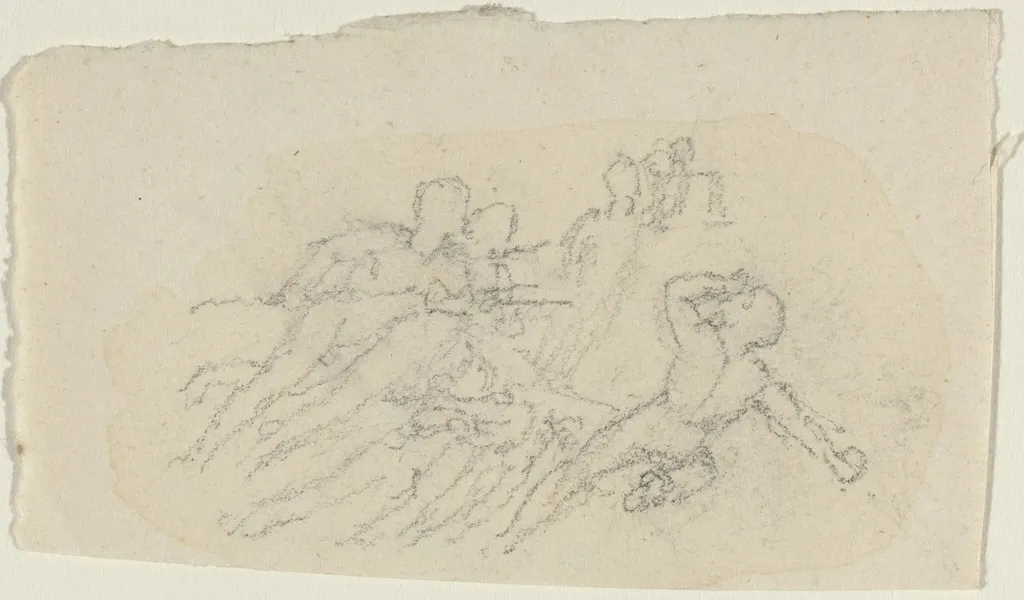
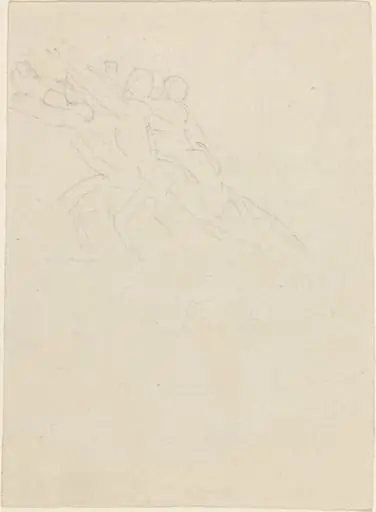
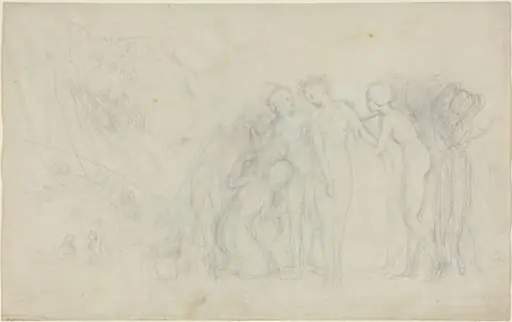
Group of Figures is a graphite drawing by the Romanticist artist John Flaxman. It dates from 1790 and is held in the collection of the National Gallery of Art.
About this work
Overview
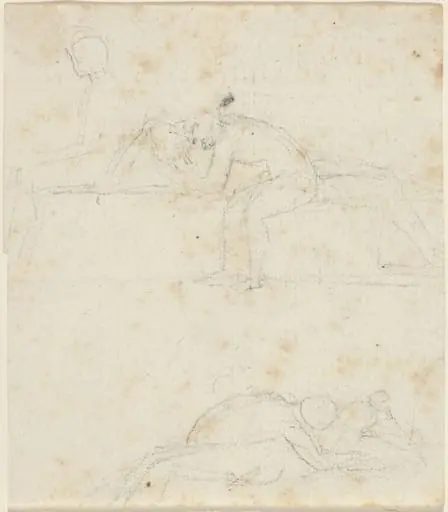
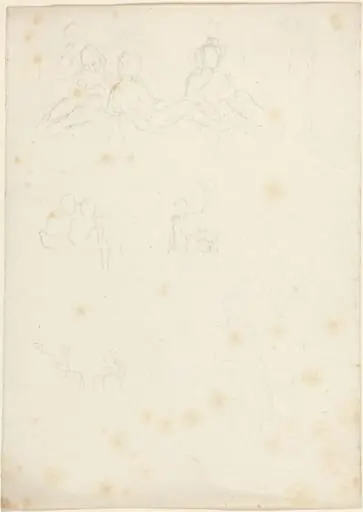
Created in 1790, this graphite drawing by John Flaxman captures a cluster of human forms in a spontaneous, unpolished manner.
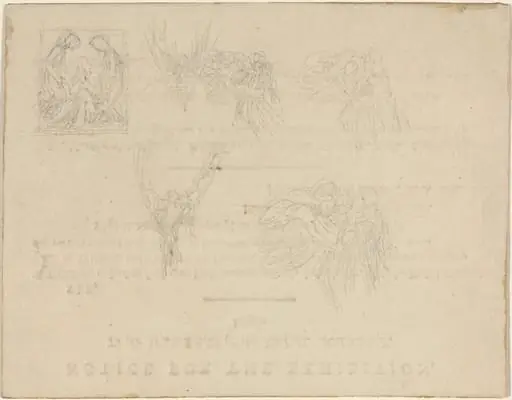
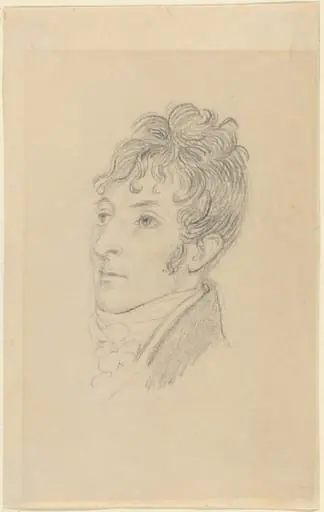
Created in 1790, this graphite drawing by John Flaxman captures a cluster of human forms in a spontaneous, unpolished manner. Unlike his finished illustrations or sculptural designs, this work appears as a rapid study, its light, uneven lines suggesting immediate observation rather than deliberate composition. The paper shows signs of age and wear, with faint smudges indicating handling over time.
Subject & Meaning
The figures are arranged in a loosely grouped, almost chaotic composition—some standing, others seated or intertwined—without clear narrative or hierarchy. Their lack of individualization and minimal detail suggests an interest in collective human presence rather than specific identities. The drawing may reflect Flaxman’s exploration of gesture and posture, possibly as preparatory material for larger projects.
Technique & Style
Flaxman employed graphite with a light, fluid touch, using thin, sketchy lines that avoid shading or modeling. The absence of heavy contours or tonal variation aligns with his Neoclassical preference for clarity and linearity. The sketch’s unfinished quality reveals his process: drawing as a tool for inquiry, not just presentation, emphasizing form through economy of mark.
History & Provenance
This drawing originates from a period when Flaxman was deeply engaged in illustrating literary texts and designing funerary monuments. It likely stems from his time in Rome, where exposure to classical sculpture and architecture refined his linear aesthetic. Its survival as a working sketch, rather than a completed piece, offers insight into his private artistic practice.
Context
In the 1790s, Flaxman’s work bridged Enlightenment ideals and emerging Romantic sensibilities. While his published illustrations adhered to classical order, private sketches like this one reveal a more fluid, expressive approach. The drawing’s informality contrasts with the rigid symmetry of his public commissions, hinting at the emotional undercurrents that would later define Romantic art.
Legacy
Though not exhibited in his lifetime as a finished work, this sketch exemplifies Flaxman’s influence on the revival of linear draftsmanship in British art. Its emphasis on contour over volume anticipated later 19th-century drawing practices. As a record of artistic process, it remains a valuable document of how Neoclassical ideals were tested and adapted in private study.
Artist & collection
Artist
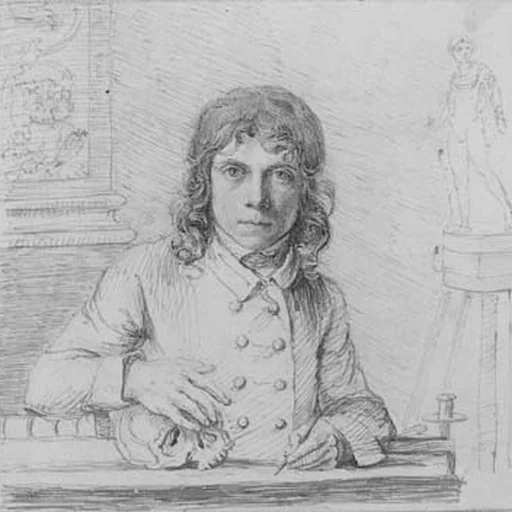
John Flaxman (6 July 1755 – 7 December 1826) was an English sculptor and draughtsman who was a leading figure in British and European Neoclassicism.

![Sheet of Studies [recto and verso], by John Flaxman](https://artifactworldgallery.com/img/john-flaxman--sheet-of-studies-recto-and-verso--6fd1500085ec614c-w320.webp)