Artwork
Portrait of a Woman
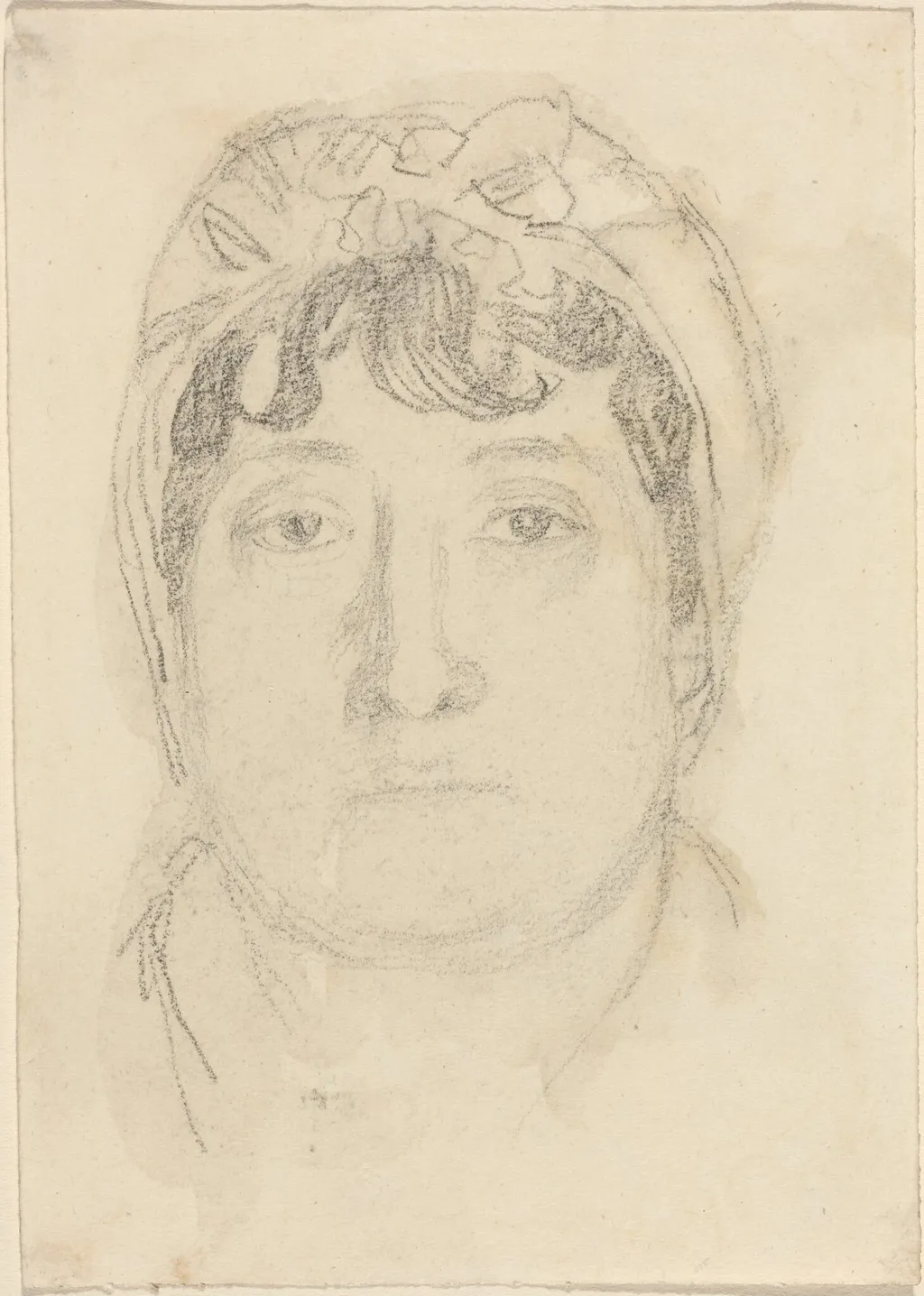
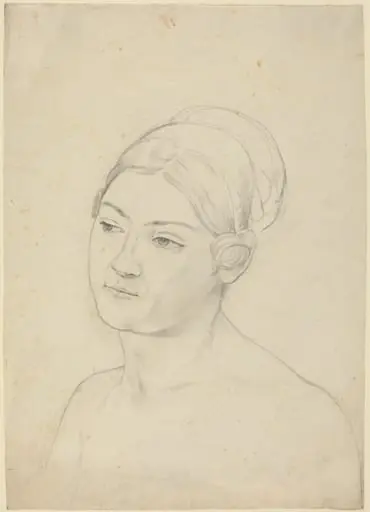
Portrait of a Woman is a graphite drawing by the Romanticist artist John Flaxman. It dates from 1790 and is held in the collection of the National Gallery of Art.
About this work
Overview
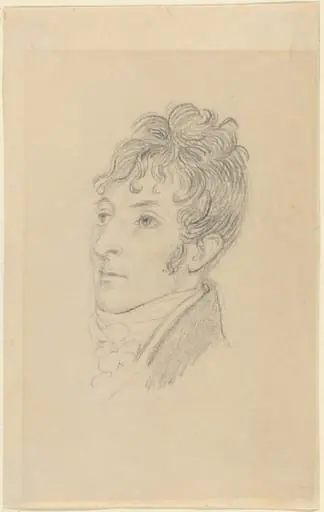
Created in 1790, this graphite drawing by John Flaxman presents a quiet, unadorned portrait of a woman. As a sculptor and draftsman central to British Neoclassicism, Flaxman employed minimal means to capture presence rather than ornament. The work reflects his training in linear precision and his commitment to understated form, characteristic of his broader artistic philosophy.
Subject & Meaning
The subject is a woman depicted with stillness and dignity, her head turned slightly, gaze direct. Her head is covered by a simple cloth, suggesting modesty or domestic life rather than aristocratic display. The absence of decorative detail or contextual cues shifts focus to her expression, inviting contemplation rather than narrative interpretation.
Technique & Style
Flaxman used graphite to achieve subtle tonal gradations with delicate, controlled lines. The drawing avoids heavy shading or dramatic contrast, instead relying on soft contours to define form. This restrained approach aligns with Neoclassical ideals of clarity and emotional restraint, emphasizing structure over sentiment.
History & Provenance
Flaxman, initially known for his work with Josiah Wedgwood’s pottery, developed his draftsmanship during extended stays in Rome, where he studied classical sculpture and antiquities. This portrait likely emerged from that period of refinement, though its specific commission or subject remains undocumented. It survives as part of his extensive body of graphic work.
Context
In late 18th-century Britain, Neoclassicism dominated visual culture, favoring rational form and classical ideals. Flaxman’s drawings, including this portrait, responded to a broader cultural turn toward simplicity and moral clarity. While contemporaries pursued grand historical themes, he found power in intimate, unembellished observation.
Legacy
Flaxman’s graphite portraits influenced later generations of British draftsmen by demonstrating how emotional depth could be conveyed through minimal means. Though not widely exhibited in his lifetime, his drawings became foundational to the study of linear drawing in academic training, shaping how simplicity was valued in portraiture.
Artist & collection
Artist
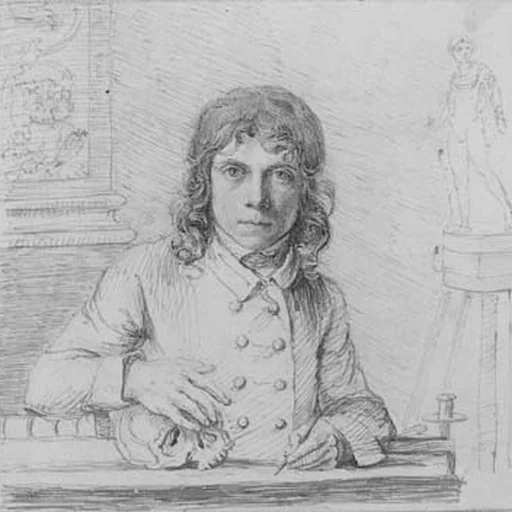
John Flaxman (6 July 1755 – 7 December 1826) was an English sculptor and draughtsman who was a leading figure in British and European Neoclassicism.

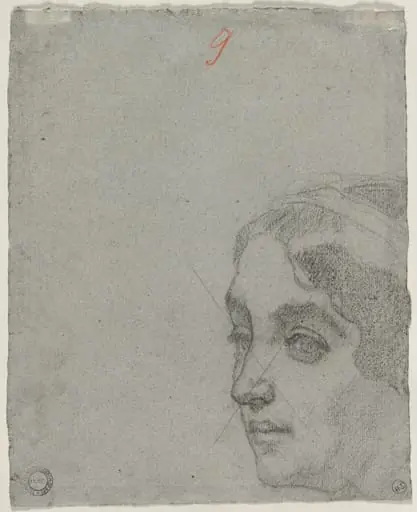 Head of a Woman (verso)
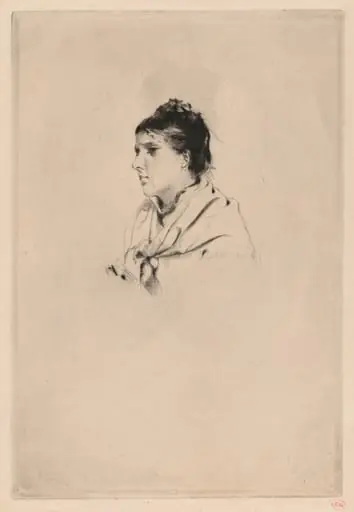 Bust of an Italian Woman
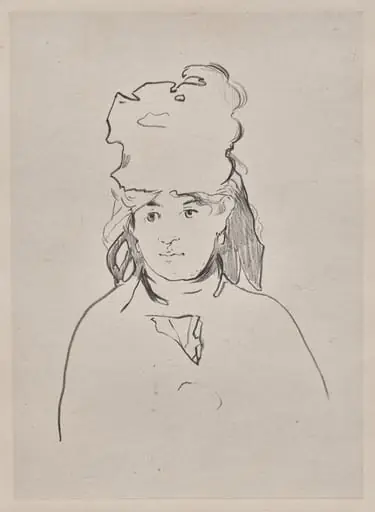 Berthe Morisot in Silhouette
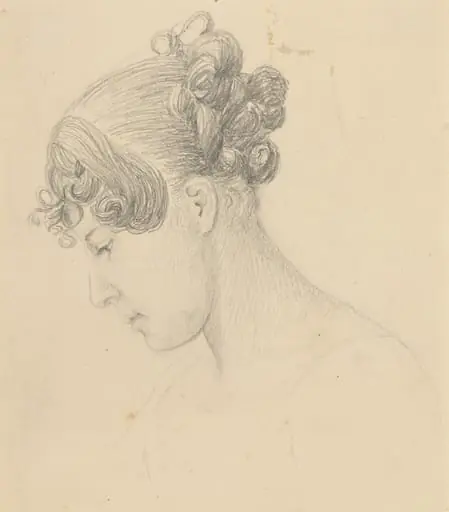 Head of a Woman Looking Down (Theresa Turner?)
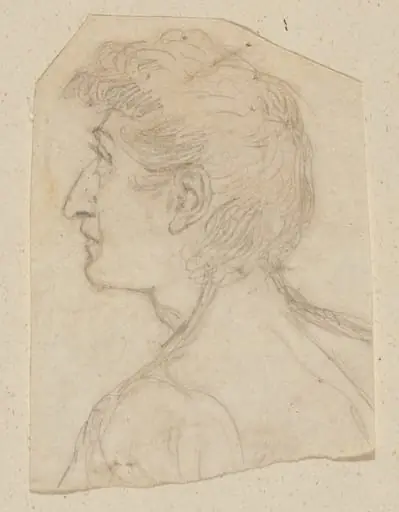 Portrait of a Man
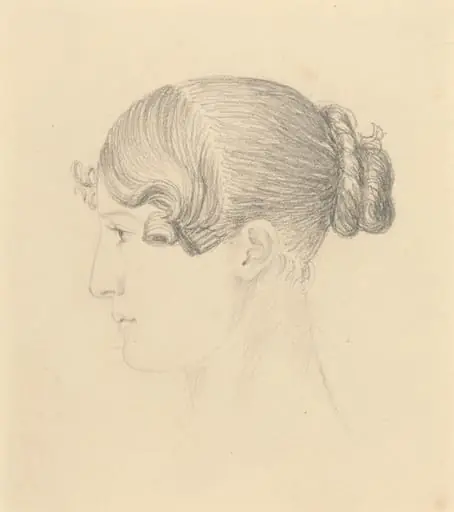 Head of a Woman (Theresa Turner?)
 Head of a Young Woman
 Krankenschwester (Nurse)
 Frauenbildnis (Portrait of a Woman)
 Unfinished Sketch of Lady Haden
 Berthe Morisot
 Etude
Etude