Artwork
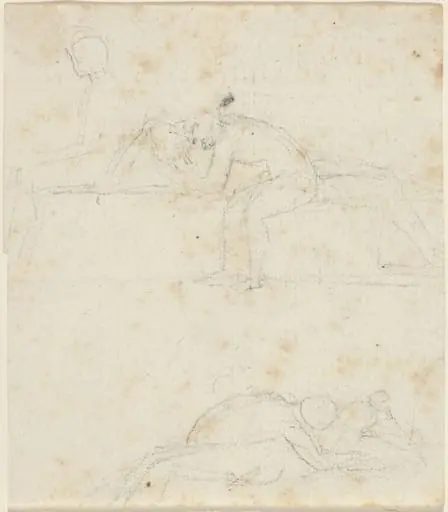
Studies of a Kneeling Boy
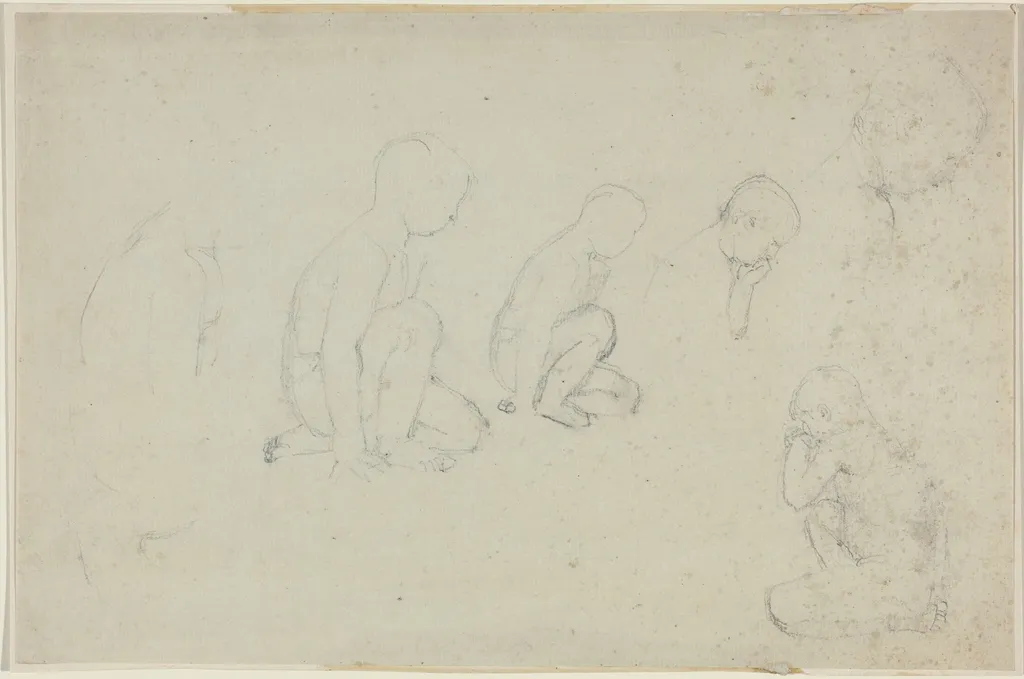
Studies of a Kneeling Boy is a graphite drawing by the Romanticist artist John Flaxman. It dates from 1790 and is held in the collection of the National Gallery of Art.
About this work
Overview
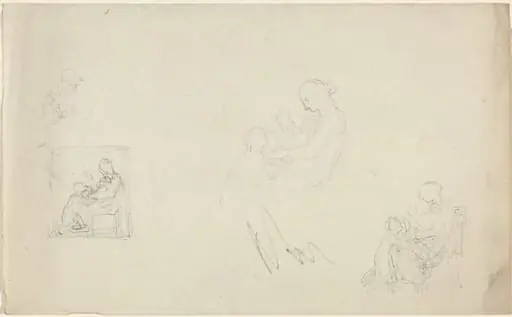
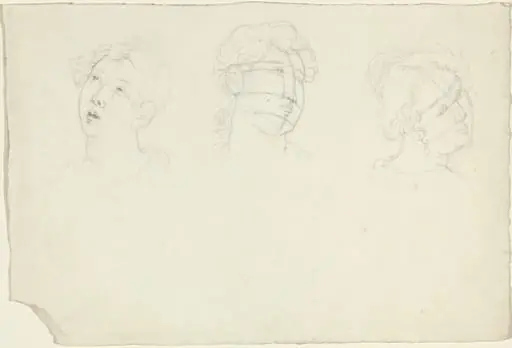
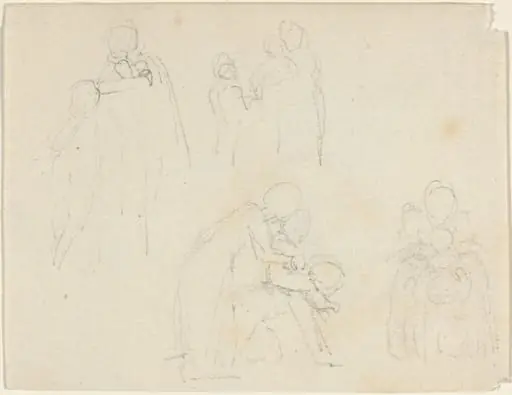
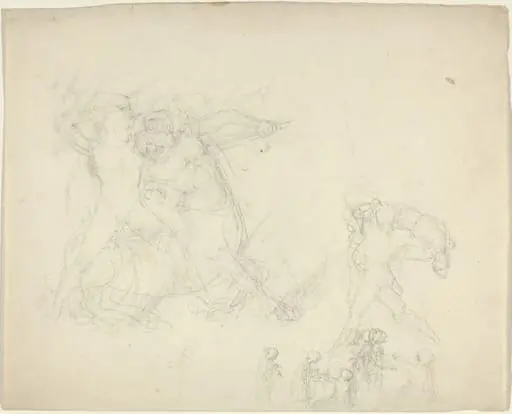
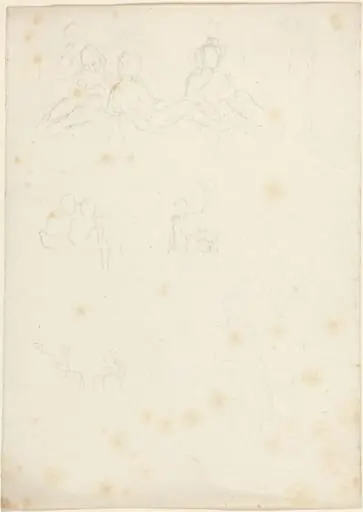
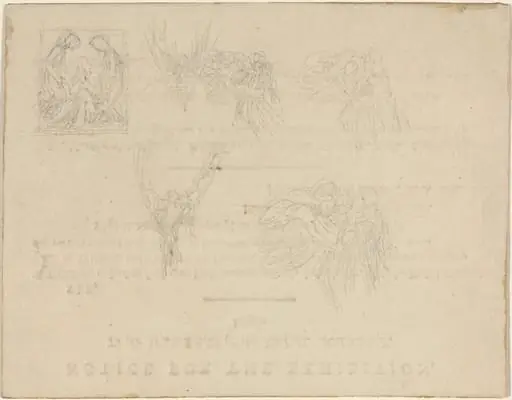
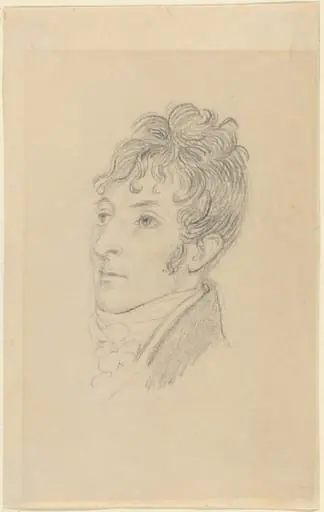
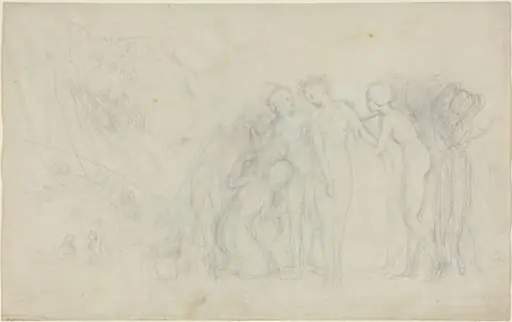
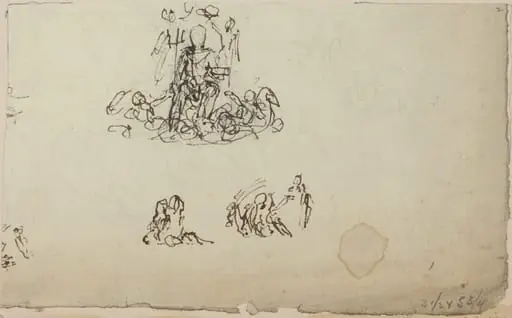
Created in 1790, *Studies of a Kneeling Boy* is a graphite drawing by English artist John Flaxman. The work consists of four small, rapidly executed sketches that explore a single pose of a young male figure kneeling with his arms folded on his legs. The drawings are not finished compositions but rather exercises in capturing posture and movement.
Subject & Meaning
Each study isolates the kneeling stance, emphasizing the balance of weight and the subtle shift of the torso. The absence of background or narrative elements suggests the artist’s focus on anatomical observation rather than storytelling, using the figure as a vehicle for practicing proportion and gesture.
Technique & Style
Executed with graphite on light paper, the marks are loose and faint, revealing an exploratory approach. Flaxman’s characteristic linear precision appears in the careful delineation of the limbs, while the overall handling remains sketchy, reflecting a quick, preparatory method rather than a polished finish.
History & Provenance
Flaxman, trained initially as a modeller for Josiah Wedgwood before studying in Rome, produced this drawing during his early career when he was refining the figurative skills that later informed his renowned neoclassical sculptures and funerary monuments. The work remains a testament to his developmental process as a draughtsman.
Artist & collection
Artist
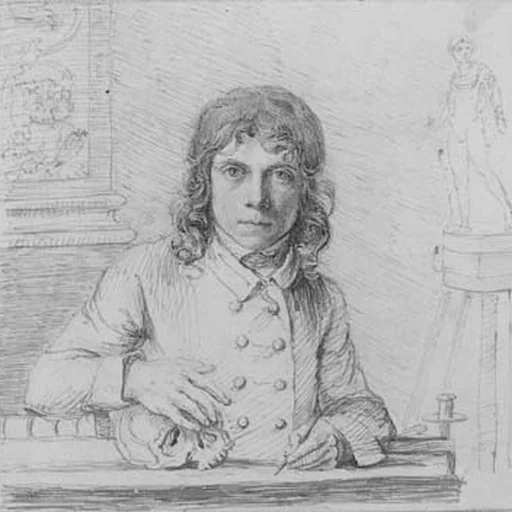
John Flaxman (6 July 1755 – 7 December 1826) was an English sculptor and draughtsman who was a leading figure in British and European Neoclassicism.

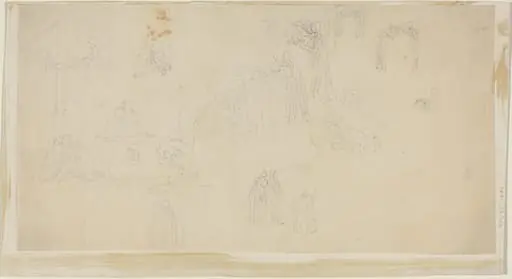
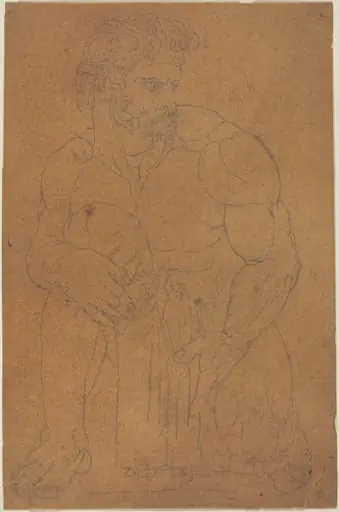
![Sheet of Studies [recto and verso], by John Flaxman](https://artifactworldgallery.com/img/john-flaxman--sheet-of-studies-recto-and-verso--37ffe1e79b52e688-w320.webp)