Artwork
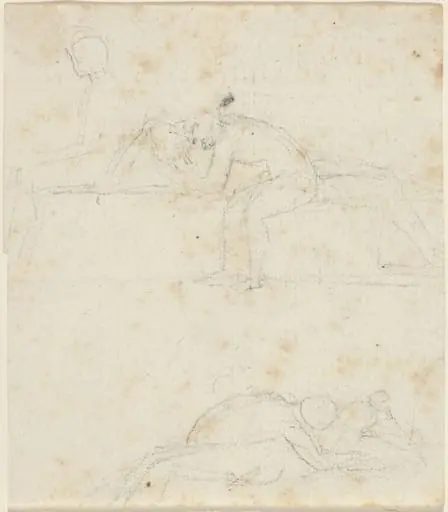
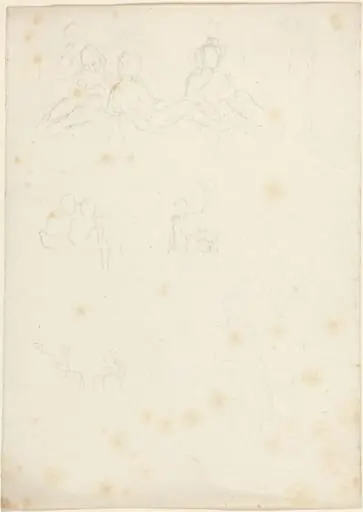
Studies of Women Kneeling
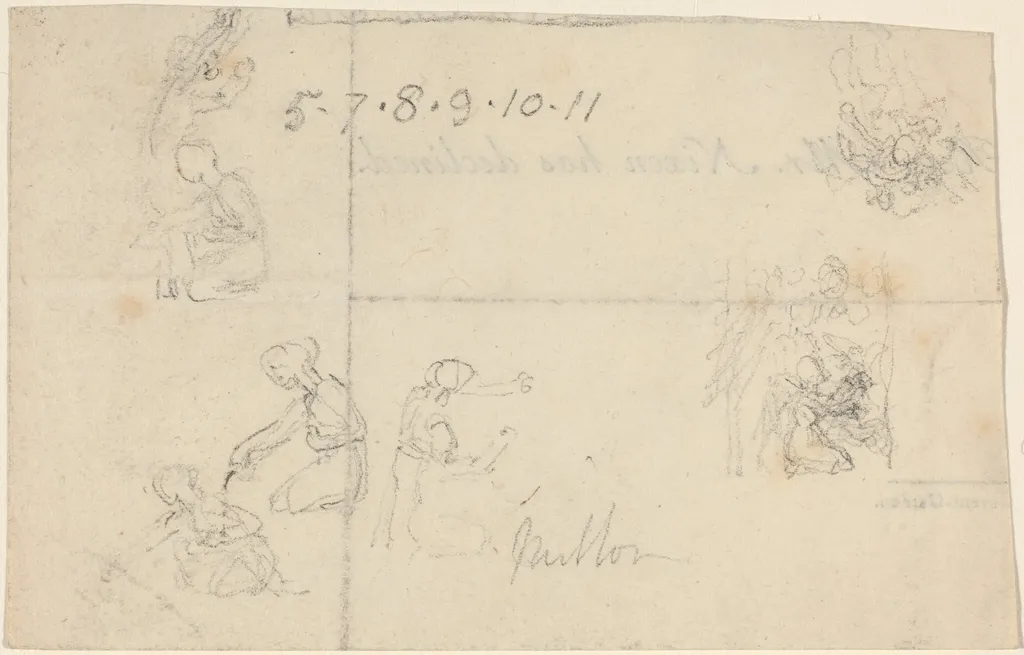
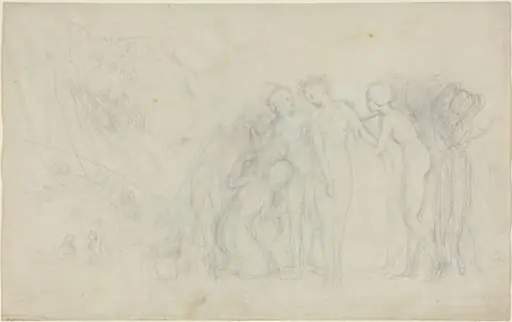
Studies of Women Kneeling is a graphite drawing by the Romanticist artist John Flaxman. It dates from 1790 and is held in the collection of the National Gallery of Art.
About this work
Overview
The work belongs to his early graphic phase, prior to his better-known monuments and illustrated books.
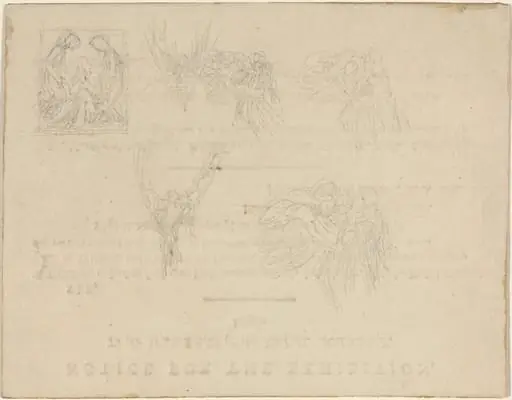
Created around 1790, this graphite drawing by John Flaxman consists of multiple studies of women in kneeling poses, executed on the reverse side of a printed sheet. The work belongs to his early graphic phase, prior to his better-known monuments and illustrated books. The use of wove paper and the presence of a faint grid suggest a methodical approach to figure study, typical of an artist refining his understanding of form through repetition and observation.
Subject & Meaning
The figures depict women in varied but related kneeling postures, likely drawn from life or memory rather than mythological narrative. Their quiet, contained gestures reflect Neoclassical ideals of dignity and restraint. No specific identity or story is attached; instead, the focus is on anatomical accuracy and the expressive potential of posture, emphasizing the human form as a vessel of calm solemnity.
Technique & Style
Flaxman employed fine, precise graphite lines to define contours and subtle shifts in weight. The grid on the paper indicates a structured method for proportion and alignment, common in academic training. Variations in detail among the sketches suggest an exploratory process—some figures are fully rendered, others mere outlines—revealing his iterative approach to capturing movement and balance within a single gesture.
History & Provenance
The drawing was likely made during Flaxman’s formative years in England, before his 1787–90 stay in Rome. Its reuse of printed paper reflects the practical habits of artists working with limited materials. Though the original printed text is illegible, its presence confirms the drawing’s function as a working study rather than a finished piece. It remained in private hands until entering a public collection.
Context
Flaxman’s work emerged alongside the rise of Neoclassicism in Britain, influenced by ancient sculpture and the Enlightenment emphasis on rational form. His training with Wedgwood exposed him to classical motifs in applied arts, while his later illustrations for Homer and Dante would cement his reputation. This drawing represents a quieter, more personal phase of his development, focused on foundational figure study rather than narrative illustration.
Legacy
Though not widely exhibited, this sheet exemplifies Flaxman’s disciplined approach to drawing, which underpinned his later success in sculpture and print. The emphasis on linear clarity and anatomical economy became hallmarks of British Neoclassical draftsmanship. Such studies, often overlooked, reveal the labor behind his public works and illustrate how academic training shaped 18th-century artistic practice.
Artist & collection
Artist
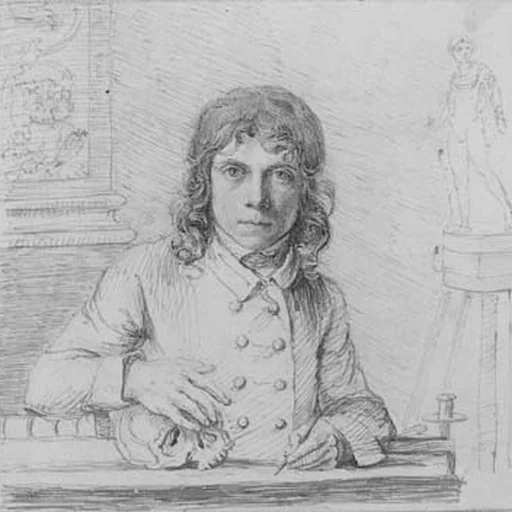
John Flaxman (6 July 1755 – 7 December 1826) was an English sculptor and draughtsman who was a leading figure in British and European Neoclassicism.

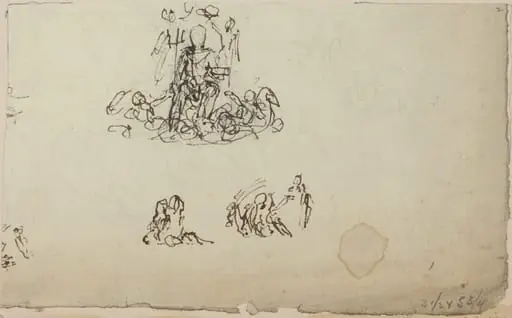
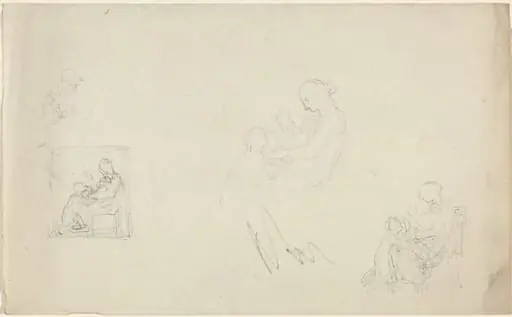 Four Studies of a Seated Woman with Children at Her Feet (Sketches for the Monument to Lady FitzHarris?)
![Sheet of Studies [recto and verso], by John Flaxman](https://artifactworldgallery.com/img/john-flaxman--sheet-of-studies-recto-and-verso--acf1b2004c9fc50f-w320.webp) Sheet of Studies [recto and verso]
Sheet of Studies [recto and verso]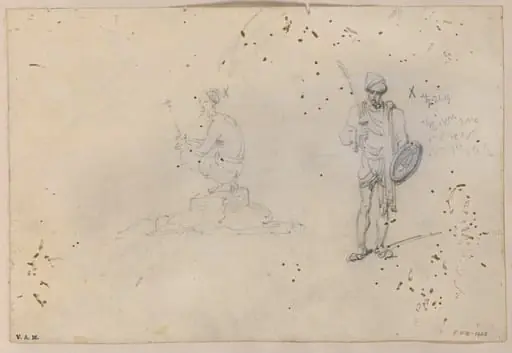 Two drawings of Indian figures
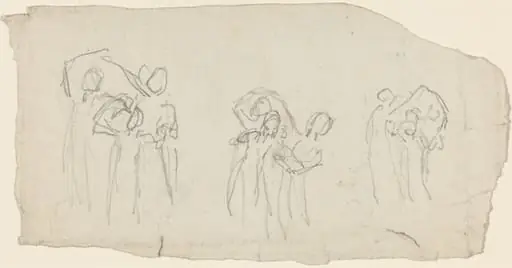 Three Groups of Dancers
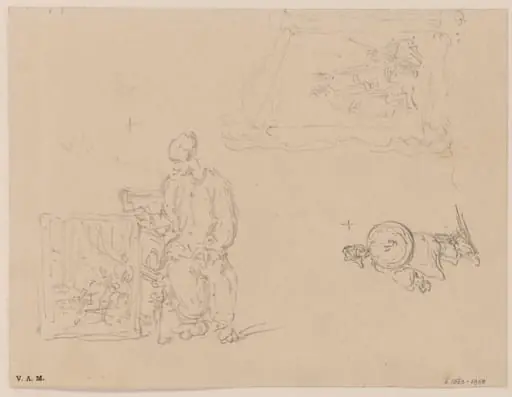 A figure seated beside a portrait, and other sketches
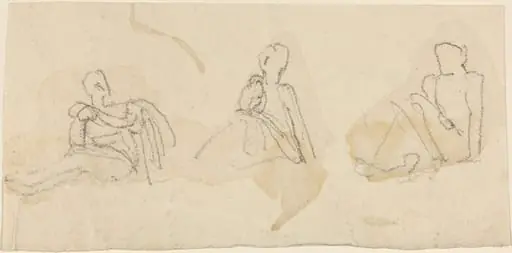 Three Seated Figures
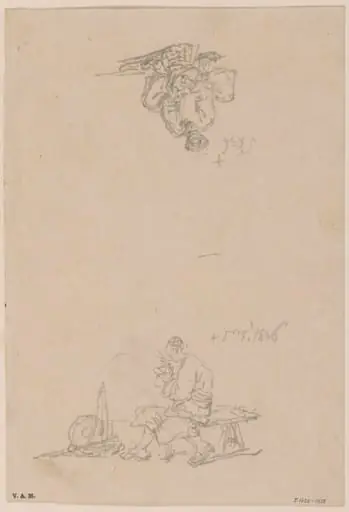 Two drawings of Chinese figures
 Figure Study
![Studies of Crowing Rooster and Reclining Figures [recto and verso], by John Flaxman](https://artifactworldgallery.com/img/john-flaxman--studies-of-crowing-rooster-and-reclining-figures-recto-and-v--6ae88f69b8f5a01b-w320.webp) Studies of Crowing Rooster and Reclining Figures [recto and verso]
Studies of Crowing Rooster and Reclining Figures [recto and verso] Sketches of Chinese figures and cows
 Untitled