Artwork
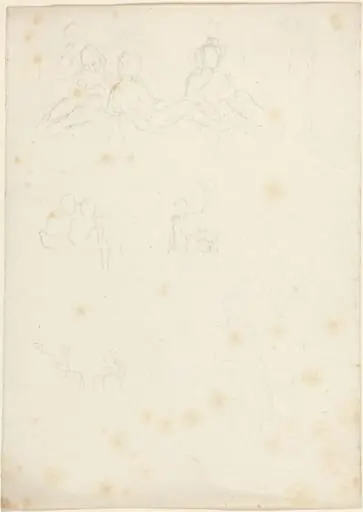
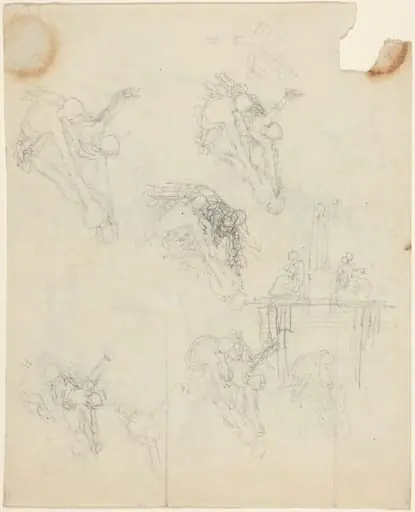
Studies of Crowing Rooster and Reclining Figures [recto and verso]
![Studies of Crowing Rooster and Reclining Figures [recto and verso], by John Flaxman, graphite, 1788](https://artifactworldgallery.com/img/john-flaxman--studies-of-crowing-rooster-and-reclining-figures-recto-and-v--6ae88f69b8f5a01b-w1024.webp)
Studies of Crowing Rooster and Reclining Figures [recto and verso] is a graphite drawing by the Romanticist artist John Flaxman. It dates from 1788 and is held in the collection of the National Gallery of Art.
About this work
Overview
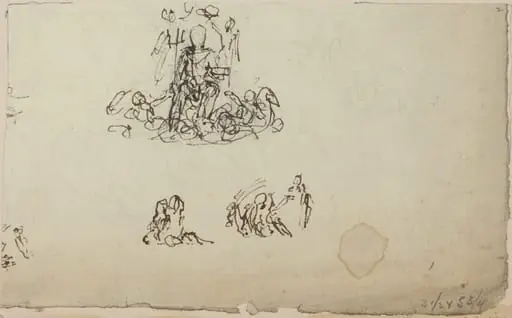
The left half records several birds, chiefly a rooster balanced on one leg, while the right half captures human figures reclining on furniture.
John Flaxman’s 1788 graphite drawing, titled *Studies of Crowing Rooster and Reclining Figures*, consists of a series of rapid sketches arranged on a single sheet. The left half records several birds, chiefly a rooster balanced on one leg, while the right half captures human figures reclining on furniture. The work exemplifies the artist’s habit of using sketchbooks to explore form and gesture during his early Roman period.
Subject & Meaning
The drawing juxtaposes two distinct motifs: avian studies and relaxed human poses. The rooster, rendered with a few sweeping strokes, emphasizes balance and motion, whereas the reclining figures convey a sense of ease and informal posture. Together they function as visual exercises, allowing Flaxman to investigate anatomy, weight distribution, and the interplay of line and volume without committing to finished detail.
Technique & Style
Executed entirely in graphite, the sketches are characterized by loose, gestural lines that prioritize overall shape over surface texture. Flaxman employs swift, wavering strokes to suggest feathering and musculature, while the human forms are outlined with simple contours that capture the essence of pose. This economical handling of the medium reflects the artist’s disciplined training and his focus on structural clarity.
History & Provenance
Created while Flaxman was residing in Rome, the sheet belongs to a period when he was absorbing classical antiquity and refining his drawing practice. Though primarily a preparatory work, it later entered collections documenting his early development, offering insight into the formative stage that preceded his later reputation for neoclassical monuments and collaborations with Josiah Wedgwood.
Context
Flaxman’s sketch aligns with the broader neoclassical emphasis on drawing from life and antiquity, yet its spontaneous execution anticipates the more expressive approaches of Romanticism. The emphasis on capturing fleeting gesture rather than idealized form places the work at a crossroads between the disciplined academic tradition of the late 18th century and the emerging interest in personal, emotive observation.
Artist & collection
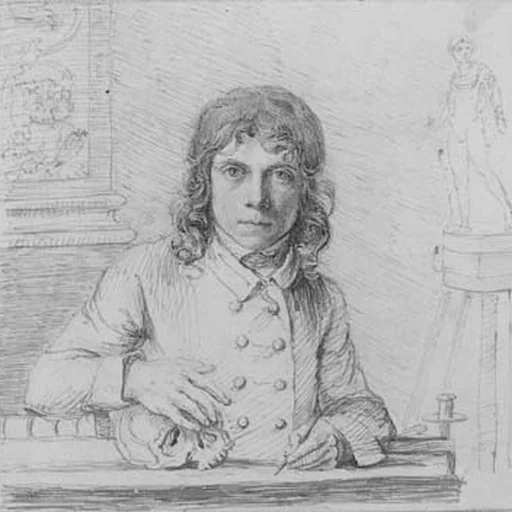
Artist
John Flaxman (6 July 1755 – 7 December 1826) was an English sculptor and draughtsman who was a leading figure in British and European Neoclassicism.

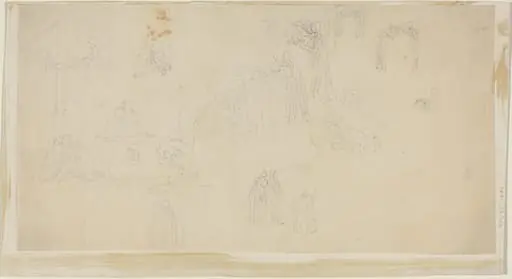
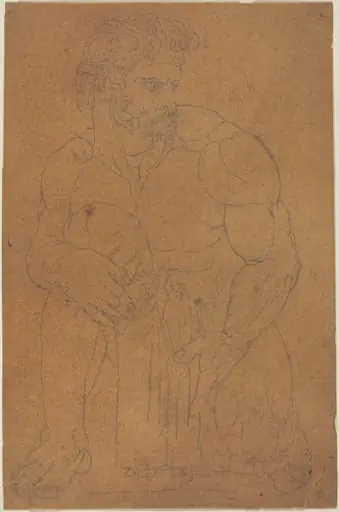
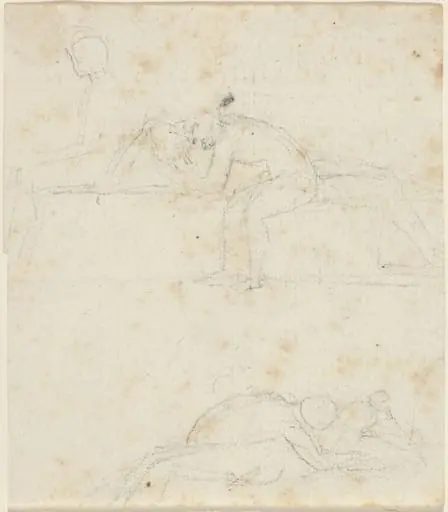
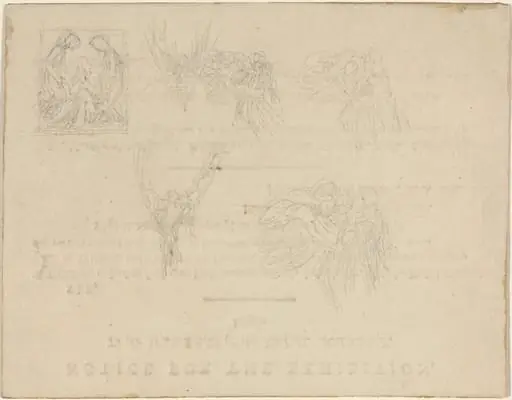
 Various Sketches of Figures and Plants (verso)
![Sheet of Studies [recto and verso], by John Flaxman](https://artifactworldgallery.com/img/john-flaxman--sheet-of-studies-recto-and-verso--acf1b2004c9fc50f-w320.webp) Sheet of Studies [recto and verso]
Sheet of Studies [recto and verso] A Western woman with her children in Macau
![Studies for a Lunette [verso], by Charles Sprague Pearce](https://artifactworldgallery.com/img/charles-sprague-pearce--studies-for-a-lunette-verso--5d54507e74f08054-w320.webp) Studies for a Lunette [verso]
Studies for a Lunette [verso]![Studies for a Monument with Angels Reaching Down to a Praying Figure [recto and verso], by John Flaxman](https://artifactworldgallery.com/img/john-flaxman--studies-for-a-monument-with-angels-reaching-down-to-a-prayin--9d789ab993a76a50-w320.webp) Studies for a Monument with Angels Reaching Down to a Praying Figure [recto and verso]
Studies for a Monument with Angels Reaching Down to a Praying Figure [recto and verso] Chinese figures, soldiers, and details of hands
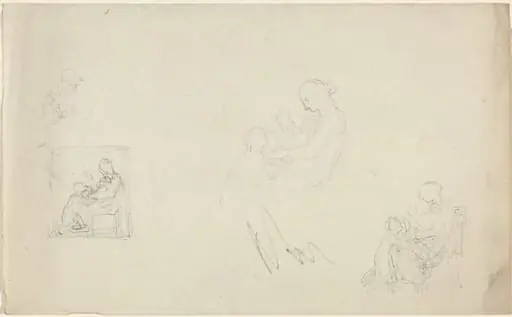 Four Studies of a Seated Woman with Children at Her Feet (Sketches for the Monument to Lady FitzHarris?)
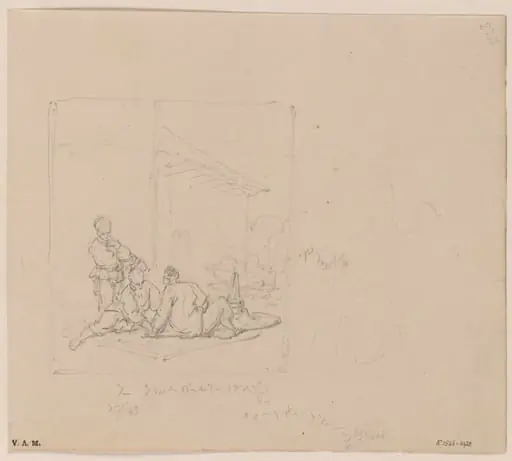 Chinese game players on a mat
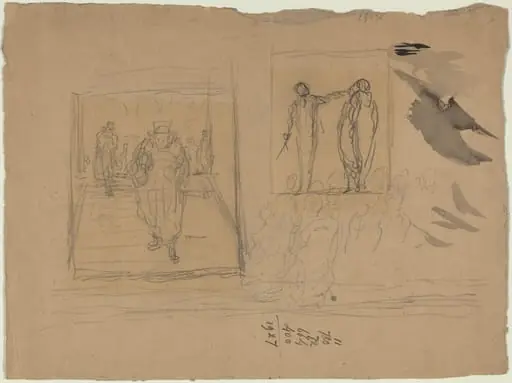 Scene in a Palace of Justice
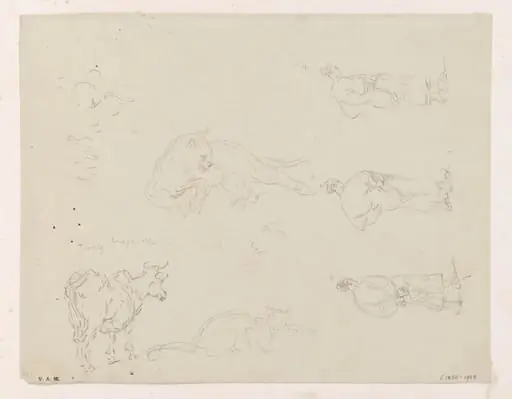 Drawings of figures and animals
 Sheet of Studies