Artwork
Two Groups of Huddled Figures
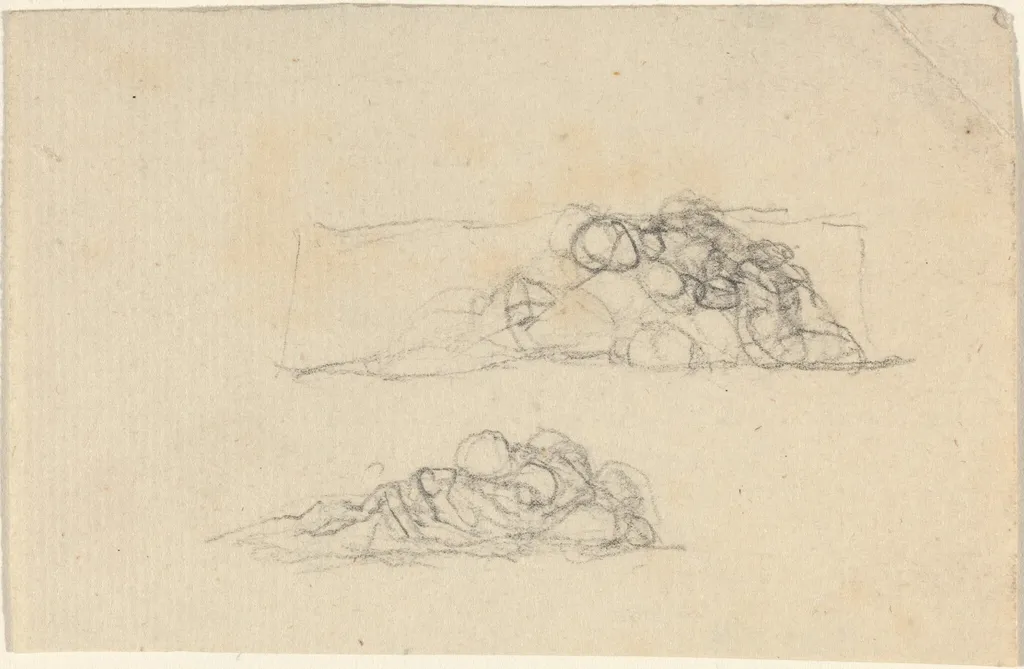
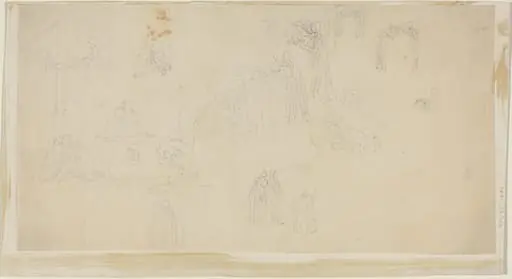
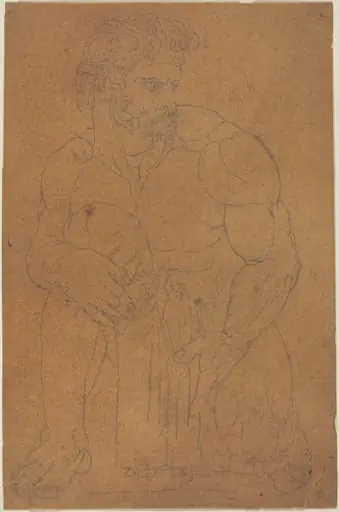
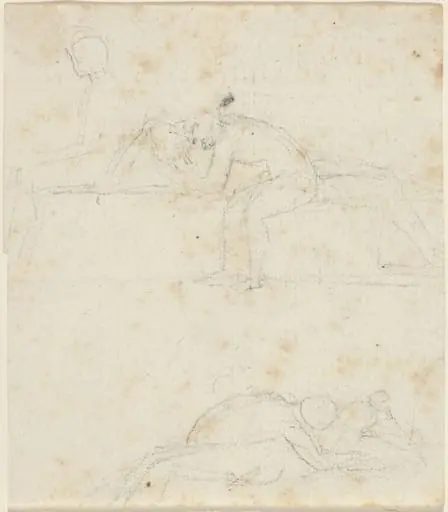
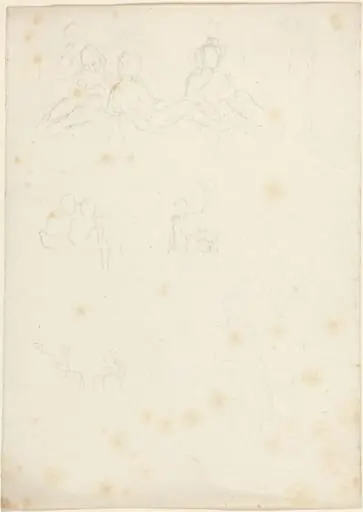
Two Groups of Huddled Figures is a graphite drawing by the Romanticist artist John Flaxman. It dates from 1790 and is held in the collection of the National Gallery of Art.
About this work
Overview
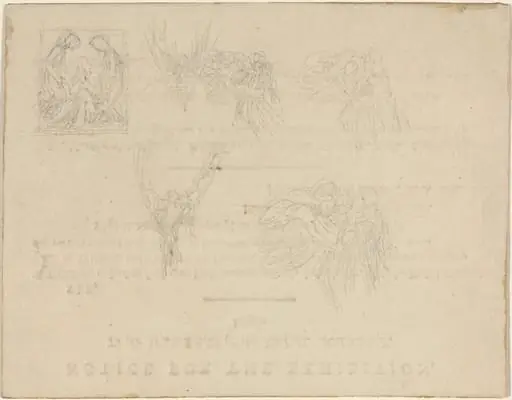
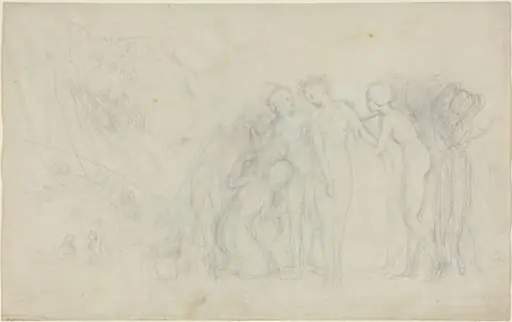
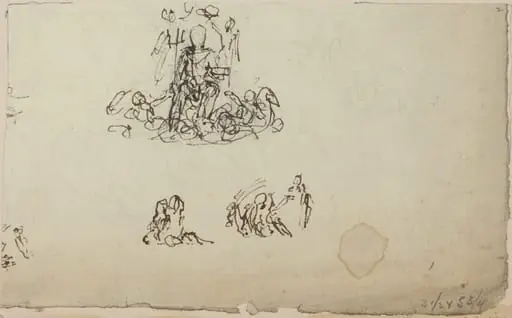
Created in 1790, this graphite drawing by John Flaxman presents two tightly grouped clusters of human forms. Executed with restrained precision, the work reflects Flaxman’s mastery of linear draftsmanship. Though small in scale, it conveys a sense of collective emotion through posture and proximity, characteristic of his interest in classical themes and human expression.
Subject & Meaning
The drawing shows no identifiable narrative or mythological scene, instead focusing on the emotional resonance of grouped figures in quiet communion. Their huddled forms suggest grief, solidarity, or contemplation—universal states rendered without specific context. Flaxman’s choice to omit detail invites interpretation, emphasizing the psychological weight of human togetherness.
Technique & Style
Flaxman employed graphite to achieve subtle tonal gradations and clean, flowing contours. His lines are deliberate yet fluid, avoiding heavy shading in favor of outline and minimal texture. This approach aligns with Neoclassical ideals of clarity and restraint, echoing ancient sculpture and engraved antiquities he studied during his time in Rome.
History & Provenance
Flaxman produced this drawing during a period of intense artistic development following his years as a modeller for Josiah Wedgwood and his stay in Rome. While its early ownership is undocumented, it survives as part of a broader corpus of his preparatory and independent drawings, valued for their formal discipline and emotional subtlety.
Context
In late 18th-century Britain, Neoclassicism dominated artistic discourse, favoring idealized forms and classical references. Flaxman, though trained in decorative arts, turned to drawing as a means to explore human anatomy and emotion outside commercial constraints. This work reflects his shift toward personal, introspective artistry amid broader cultural revival of antiquity.
Legacy
Flaxman’s drawings, including this one, influenced later generations of British artists through their emphasis on line and emotional economy. Though less known than his sculptures or illustrated editions, such works reveal his foundational role in redefining drawing as a medium for philosophical and aesthetic inquiry within Neoclassical practice.
Artist & collection
Artist
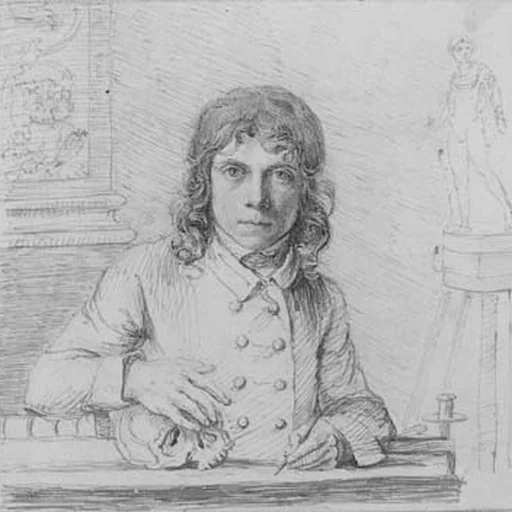
John Flaxman (6 July 1755 – 7 December 1826) was an English sculptor and draughtsman who was a leading figure in British and European Neoclassicism.

![Sheet of Studies [recto and verso], by John Flaxman](https://artifactworldgallery.com/img/john-flaxman--sheet-of-studies-recto-and-verso--e428fab422bf3286-w320.webp)
![Figure Seated on the Ground [recto], by Paul Gauguin](https://artifactworldgallery.com/img/paul-gauguin--figure-seated-on-the-ground-recto--ce49e9c311169db0-w320.webp)
![Sheet of Studies [recto and verso], by John Flaxman](https://artifactworldgallery.com/img/john-flaxman--sheet-of-studies-recto-and-verso--5d19d38e20f446c0-w320.webp)