Artwork
H Beard Print Collection
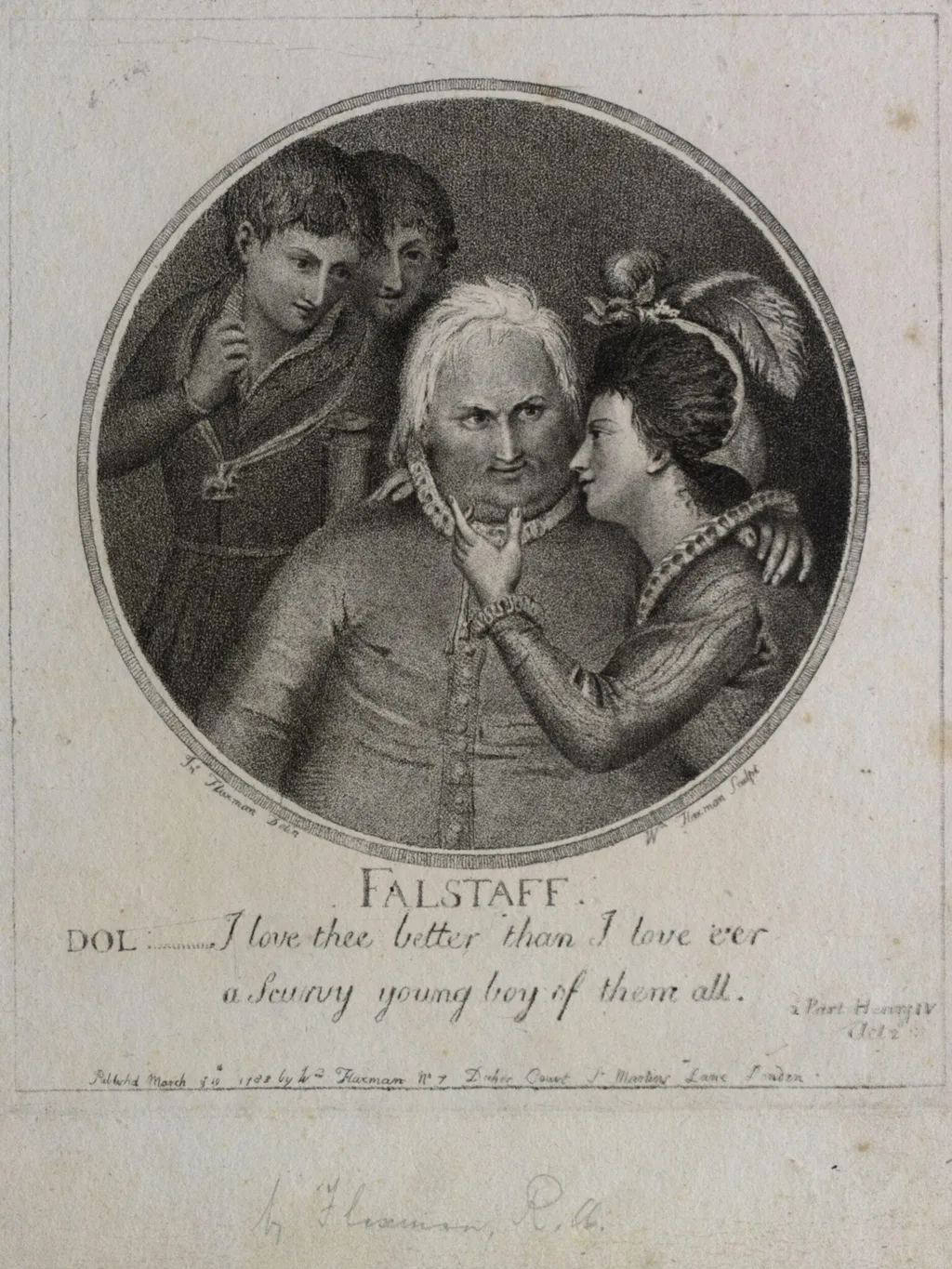
H Beard Print Collection is a print by the Romanticist artist William Flaxman. It dates from 19 and is held in the collection of the Victoria and Albert Museum.
About this work
Overview
The image was created as part of a series illustrating Shakespearean drama, intended for wider public circulation rather than theatrical use.
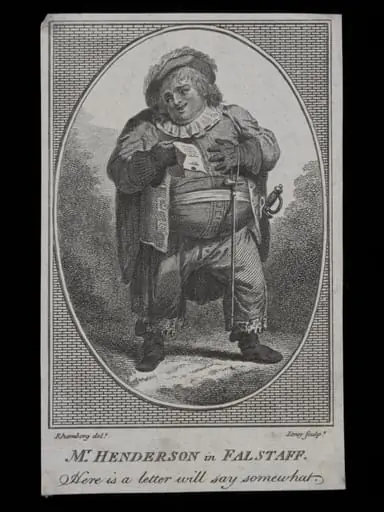
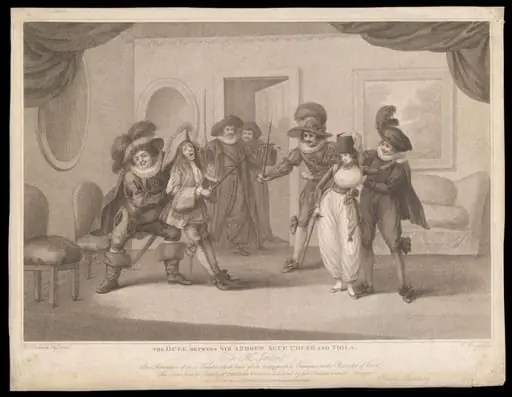
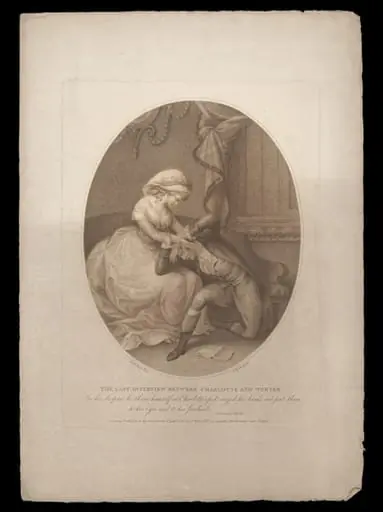
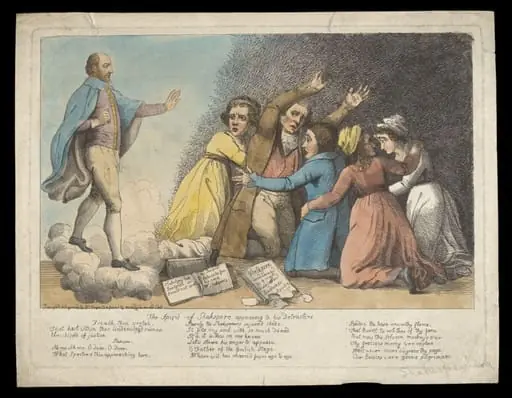
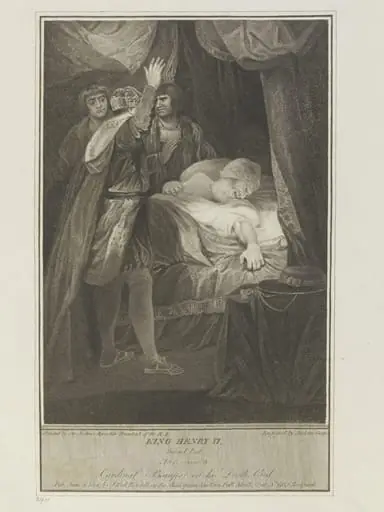
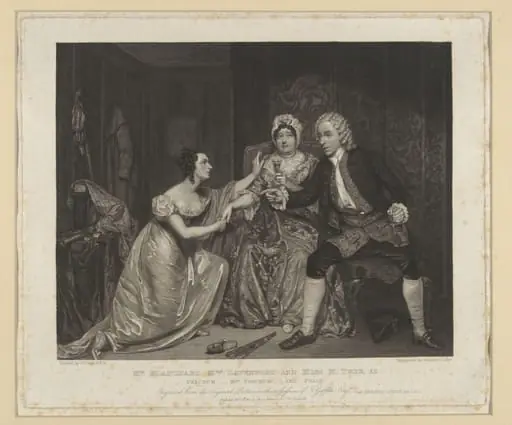
A printed scene from Shakespeare’s Henry IV, Part Two, produced in 1783 by William Flaxman, captures a moment between Sir John Falstaff and Doll Tearsheet in Act II, Scene IV. The image was created as part of a series illustrating Shakespearean drama, intended for wider public circulation rather than theatrical use. Its format and distribution reflect the growing 18th-century interest in literary imagery accessible to middle-class households.
Subject & Meaning
The print portrays Falstaff, the boisterous knight, engaged with Doll Tearsheet, a woman associated with London’s underworld. Their interaction, marked by informality and wit, underscores themes of moral ambiguity and social decay in Shakespeare’s play. The scene avoids grandeur, focusing instead on the intimacy and tension between two flawed characters, highlighting the human comedy beneath the play’s political backdrop.
Technique & Style
Executed in line engraving, the print relies on precise, controlled strokes to define figures and setting. Flaxman’s approach favors clarity over ornamentation, with minimal shading and a restrained palette typical of engraved illustrations of the period. The composition is tightly framed, directing attention to the two central figures and their gestures, reinforcing narrative immediacy.
History & Provenance
Produced by William Flaxman, a London-based print publisher active in the late 18th century, this work was part of a broader effort to translate Shakespeare into visual form for domestic consumption. It likely circulated alongside other theatrical prints, serving as both entertainment and cultural education. No record of original ownership survives, but its existence attests to the commercial demand for literary imagery at the time.
Context
In the 1780s, illustrated editions of Shakespeare were gaining popularity as Britain’s middle class sought culturally respectable pastimes. Flaxman’s print aligns with a trend of adapting classical drama into accessible formats, often divorced from stage performance. This print reflects a growing belief that literature could be understood and appreciated through visual representation, not just live theater.
Legacy
Though not widely preserved or studied today, the print contributes to a larger archive of 18th-century Shakespearean illustration. It exemplifies how literary texts were visually interpreted for non-theatrical audiences, influencing later generations of book illustrators. Its modest scale and commercial origins contrast with later, more elaborate artistic treatments of Shakespearean subjects.
Artist & collection
Artist
William Flaxman kept his head down and his lines tight. Every curve of a body or fold of cloth looks like it was measured twice, then drawn once. His prints feel like blueprints—useful, spare, no wasted flourish. You’ll…