Artwork
Le Christ dépouillé de ses vêtements (Christ Stripped of His Clothes)
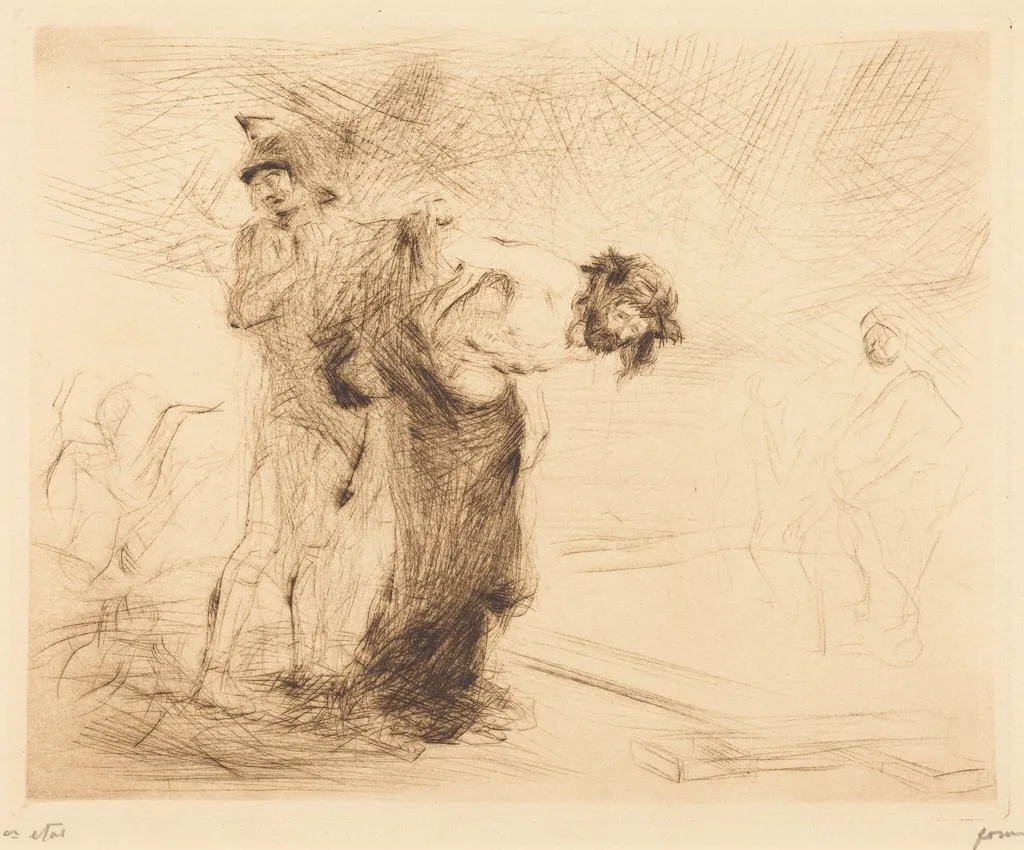
Le Christ dépouillé de ses vêtements (Christ Stripped of His Clothes) is an ink print by Jean-Louis Forain. It dates from 1909 and is held in the collection of the National Gallery of Art.
About this work
Overview
Jean‑Louis Forain’s 1909 drypoint, *Le Christ dépouillé de ses vêtements*, presents a biblical episode in which Christ is divested of his garments.
Jean‑Louis Forain’s 1909 drypoint, *Le Christ dépouillé de ses vêtements*, presents a biblical episode in which Christ is divested of his garments. Executed on wove Van Gelder paper, the image is rendered in a uniform brown tone, emphasizing the starkness of the moment. The composition centers on the central figure surrounded by a few attendants, their simple robes and the muted background reinforcing the work’s solemn atmosphere.
Subject & Meaning
The print illustrates the moment described in the Passion narratives when soldiers remove Jesus’ clothing before the crucifixion. By focusing on the act of stripping, Forain draws attention to vulnerability and humiliation, themes that resonate with the broader Christian contemplation of suffering and sacrifice. The surrounding figures, rendered without individual distinction, serve to amplify the collective indifference surrounding the central event.
Technique & Style
Forain employed drypoint, a intaglio method in which a sharp needle incises lines directly into the paper’s surface. The resulting burr produces rich, velvety strokes that convey texture and depth, while the bold, expressive lines impart a sense of immediacy. The limited brown palette unifies the composition, allowing the tactile quality of the drypoint to dominate the visual experience.
History & Provenance
Created in 1909, the print entered the collection of the National Gallery of Art in Washington, D.C., where it remains on view. Forain, a prolific French artist known for his work across oils, watercolors, pastels, etchings, and lithographs, achieved considerable commercial success during his lifetime, though his posthumous reputation has fluctuated.
Context
Forain’s career unfolded amid the late‑19th‑ and early‑20th‑century French art scene, a period marked by Impressionist experimentation and the rise of printmaking as a popular medium. While best known for urban scenes and caricatures, his religious works, such as this drypoint, reflect a broader engagement with traditional subjects, offering a contrast to his more secular output.
Own this work as a print
Artist & collection

Artist
Jean-Louis Forain (French pronunciation: ; 23 October 1852 – 11 July 1931) was a French Impressionist painter and printmaker, working in media including oils, watercolour, pastel, etching and lithograph.


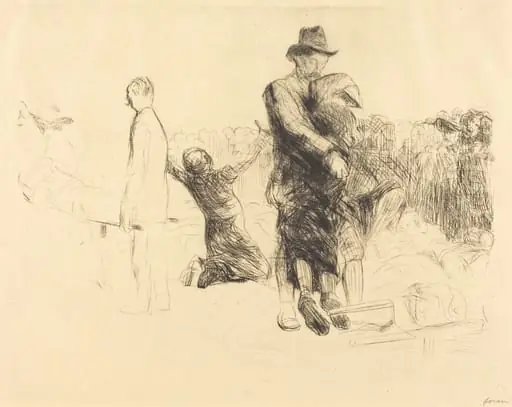 Lourdes, transport des paralysées (Lourdes, Transport of the Paralyzed)
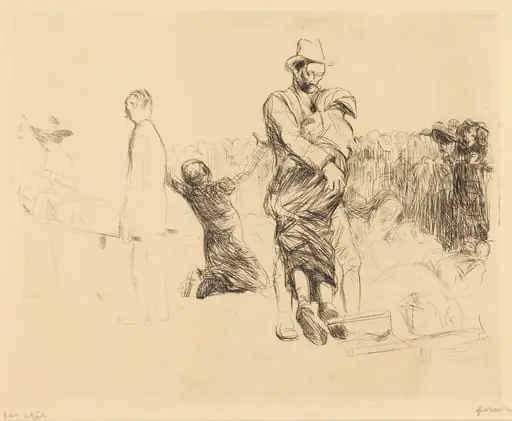 Lourdes, transport des paralysées (Lourdes, Transport of the Paralyzed)
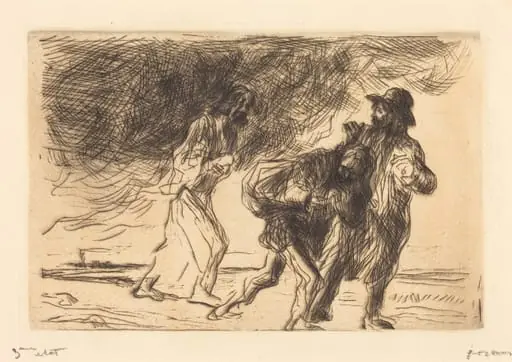 La route d'Emmaüs (1ère planche) (The Road to Emmaus) (first plate)
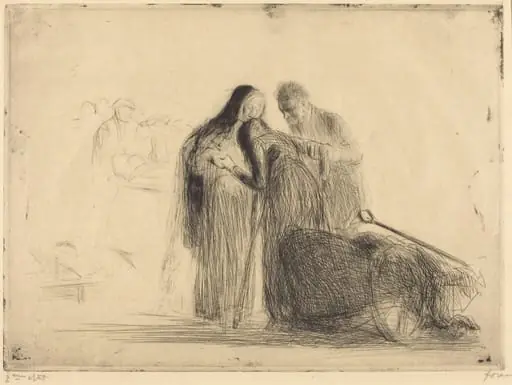 Lourdes, la paralytique (2e planche) (Lourdes, the Paralytic) (second plate)
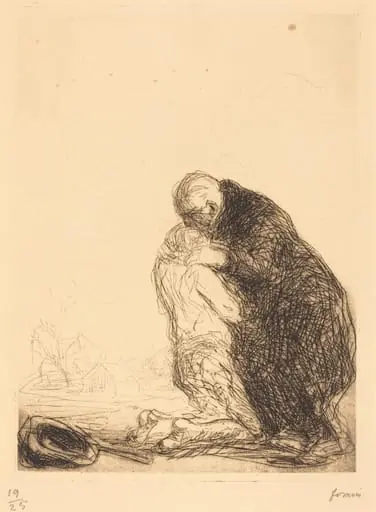 Le retour de l'enfant prodigue (3e planche) (The Return of the Prodigal Son) (third plate)
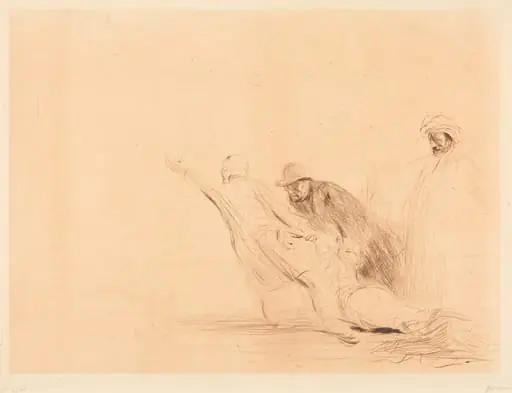 Le femme adultère (3e planche) (The Adulteress) (third plate)
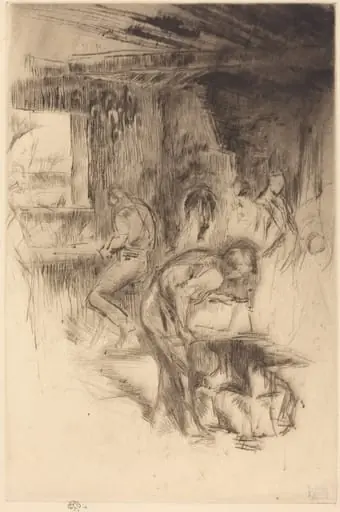 The Little Forge
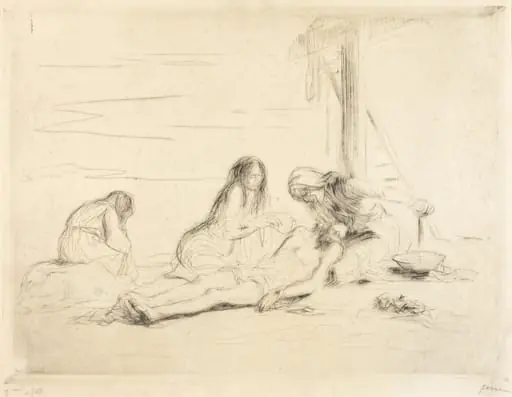 Pietà (1ère planche) (Pietà) (first plate)
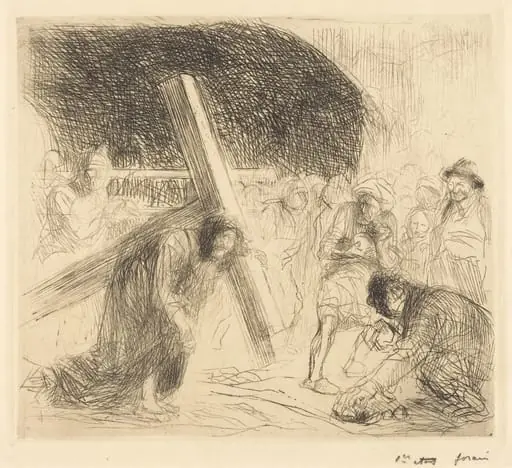 Le Christ portant sa croix (7e planche) (Christ Carrying the Cross) (seventh plate)
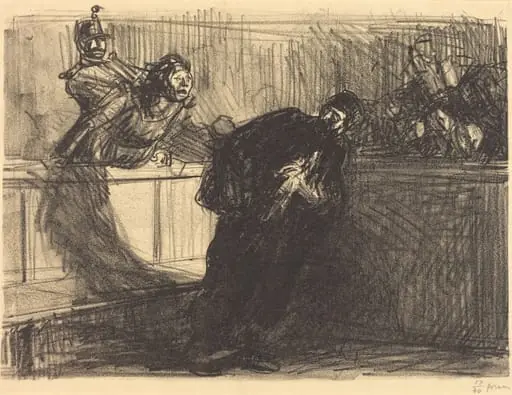 L'avocat invectivé (The Lawyer Abused)