Artwork
Punakaarti
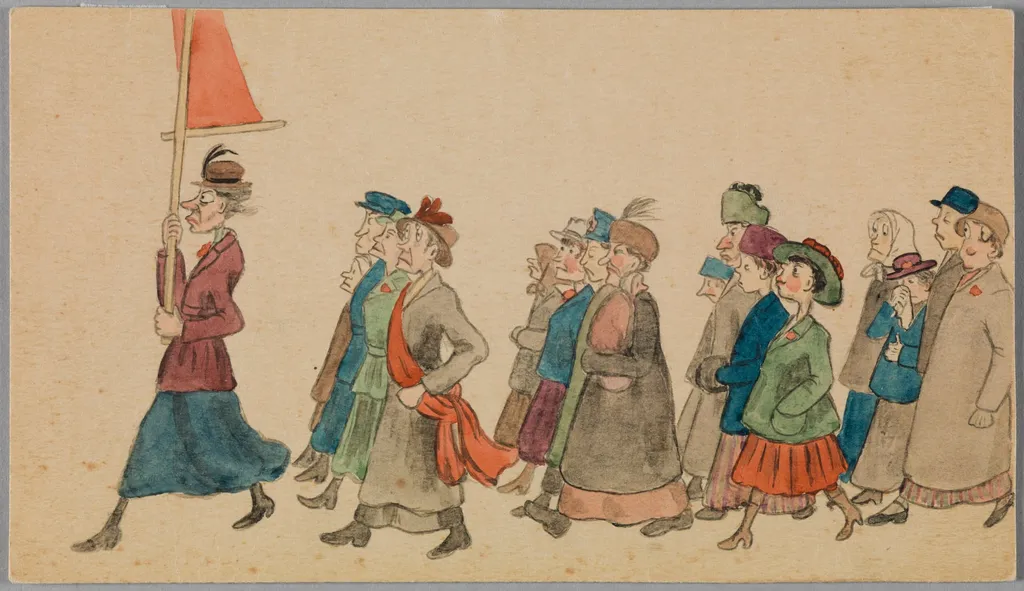
Punakaarti is a drawing by Olga Forslund. It is held in the collection of the Helsinki City Museum.
About this work
Overview
This pencil or ink drawing by Olga Forslund captures a line of women marching in unison, their figures rendered with clean, decisive lines and little detail.
This pencil or ink drawing by Olga Forslund captures a line of women marching in unison, their figures rendered with clean, decisive lines and little detail. The composition emphasizes movement and collective action, with the lead figure holding a red flag. Minimal shading and simplified forms direct attention to posture and rhythm rather than individual identity, suggesting a symbolic rather than documentary intent.
Subject & Meaning
The procession depicts women moving with unified purpose, their attire and the red flag hinting at political or social activism. The lack of facial detail universalizes the figures, transforming them into representatives of a larger movement. The orderly line and forward momentum imply solidarity and resolve, possibly referencing labor, suffrage, or other early 20th-century women’s campaigns in Sweden.
Technique & Style
Forslund employs a restrained graphic style, using bold outlines and flat areas of tone to define form. There is no attempt at realism; instead, the emphasis is on rhythm and silhouette. Clothing folds and body angles are suggested with economical strokes, and the absence of background reinforces focus on the group’s motion. This approach aligns with modernist tendencies to distill subject matter to its essential gestures.
History & Provenance
The drawing is attributed to Olga Forslund, a Swedish artist active in the early 20th century, known for her interest in social themes and women’s roles. While specific details of its creation or early ownership are not widely documented, it appears in collections focused on Nordic feminist art and labor-related imagery from the period, suggesting it was produced during a time of heightened civic engagement among women.
Context
Created during a period of expanding women’s rights in Sweden—including suffrage gained in 1919—the drawing reflects broader cultural shifts. Similar imagery appeared in pamphlets and posters supporting labor unions and women’s organizations. Forslund’s work contributes to a visual record of grassroots activism, where art served as both documentation and mobilization tool.
Legacy
Forslund’s drawing remains a quiet but potent example of how simplified visual language could convey collective agency. It is referenced in studies of Scandinavian feminist art for its understated yet forceful representation of women in public action. Though not widely exhibited, it endures as a testament to the role of art in expressing social change beyond grand narratives.
Artist & collection
Artist
Olga Forslund left a small but vivid slice of early 20th-century life in her pencil drawings.

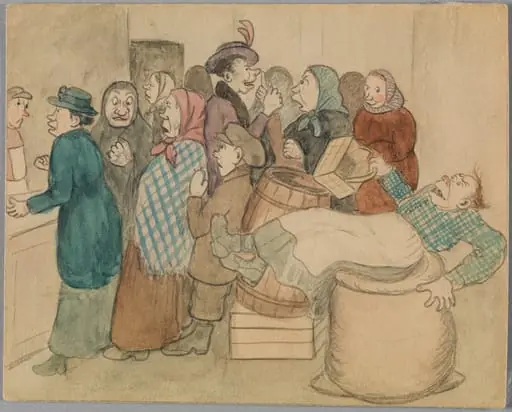
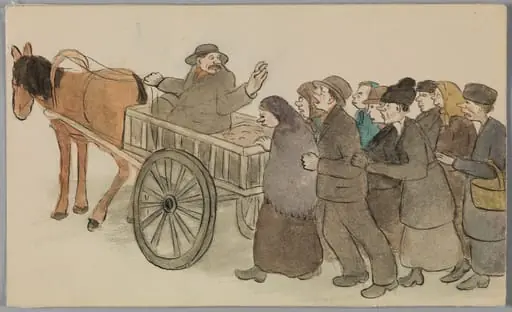 Perunanostajia (Perunapula)
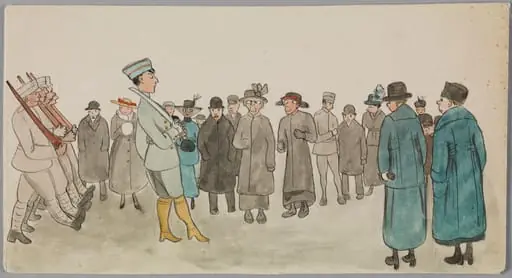 Paraati
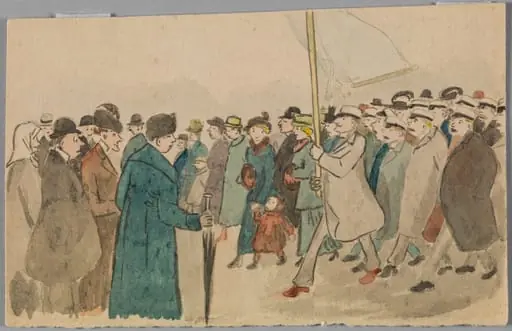 Ylioppilaita vappukulkueessa
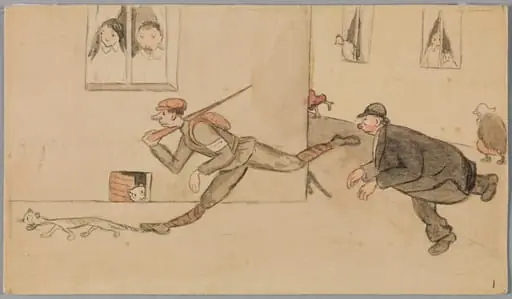 Hälytys
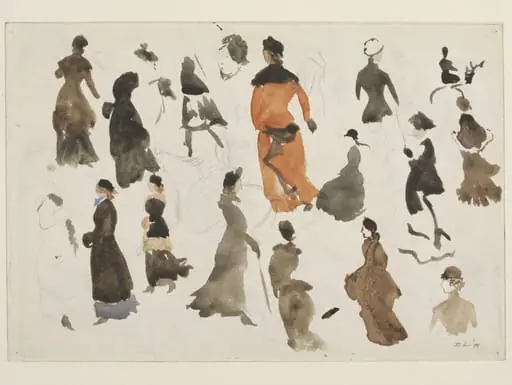 Brighton Ladies
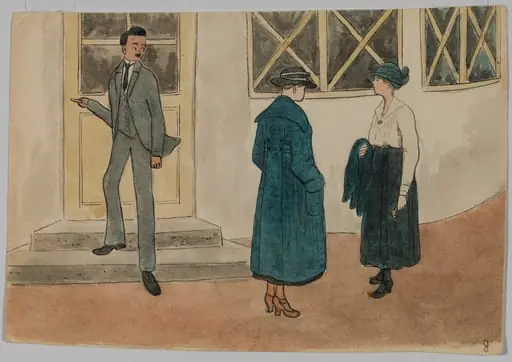 Sisarukset Forslund ja heidän kavaljeerinsa. Sisarukset ja Cyrus Florström Kulosaaren kasinolla.
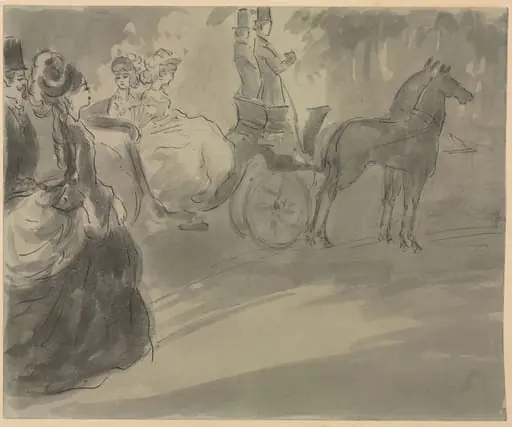 A Stop in the Park
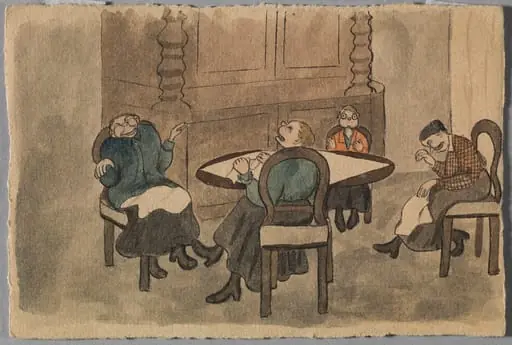 Ompeluseura
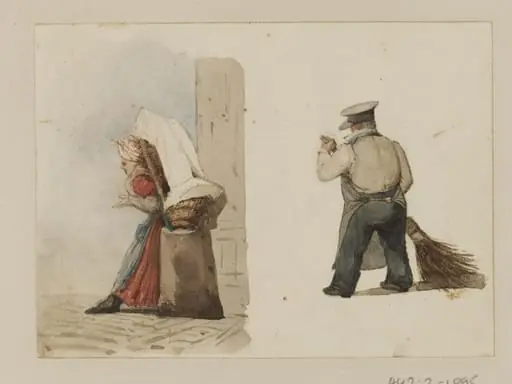 A woman resting a load on a post and a man sweeping
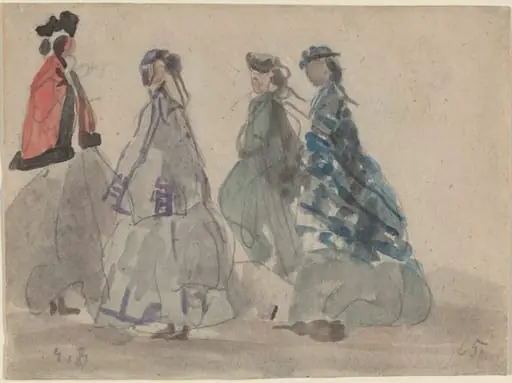 Four Women at Trouville
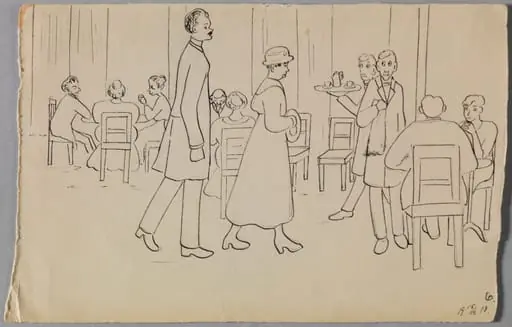 Sisarukset Forslund.