Artwork
The Erection of Cleopatra's Needle
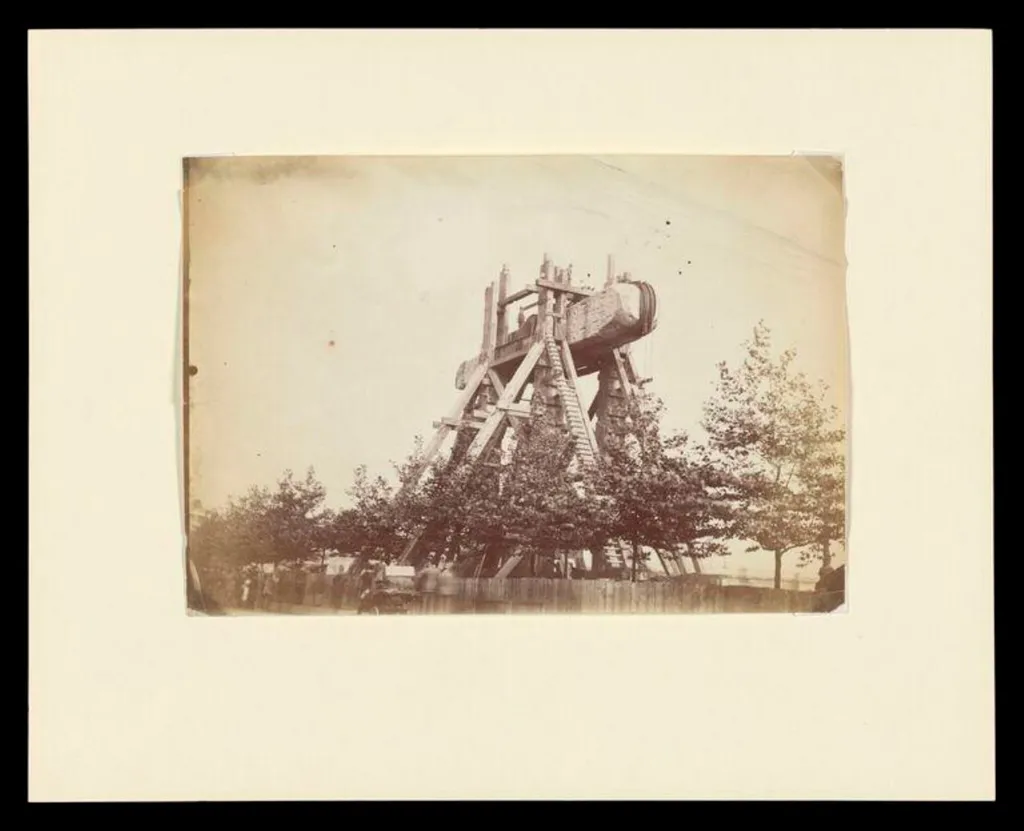
The Erection of Cleopatra's Needle is a photographic photography by the Impressionist artist Peter le Neve Foster. It dates from 1878 and is held in the collection of the Victoria and Albert Museum. The image is a sepia‑toned photograph documenting the installation of a massive stone obelisk, known as Cleopatra’s Needle.
About this work
Overview
The image is a sepia‑toned photograph documenting the installation of a massive stone obelisk, known as Cleopatra’s Needle. The picture captures the monument in a horizontal position, supported by wooden trestles, as it is being maneuvered toward its final base.
Subject & Meaning
The scene focuses on the practical aspects of moving and positioning the ancient stone, emphasizing the labor and engineering involved rather than decorative composition. Workers on scaffolding and the surrounding landscape underscore the scale of the undertaking.
Technique & Style
Taken with a straightforward camera, the photograph adopts a documentary approach, presenting the event without artistic embellishment. The sepia tone, typical of early 20th‑century photography, lends a muted, historical atmosphere to the industrial activity.
Context
Cleopatra’s Needle, an Egyptian obelisk, was being relocated to a new setting, requiring careful handling and temporary wooden structures. The image records a moment in the broader effort to preserve and display ancient monuments in a modern urban environment.
Legacy
The photograph serves as a visual record of historic preservation practices, illustrating the logistical challenges of moving monumental artifacts. It is held in the collection of the Victoria and Albert Museum, where it contributes to research on early conservation engineering.
Artist & collection
Artist
Peter le Neve Foster carried a glass plate camera everywhere, even to watch the giant needle from Egypt being raised on London’s embankment.

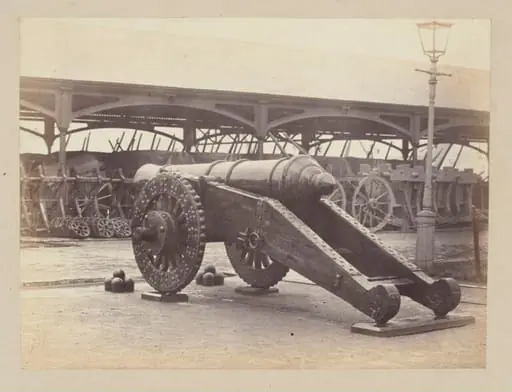 Canon on Display
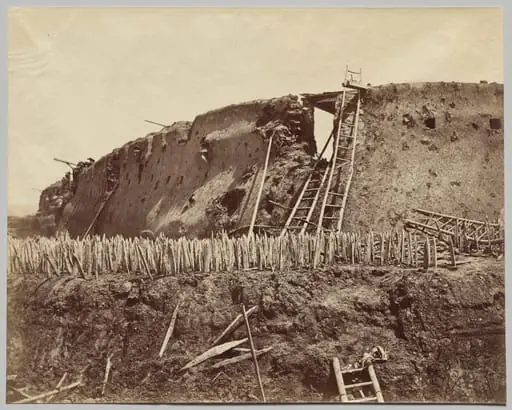 Angle of Taku Fort at which the French entered
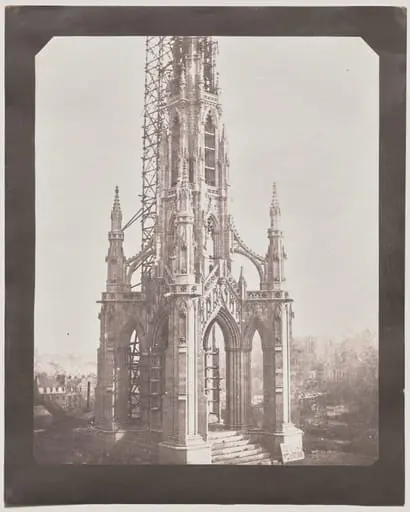 Sir Walter Scott's Monument, Edinburgh
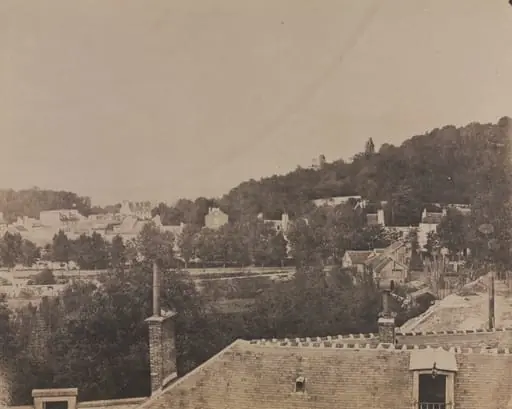 The Royal Porcelain Factory at Sèvres
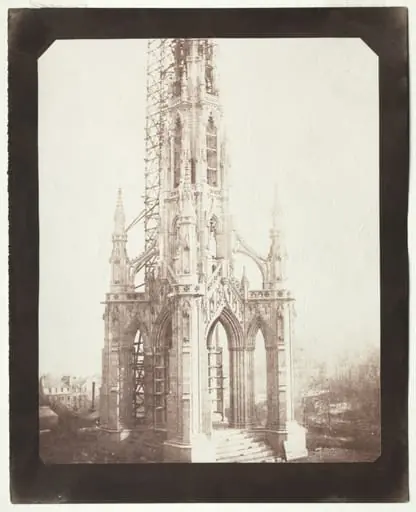 Scott Monument Under Construction
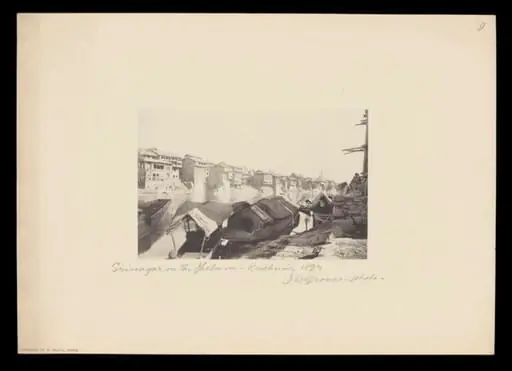 Srinagar on the Jhelum, Kashmir
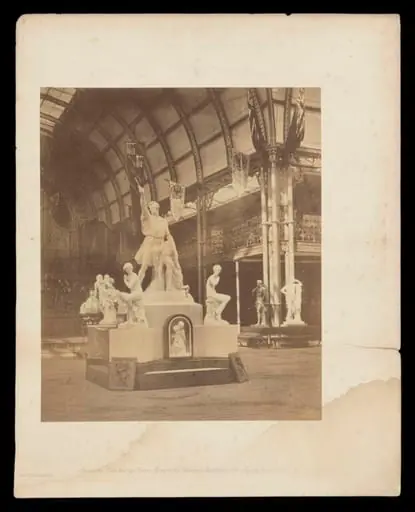 Manchester
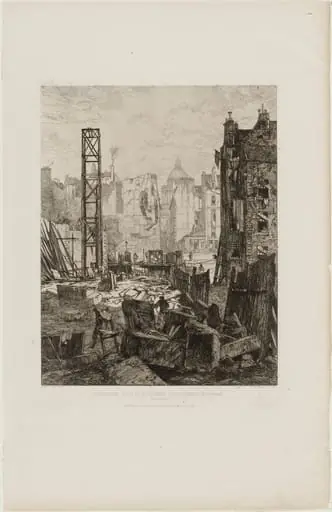 Démolitions pour le percement du Boulevard Saint-Germain (Demolitions for the Construction of the Boulevard St. Germain, Paris)
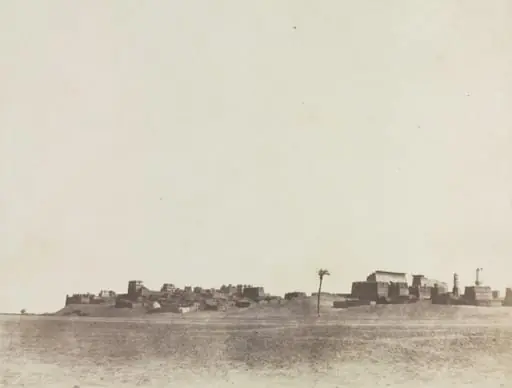 View of Luxor
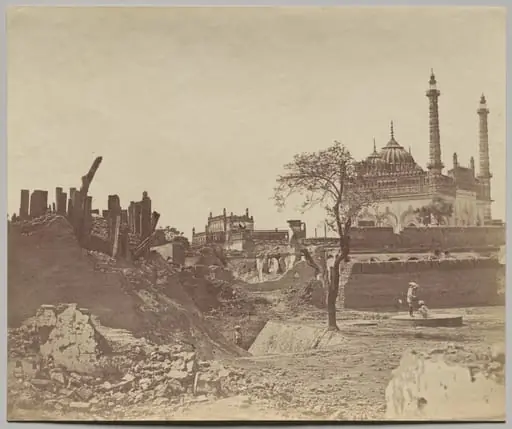 Battery Near the Begum Kotie
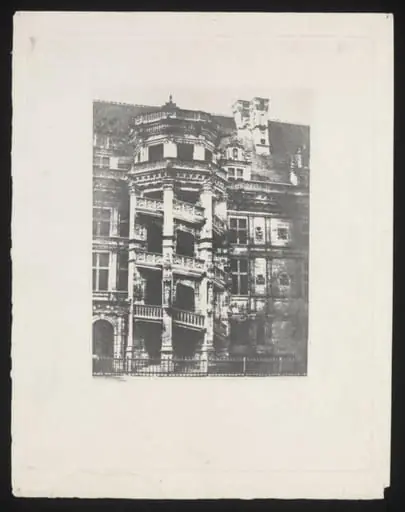 Château de Blois
 Lyon. Viaduc du Rhône