Artwork
Saint Mark
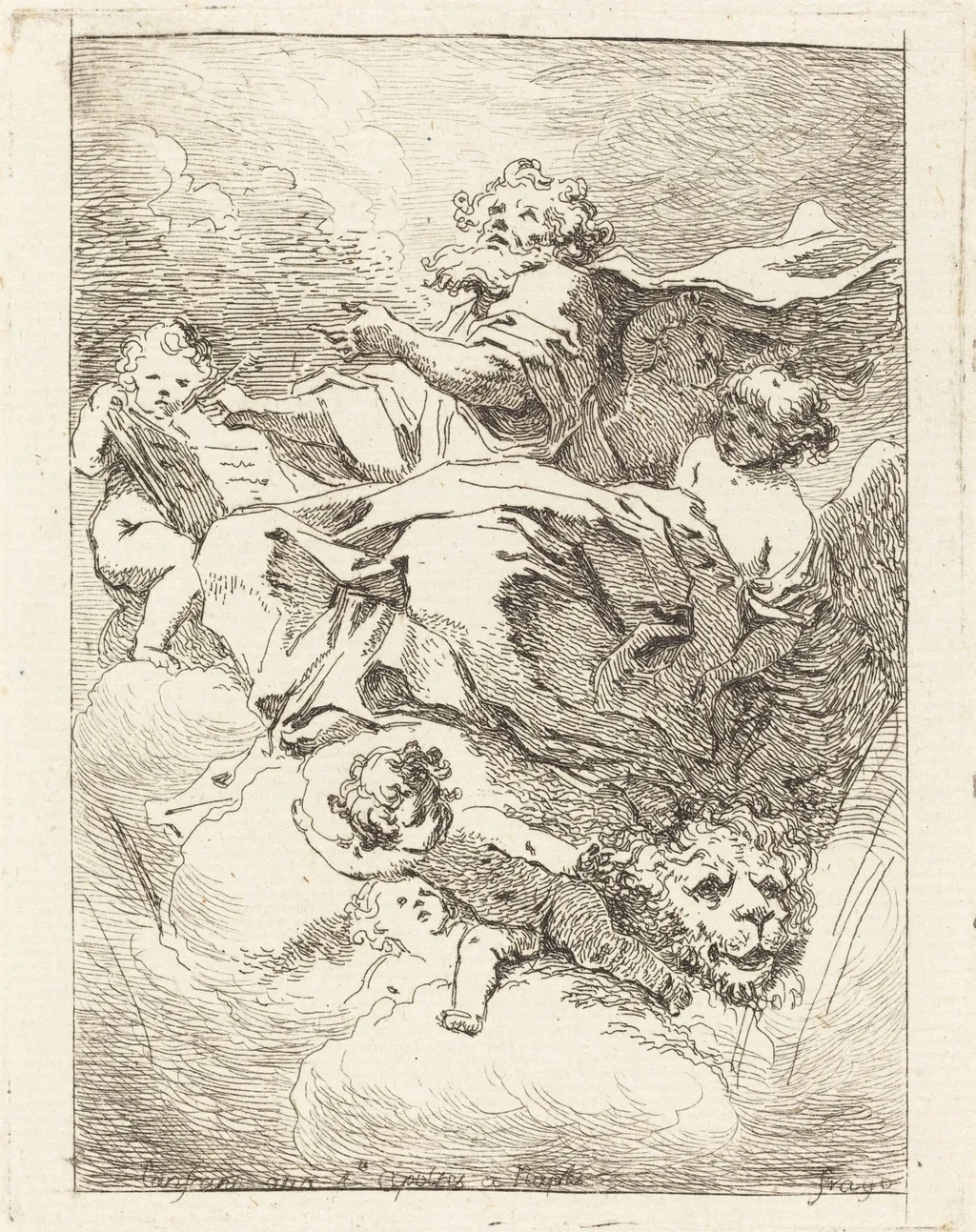
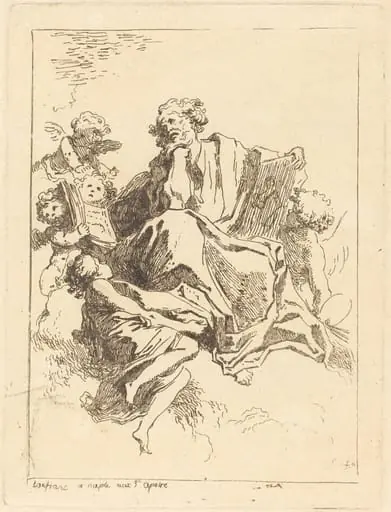
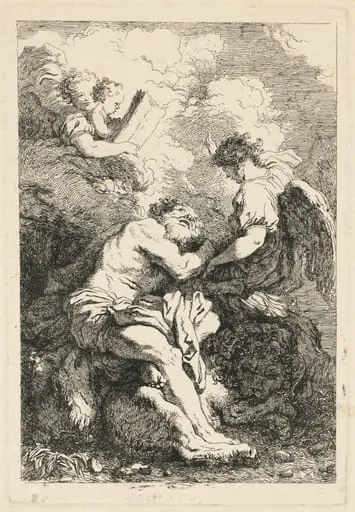
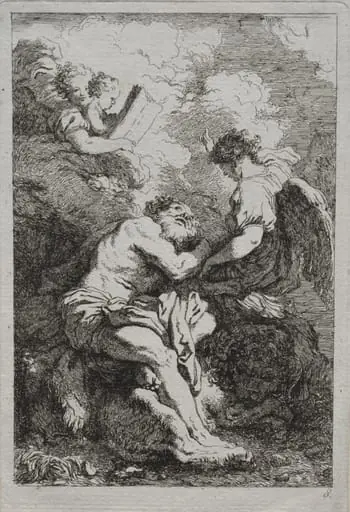
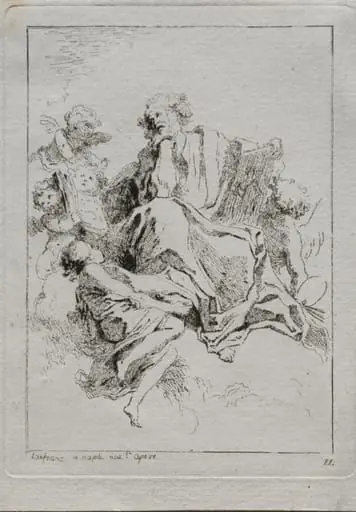
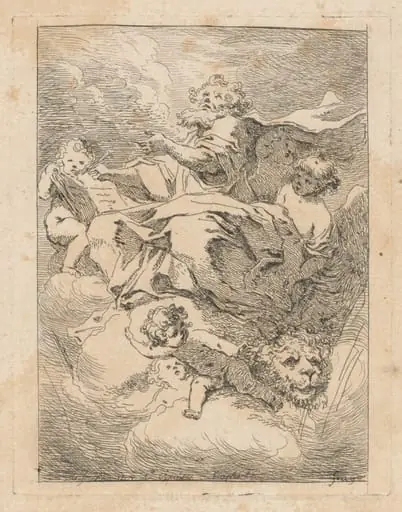
Saint Mark is an ink print by the Romanticist artist Jean Honoré Fragonard. It dates from 1762 and is held in the collection of the National Gallery of Art.
About this work
Overview
Saint Mark is an etching on laid paper executed by the French artist Jean‑Honoré Fragonard in 1762. The work presents a solitary, bearded figure holding a book, his expression composed yet solemn. Light is rendered in brief, stippled strokes that illuminate portions of his robe, creating a subtle contrast between illuminated and shadowed areas.
Subject & Meaning
The image depicts the evangelist Mark, identifiable by his traditional attributes—a beard and a manuscript, symbolizing his role as a gospel writer. The restrained demeanor and focused gaze suggest contemplation, inviting viewers to consider the intellectual and spiritual responsibilities associated with the transmission of sacred texts.
Technique & Style
Fragonard employed the etching process, incising lines into a copper plate with acid before inking and pressing the image onto paper. The technique yields fine, delicate lines and a slightly grainy texture characteristic of laid paper. The artist’s handling of light through quick, dabbing strokes demonstrates an early departure from his later, more exuberant painterly style.
History & Provenance
Created early in Fragonard’s career, this print predates his well‑known Rococo paintings. While specific ownership records are limited, the work is documented as part of the artist’s print output from the 1760s, reflecting his engagement with graphic media alongside his painting practice.
Context
In the mid‑18th century, French artists often produced religious subjects for devotional purposes or private collectors. Fragonard’s Saint Mark aligns with this tradition, yet its modest scale and intimate execution contrast with the grander altar pieces of the period, highlighting a personal, contemplative approach to sacred imagery.
Artist & collection

Artist
Jean-Honoré Fragonard was born on 5 April 1732 in Grasse, the son of a glover, and moved with his family to Paris in 1738.