Artwork
Ceiling Decoration
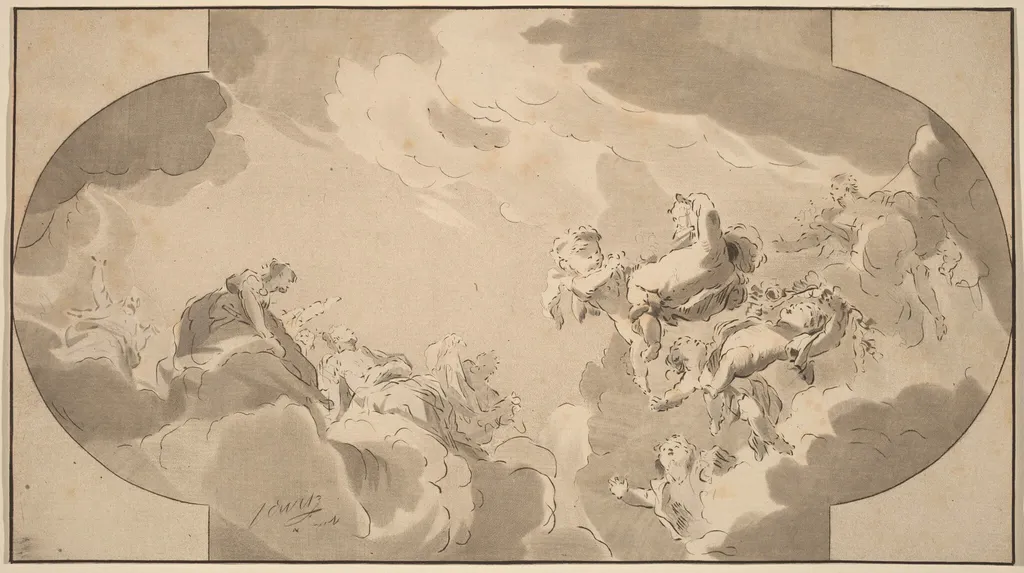
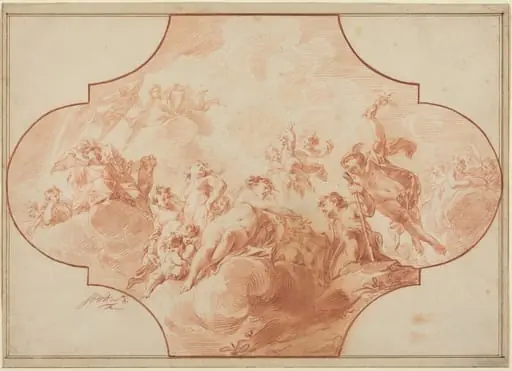
Ceiling Decoration is an ink print by the Baroque artist Bernhard Schreuder. It dates from 1740 and is held in the collection of the National Gallery of Art.
About this work
Overview
Ceiling Decoration is a print created in 1740 by Bernhard Schreuder. Executed as an etching with wash on laid paper, the work measures a modest size typical of 18th‑century printmaking. The composition depicts a cloudy sky in which four figures appear suspended, their bodies tangled in draped sheets and rendered with a loose, almost sketch‑like quality.
Subject & Meaning
The scene presents four individuals seemingly adrift in the heavens, their expressions ambiguous and their posture suggestive of confusion or disorientation. The juxtaposition of the ethereal sky with the tangled, grounded forms may allude to themes of uncertainty, transition, or the precariousness of human circumstance, though the work offers no explicit narrative.
Technique & Style
Schreuder employed a hybrid method that combines traditional line etching with a wash technique, allowing ink to be diluted with water to produce soft, blurred edges. This approach creates a tonal atmosphere and a sense of immediacy, reflecting a broader 18th‑century interest in merging drawing‑like spontaneity with the reproducibility of print.
History & Provenance
The print originates from the mid‑1700s, a period when etching and wash prints were popular among German and Dutch artists for their capacity to convey atmospheric effects. Documentation of its early ownership is scarce, but the work has been catalogued in several collections of European prints, confirming its attribution to Schreuder.
Context
During the 1740s, printmakers increasingly explored the expressive potential of tonal washes, a technique derived from watercolor drawing. Schreuder’s work aligns with this trend, situating the piece within a transitional moment when artists sought to capture fleeting moods and narrative ambiguity through economical means.
Artist & collection


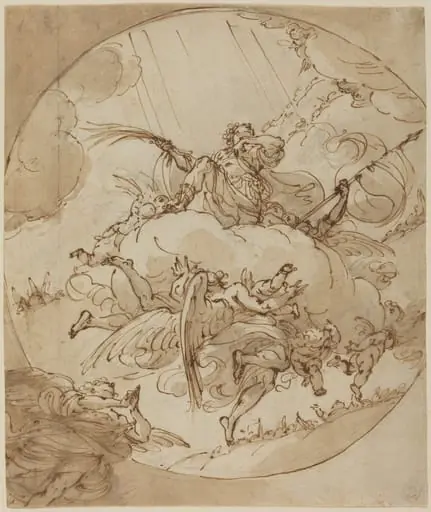 The Apotheosis of San Vitale
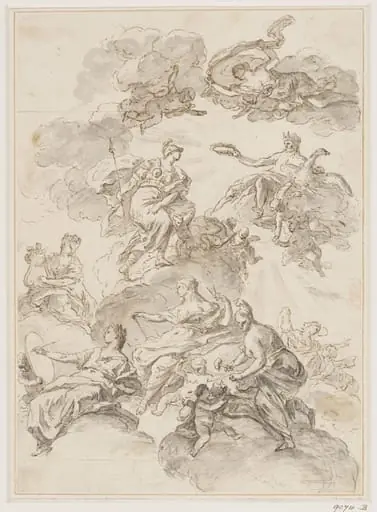 Minerva commending the arts of sculpture, architecture, painting and music to Jupiter
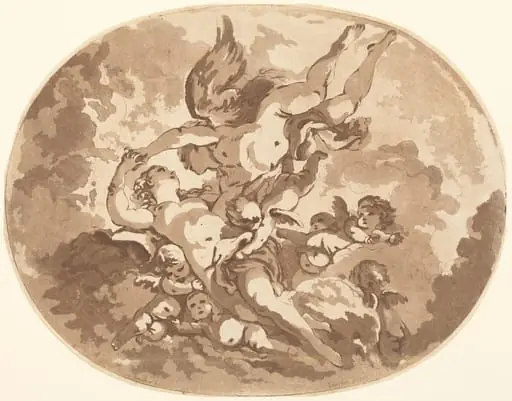 Eros and Psyche
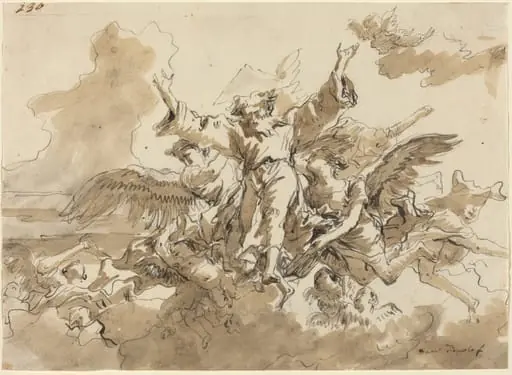 Creation of the Universe
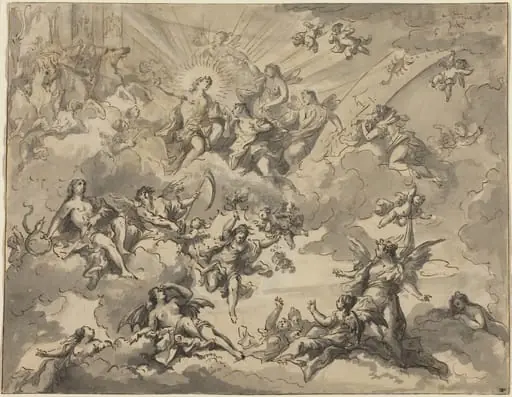 Apollo and the Muses
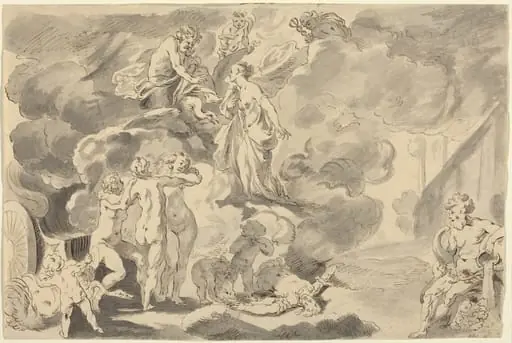 Death of Phaeton
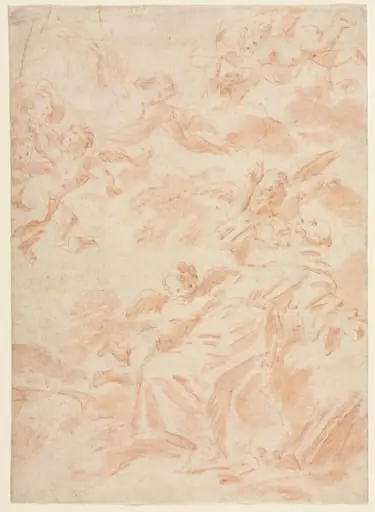 The Stigmatization of Saint Francis
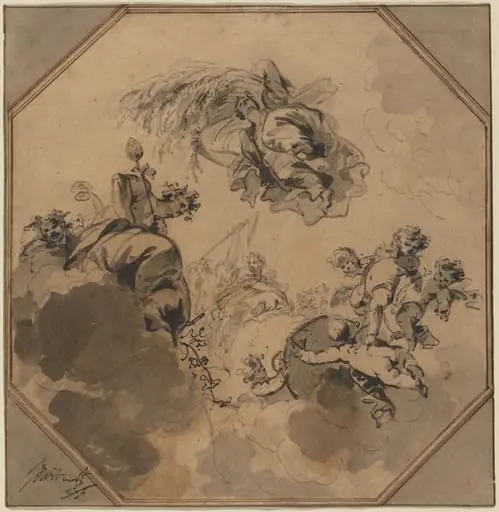 Study for a Ceiling: Allegory of the Harvest with Dionysus and Ceres
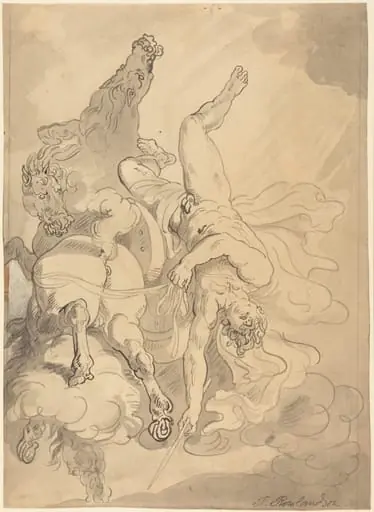 The Fall of Phaeton
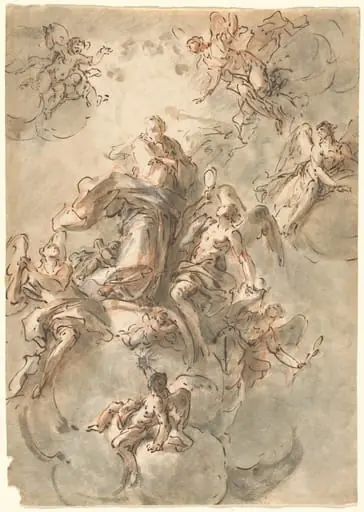 Virgin of the Immaculate Conception
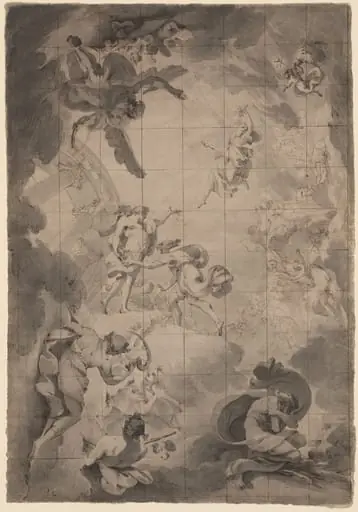 Studies of Aurora and Apollo
 The Judgment of Paris