Artwork
Pygmalion and Galatea
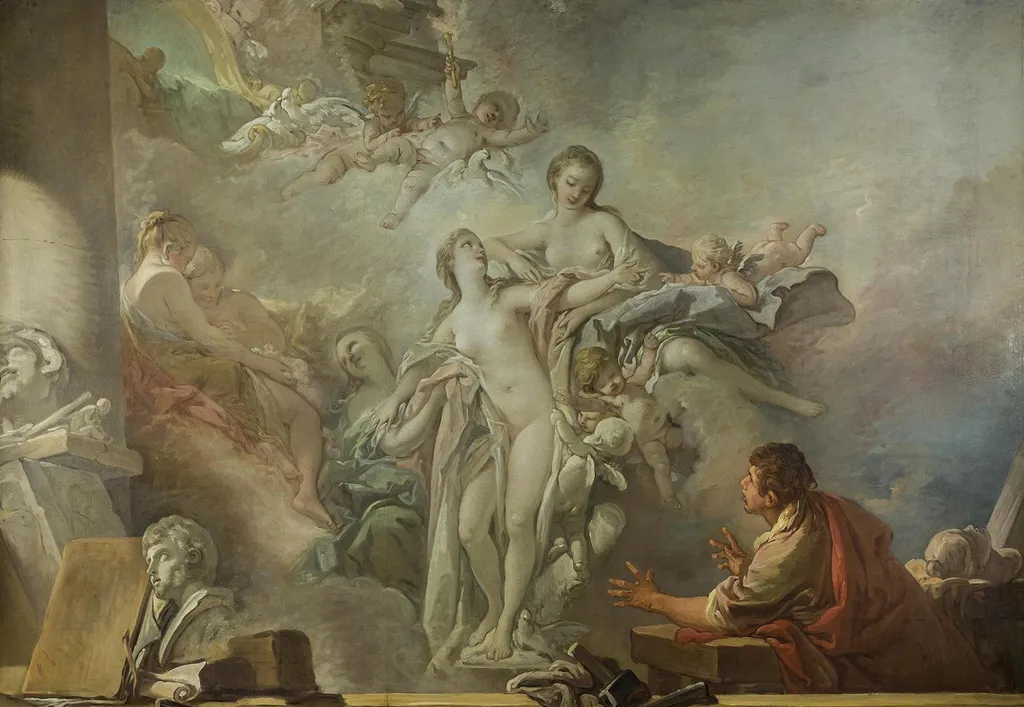
Pygmalion and Galatea is an oil painting by the Rococo painting artist François Boucher. It dates from 1764 and is held in the collection of the Hermitage Museum.
About this work
Overview
François Boucher’s oil on canvas, completed in 1764, portrays the mythic encounter between Pygmarion and his sculpted beloved, Galatea. The composition is housed in the State Hermitage Museum, where it remains a representative example of the artist’s Rococo sensibility.
Subject & Meaning
The work visualises the ancient tale of a sculptor who falls in love with his own creation. A seated figure in a red robe gazes upward at a nude woman whose flawless skin and flowing hair suggest a sudden animation of stone, while cherubic figures hover in the sky, underscoring the moment of divine intervention.
Technique & Style
Executed in oil, Boucher employs soft, luminous brushwork to render the delicate flesh of the female form and the airy atmosphere surrounding the figures. The pastel palette, characteristic of Rococo, emphasizes sensuality, while the inclusion of broken statues and floating putti adds a theatrical, decorative quality to the scene.
History & Provenance
Painted in the mid‑eighteenth century, the canvas entered the collection of the State Hermitage Museum, where it has been displayed as part of the museum’s holdings of French art. Its provenance traces back to the artist’s workshop, reflecting the period’s fascination with classical mythology rendered in a light, ornamental manner.
Artist & collection
Artist
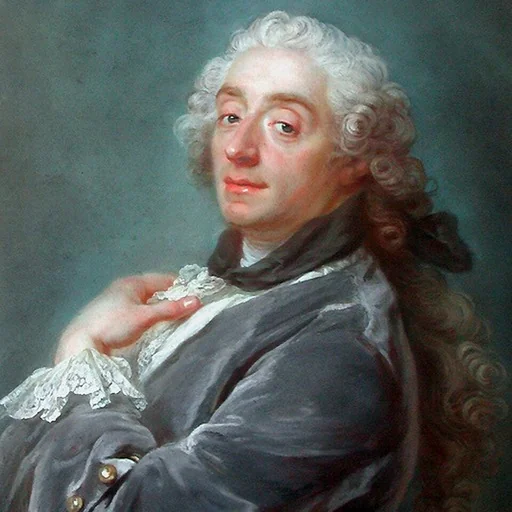
François Boucher was a French painter, draughtsman and etcher, who worked in the Rococo style.

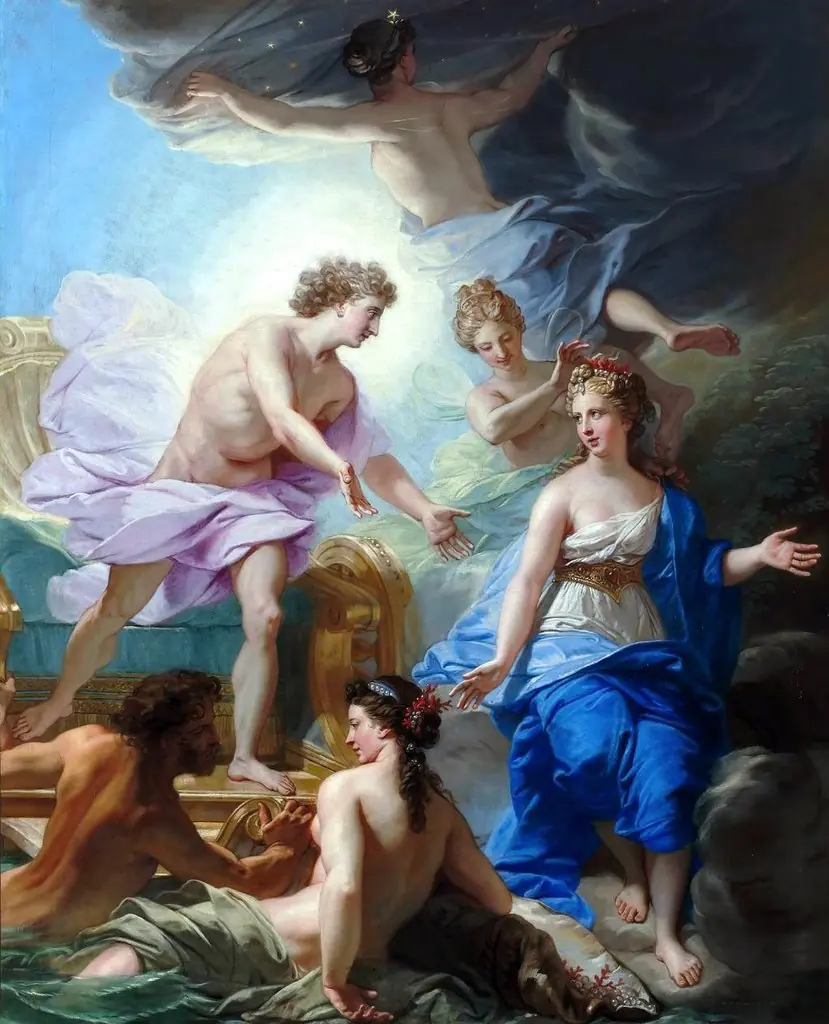 Apollo and Thetis
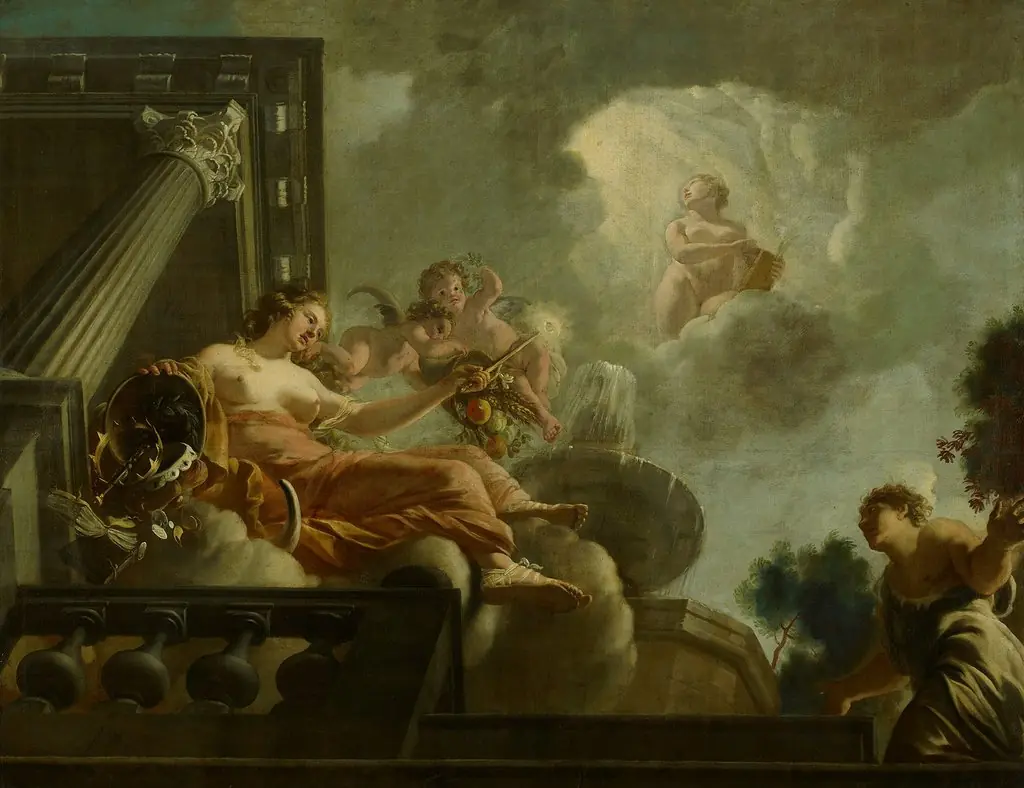 Religio begunstigt Abondantia : Allegorische voorstelling van de verzorging van leprozen en onnozelen
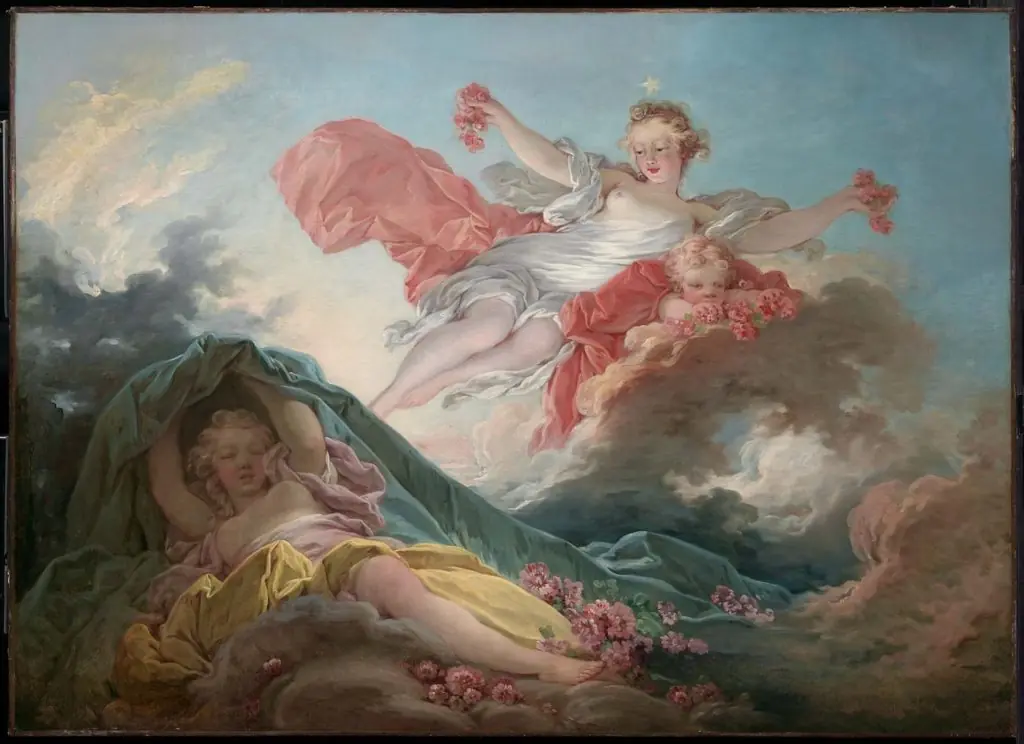 Aurora Triumphing over Night
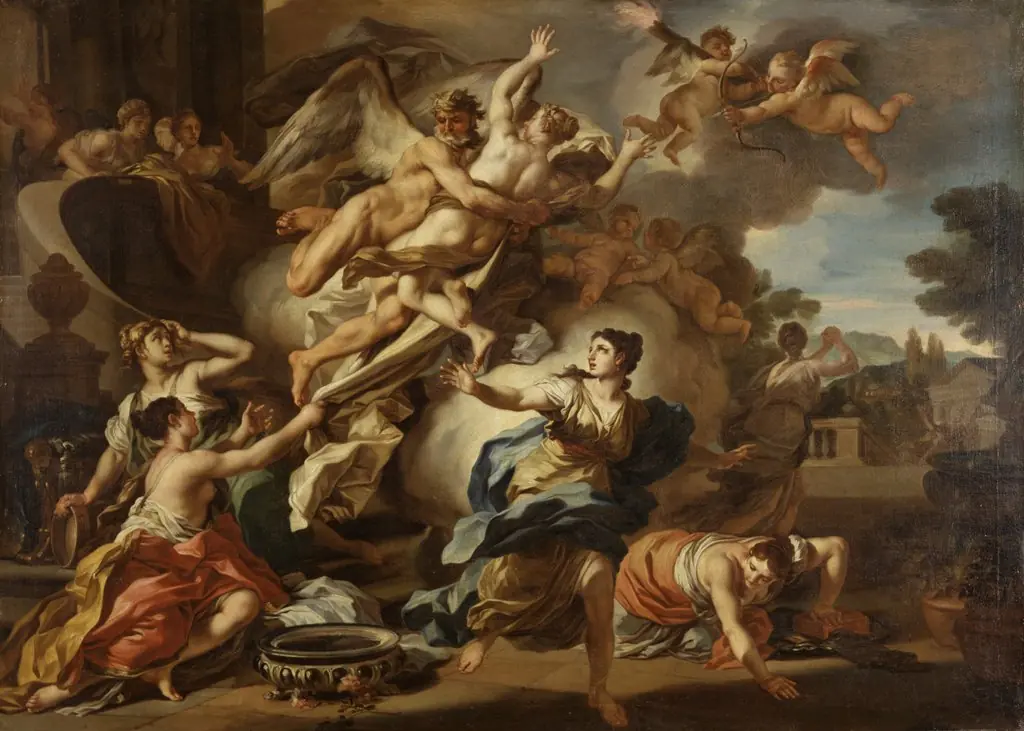 The Abduction of Orithyia
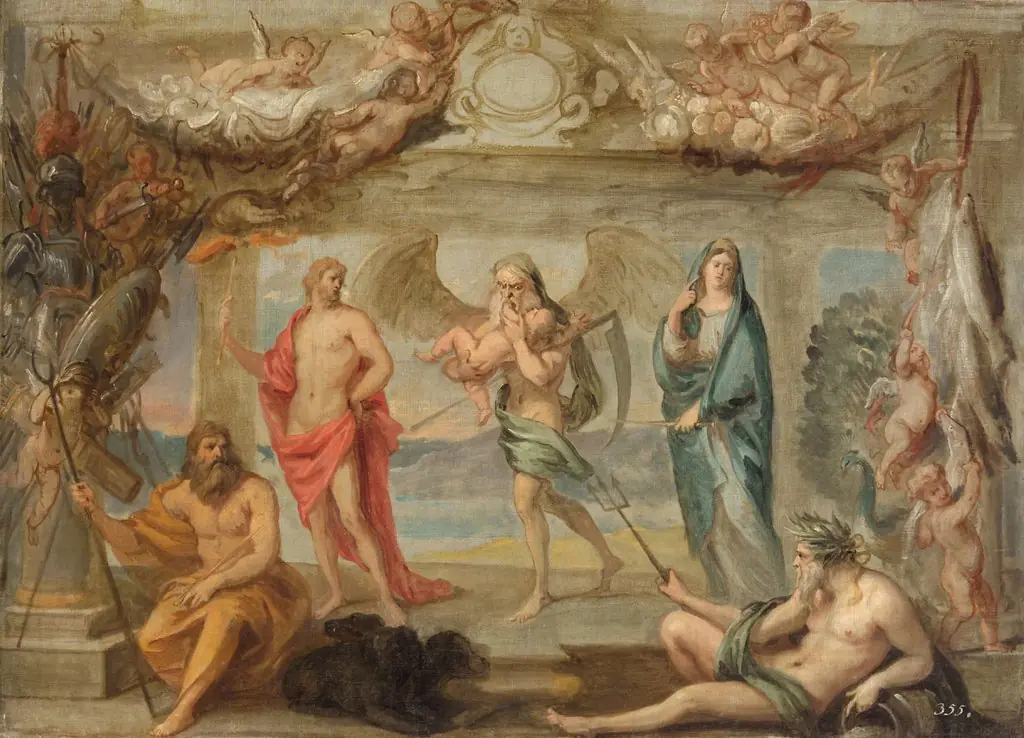 Die Elemente und die Zeit
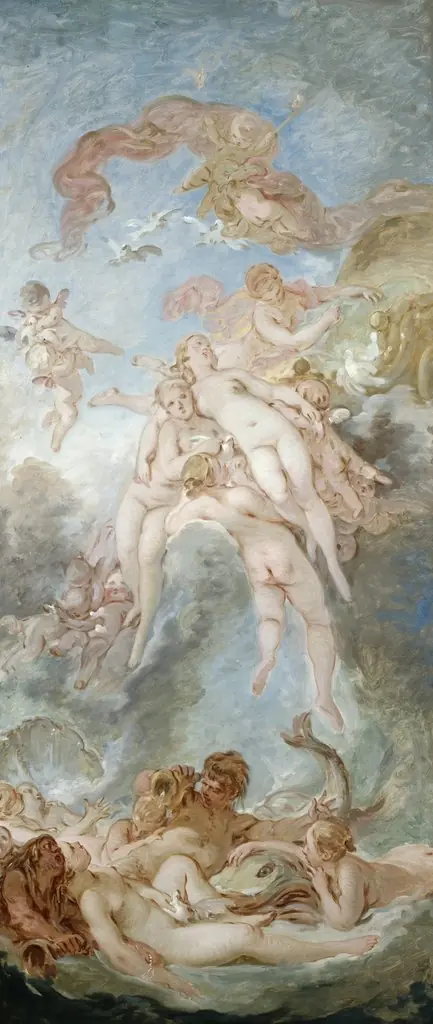 The Birth of Venus
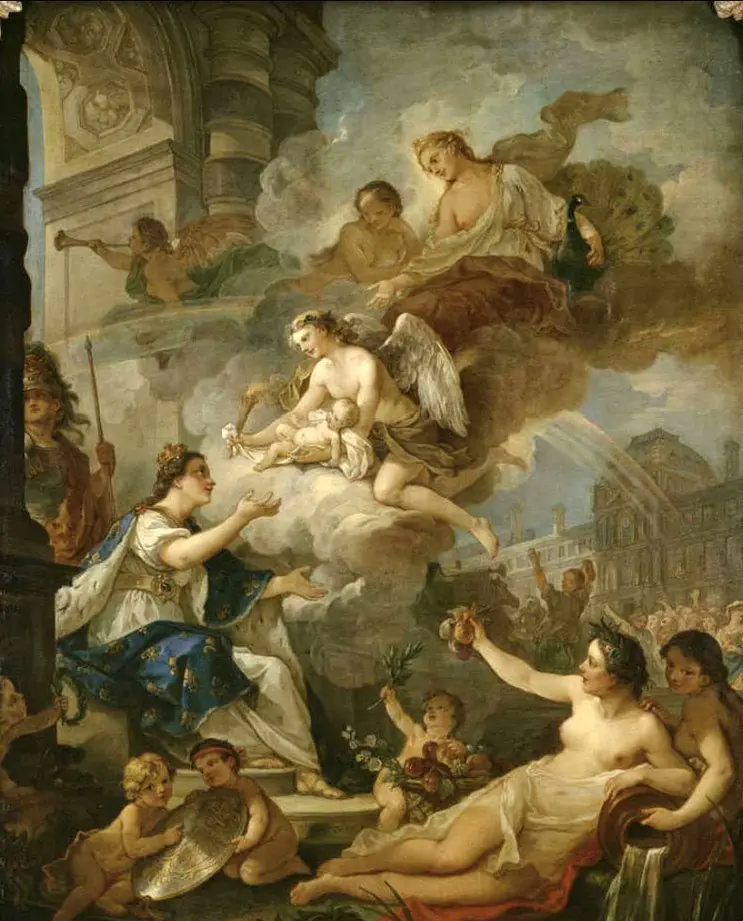 Allegory of the Birth of Marie-Zéphyrine of France, daughter of Louis of France
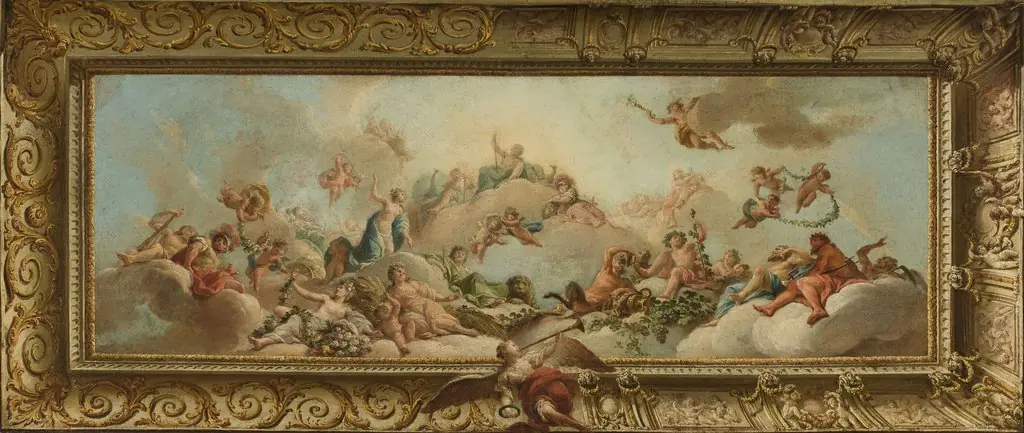 Greeting of Venus at Mount Olympus
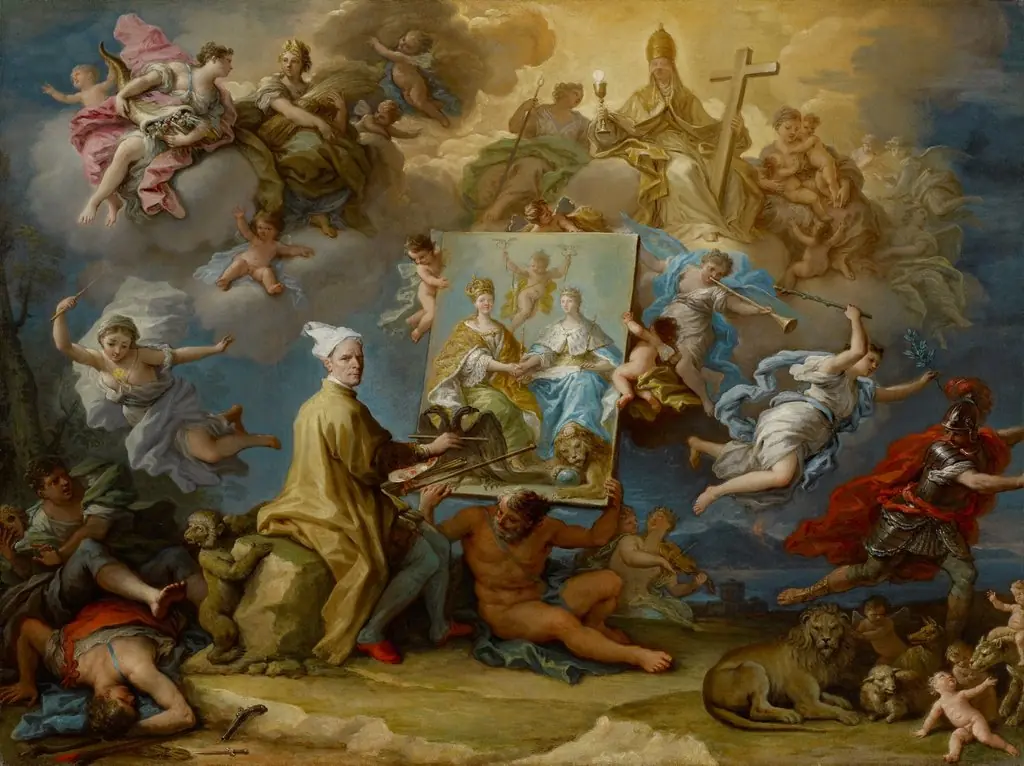 Allegory of the Consequences of the Peace of Utrecht
 Old Testament Figures in Paradise