Artwork
Jacob's homecoming
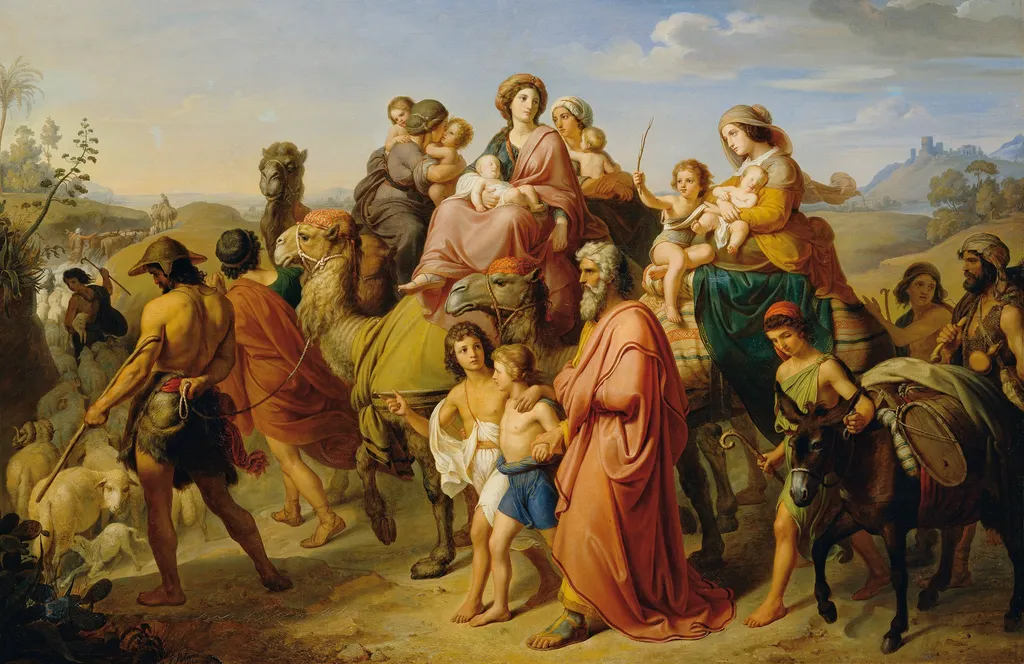
Jacob's homecoming is an oil painting by the Biedermeier artist Karl von Blaas. It dates from 1841 and is held in the collection of the Kunsthistorisches Museum.
About this work
Overview
The work is part of the Kunsthistorisches Museum’s collection in Vienna, reflecting its cultural significance in 19th-century Austrian art.
Karl von Blaas painted *Jacob's Homecoming* in 1841 using oil on canvas. An Austrian artist known for religious and portrait subjects, he rendered this scene within the Biedermeier tradition, which favored quiet domestic moments over grand historical narratives. The work is part of the Kunsthistorisches Museum’s collection in Vienna, reflecting its cultural significance in 19th-century Austrian art.
Subject & Meaning
The painting illustrates the biblical moment when Jacob returns to his family after years of absence. Figures gather in a pastoral setting, their gestures and postures suggesting reunion and emotional resolution. The central figure, Jacob, is surrounded by relatives and servants, with livestock and belongings indicating a journey completed. The scene emphasizes familial reconciliation rather than spectacle, aligning with Biedermeier values of personal and domestic harmony.
Technique & Style
Blaas employed careful modeling and a restrained palette to convey texture and spatial depth. Clothing and animal forms are rendered with attention to detail, while the landscape recedes softly into the background. Light falls naturally across the group, enhancing volume without dramatic contrast. The composition is balanced yet dynamic, with figures arranged to suggest gentle motion toward a shared center, reinforcing the theme of unity.
History & Provenance
Completed in 1841, the painting entered the Kunsthistorisches Museum’s collection shortly after its creation, likely through state acquisition or donation. It remained within Austrian institutional holdings, reflecting its status as a representative work of mid-19th-century Viennese academic art. No significant changes in ownership are recorded, indicating consistent recognition of its cultural value within Austria.
Context
Created during the Biedermeier era, the painting reflects a broader cultural shift away from Romantic grandeur toward intimate, morally grounded scenes. In post-Napoleonic Austria, such works resonated with middle-class ideals of stability and domestic virtue. Religious narratives were often treated with quiet realism, avoiding theatricality in favor of emotional authenticity, a tone evident in this depiction of Jacob’s return.
Legacy
While not widely exhibited outside Austria, *Jacob's Homecoming* remains a key example of Biedermeier religious painting within the Kunsthistorisches Museum’s holdings. It illustrates how academic artists of the period adapted biblical themes to contemporary sensibilities, prioritizing psychological nuance over doctrinal emphasis. Its preservation underscores its role in documenting 19th-century Austrian artistic priorities.
Own this work as a print
Artist & collection
Artist
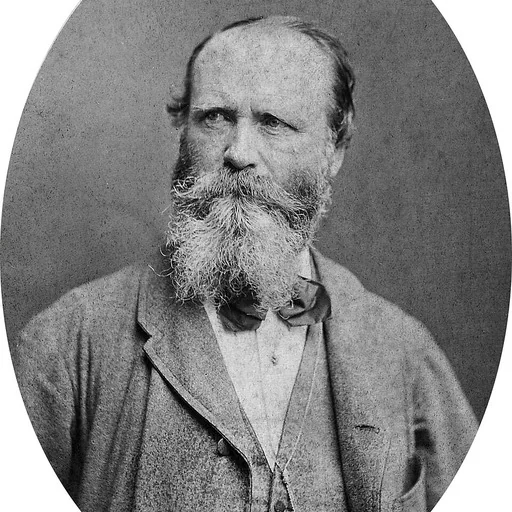
Karl von Blaas (28 April 1815 – 19 March 1894) was an Austrian painter known for his portraits and religious compositions executed on canvas as well as in the form of frescoes.

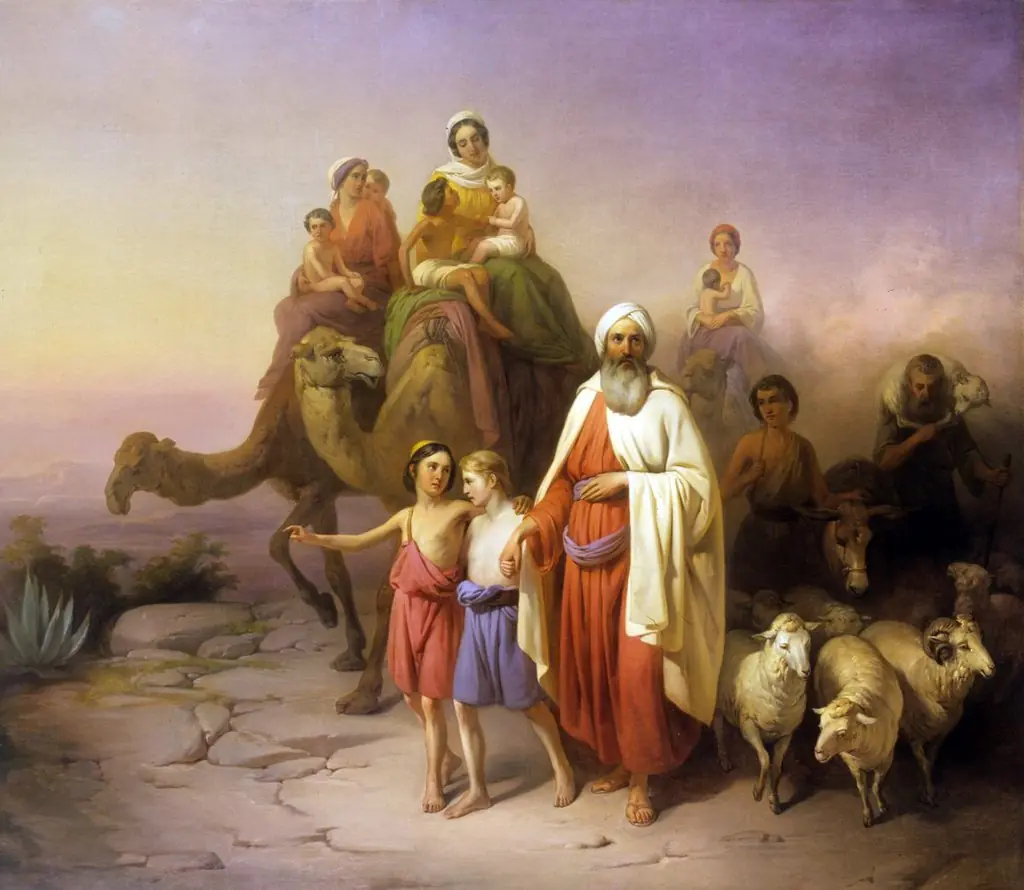 The Departure of Abraham
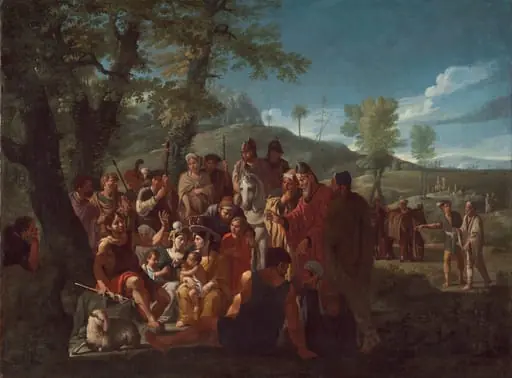 Saint John the Baptist Preaching
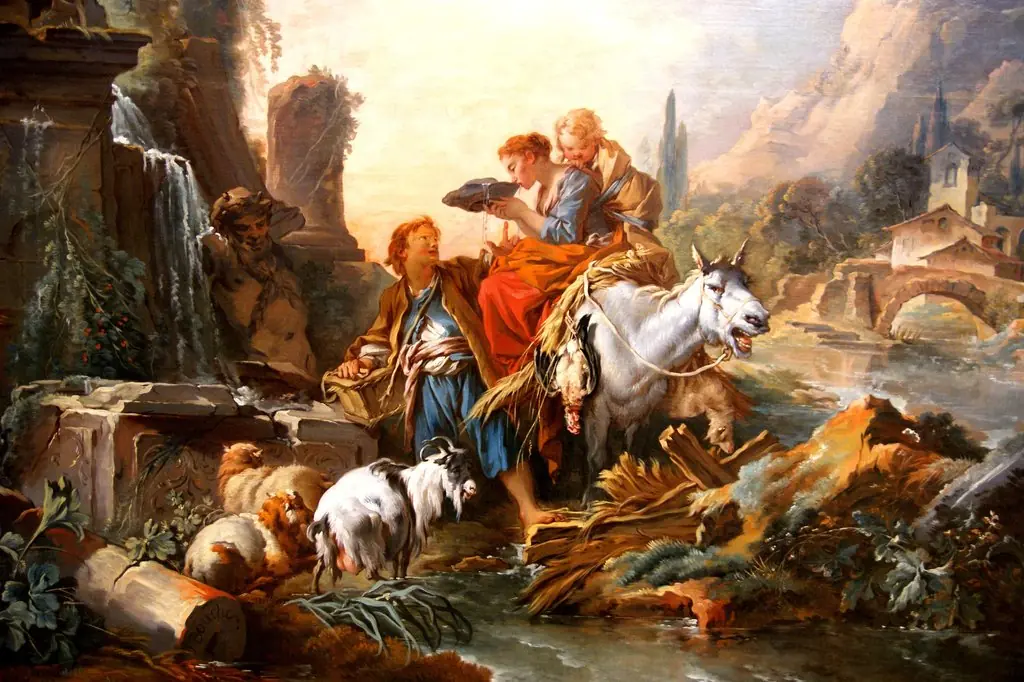 Rast am Brunnen
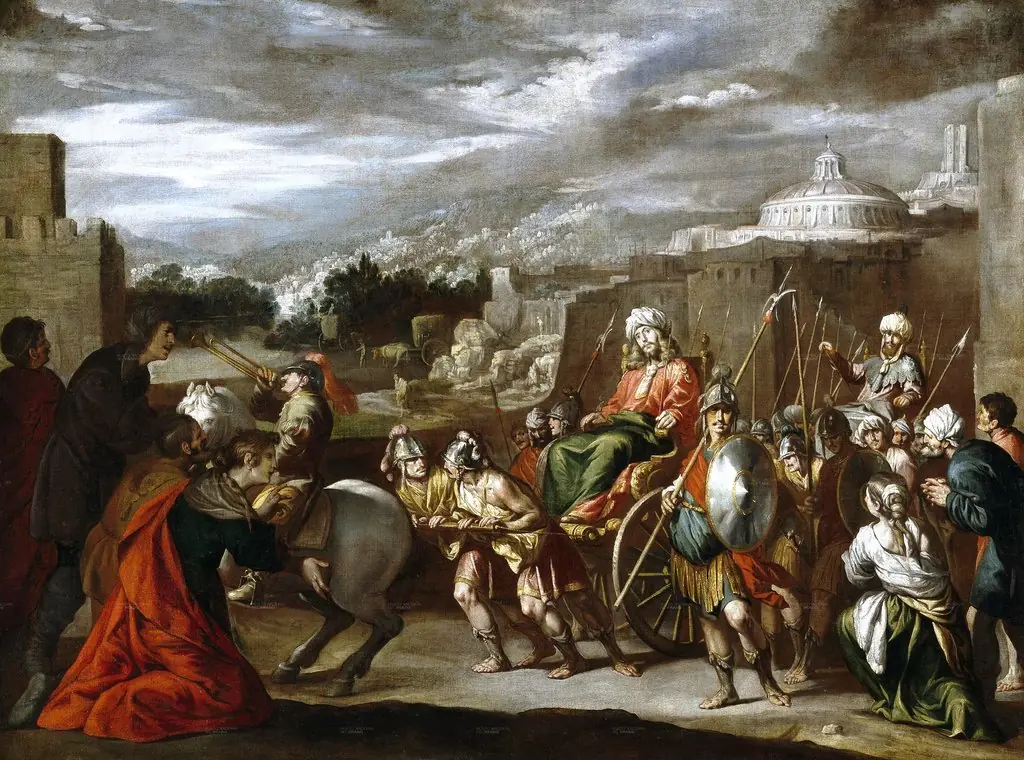 Joseph’s Triumph in Egypt
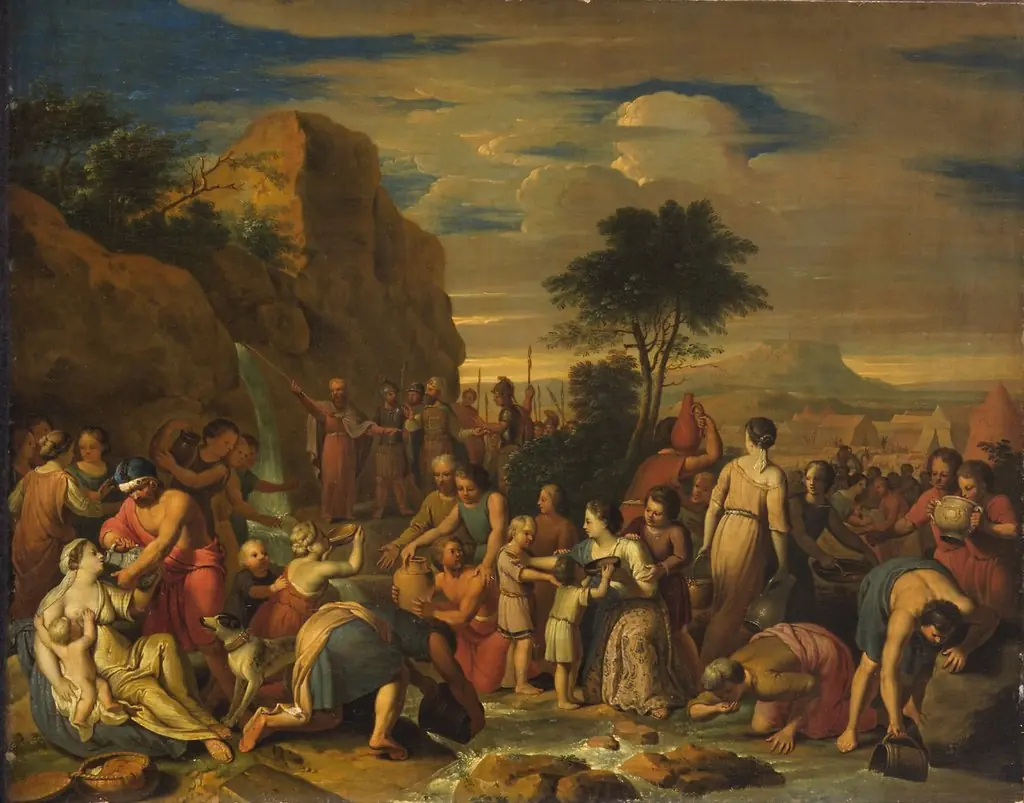 Moses schlägt Wasser aus dem Felsen
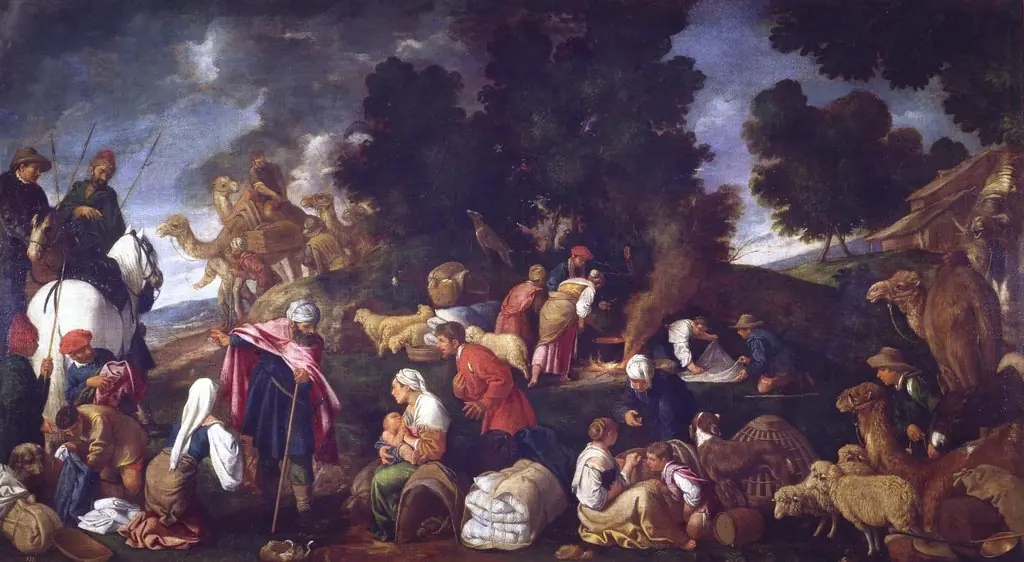 Labán busca los ídolos
 Journey of the Magi with their Retinue
 Adoration of the Magi
 Jacob's Sons Show Him Joseph's Blood-Stained Robe
 Fuga lui Iacov
 Holy Family in Egypt
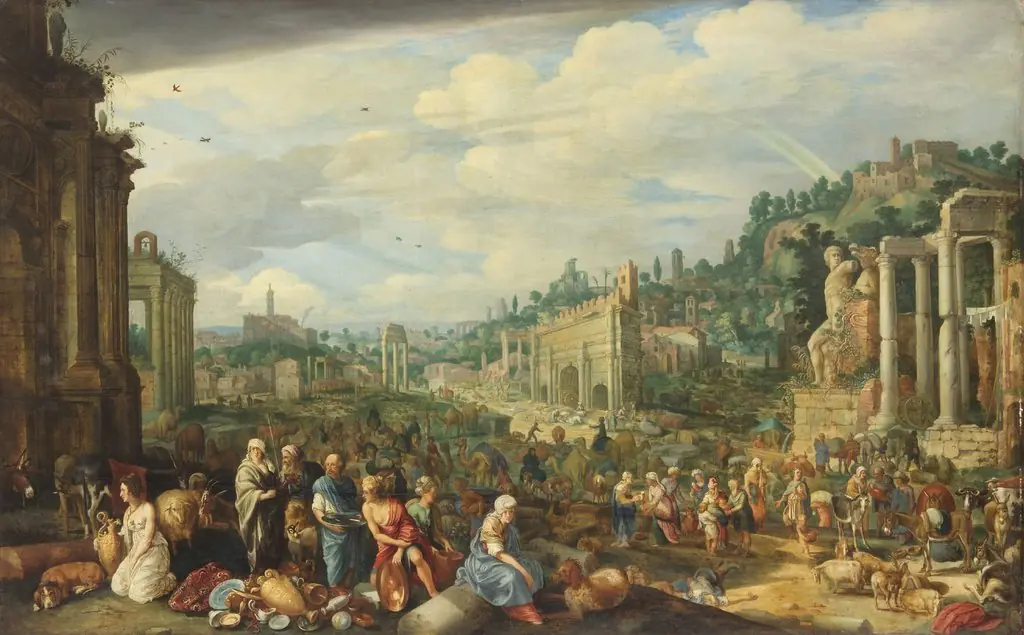 Ansicht des Campo Vaccino in Rom (Aufbruch der Israeliten aus Ägypten)