Artwork
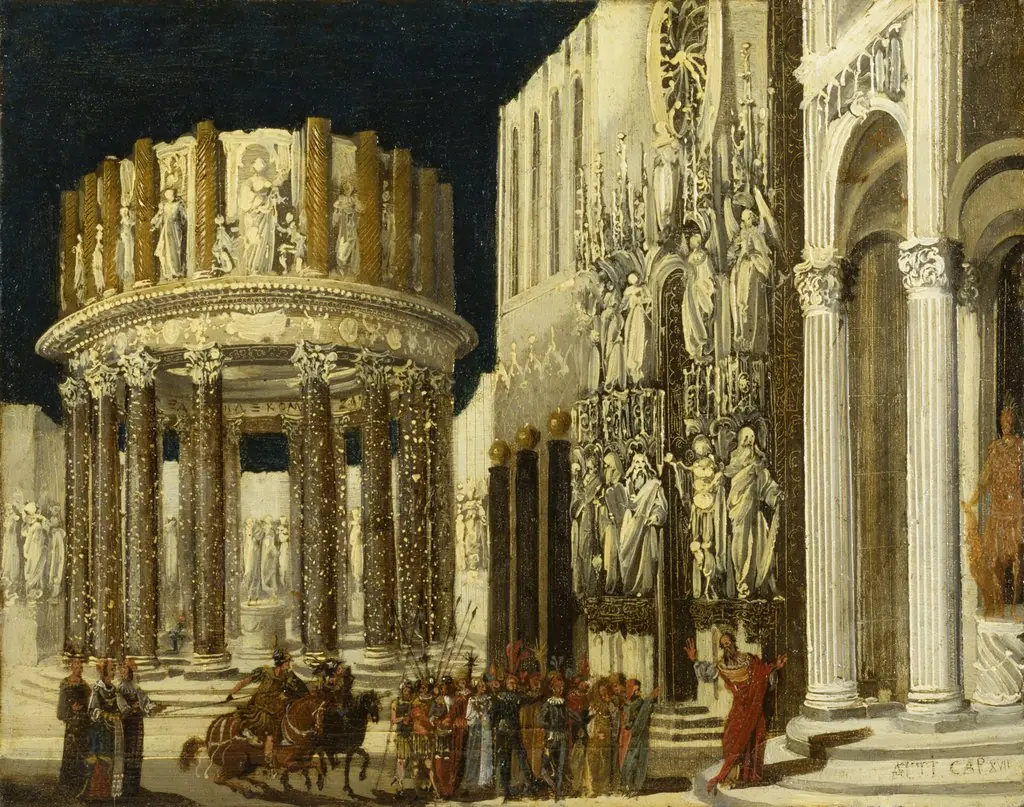
Architectural Fantasy with the Conversion of Saul (Saint Paul)
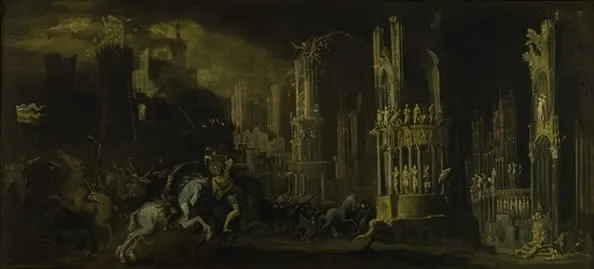
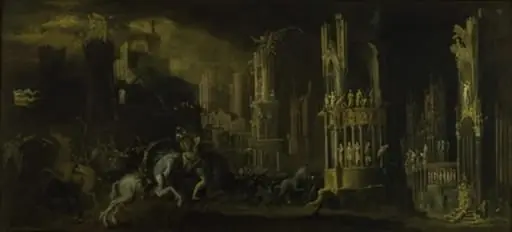
Architectural Fantasy with the Conversion of Saul (Saint Paul) is an oil painting by the French Classical Baroque artist François de Nomé. It dates from 1622 and is held in the collection of the Statens Museum for Kunst.
About this work
Overview
The composition centers on the biblical conversion of Saint Paul, depicting the apostle falling from his horse amidst a swirling crowd of figures.
Painted in 1622, Architectural Fantasy with the Conversion of Saul is a seminal work by François de Nomé, also known as Monsù Desiderio, that exemplifies the French artist's career-long fascination with fantastical architecture and dramatic perspective. The composition centers on the biblical conversion of Saint Paul, depicting the apostle falling from his horse amidst a swirling crowd of figures. This narrative event is secondary to the overwhelming presence of the setting: a vast, imaginary cityscape defined by towering, spiraling spires, crumbling ruins, and impossible geometric structures that dwarf the human figures. Nomé employs a theatrical use of light and shadow to accentuate the vertiginous depth and the monumental scale of the architecture, creating a sense of awe and disorientation. The work reflects the artist's unique position in early 17th-century art, bridging the Mannerist tradition of elaborate design with the emerging Baroque interest in emotional intensity and spatial complexity. By prioritizing the architectural environment over the religious subject, Nomé establishes a visual language that influenced the development of capriccio painting and the depiction of imaginary ruins in later European art.
Subject & Meaning
The central narrative references the biblical episode in which Saul, later Paul, experiences a divine revelation while traveling. In the painting, the rider’s presence amid a chaotic cityscape suggests a moment of spiritual interruption, with the surrounding figures reacting either with curiosity or alarm, underscoring the tension between sacred revelation and worldly disorder.
Technique & Style
De Nomé employs a muted palette of earth tones, punctuated by deep shadows that lend the scene atmospheric depth. The contrast between illuminated forms and darker recesses creates a chiaroscuro effect, heightening the drama of the composition and emphasizing the architectural fantasy that frames the biblical event.
History & Provenance
Created in the early seventeenth century, the canvas entered the Statens Museum for Kunst’s holdings during the museum’s effort to assemble a representative European Baroque collection. Its provenance prior to acquisition is not extensively documented, but the work has remained a notable example of de Nomé’s imaginative architectural scenes.
Artist & collection

 Bombardment of Brussels in 1695
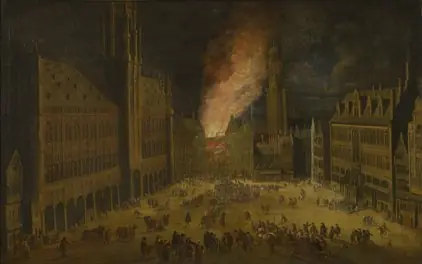 Fire of the house the Wolvin in Brussels in 1690
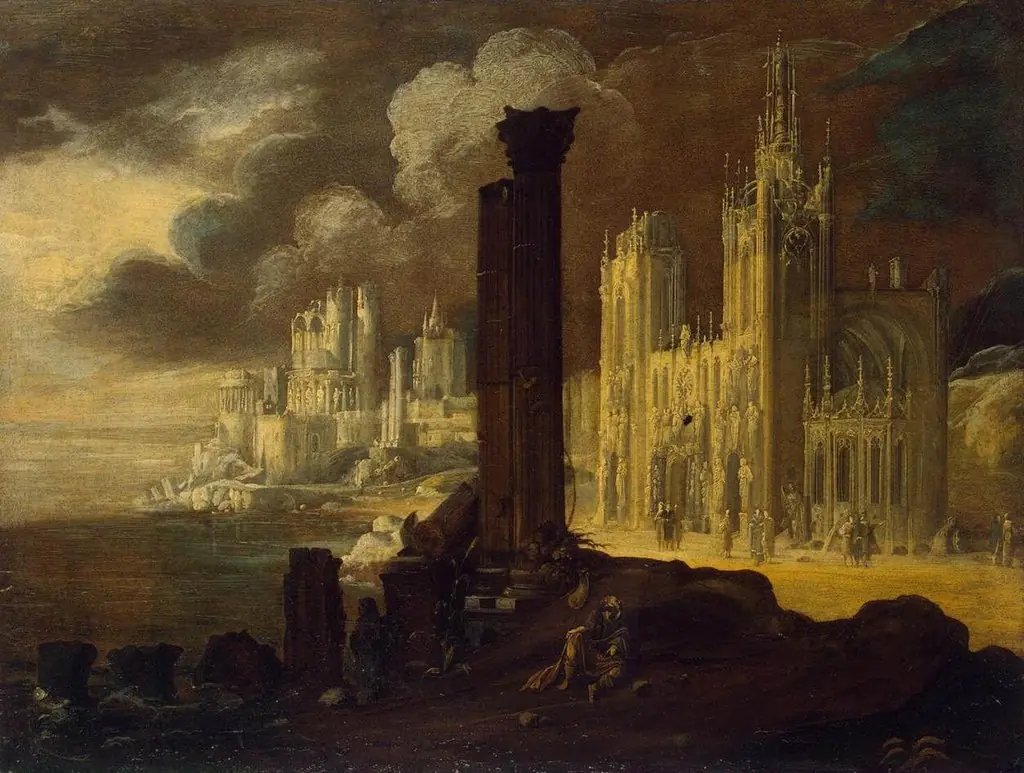 Landscape with Buildings
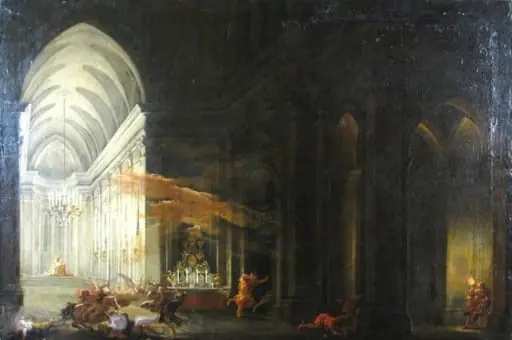 Heliodor biruit de înger
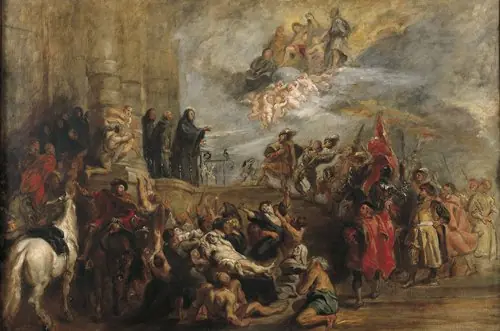 The miracles of Saint Benedict
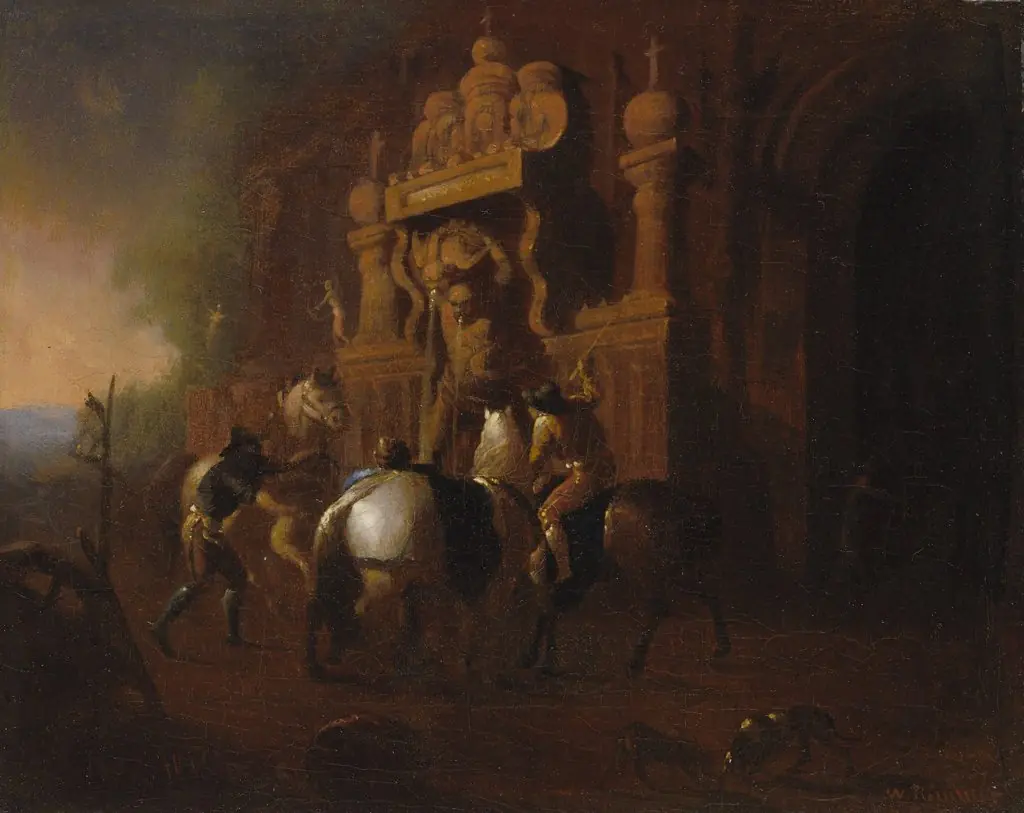 Horses at a Fountain
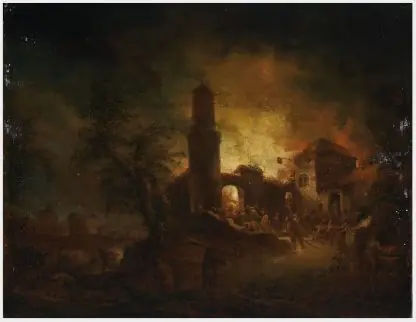 A Town on Fire
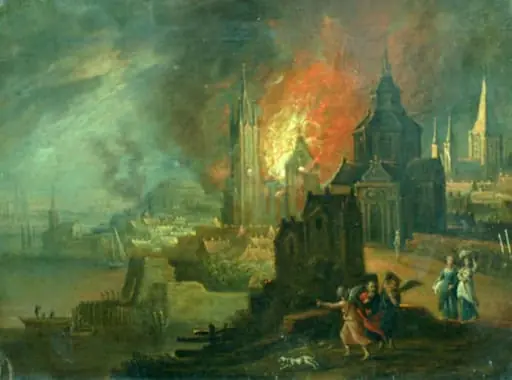 Oraș în flăcări
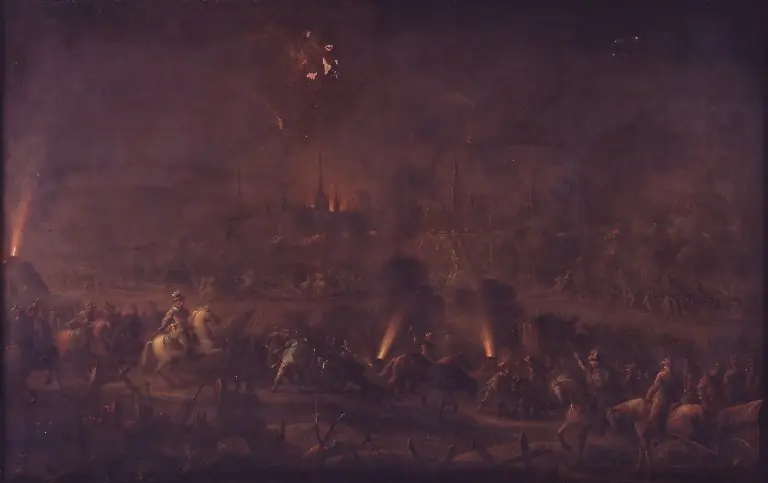 Wismars bombardement
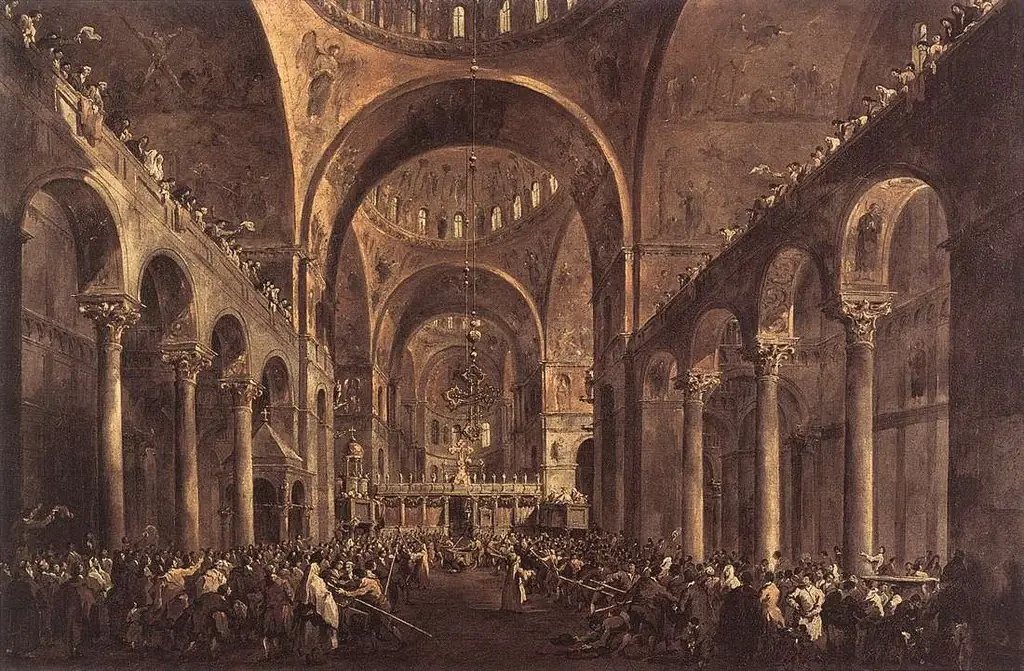 Doge Alvise IV Mocenigo Appears to the People in St Mark's Basilica in 1763
 Architectural Fantasy with the Conversion of Saul (Saint Paul)