Artwork
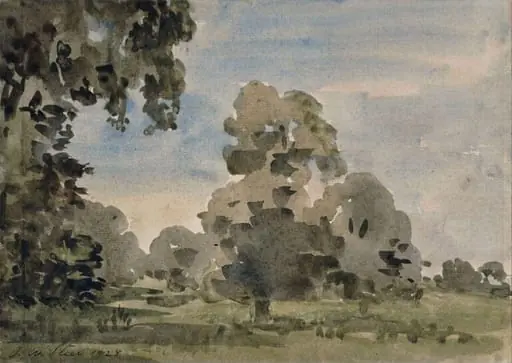
View of Hyde Park
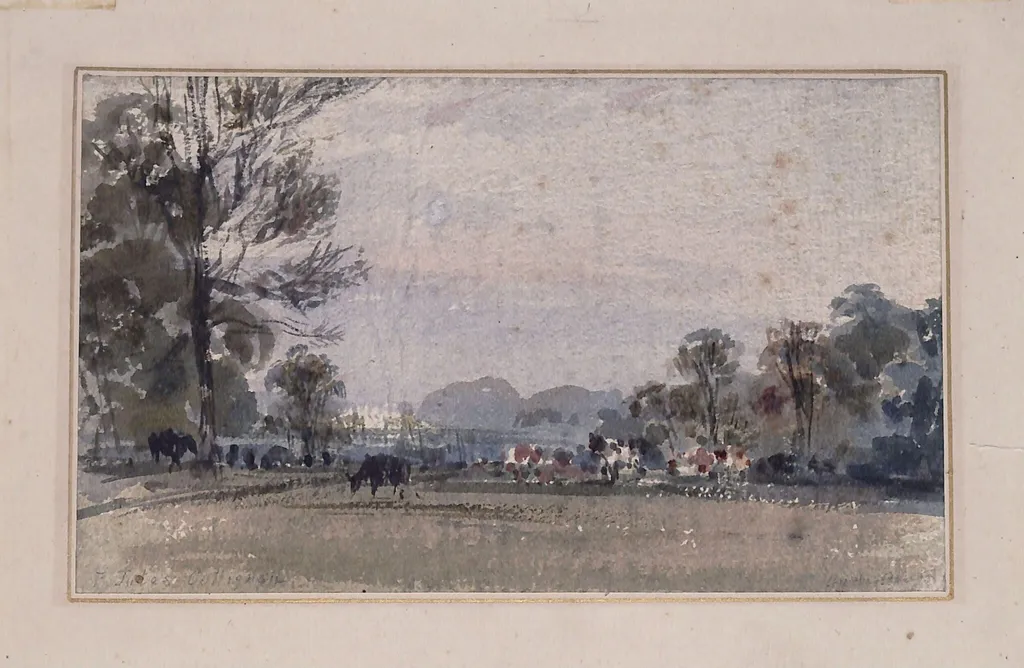
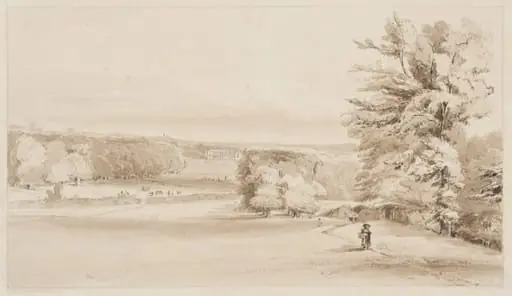
View of Hyde Park is a watercolor work on paper by the Romanticist artist François Jules Collingnon. It dates from 1800 and is held in the collection of the Victoria and Albert Museum.
About this work
Overview
Its delicate handling and unfinished appearance suggest it was made as an on-site observation rather than a formal composition.
View of Hyde Park is a watercolor landscape painted in 1800 by François Jules Collingnon. Executed in transparent pigments on paper, the work captures a quiet moment in one of London’s most prominent public spaces. Its delicate handling and unfinished appearance suggest it was made as an on-site observation rather than a formal composition. The piece resides in the Victoria and Albert Museum’s collection of 19th-century British watercolors.
Subject & Meaning
The scene depicts a pastoral stretch of Hyde Park, with grazing cattle, scattered trees, and a distant group of figures near the Serpentine River. No specific event is recorded, but the presence of people implies everyday leisure—a common theme in early 19th-century urban landscapes. The work conveys a sense of calm observation, reflecting the growing public interest in nature within the city during the period.
Technique & Style
Collingnon employed loose, rapid brushwork and diluted washes to suggest form without detail. The paper’s texture remains visible in places, enhancing the airy, ephemeral quality of the scene. Muted greens, browns, and pale blues dominate, with subtle variations in tone indicating shifting light. The technique prioritizes atmosphere over precision, aligning with the observational traditions of topographical watercolorists of the era.
History & Provenance
The watercolor was created in 1800 and entered the Victoria and Albert Museum’s collection through its long-standing acquisition of British watercolors. Its provenance prior to museum acquisition is not publicly documented, but its style and subject suggest it was likely made for private circulation or as part of a travel sketchbook. It has remained in institutional care since the 19th century.
Context
In the early 1800s, watercolor was increasingly used by amateur and professional artists to record landscapes during a time of rising public access to urban parks. Hyde Park, recently opened to the general populace, became a favored subject for sketches. Collingnon’s work reflects this cultural shift, capturing the park not as a royal domain but as a shared, lived-in environment.
Legacy
Though not widely known today, the painting exemplifies the quiet, observational watercolor tradition that preceded the more dramatic Romantic landscapes. Its modest scale and unpolished finish highlight the value placed on immediacy and naturalism in early 19th-century British art. It remains a representative example of how artists documented everyday urban nature during a period of social and aesthetic change.
Own this work as a print
Artist & collection
Artist
François Collignon painted British landscapes in watercolor during the early 1800s.

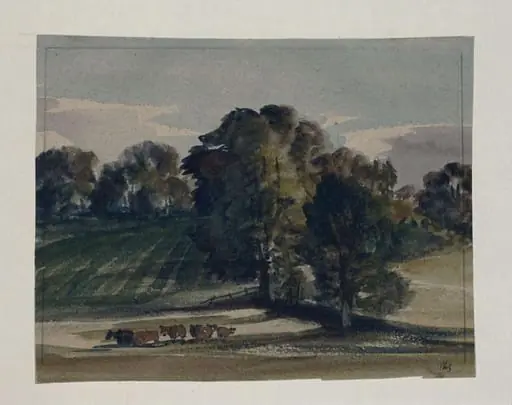 Coneycroft Farm, Compton
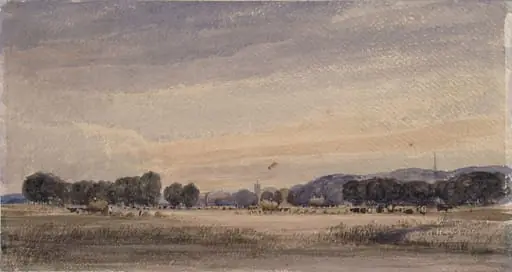 Fields near Norwich
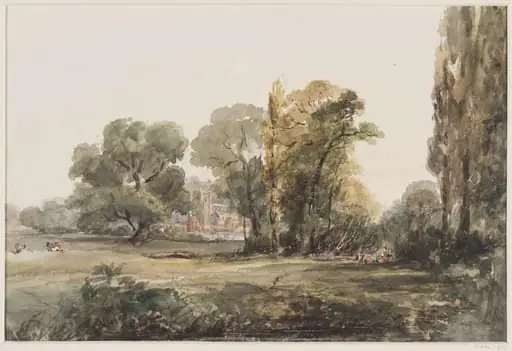 Stowe: a church in the distance, seen amid trees
 Untitled
 Landscape
 Windsor Castle from the Great Park, near the End of the Long Walk
 The Southdown, Underhill Road; Clayton to Westmeston
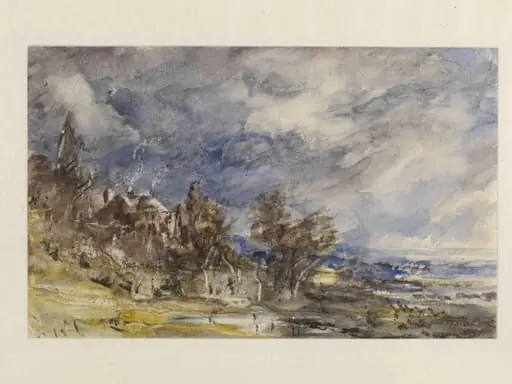 Hampstead Heath, from near Well Walk
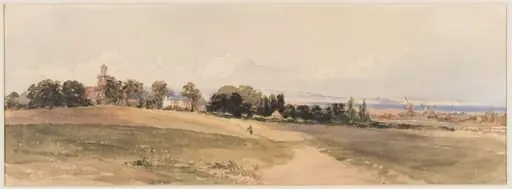 Upper Deal - Ramsgate in the distance
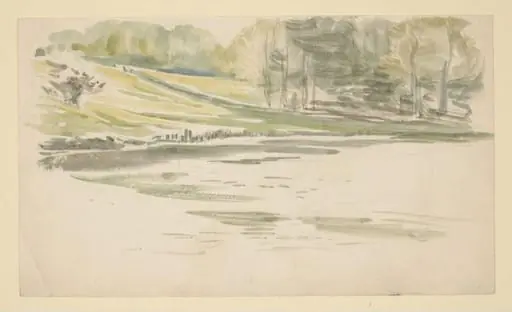 A lake with trees; study relating to The Tale of Mr Tod
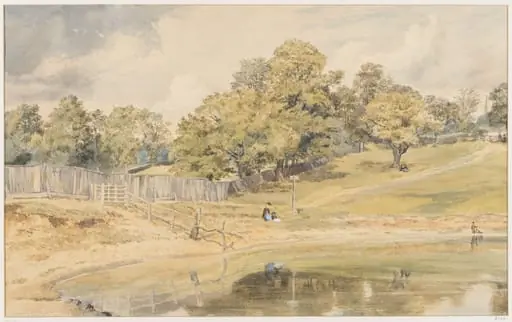 Pond at Hampstead
 A Park Scene in Suffolk