Artwork
The Fencer's Guild Receives J. Vermoelen, Abbot of Sint-Michiels
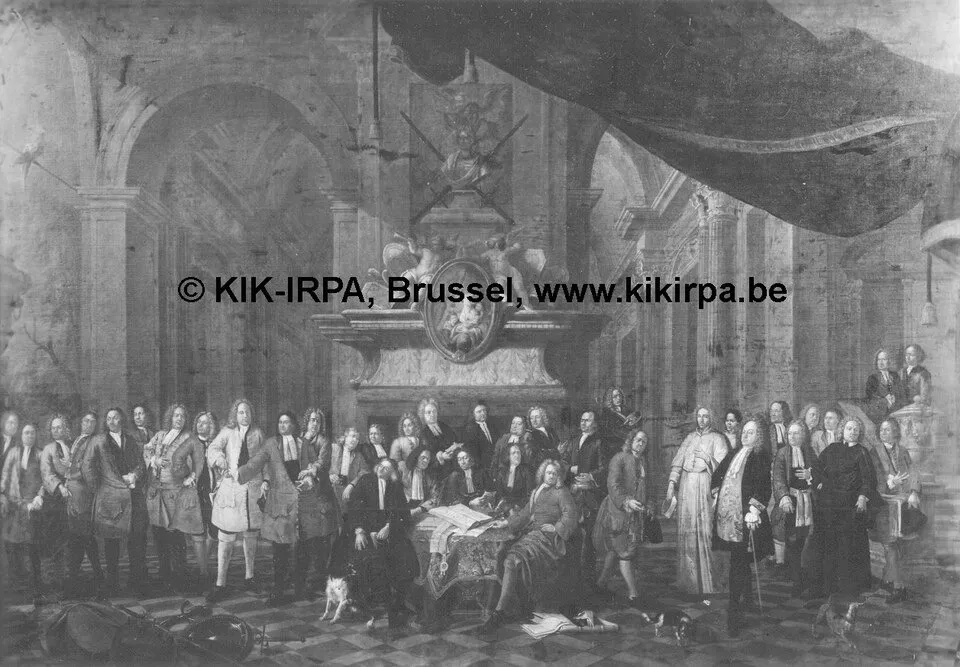
The Fencer's Guild Receives J. Vermoelen, Abbot of Sint-Michiels is an oil painting by the Rococo painting artist François Xaver Henri Verbeeck. It dates from 1713 and is held in the collection of the Royal Museum of Fine Arts Antwerp.
About this work
Overview
Painted in 1713 by François Xaver Henri Verbeeck, this oil-on-canvas work captures a formal ceremony in Antwerp’s fencing guildhall.
Painted in 1713 by François Xaver Henri Verbeeck, this oil-on-canvas work captures a formal ceremony in Antwerp’s fencing guildhall. Verbeeck, known for scenes of civic life, rendered the occasion with precision and restrained grandeur. The composition centers on a ritualized moment of institutional recognition, reflecting the guild’s role in urban society. The painting remains in the Royal Museum of Fine Arts Antwerp, where it exemplifies early 18th-century Flemish genre painting.
Subject & Meaning
The scene depicts the fencing guild formally receiving J. Vermoelen, abbot of Sint-Michiels, likely as part of a ceremonial acknowledgment of his patronage or authority. Guild members stand in attentive formation around a scribe documenting the event, while the abbot, clad in ecclesiastical robes, occupies a position of quiet prominence. The gathering underscores the intersection of civic and religious power in Antwerp’s social fabric, where martial associations maintained formal ties to the Church.
Technique & Style
Verbeeck employed fine brushwork to render textures of wool, leather, and metal with meticulous detail. The figures are arranged in a shallow, stage-like space defined by architectural arches and a monumental fireplace, enhancing the sense of ceremony. Lighting is even and naturalistic, avoiding dramatic contrasts. Facial expressions are subdued, emphasizing decorum over emotion. The composition’s balance and clarity reflect a transition from Baroque formality toward the emerging Rococo emphasis on refined social interaction.
History & Provenance
Commissioned by the guild itself, the painting was likely displayed in their meeting hall to commemorate the abbot’s visit. It remained in Antwerp throughout its history, passing through private and institutional hands before entering the Royal Museum of Fine Arts Antwerp’s collection. Its survival in near-original condition is uncommon for works of this type, which were often altered or lost due to changing tastes or political upheaval.
Context
In early 18th-century Antwerp, fencing guilds were not merely martial societies but civic institutions with legal privileges, often linked to trade and municipal governance. Their ceremonies, like this one, reinforced social hierarchies and alliances between secular and religious authorities. The presence of an abbot signals the Church’s continued influence in urban life, even as guilds asserted their own autonomy through ritual.
Legacy
Verbeeck’s painting stands as a rare, well-preserved record of guild ceremonial life in the Southern Netherlands. While not widely exhibited outside Antwerp, it contributes to scholarly understanding of how civic organizations used visual culture to legitimize their status. Its restrained tone and attention to detail distinguish it from more theatrical contemporary works, offering a quiet but valuable window into the social rituals of the time.
Artist & collection
Artist
François Xaver Henri Verbeeck or Frans Verbeeck (Antwerp, baptized on 21 February 1686 – Antwerp, 28 May 1755) was a Flemish painter known mainly for his genre scenes and paintings of merry and gallant companies.

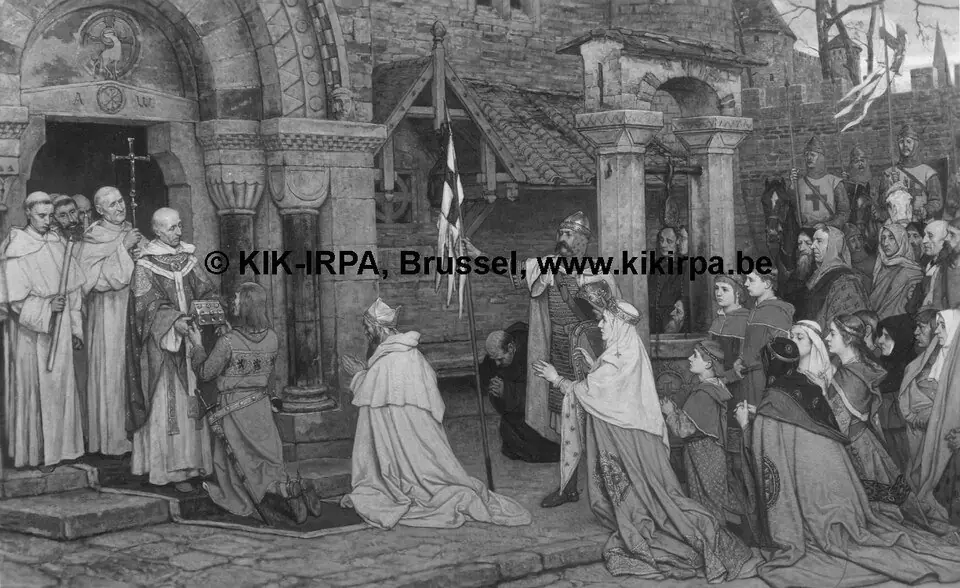 Thierry of Alsace Brings the Holy Blood to Bruges
 St Ambrose and Theodosius
 Chariclea is Recognized by her Parents
 Minerva and the Muses in a Landscape
 The Sacristy
 Easter in Egypt
 Interior of he Cathedral of Bruges
 The First French Church in Berlin
 Le concert
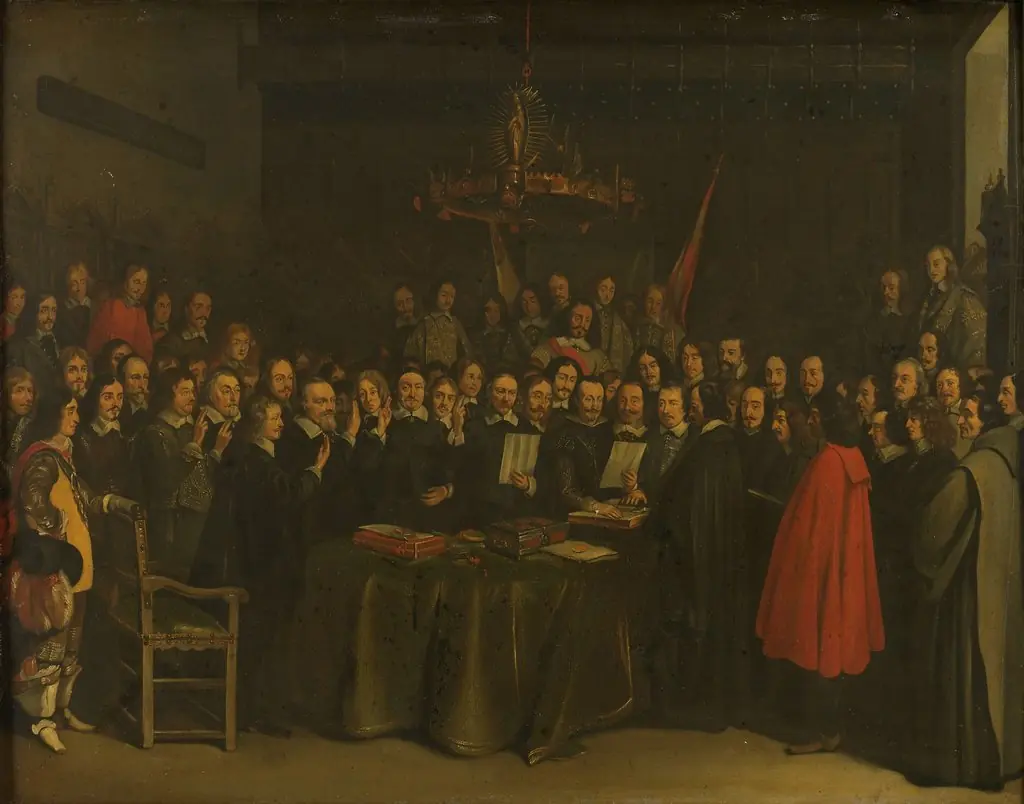 Ratification of the Peace of Münster between Spain and the Dutch Republic in the town hall of Münster, 15 May 1648
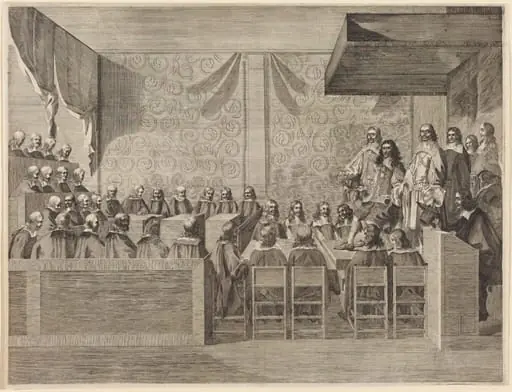 Charles II with His Council
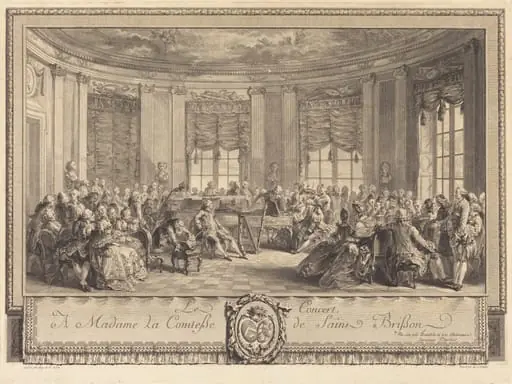 Le concert