Artwork
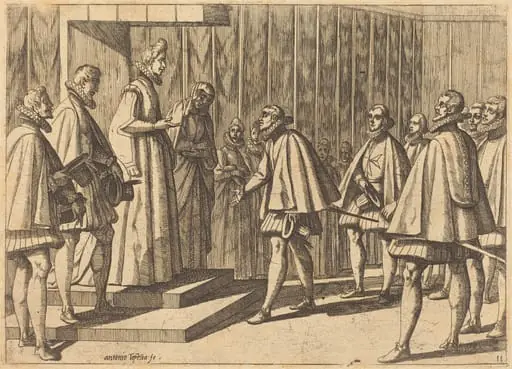
Charles II with His Council
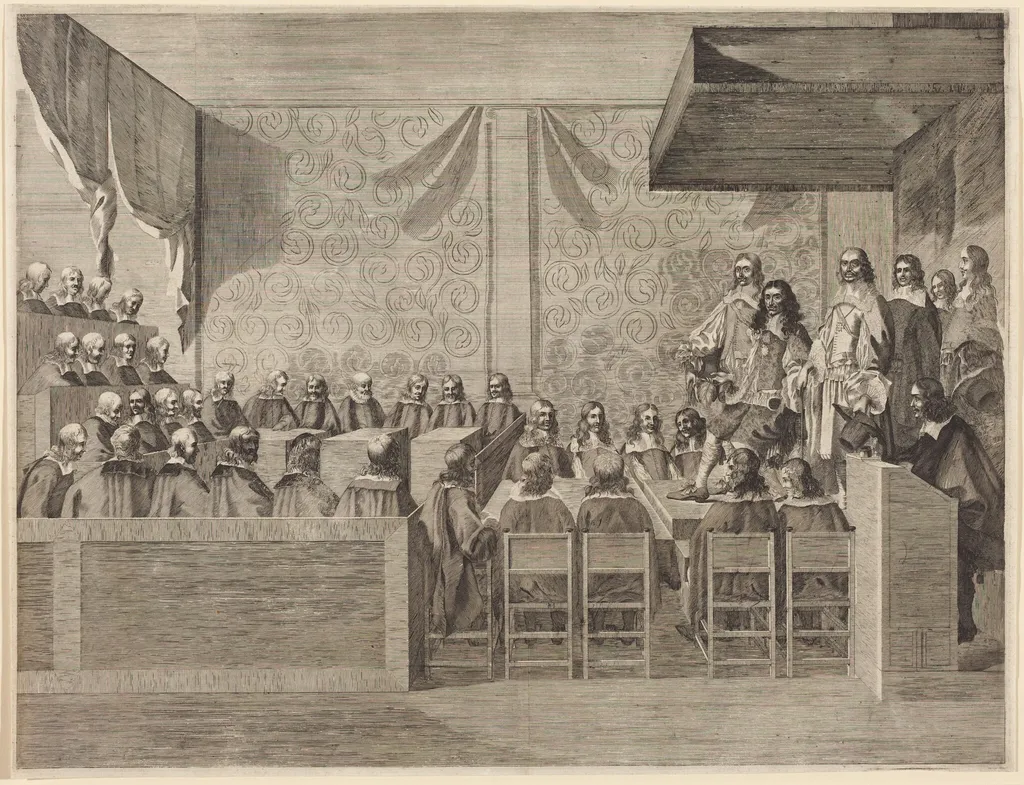
Charles II with His Council is an ink print by the Baroque artist British 17th Century. It dates from 1660 and is held in the collection of the National Gallery of Art.
About this work
Overview
The print entitled *Charles II with His Council* is an engraving that depicts a formal gathering of men in a richly appointed interior. A long table dominates the composition, flanked by seated and standing figures dressed in 17th‑century attire. At the focal point stands a cloaked individual, presumed to be the monarch, whose solemn gaze commands the attention of the assembled council.
Subject & Meaning
The central figure is identified as King Charles II, surrounded by members of his advisory body. The arrangement suggests a moment of deliberation or royal audience, emphasizing the authority of the sovereign and the collective responsibility of his ministers. The serious expressions and attentive postures convey a sense of gravitas appropriate to the governance of the Restoration era.
Technique & Style
Executed as an engraving, the work relies on fine line work to render textures of fabric, wood, and wall hangings.
Executed as an engraving, the work relies on fine line work to render textures of fabric, wood, and wall hangings. The composition employs chiaroscuro typical of the Baroque period, with strong contrasts between illuminated faces and darker background spaces, heightening the drama of the scene. The intricate detailing of clothing and furnishings reflects the period’s taste for elaborate visual narratives.
History & Provenance
The print was produced in the late 17th century, shortly after Charles II’s restoration to the English throne. While the specific engraver is not recorded in the supplied data, such images were commonly circulated as political propaganda or commemorative souvenirs. Surviving copies have appeared in private collections and museum holdings, documenting the visual culture of the Restoration court.
Context
During the Baroque era, portraiture and group scenes often served to reinforce monarchical power and the legitimacy of governance. This engraving aligns with contemporary efforts to portray Charles II as a stable, decisive ruler surrounded by loyal advisors, countering the turbulence of the preceding Commonwealth period. The setting, with its ornate décor, reflects the renewed royal patronage of the arts.
Artist & collection

Artist
This artist made detailed engravings and etchings in 17th-century Britain, often for book pages.

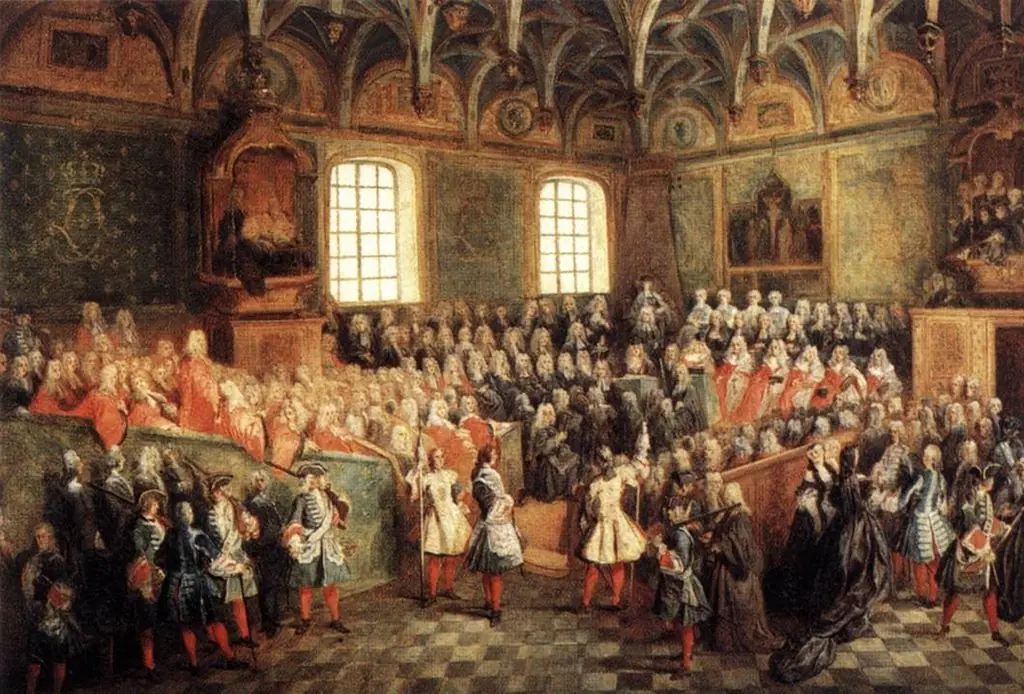 The Seat of Justice in the Parliament of Paris in 1723
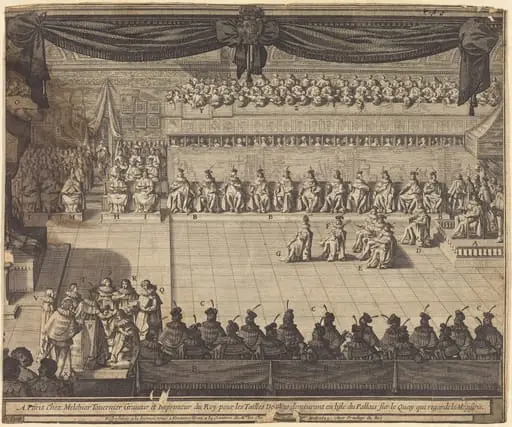 Meeting in the Chapel at Fontainebleau
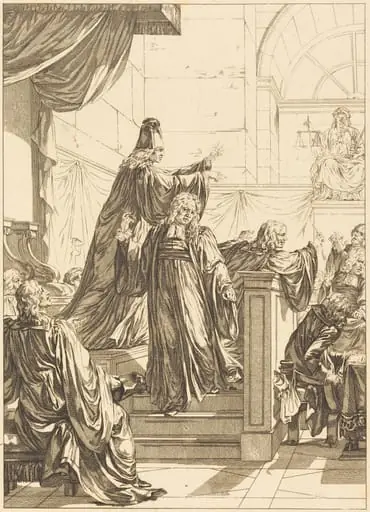 Le juge de mesle
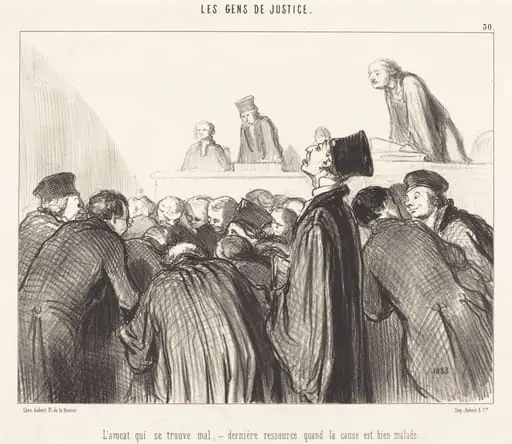 L'Avocat que se trouve mal
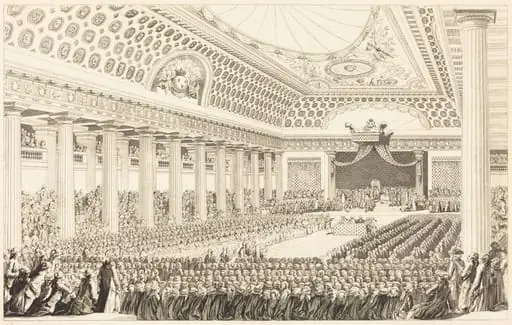 Ouverture des Etats-Généraux à Versailles, le 5 mars 1789
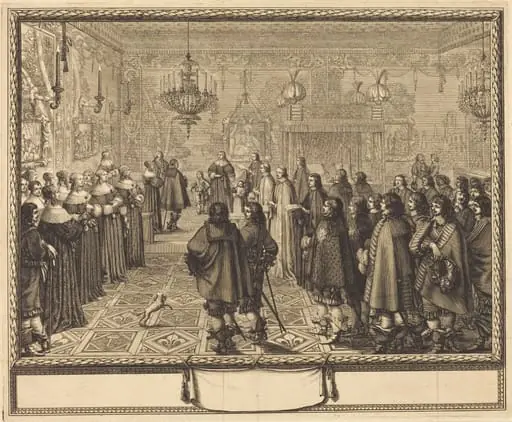 Ceremony of the Contract of Marriage between Vladislas IV, King of Poland, and LouiseMarie of Gonzaga, Princess of Mantua, at Fontainbleau
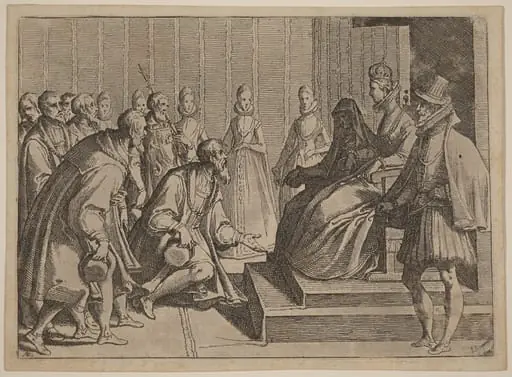 Margaret of Austria Giving Audience to a Nobleman
 The Coronation of Cosimo I de' Medici
 Italian Prince before Margaret of Austria
 The Members of the Academy of Beaux-Arts Assembled to Jury the Rome Prize
 Une Péroraison a la Démosthène
 Italian Prince before Margaret of Austria