Artwork
Dead Christ
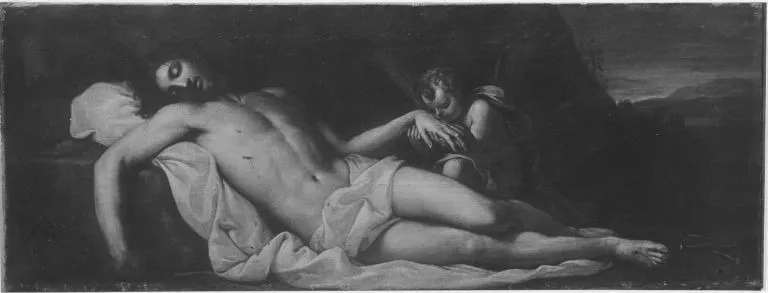
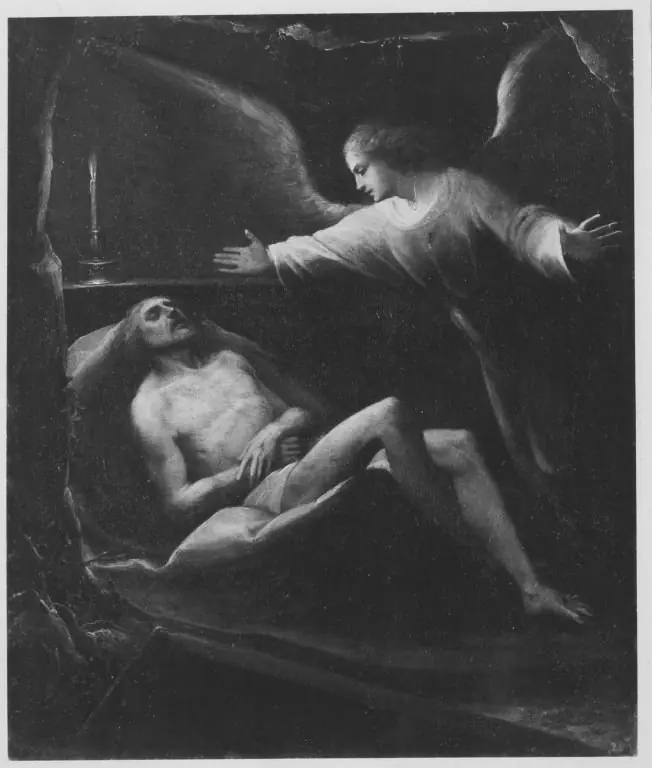
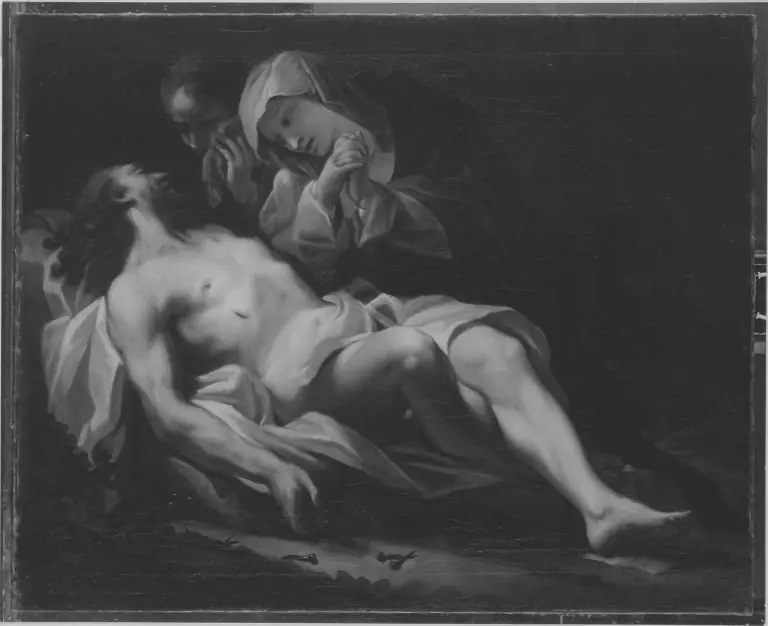
Dead Christ is an unspecified painting by the Early Baroque Italian artist Giacomo Cavedone. It dates from 1618 and is held in the collection of the Bavarian State Painting Collections.
About this work
Overview
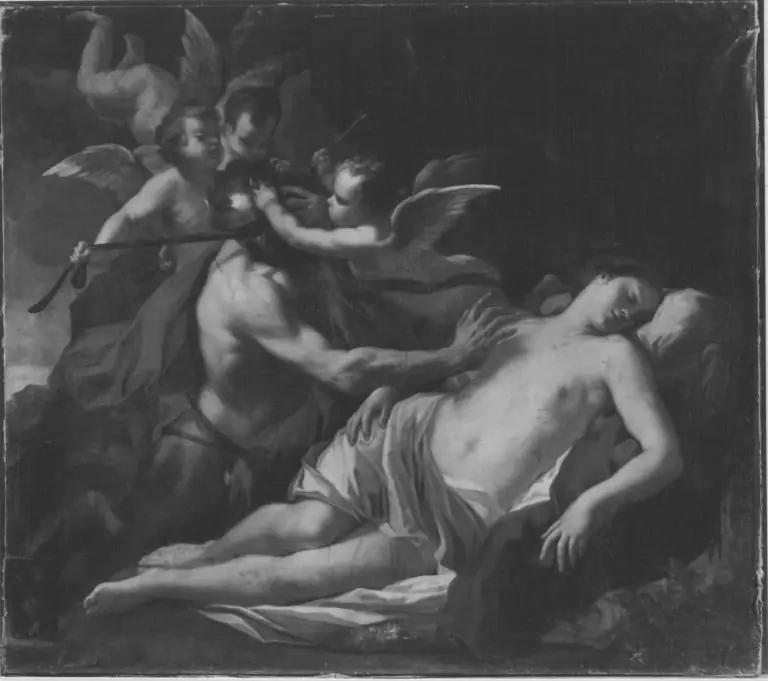
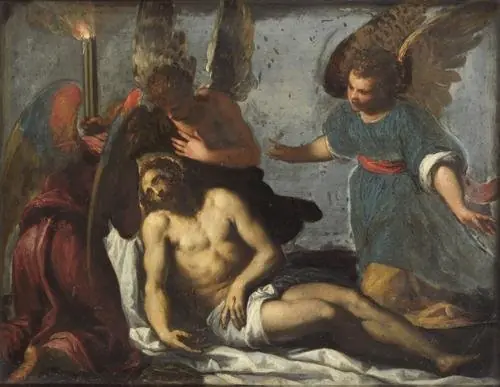
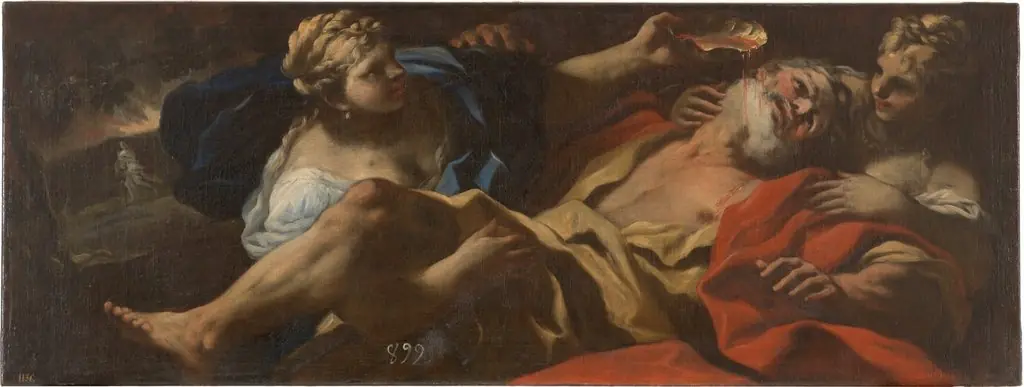
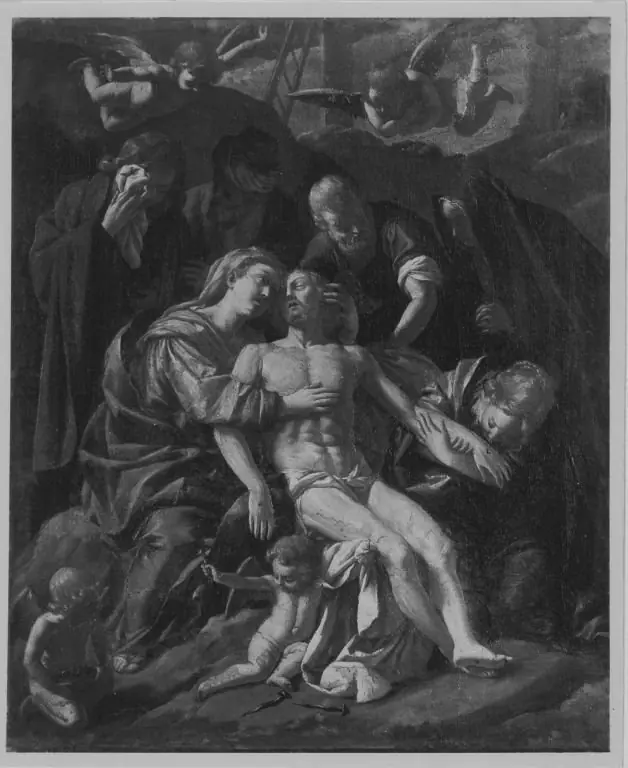
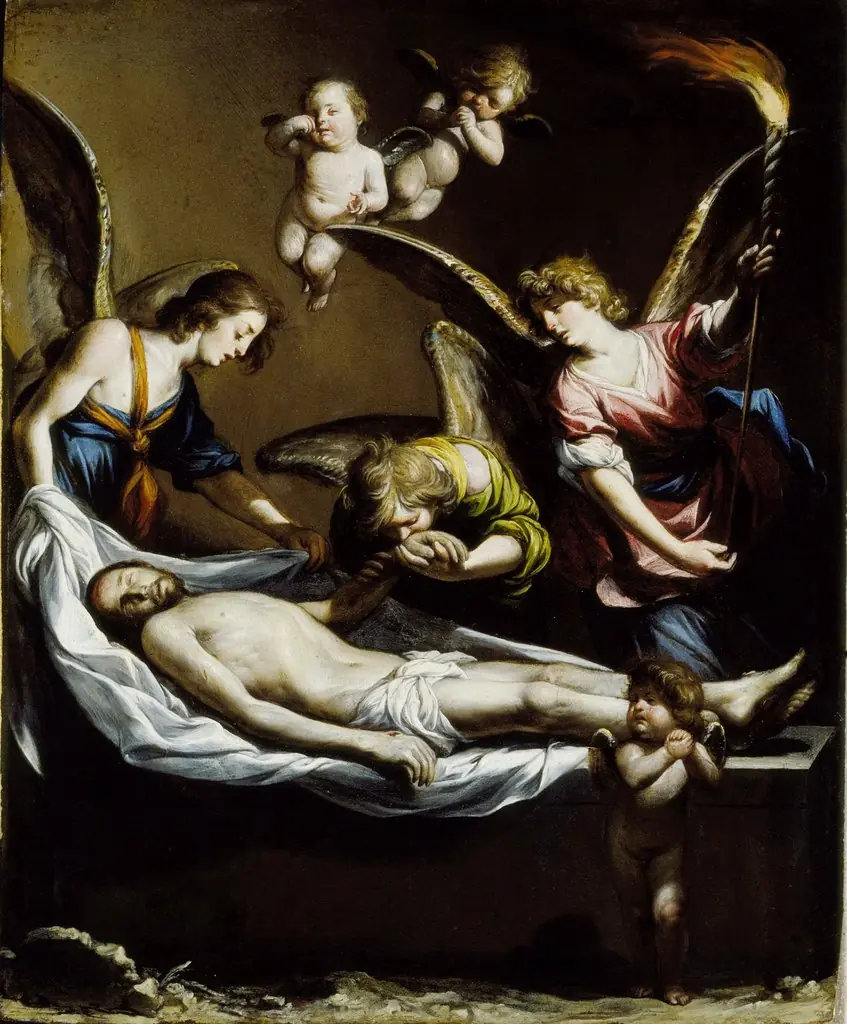
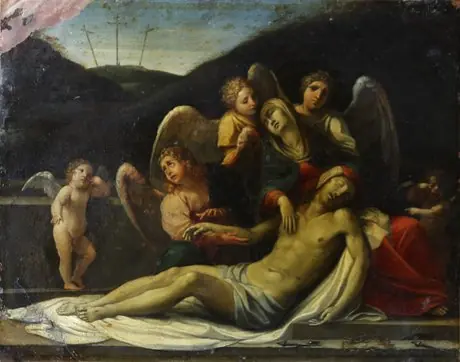
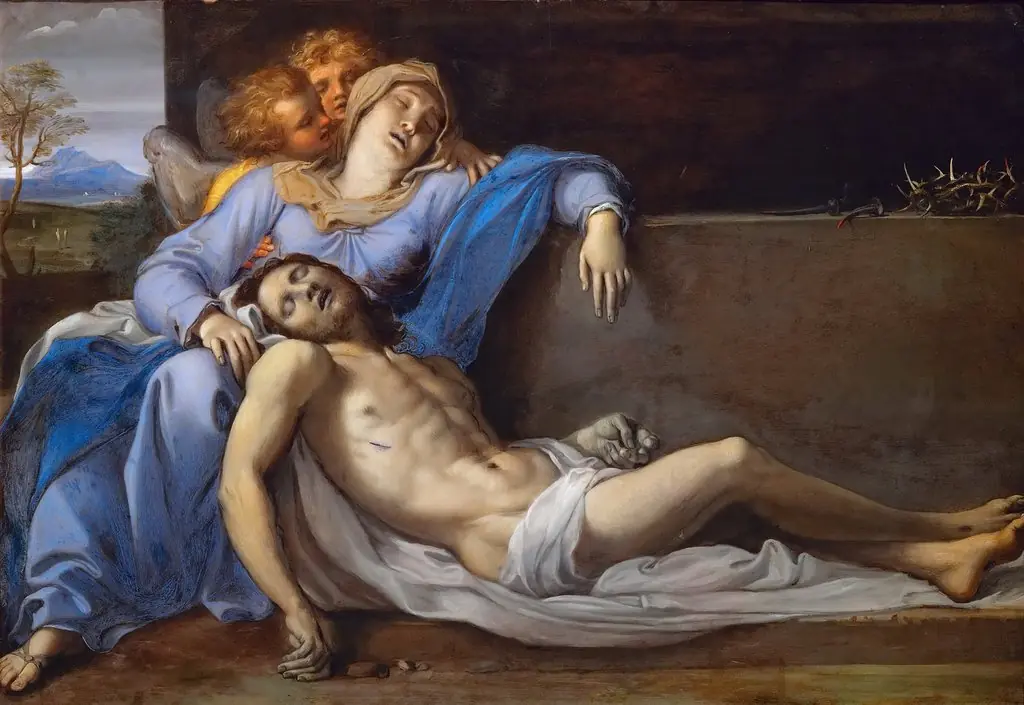
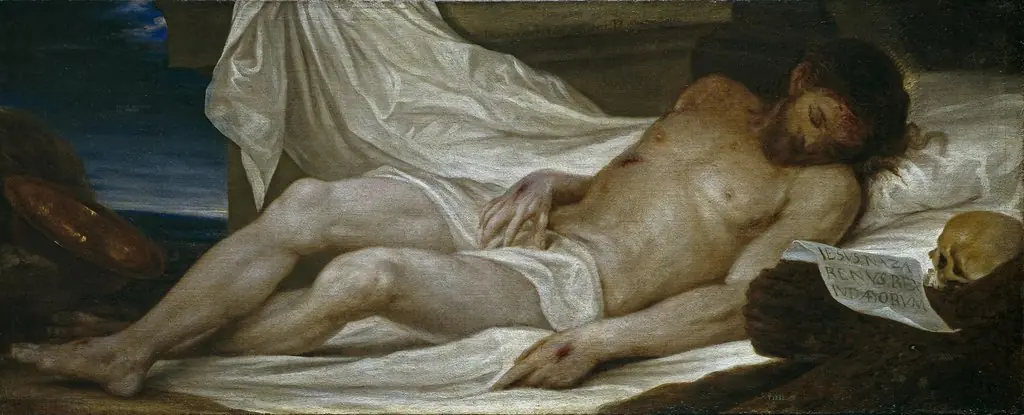
Giacomo Cavedone’s 1618 work titled *Dead Christ* presents a solemn religious tableau. Executed in oil on canvas, the composition is part of the collection of the Alte Pinakothek in Munich. The painting captures the moment after the crucifixion, focusing on the lifeless body of Christ and a solitary figure in mourning, rendered with a restrained palette and dramatic lighting.
Subject & Meaning
At the center lies a nude Christ, reclined on his back with arms outstretched, his pallid skin contrasting with the surrounding darkness. A diminutive, kneeling figure—interpreted as a disciple or a grieving attendant—looks down upon the body with an expression of sorrow. The scene emphasizes the humanity of the crucified savior and invites contemplation of sacrifice and loss.
Technique & Style
Cavedone employs a pronounced chiaroscuro, allowing light to illuminate Christ’s face and hands while the remainder of the composition recedes into deep shadow. This stark contrast heightens the emotional intensity and gives the figure a three‑dimensional presence. The background hints at a rocky cliff and a muted sky, rendered with loose brushwork that reinforces the somber atmosphere.
History & Provenance
Created in the early seventeenth century, the painting reflects the Counter‑Reformation’s emphasis on vivid, affective religious imagery. It entered the Alte Pinakothek’s holdings in the nineteenth century, where it has remained a representative example of Cavedone’s devotional output and of Bolognese Baroque painting.
Artist & collection