Artwork
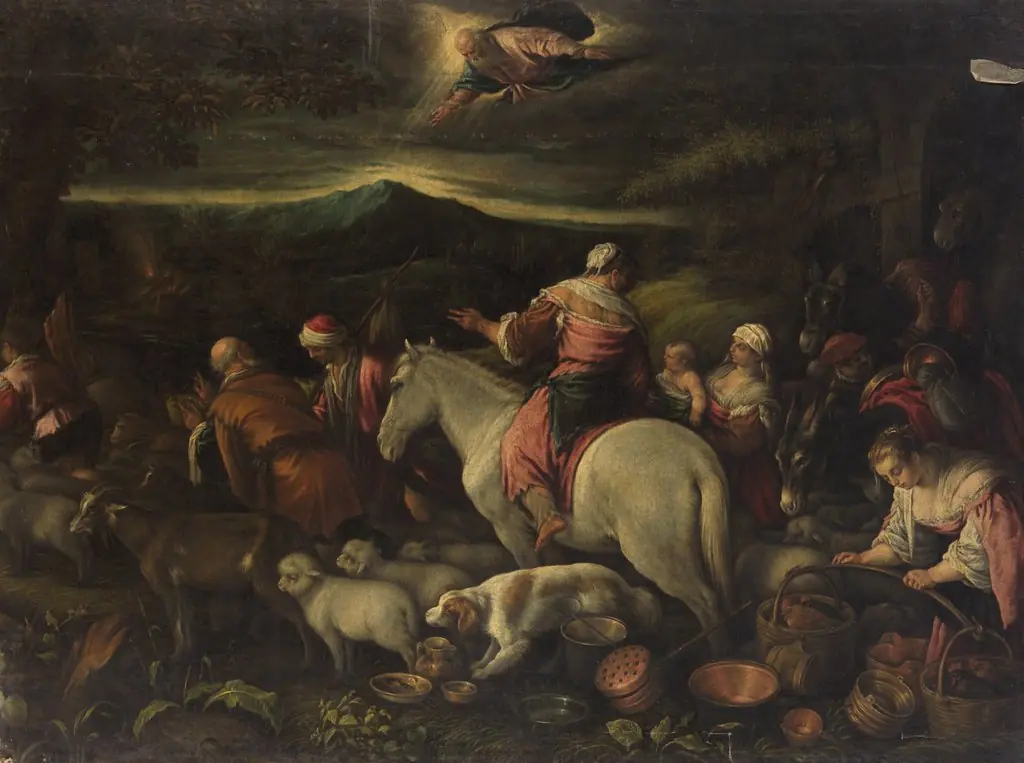
Abraham leaves Haran for Egypt
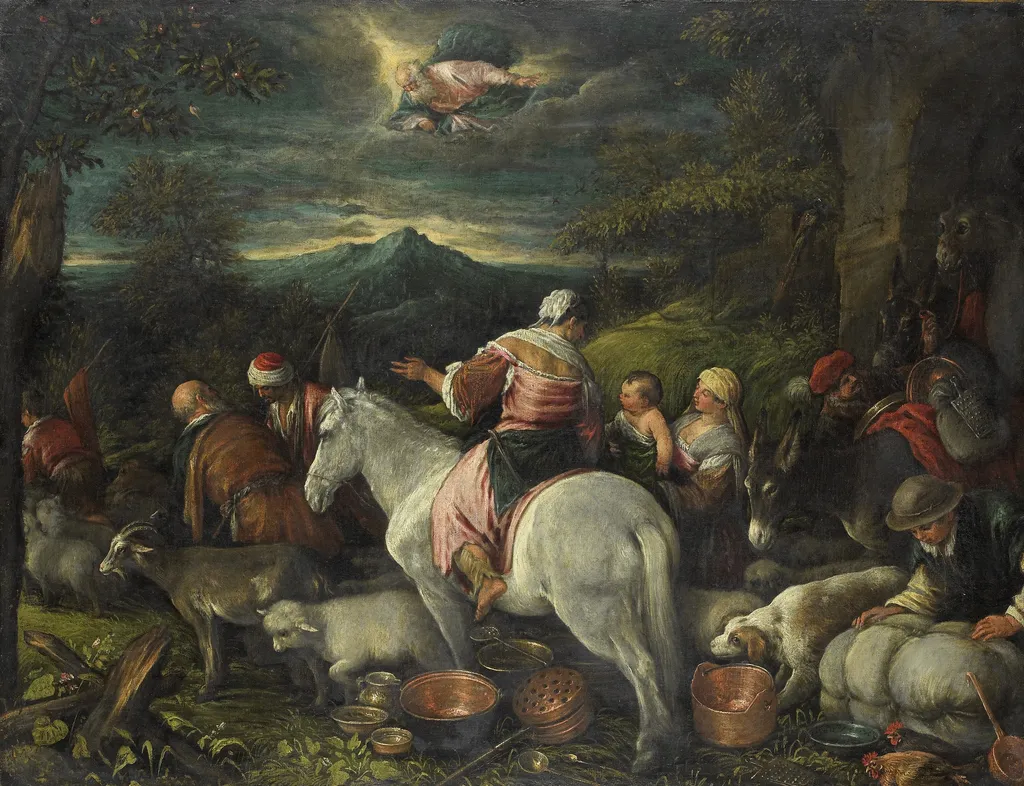
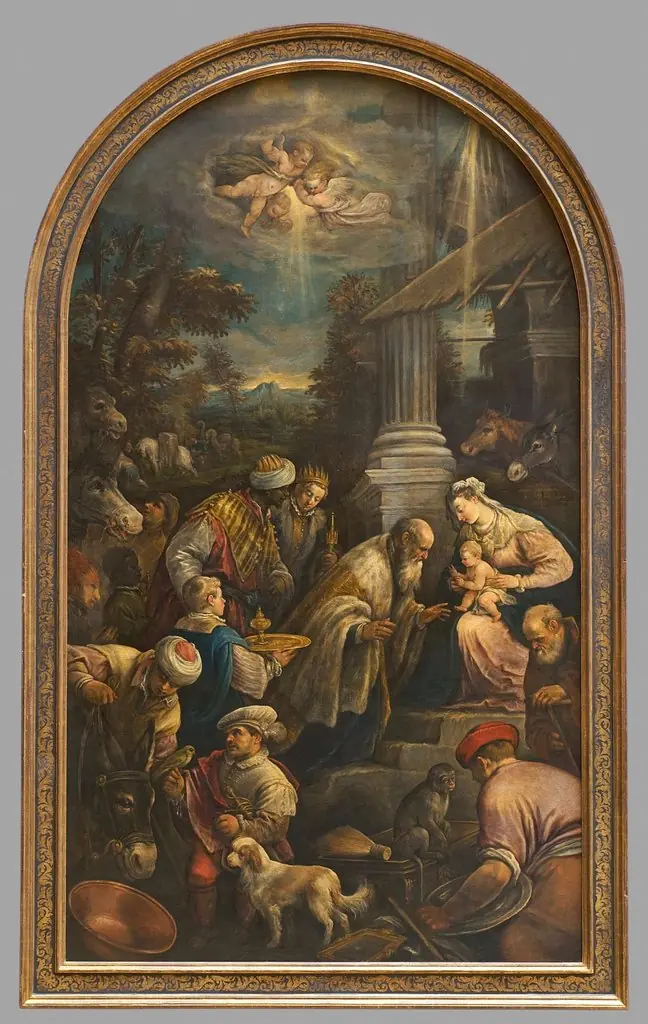
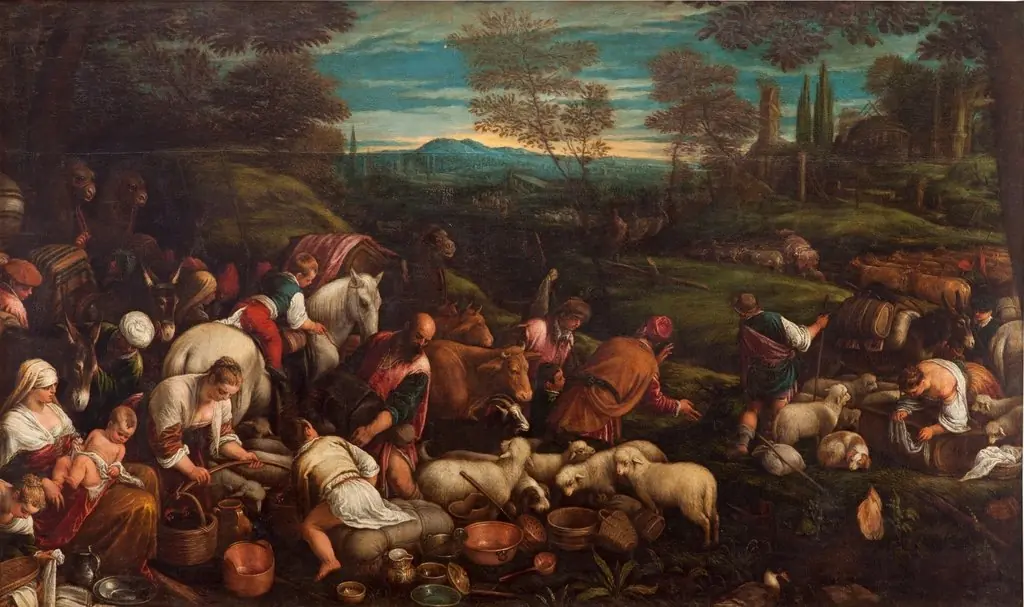
Abraham leaves Haran for Egypt is an oil painting by the Mannerist artist Francesco Bassano the Younger. It dates from 1588 and is held in the collection of the Rijksmuseum.
About this work
Overview
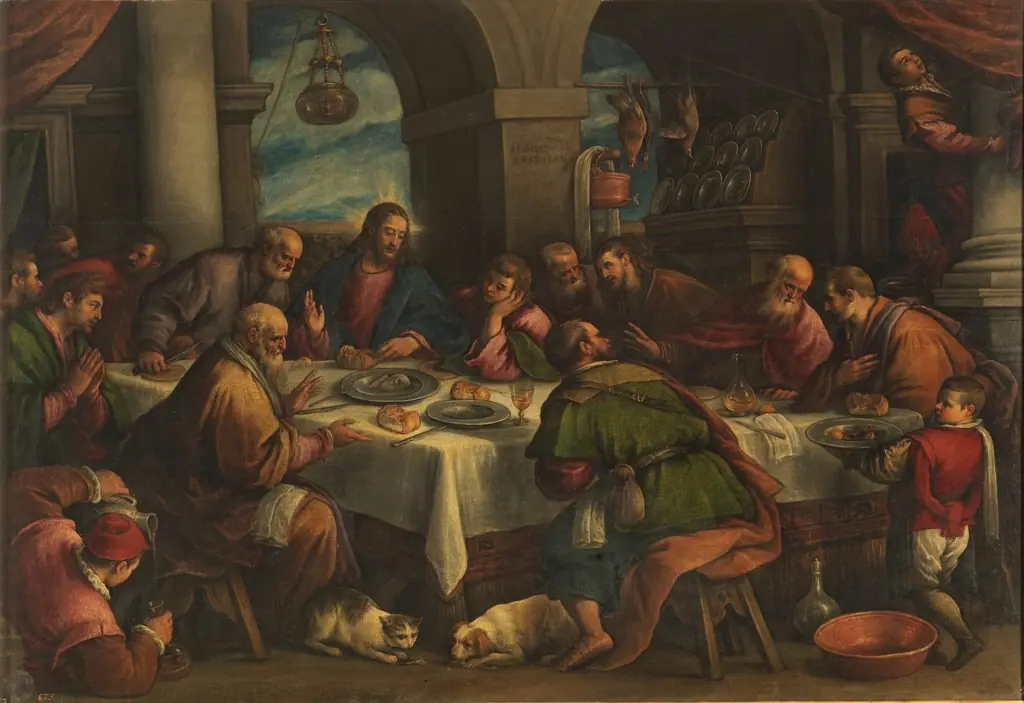
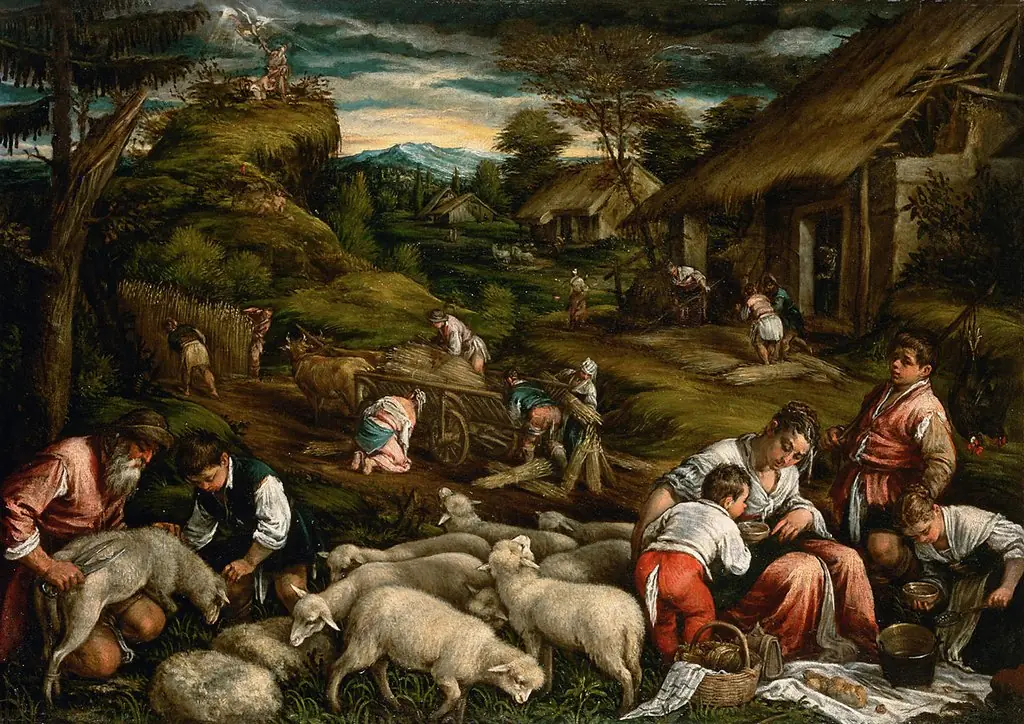
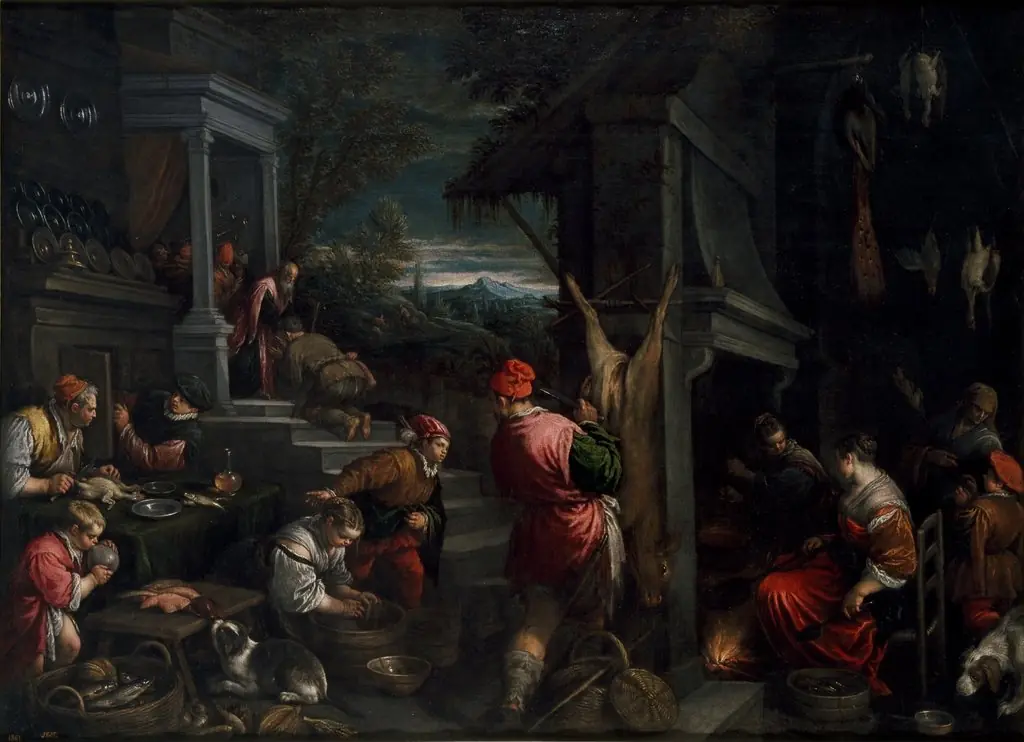
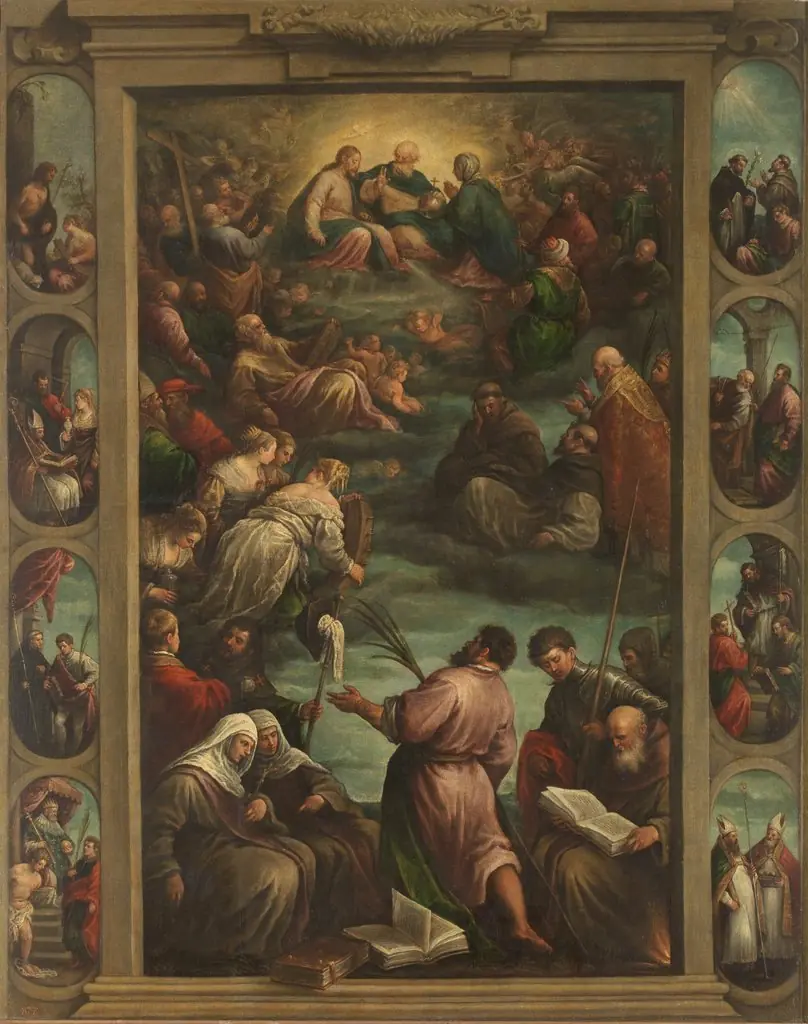
In 1588 Francesco Bassano the Younger completed a canvas titled Abraham leaves Harar for Egypt. Executed in the Mannerist idiom, the work presents a biblical episode set within a wooded landscape populated by figures, livestock, and a horse. The composition balances a bustling group of characters with a tranquil atmosphere, rendered in warm hues and gentle chiaroscuro.
Subject & Meaning
The painting portrays Abraham’s departure from Haran, interpreted through a symbolic tableau: a woman on horseback gestures toward a luminous point in the sky, while a lamb rests on the ground beneath a radiant glow. The light may allude to divine guidance or a miraculous event, underscoring the narrative’s spiritual dimension within the everyday setting.
Technique & Style
Bassano employs the elongated forms and complex poses characteristic of Mannerism, arranging figures in a serpentine rhythm across the canvas. Soft shadows and a warm palette unify the scene, while the detailed rendering of sheep, staffs, and cups demonstrates the artist’s skill in integrating genre detail with religious content.
History & Provenance
A member of the Bassano workshop, Francesco the Younger inherited the family’s artistic tradition from his father Jacopo and grandfather Francesco da Ponte the Elder. After a career centered in Venice, the painting entered the Rijksmuseum’s collection, where it remains part of the museum’s holdings of late‑Renaissance Italian art.
Own this work as a print
Artist & collection
Artist
Francesco Bassano the Younger (Italian: Francesco Bassano il Giovane; 26 January 1549 – 4 July 1592), also called Francesco Giambattista da Ponte or Francesco da Ponte the Younger, was an Italian painter of the Renaissance period.