Artwork
Bacchanalian Scene
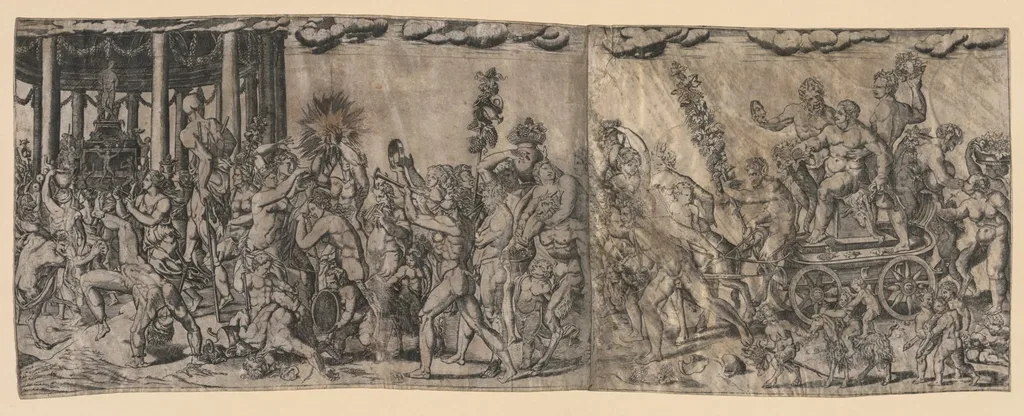
Bacchanalian Scene is a print by the Renaissance artist Francesco Bertelli. It dates from 1620 and is held in the collection of the Cleveland Museum of Art.
About this work
Overview
The work is part of the collection at The Cleveland Museum of Art, where it is preserved as an example of early 17th-century Northern Italian printmaking.
Created around 1620 by Francesco Bertelli, this print depicts a lively gathering inspired by ancient Roman rituals dedicated to Bacchus, the god of wine and revelry. Executed in a detailed, tonal style, it captures a moment of communal celebration with figures engaged in varied activities. The work is part of the collection at The Cleveland Museum of Art, where it is preserved as an example of early 17th-century Northern Italian printmaking.
Subject & Meaning
The scene portrays a mythological feast associated with Bacchus, featuring nude and clothed figures dancing, playing music, and socializing. The inclusion of classical architecture suggests a sacred or ceremonial setting, blending pagan ritual with Renaissance ideals of antiquity. The unrestrained energy of the figures reflects contemporary fascination with classical mythology as a vehicle for exploring human passion and freedom.
Technique & Style
Bertelli employed fine line engraving to render intricate textures—fabrics, skin, foliage, and stone—with precision. The composition is densely packed, guiding the eye through rhythmic movement and layered spatial depth. Subtle gradations of tone, achieved through hatching and cross-hatching, enhance the three-dimensionality of forms, reflecting the influence of contemporary Italian graphic traditions and the Mannerist emphasis on complexity.
History & Provenance
The print was produced in Italy during the early 17th century, likely as part of a series or standalone decorative image for private collectors. It entered the Cleveland Museum of Art’s collection in the 20th century, having passed through several European holdings. Its survival in good condition offers insight into the circulation of mythological prints among educated elites who valued classical themes in domestic settings.
Context
This work emerges from a period when Northern Italian artists revisited classical subjects amid religious upheaval. While the Counter-Reformation discouraged overt sensuality in public art, private collections embraced mythological scenes as intellectual and aesthetic pursuits. Bertelli’s print aligns with a broader trend of translating ancient rites into visual narratives that appealed to humanist tastes and scholarly curiosity.
Legacy
Though not widely known today, Bertelli’s print exemplifies the enduring appeal of Bacchanalian themes in early modern European art. It contributes to the understanding of how mythological subjects were adapted for print culture, reaching audiences beyond elite painting patrons. Its detailed execution and thematic richness continue to inform studies of Renaissance and Baroque graphic arts.
Artist & collection

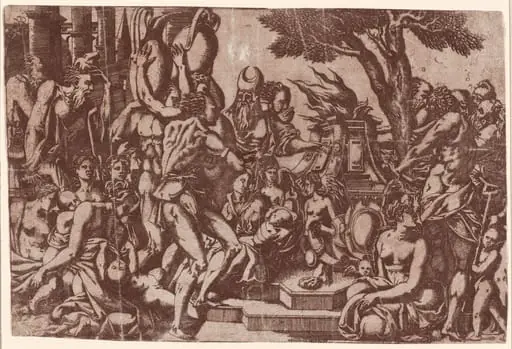 Sacrifice to Priapus
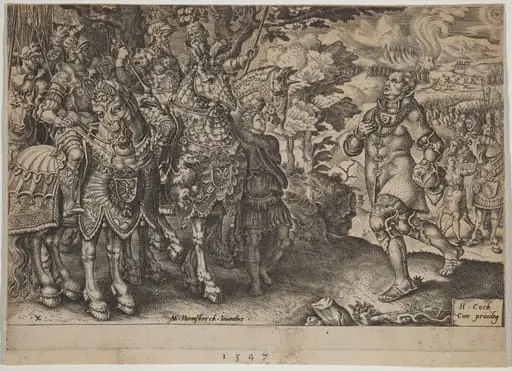 The Surrender of John Frederick, Elector of Saxony, After the Battle of Mühlberg
![The Triumph of Julius Caesar [no.1 and 2 plus 2 columns], by Andrea Andreani](https://artifactworldgallery.com/img/andrea-andreani--the-triumph-of-julius-caesar-no-1-and-2-plus-2-columns--72fc49376c9f9633-w320.webp) The Triumph of Julius Caesar [no.1 and 2 plus 2 columns]
The Triumph of Julius Caesar [no.1 and 2 plus 2 columns]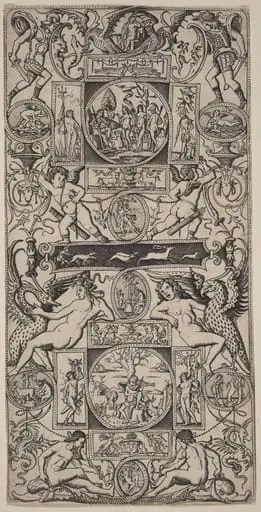 Ornament Panel with Orpheus and the Judgment of Paris
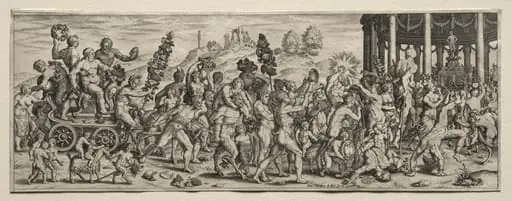 Triumph of Bacchus
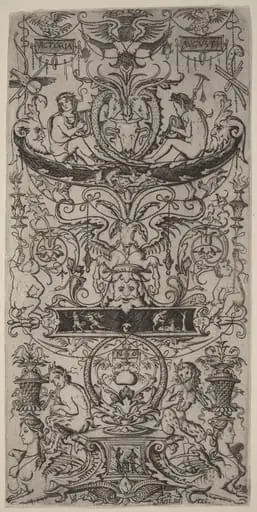 Ornament Panel: Victoria Augusta
![The Triumph of Julius Caesar [no.7 and 8 plus 2 columns], by Andrea Andreani](https://artifactworldgallery.com/img/andrea-andreani--the-triumph-of-julius-caesar-no-7-and-8-plus-2-columns--75ccf1616a5609e2-w320.webp) The Triumph of Julius Caesar [no.7 and 8 plus 2 columns]
The Triumph of Julius Caesar [no.7 and 8 plus 2 columns]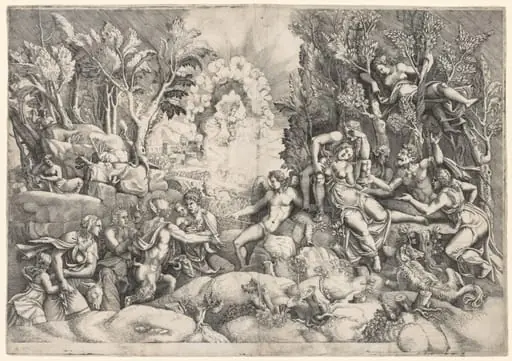 The Death of Procris
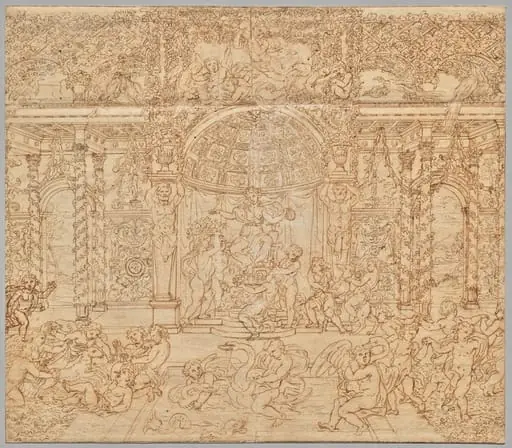 Hymn to Venus
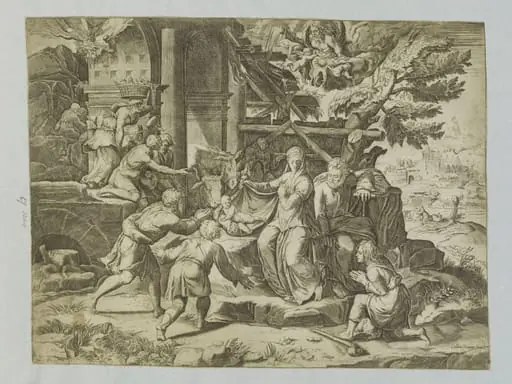 Adoration of the Shepherds
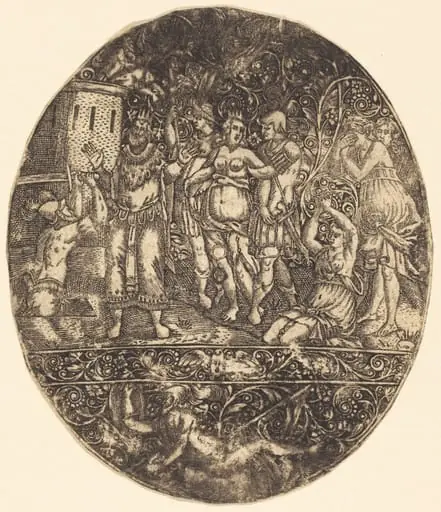 The Capture of Troy
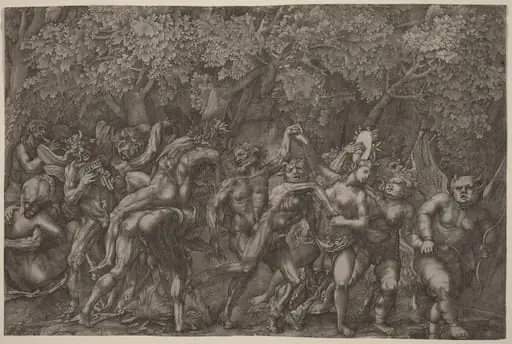 Bacchanale