Artwork
The Triumph of Julius Caesar [no.1 and 2 plus 2 columns]
![The Triumph of Julius Caesar [no.1 and 2 plus 2 columns], by Andrea Andreani, ink, 1599](https://artifactworldgallery.com/img/andrea-andreani--the-triumph-of-julius-caesar-no-1-and-2-plus-2-columns--72fc49376c9f9633-w1024.webp)
The Triumph of Julius Caesar [no.1 and 2 plus 2 columns] is an ink print by the Renaissance artist Andrea Andreani. It dates from 1599 and is held in the collection of the National Gallery of Art.
About this work
Overview
Andrea Andreani’s 1599 chiaroscuro woodcut, titled *The Triumph of Julius Caesar* (numbers 1 and 2 plus two columns), presents a bustling ceremonial procession.
Andrea Andreani’s 1599 chiaroscuro woodcut, titled *The Triumph of Julius Caesar* (numbers 1 and 2 plus two columns), presents a bustling ceremonial procession. The composition is framed by two imposing columns that guide the eye toward a crowded scene of soldiers, a semi‑nude figure leading a horse, and a multitude of onlookers bearing banners, all set against a cityscape with towers, a river, and a moonlit sky.
Subject & Meaning
The print depicts a celebratory parade honoring Julius Caesar, echoing Roman triumphal traditions. Participants march in disciplined ranks, while the half‑clothed rider and the fluttering standards suggest both martial prowess and civic pride. The inclusion of textual banners, though partially illegible, hints at proclamations or dedications that would have reinforced the political significance of Caesar’s victory.
Technique & Style
Executed in chiaroscuro woodcut, Andreani employed multiple blocks to achieve a nuanced play of light and shadow, creating a three‑dimensional illusion within the flat plane. The stark contrasts between illuminated figures and deepened backgrounds generate a sense of depth, while the intricate line work renders the bustling crowd with remarkable clarity for a print of its period.
History & Provenance
Created at the close of the sixteenth century, the work reflects the flourishing of printmaking in Italy, where artists like Andreani adapted woodcut techniques to produce richly toned images. The piece has survived in several collections, illustrating the durability of chiaroscuro prints and their role in disseminating classical themes across Europe during the late Renaissance.
Context
The image belongs to a broader tradition of Renaissance visualizations of ancient Roman triumphs, which served both educational and decorative purposes. By integrating architectural elements such as columns and a city backdrop, Andreani situates Caesar’s victory within an idealized urban environment, aligning contemporary civic ideals with the grandeur of antiquity.
Artist & collection


![The Triumph of Julius Caesar [no.9 plus 2 columns], by Andrea Andreani](https://artifactworldgallery.com/img/andrea-andreani--the-triumph-of-julius-caesar-no-9-plus-2-columns--26f4d2249baf2916-w320.webp)
![The Triumph of Julius Caesar [no.3 and 4 plus 2 columns], by Andrea Andreani](https://artifactworldgallery.com/img/andrea-andreani--the-triumph-of-julius-caesar-no-3-and-4-plus-2-columns--58c944449efc96df-w320.webp)
![The Triumph of Julius Caesar [no.7 and 8 plus 2 columns], by Andrea Andreani](https://artifactworldgallery.com/img/andrea-andreani--the-triumph-of-julius-caesar-no-7-and-8-plus-2-columns--75ccf1616a5609e2-w320.webp)
![The Triumph of Julius Caesar [no.5 and 6 plus 2 columns], by Andrea Andreani](https://artifactworldgallery.com/img/andrea-andreani--the-triumph-of-julius-caesar-no-5-and-6-plus-2-columns--89574bdb08c8732e-w320.webp)
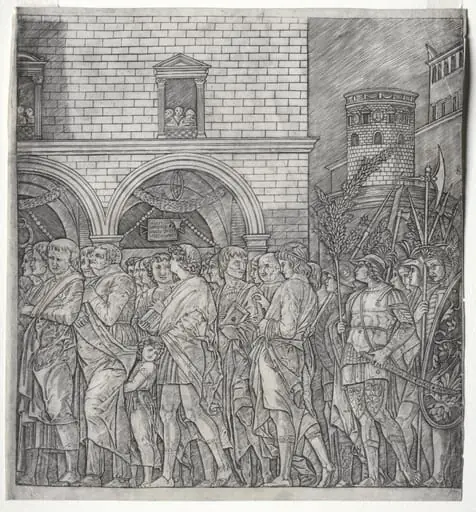 Triumph of Caesar: The Senators
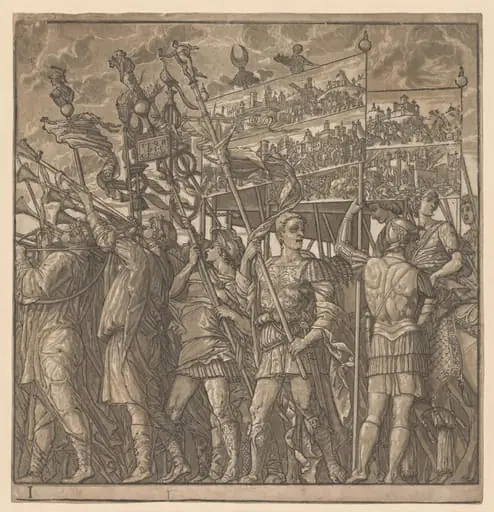 The Triumph of Julius Caesar: Soldiers Carrying the Pictures of War
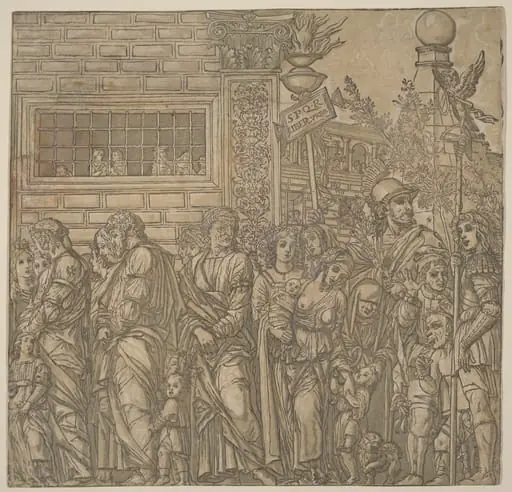 The Triumph of Julius Caesar
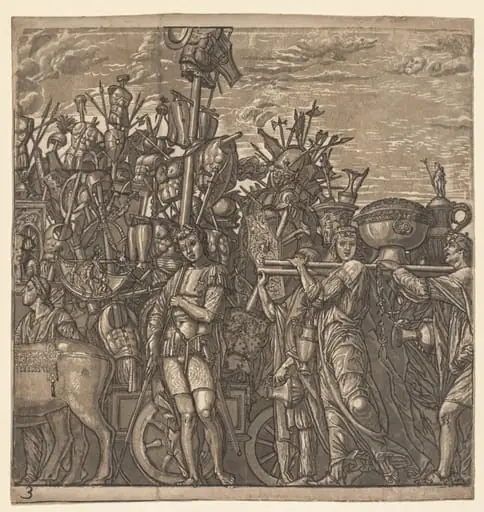 The Triumph of Julius Caesar: Soldiers Marching with Trophies of War
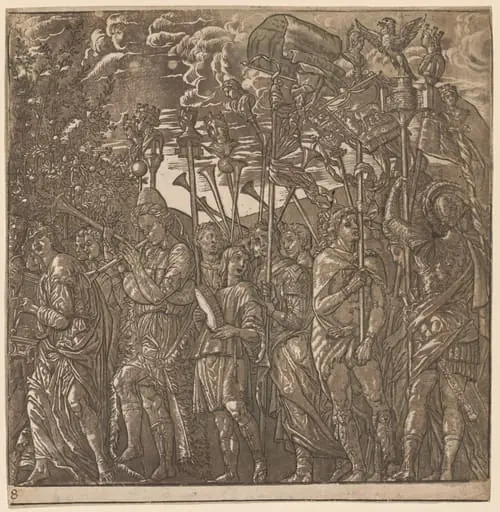 The Triumph of Julius Caesar: Soldiers Carrying Banners and Standards
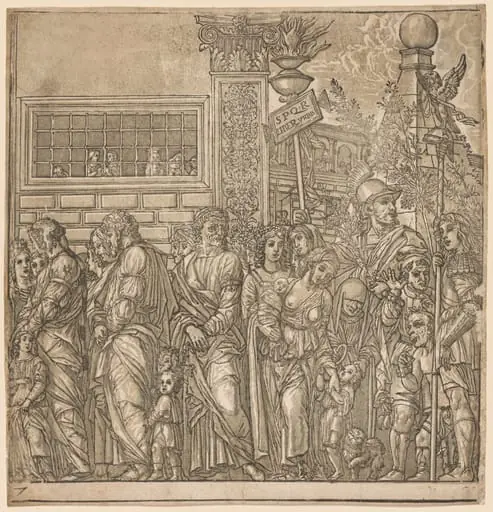 The Triumph of Julius Caesar: Procession of Men, Women and Children
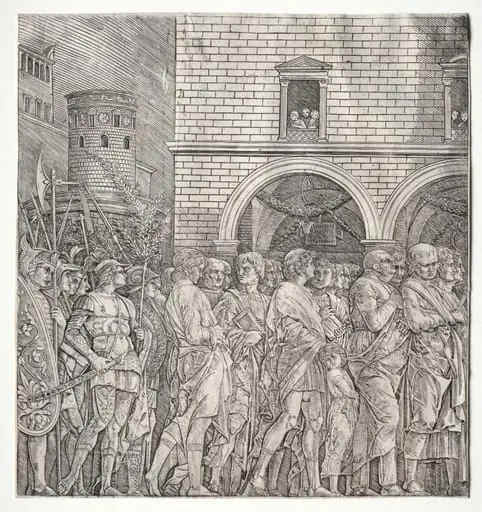 The Triumphs of Caesar: The Senators
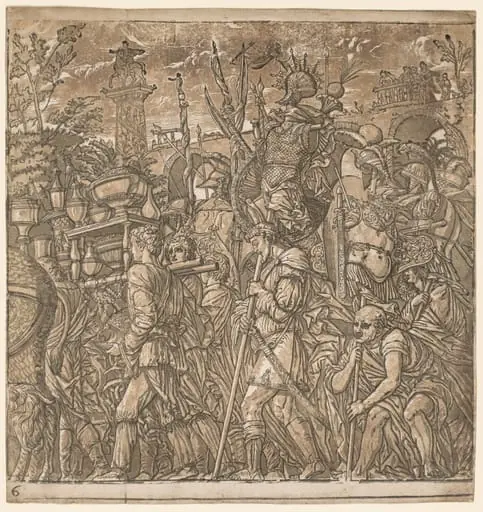 The Triumph of Julius Caesar: Soldiers Carrying Vases and Trophies of War