Artwork
Paris (right end panel)
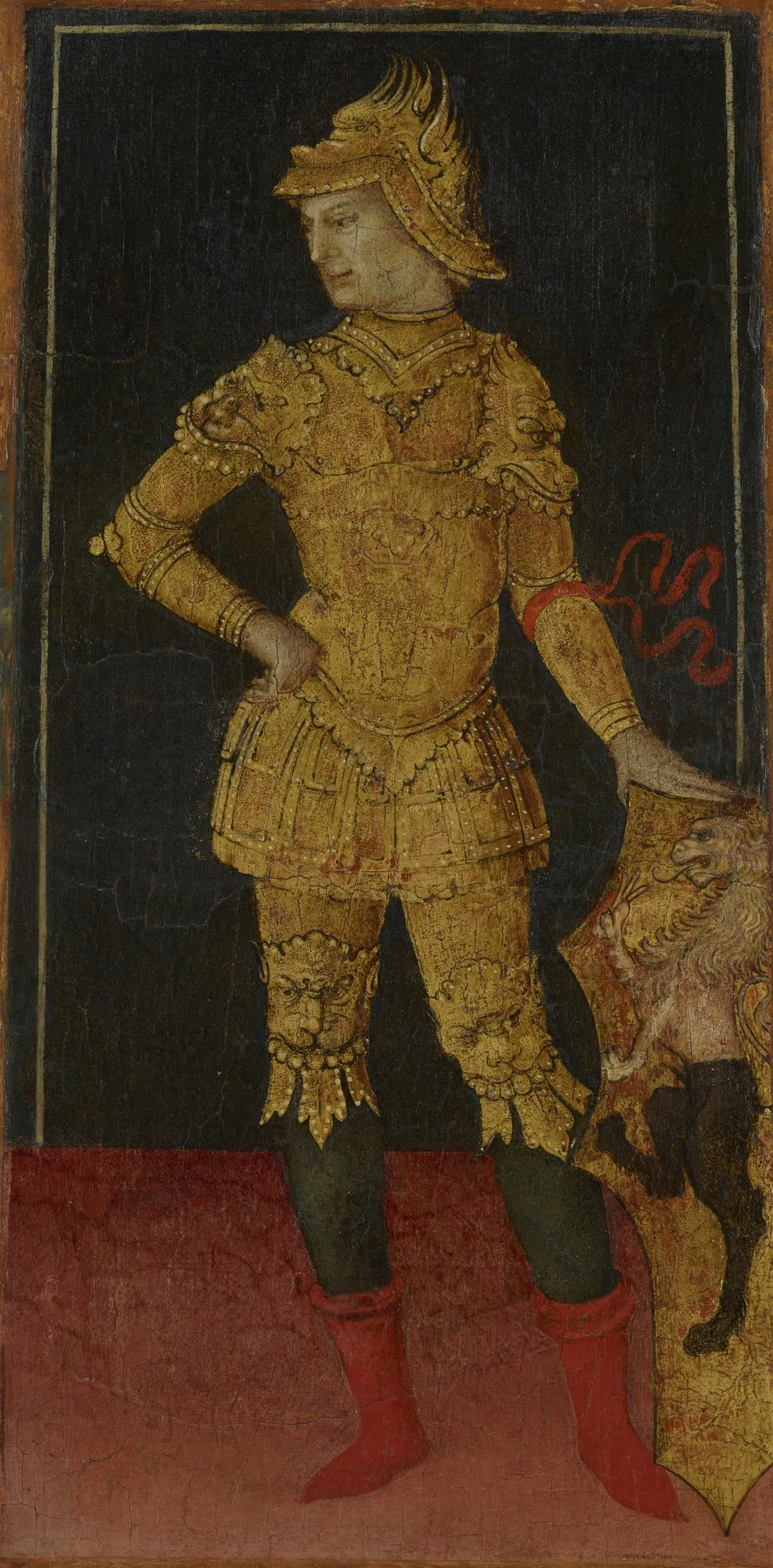
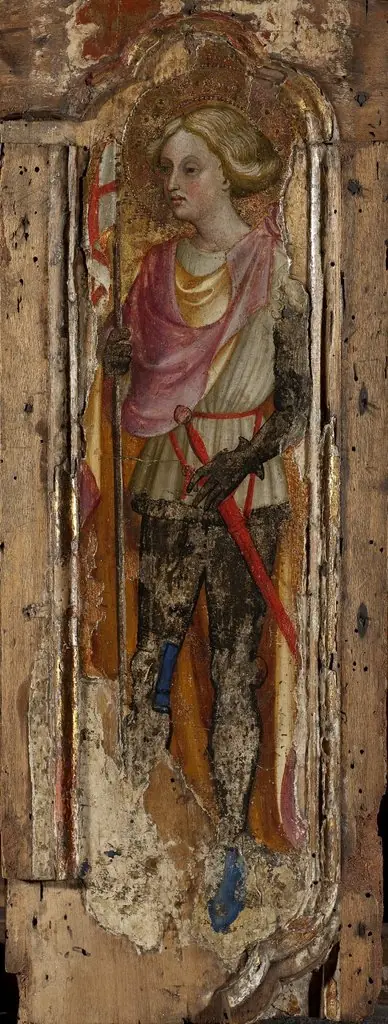
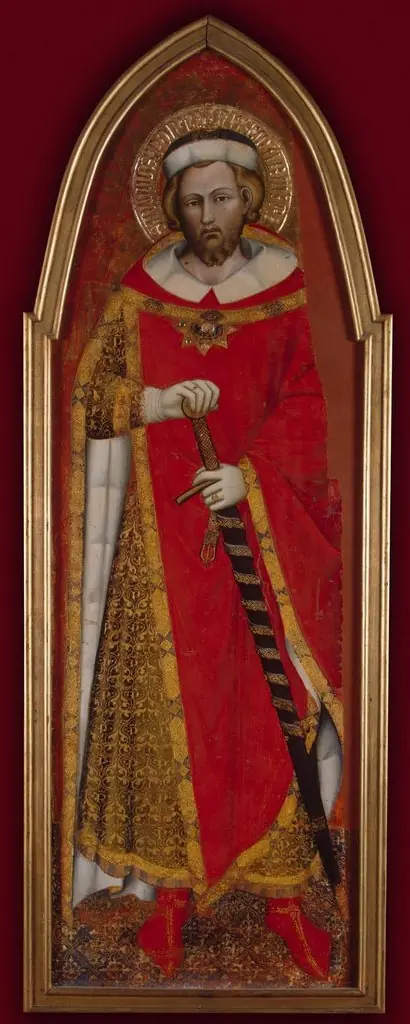
Paris (right end panel) is an unspecified painting by the Early Renaissance artist Francesco di Giorgio. It dates from 1460 and is held in the collection of the J. Paul Getty Museum.
About this work
Overview
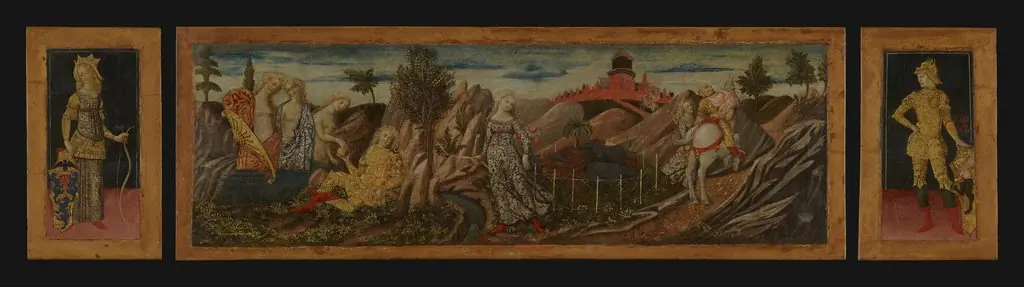
Painted around 1460 by Francesco di Giorgio Martini, this panel forms the rightmost section of a triptych depicting the mythological figure Paris.
Painted around 1460 by Francesco di Giorgio Martini, this panel forms the rightmost section of a triptych depicting the mythological figure Paris. Executed in tempera and gold leaf on wood, it presents a solitary knight in ceremonial armor, rendered with meticulous detail. The work is part of the J. Paul Getty Museum’s collection, where it survives as one of the few preserved fragments from a larger narrative composition.
Subject & Meaning
The figure represents Paris, the Trojan prince from Greek myth, identified through his regal bearing and armor rather than explicit narrative cues. His poised stance and ornate equipment suggest a moment of contemplation or readiness, aligning with Renaissance ideals of noble virtue. The absence of other figures or landscape elements focuses attention on his individual dignity, reflecting a humanist emphasis on personal character.
Technique & Style
Francesco di Giorgio employed tempera and gold leaf to achieve a luminous, metallic surface, particularly on the armor and helmet plume. The intricate engraving-like patterns on the armor and shield demonstrate his background in metalwork and engineering. The flat, dark background and red floor create a stage-like setting, emphasizing the figure’s form and minimizing spatial depth, a common trait in early Renaissance panel painting.
History & Provenance
This panel was originally one of three in a devotional or mythological triptych, likely commissioned by a noble patron in Urbino. Its survival as a standalone piece suggests it was separated from its companions over time. Acquired by the J. Paul Getty Museum in the 20th century, it remains one of the few authenticated panel works by the artist outside Italy.
Context
Created during the height of the Early Renaissance in central Italy, the painting reflects the fusion of courtly ideals with classical themes. Urbino, where di Giorgio worked, was a center of humanist learning and artistic innovation. The depiction of a mythological hero in contemporary armor reveals how classical narratives were adapted to reflect contemporary aristocratic values and visual culture.
Legacy
Though not widely known outside scholarly circles, this panel exemplifies Francesco di Giorgio’s unique synthesis of architectural precision and figural elegance. His attention to armor detail influenced later Renaissance depictions of chivalric figures. As a rare surviving example of his panel painting, it contributes to understanding the transition from medieval iconography to Renaissance individualism.
Artist & collection

Artist
Francesco di Giorgio Martini (1439–1501) was an Italian architect, engineer, painter, sculptor, and writer.