Artwork
View towards Murano from the Fondamente Nuove, Venice
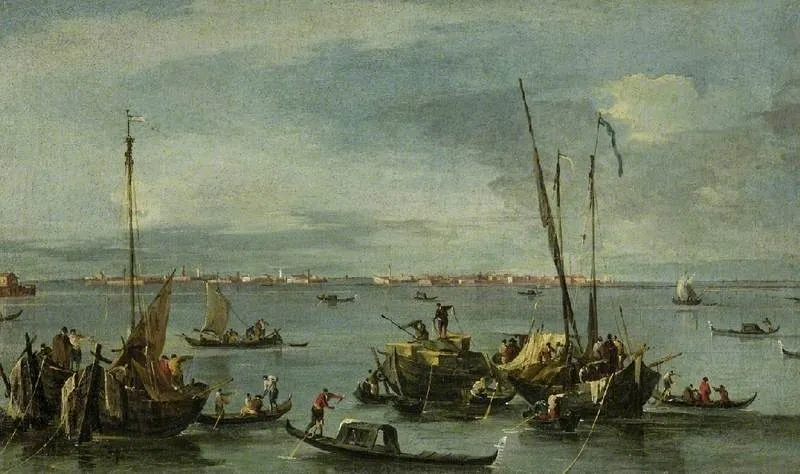
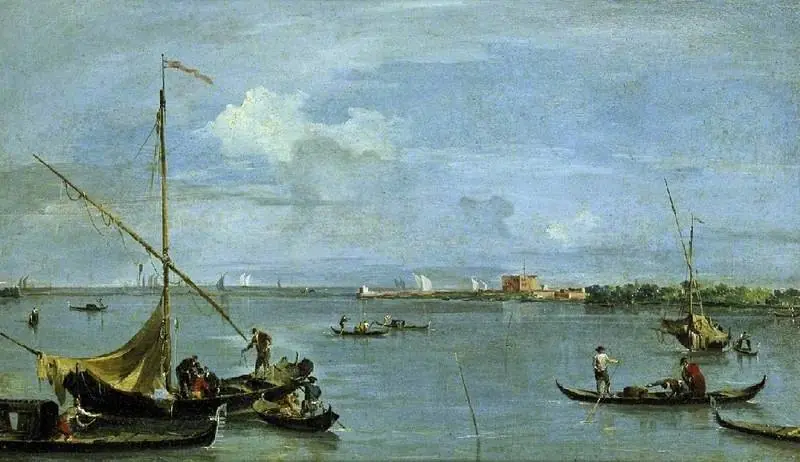
View towards Murano from the Fondamente Nuove, Venice is an oil painting by Francesco Guardi. It dates from 1765 and is held in the collection of the Fitzwilliam Museum.
About this work
Overview
Painted in 1765 by Francesco Guardi, this oil on canvas depicts a stretch of the Venetian Lagoon viewed from the Fondamente Nuove.
Painted in 1765 by Francesco Guardi, this oil on canvas depicts a stretch of the Venetian Lagoon viewed from the Fondamente Nuove. It captures the quiet bustle of maritime life, with vessels of varying sizes scattered across the water. Guardi, a member of Venice’s aristocracy, turned to landscape painting after his brother’s death, refining a personal style distinct from the precision of earlier vedute artists.
Subject & Meaning
The scene portrays everyday activity in Venice’s waterways: rowboats ferrying passengers, larger sailing vessels anchored or drifting, and distant buildings lining the shore of Murano. The composition emphasizes movement and transience, reflecting the rhythm of Venetian life rather than monumental architecture. Subtle human presence suggests the city’s dependence on its aquatic infrastructure.
Technique & Style
Guardi abandoned the sharp detail favored by Canaletto in favor of loose, atmospheric brushwork. He applied thin layers of paint to suggest light and weather, using muted blues, grays, and greens to unify sky, water, and land. Forms are suggested rather than defined, with figures and sails rendered in quick strokes that convey motion and spontaneity without literal precision.
History & Provenance
Created in the mid-1760s, the painting emerged during a period when Guardi was fully developing his mature style. It entered the Fitzwilliam Museum’s collection in the 19th century, likely through a private acquisition. Its survival and preservation reflect its recognition as a representative example of Venetian 18th-century landscape painting, though it was never widely exhibited during Guardi’s lifetime.
Context
In 18th-century Venice, vedute paintings served as souvenirs for travelers and records of urban life. Guardi’s work diverged from topographical accuracy, focusing instead on mood and transient effects of light. This painting reflects a city in transition, where commerce and daily routines unfolded on water, and the lagoon remained central to both economy and identity.
Legacy
Guardi’s approach influenced later generations of painters interested in atmosphere over detail. His loose handling and sensitivity to weather conditions prefigured Impressionist concerns, though he remained rooted in Venetian traditions. Today, the painting stands as a quiet testament to the city’s maritime character, valued for its emotional resonance rather than its documentary precision.
Artist & collection

Artist
Francesco Lazzaro Guardi (Italian pronunciation: ; 5 October 1712 – 1 January 1793) was an Italian painter, nobleman, and a member of the Venetian School.

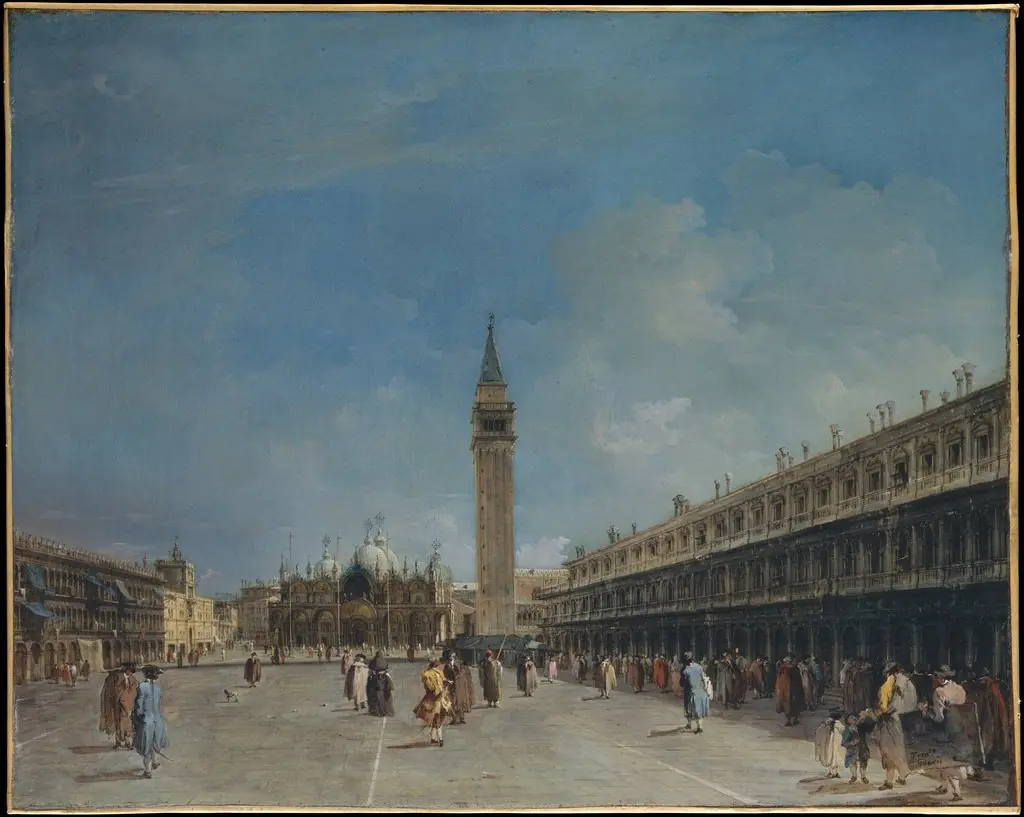
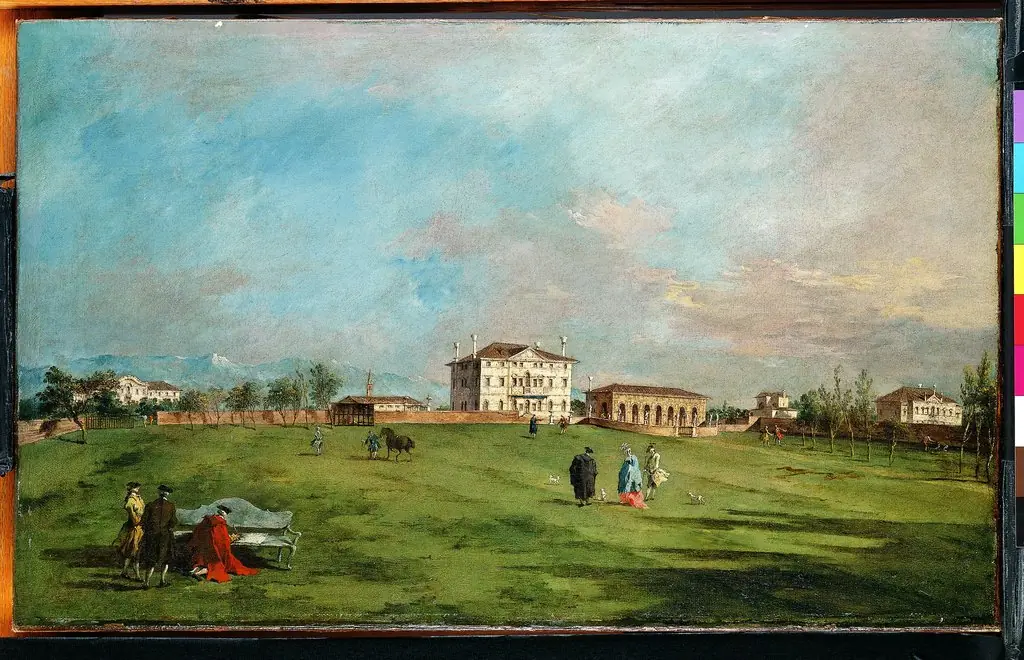
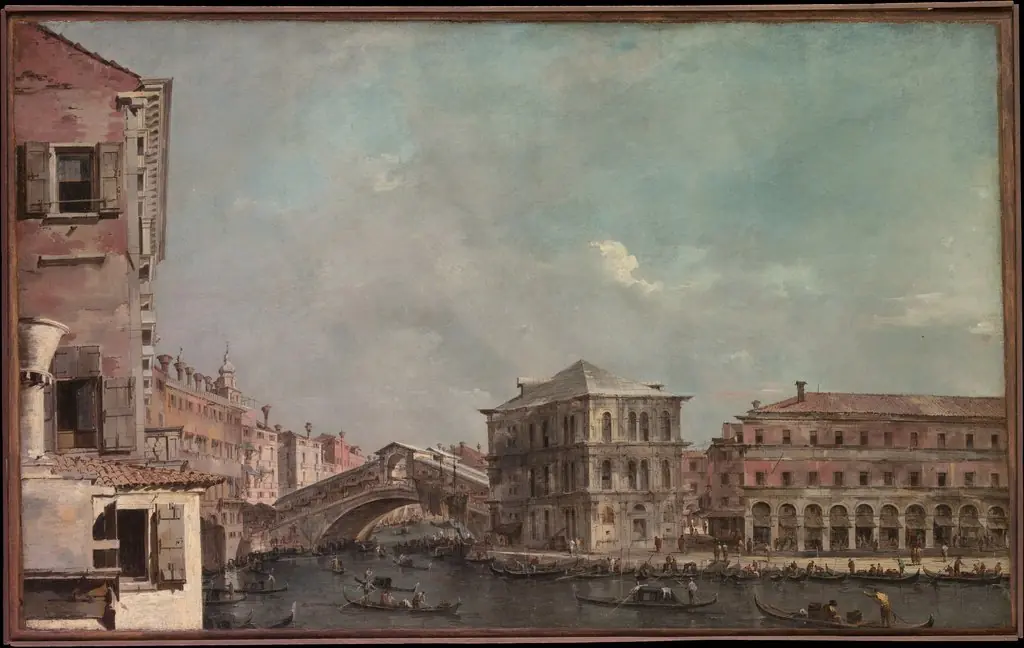
 Forte S. Andrea Del Lido, Venice
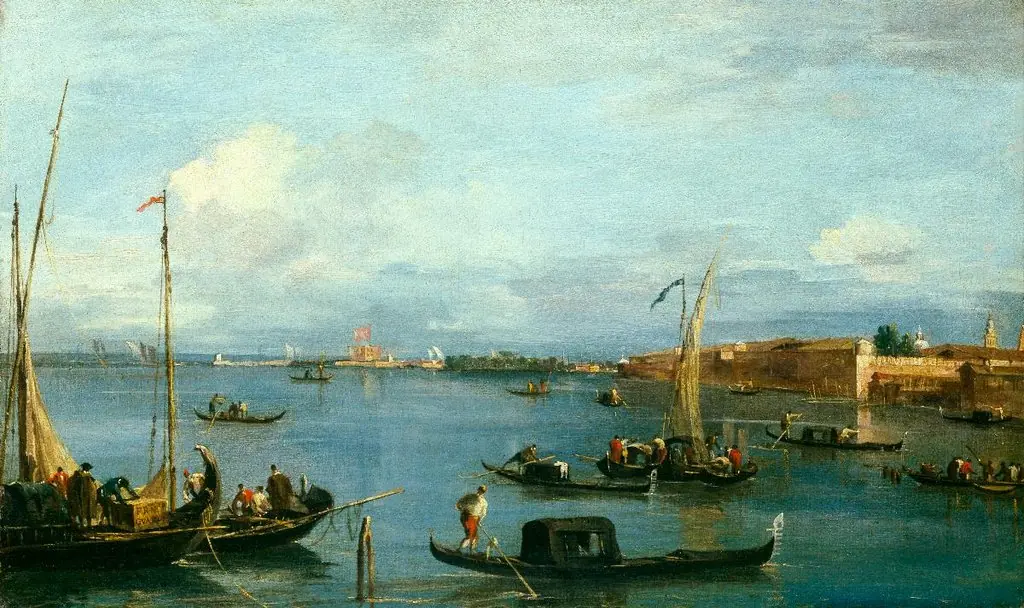 Die Lagune mit dem Fort San Nicolò
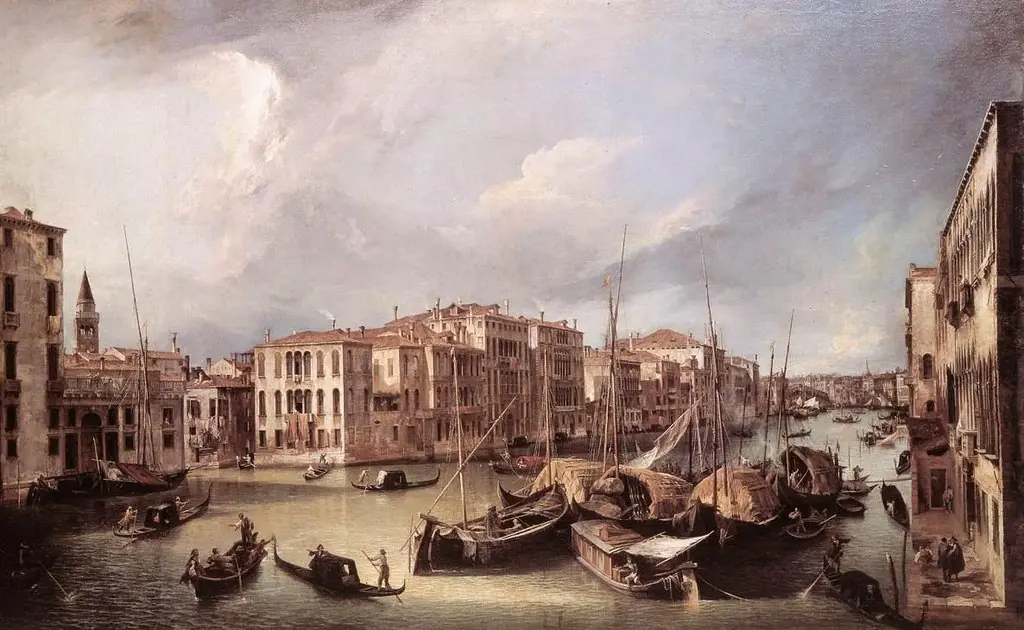 Grand Canal: Looking North-East toward the Rialto Bridge
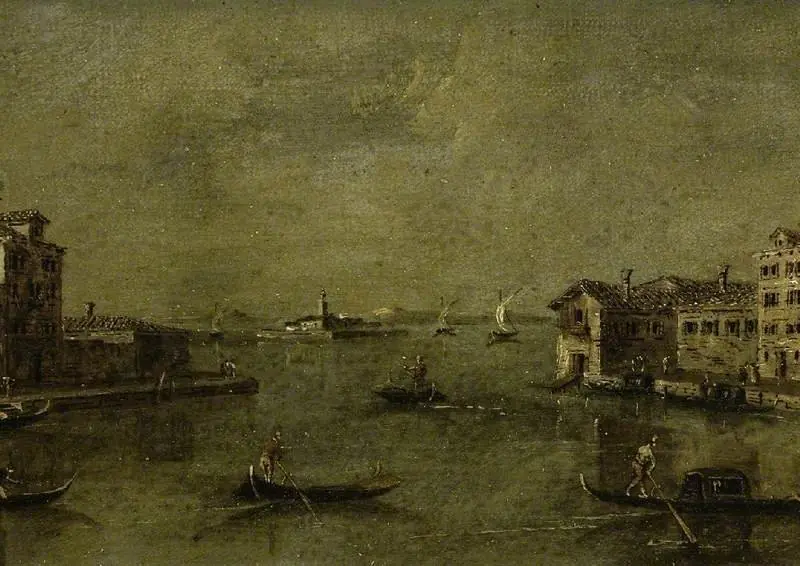 Punta Di S. Giobbe, Venice
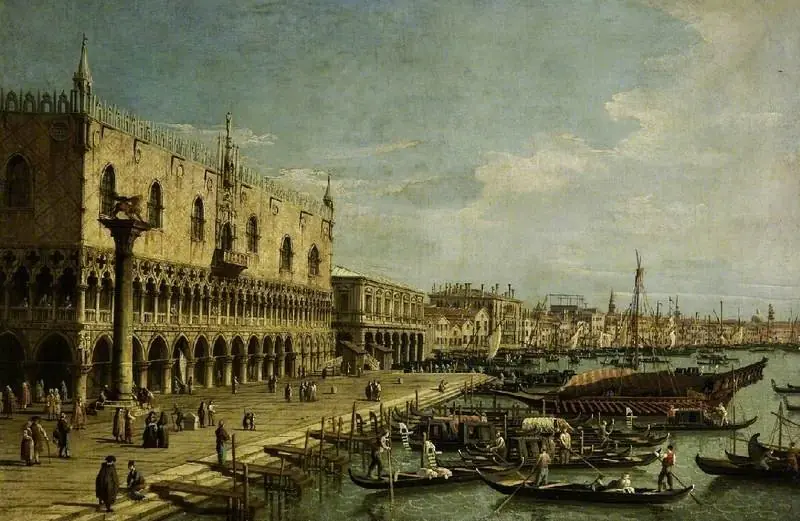 The Doge's Palace, Venice
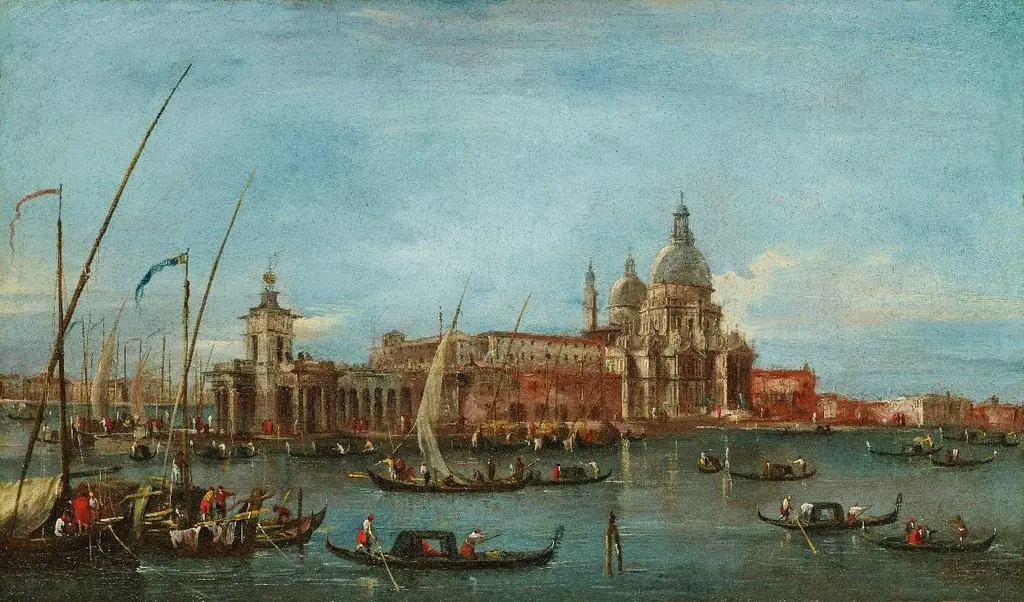 Punta della Dogana e Santa Maria della Salute
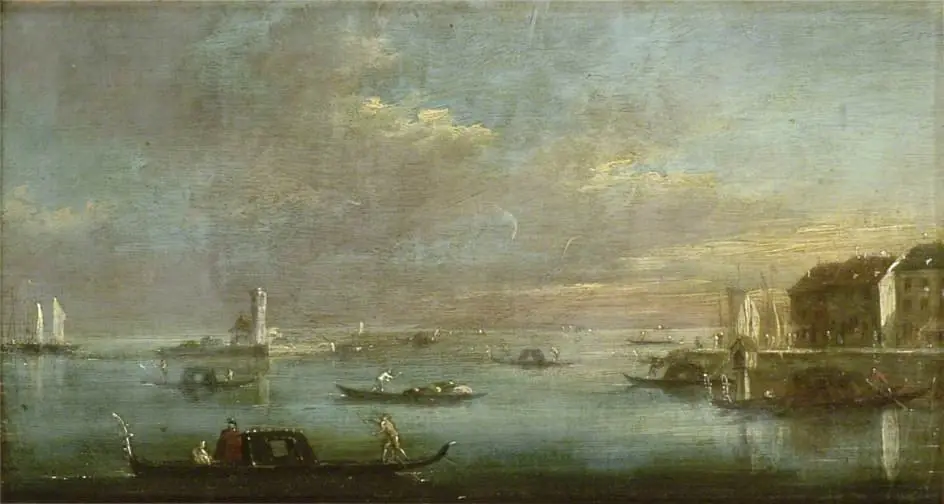 The Venetian Lagoon at Sunset
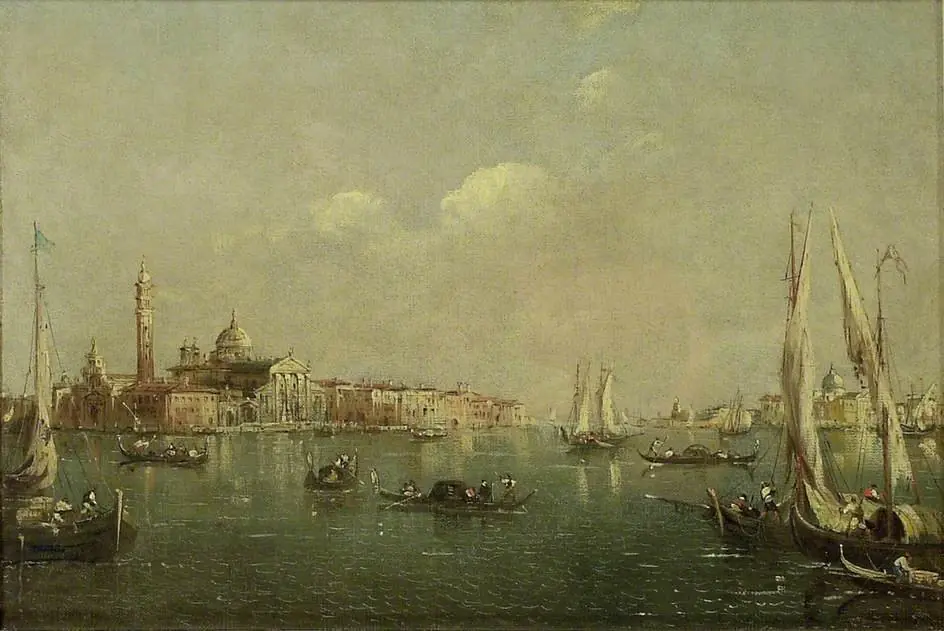 The Lagoon and Island of San Giorgio seen from the Molo
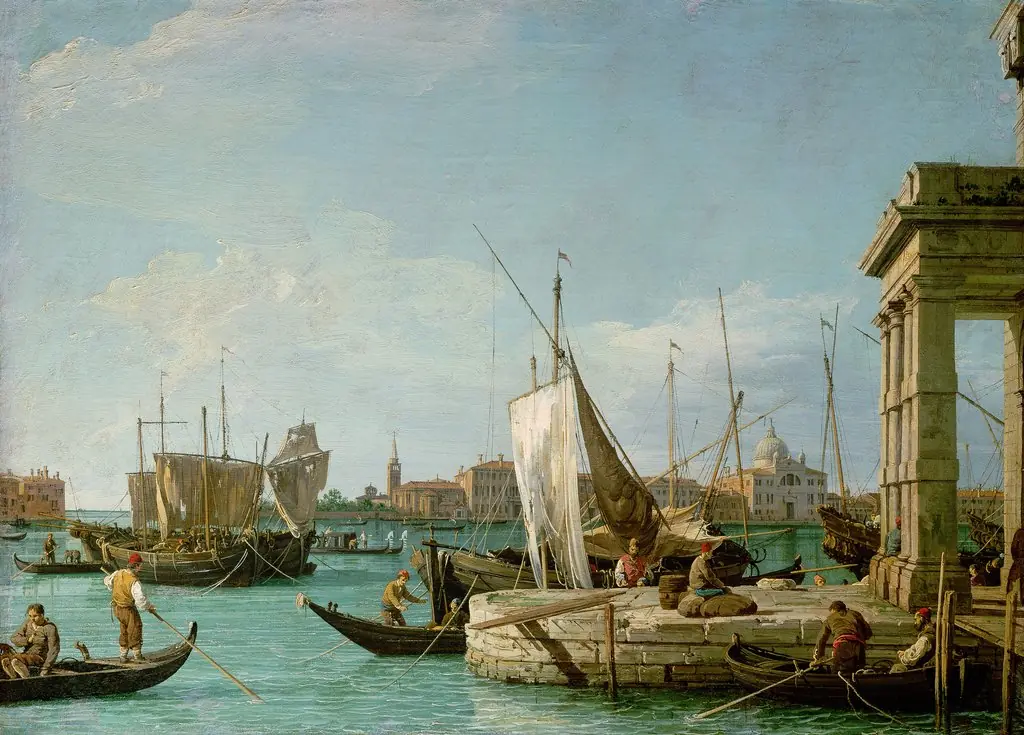 La Punta della Dogana
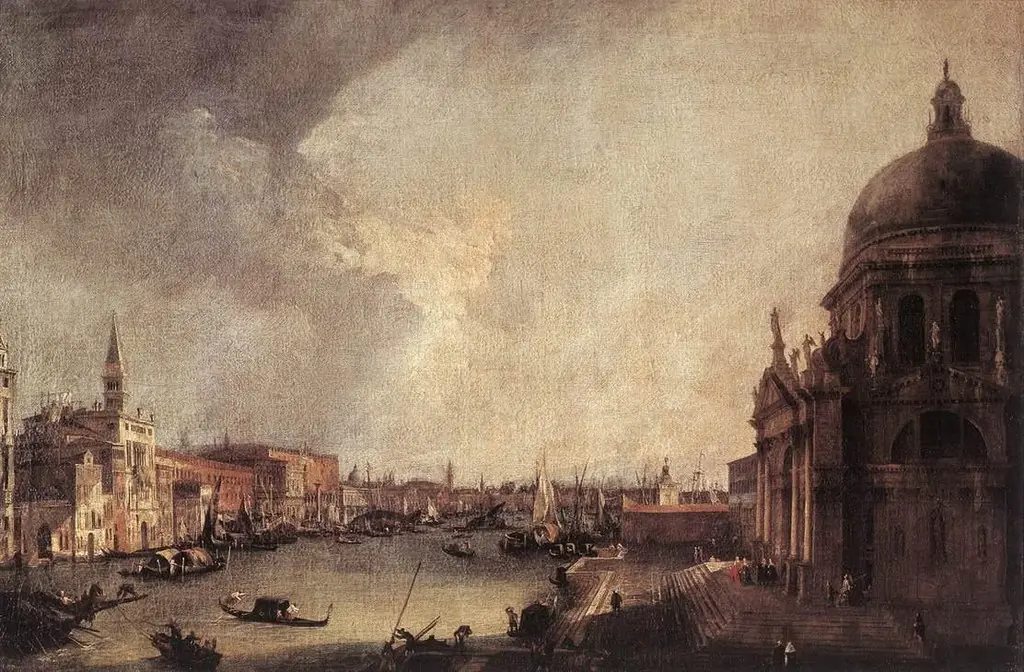 Entrance to the Grand Canal: Looking East