Artwork
Lucretia
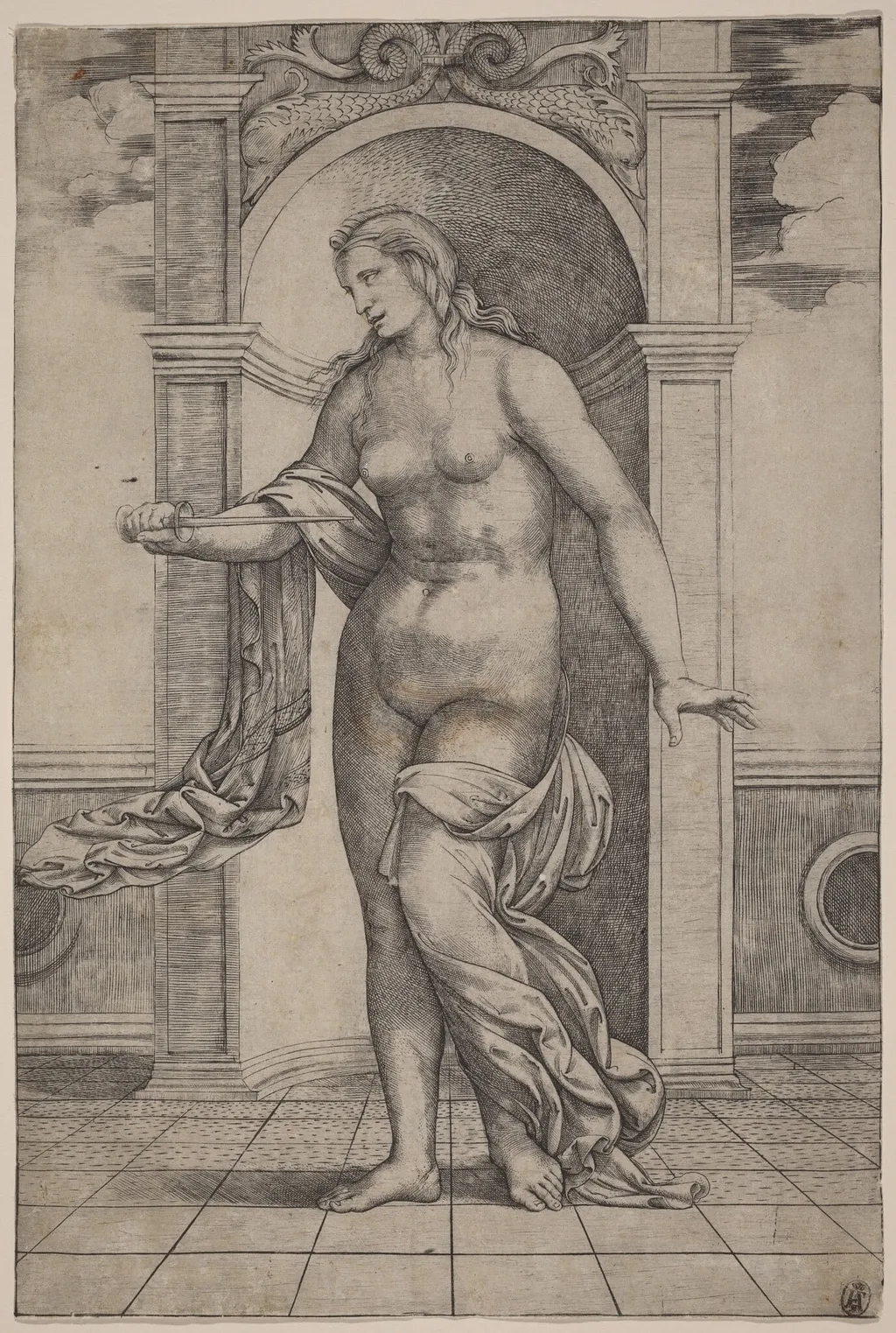
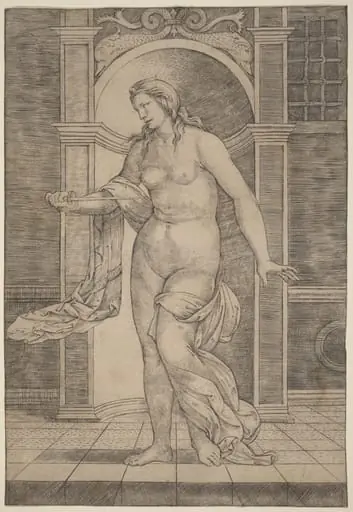
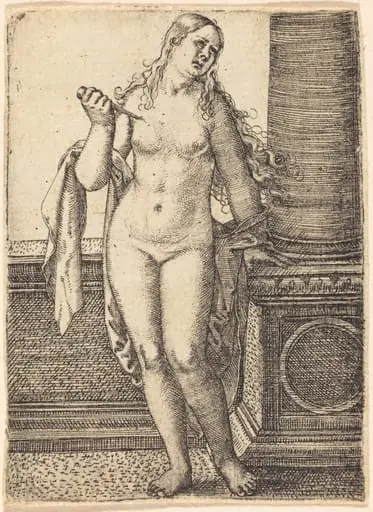
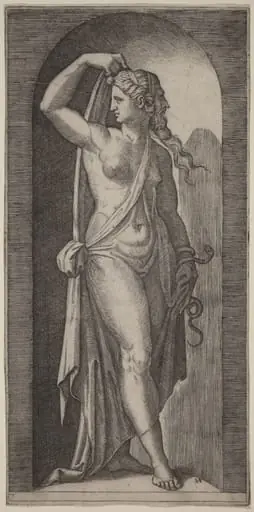
Lucretia is an ink print by the Renaissance artist Jacopo Francia. It dates from 1510 and is held in the collection of the National Gallery of Art.
About this work
Overview
Lucretia is an engraving by Jacopo Francia, dated to around 1510. It portrays a nude female figure in a contemplative, determined pose, set against an arched doorway.
Subject & Meaning
The subject, likely inspired by the ancient Roman legend of Lucretia, conveys resolve and determination through her posture and expression. Her partially draped form, with one breast exposed, and the upheld dagger in her right hand, may symbolize the story's themes of virtue, betrayal, and tragic consequence.
Technique & Style
Executed in the Renaissance style, the engraving showcases attention to detail and realism, characteristic of the era's humanist and classical influences. The use of cross-hatching techniques would have been central to achieving depth and texture in the work.
History & Provenance
Created circa 1510 by Jacopo Francia, specific details regarding the engraving's history, ownership, or exhibition record before its current location are not provided in the available information.
Context
Emerging from the Renaissance, this work reflects the period's emphasis on classical narratives and the depiction of the human form with realism and emotional depth. The choice of Lucretia as a subject aligns with the Renaissance interest in ancient Roman stories.
Legacy
While specific legacy details of this engraving are not provided, as a work of Jacopo Francia, it contributes to the broader understanding and appreciation of Renaissance engraving techniques and the enduring appeal of classical subjects in art.
Artist & collection