Artwork
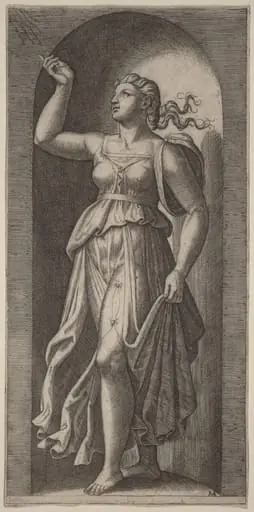
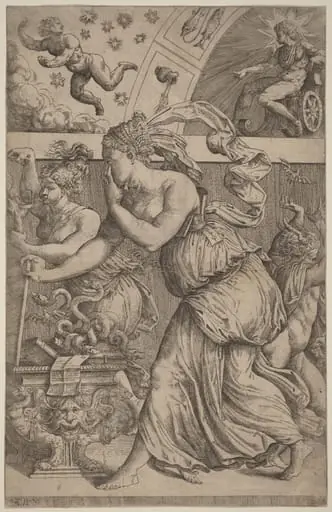
Woman Pulling Her Hair
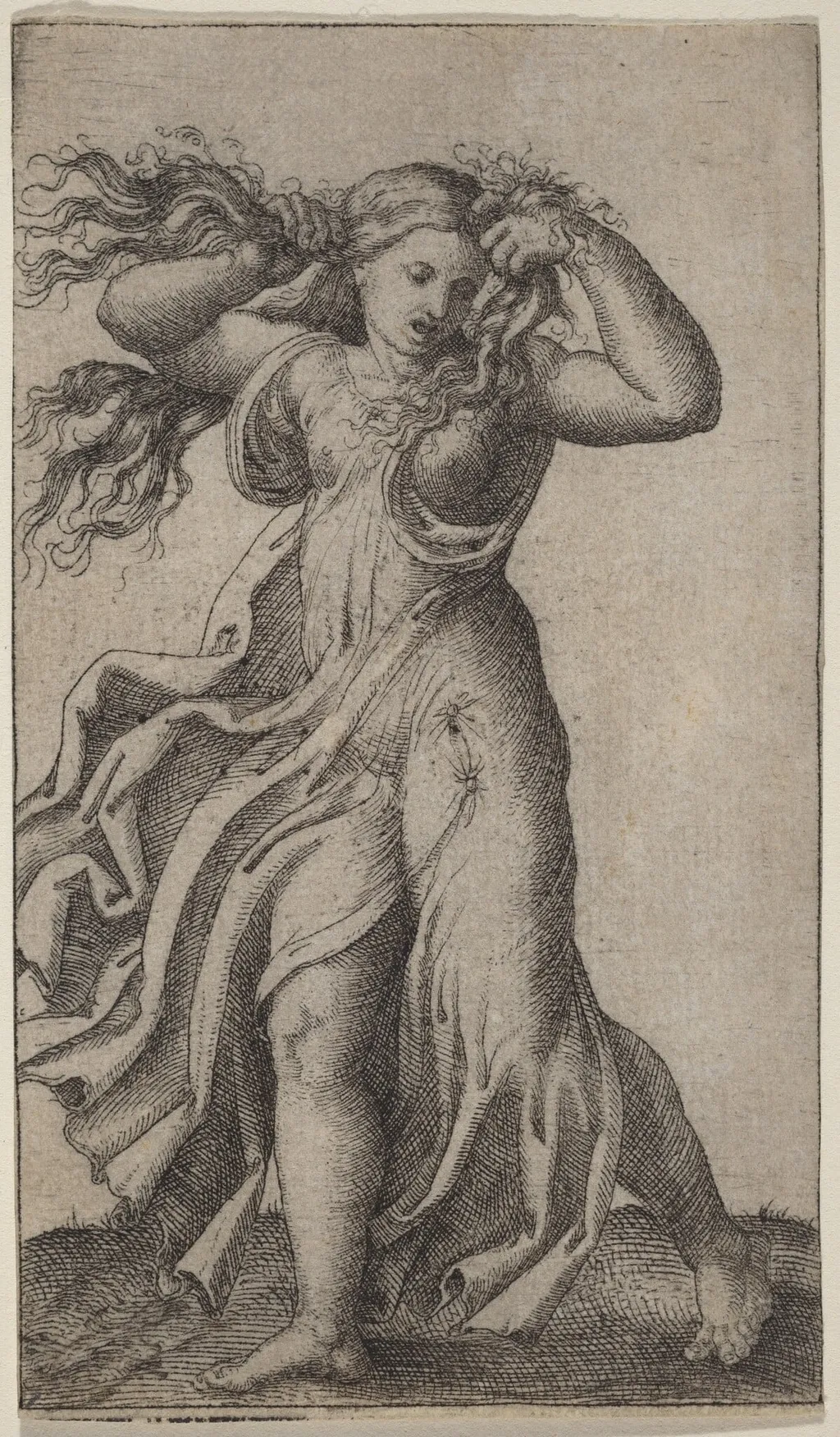
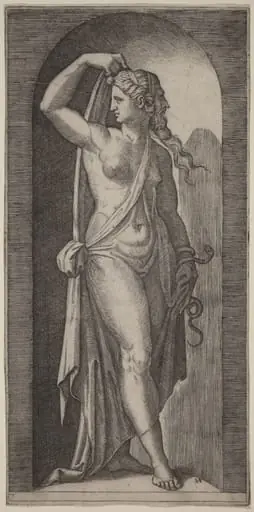
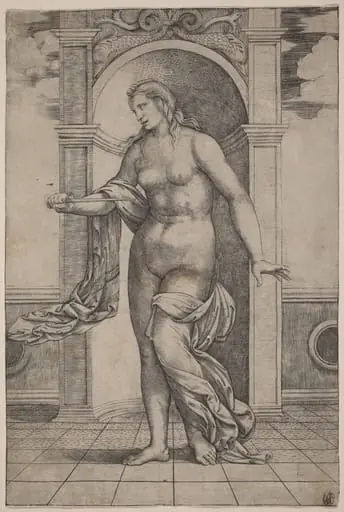
Woman Pulling Her Hair is an ink print by the Renaissance artist Marcantonio Raimondi. It dates from 1522 and is held in the collection of the National Gallery of Art.
About this work
Overview
Created in 1522, *Woman Pulling Her Hair* is a print that combines etching and engraving. The work is attributed to Marcantonio Raimondi, an Italian printmaker active at the turn of the 16th century. It presents a solitary female figure caught in a moment of intense gesture, rendered with the fine line work characteristic of early modern print techniques.
Subject & Meaning
The composition shows a woman in a loose gown, her long hair grasped by both hands as it streams in the wind. Her facial expression, a blend of strain and resolve, and the exposed bare feet on a grassy plane suggest a narrative of personal struggle or emotional turmoil, inviting viewers to contemplate the psychological state behind the gesture.
Technique & Style
Raimondi employs a hybrid of etching, which allows for subtle tonal gradations, and engraving, which provides crisp, controlled lines. This combination yields detailed textures in the hair and fabric, while preserving the overall clarity of the figure’s form. The precision of the line work reflects the influence of contemporary Northern European printmakers, especially Albrecht Dürer.
History & Provenance
Marcantonio Raimondi built his reputation through reproductions of Raphael’s designs, but *Woman Pulling Her Hair* is an original composition rather than a copy. The print circulated in the early 16th‑century market for prints, reaching collectors across Italy and beyond, though specific ownership records from its early years are scarce.
Context
The piece emerges during a period when printmaking was expanding as a medium for both artistic expression and the dissemination of visual ideas. Raimondi’s work contributed to the spread of High Renaissance aesthetics, while also engaging with the detailed, observational approach seen in Northern engravings.
Legacy
Raimondi’s integration of etching and engraving set a technical precedent for later printmakers, influencing the development of more nuanced tonal effects in the medium. The print’s focus on an emotionally charged solitary figure anticipates later Baroque explorations of drama and individual experience.
Artist & collection

Artist
Marcantonio Raimondi, often called simply Marcantonio (c. 1470/82 – c. 1534), was an Italian engraver, known for being the first important printmaker whose body of work consists largely of prints copying paintings. He…