Artwork
Holy Family with Saint Elizabeth and the Infant Saint John the Baptist
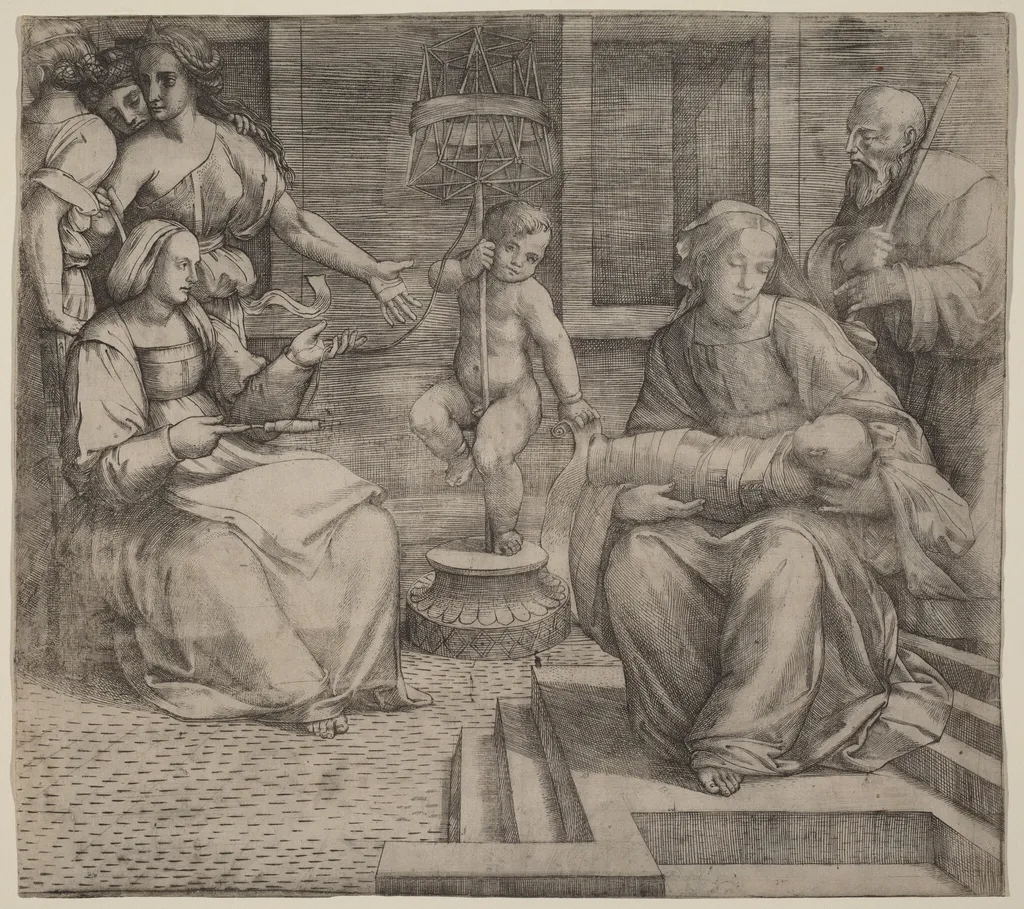
Holy Family with Saint Elizabeth and the Infant Saint John the Baptist is an ink print by the Renaissance artist Jacopo Francia. It dates from 1513 and is held in the collection of the National Gallery of Art.
About this work
Overview
The work belongs to the tradition of Renaissance printmaking, where intricate line work replaced broad brushstrokes to convey form and emotion.
Created around 1513, this engraving by Jacopo Francia depicts a quiet domestic scene centered on the Holy Family, extended by the presence of Saint Elizabeth and the young John the Baptist. Rendered in fine linear detail, the composition unfolds within a modest interior, where everyday objects and textured fabrics ground the sacred figures in a tangible space. The work belongs to the tradition of Renaissance printmaking, where intricate line work replaced broad brushstrokes to convey form and emotion.
Subject & Meaning
The scene portrays the Virgin Mary seated with the infant Jesus, while Saint Elizabeth, her cousin, stands nearby, reaching toward a young John the Baptist. A second child, possibly an angel or servant, holds a miniature ship—an allusion to the Church as a vessel of salvation. The inclusion of a scroll and a bowl suggests contemplation and ritual, reinforcing the spiritual significance of the moment without overt symbolism, reflecting a humanized approach to sacred narrative.
Technique & Style
Francia employed fine, controlled engraving lines to model volume and texture, particularly in the folds of garments and the soft contours of faces. Shading is achieved through cross-hatching and delicate parallel strokes, creating subtle gradations of light and shadow. The patterned floor and woven wall hanging demonstrate attention to surface detail, characteristic of early 16th-century Italian prints that valued precision over dramatic flair.
History & Provenance
The engraving was produced during Francia’s active years in Bologna, a center of printmaking influenced by both local traditions and northern European techniques. While no early ownership records are widely documented, the work aligns with other devotional prints circulating among private collectors and religious communities in northern Italy during the early Renaissance, intended for personal meditation rather than public display.
Context
In early 16th-century Italy, engravings served as accessible religious images for domestic devotion, especially where paintings were costly or unavailable. Francia’s work reflects the broader trend of integrating sacred figures into intimate, domestic settings, echoing contemporary painting styles while adapting them to the constraints and possibilities of the print medium. The inclusion of everyday details like the bowl and woven textile grounds the divine in the familiar.
Legacy
Though not widely replicated or copied by later artists, Francia’s engraving exemplifies the quiet, detailed aesthetic of Bolognese printmaking before the rise of more theatrical Mannerist styles. Its emphasis on restrained emotion and tactile realism contributed to the development of devotional imagery in print, influencing regional workshops that prioritized clarity and intimacy over grandeur.
Own this work as a print
Artist & collection


 The Mystic Marriage of Saint Catherine
 The Virgin and Child with Saints
 The Virgin and the Cradle with Saint Elisabeth and Saint Anne
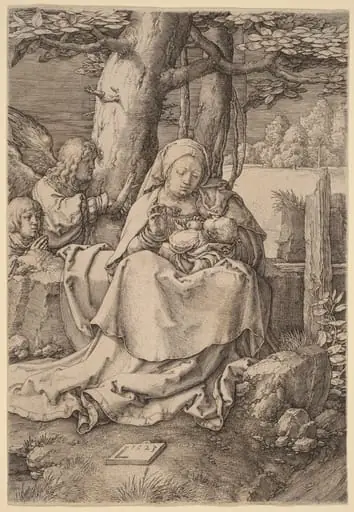 The Virgin and Child with Two Angels
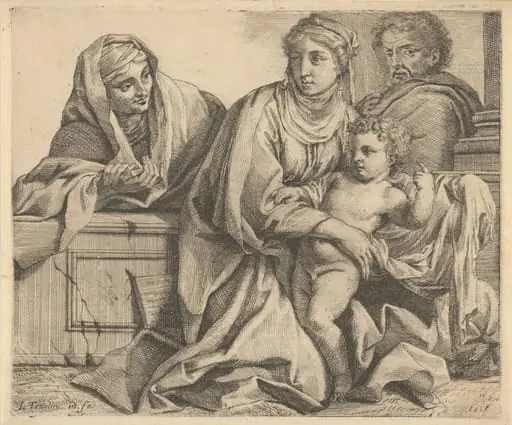 The Holy Family with Saint Anne
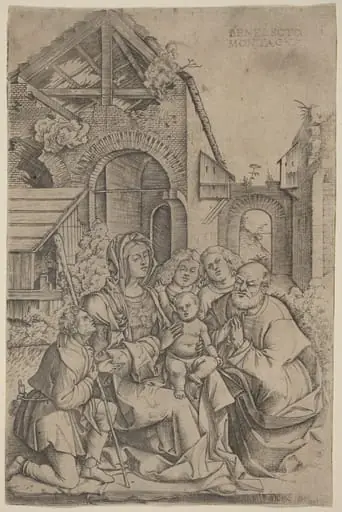 The Nativity
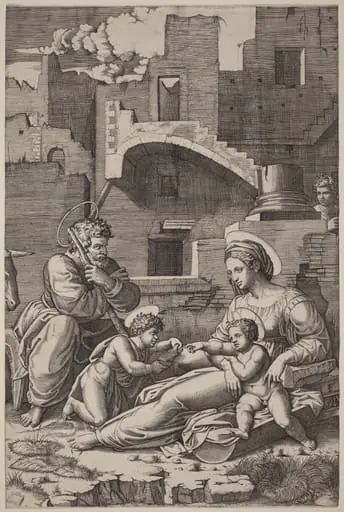 The Holy Family with the Young Saint John the Baptist (The Madonna of the Long Thigh)
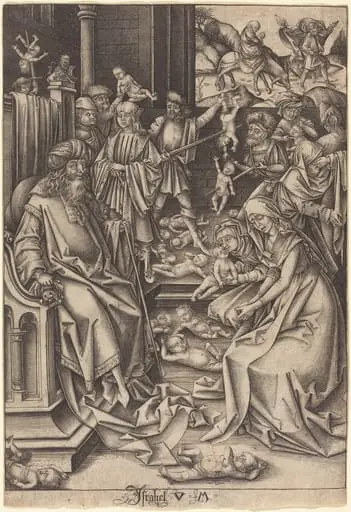 Massacre of the Innocents
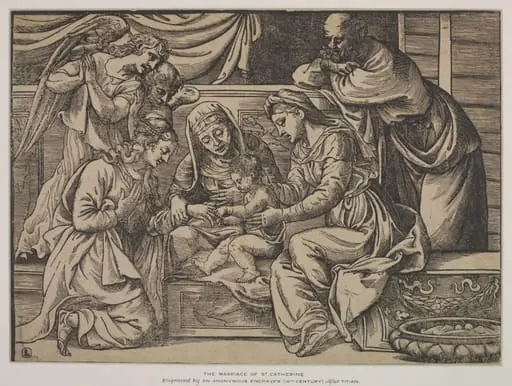 Marriage of St. Catherine