Artwork
Patron Saints of Bologna
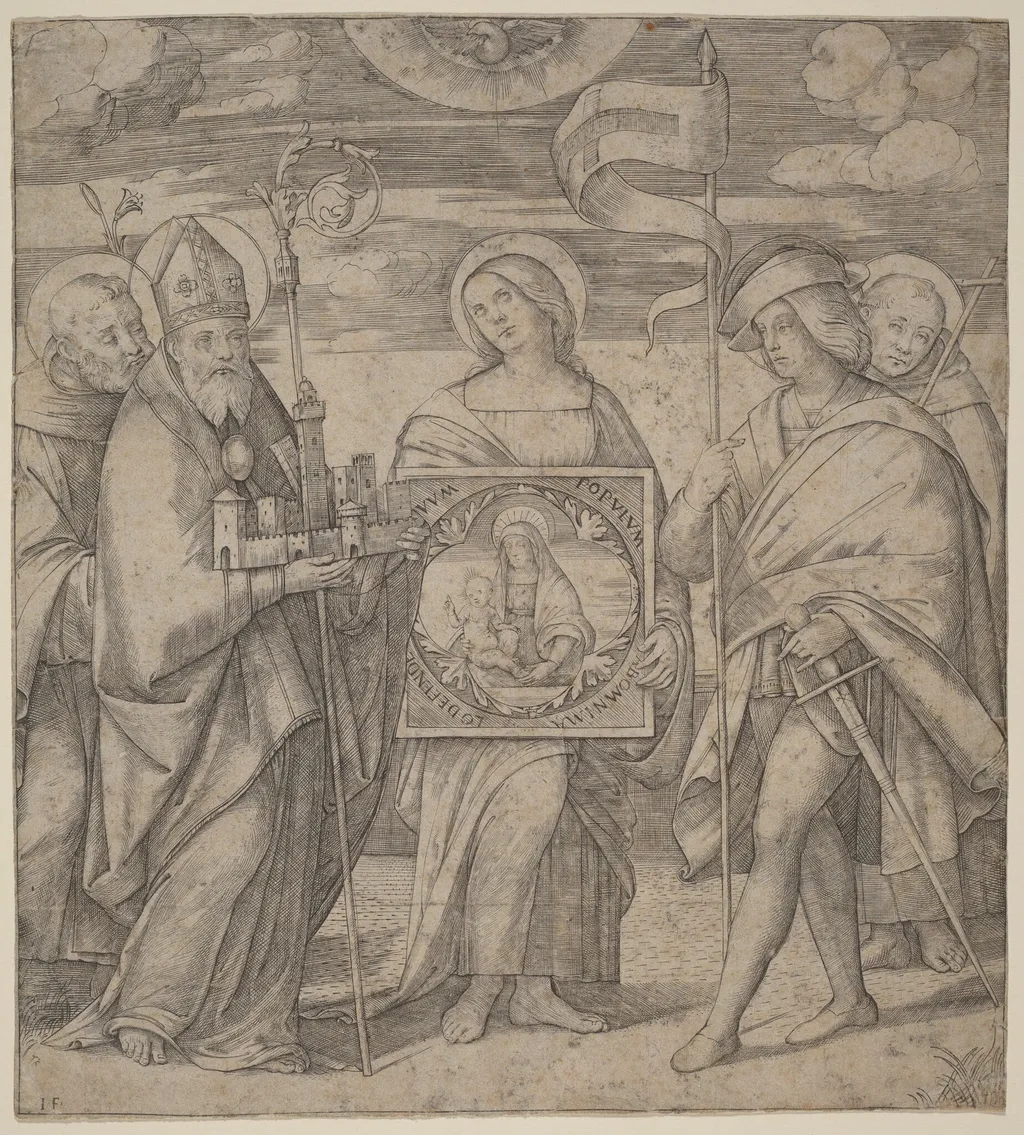
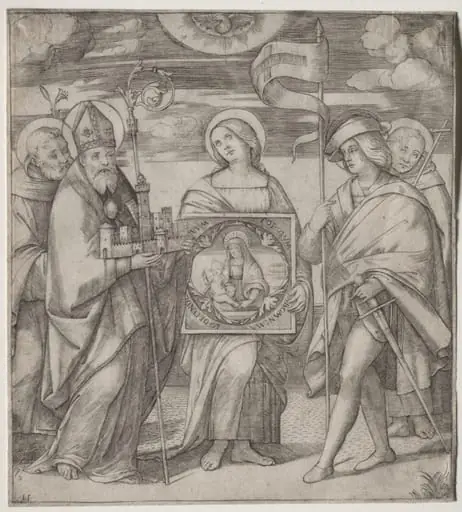
Patron Saints of Bologna is an ink print by the Renaissance artist Jacopo Francia. It dates from 1518 and is held in the collection of the National Gallery of Art.
About this work
Overview
The work belongs to a tradition of devotional prints meant for private contemplation or local veneration, emphasizing spiritual authority over narrative action.
Created around 1518, this engraving by Jacopo Francia depicts four revered figures associated with Bologna. Rendered in fine linear detail, the composition presents them in a solemn, aligned formation, each distinguished by symbolic attributes and modest, archaic garments. The work belongs to a tradition of devotional prints meant for private contemplation or local veneration, emphasizing spiritual authority over narrative action.
Subject & Meaning
The figures represent Bologna’s patron saints, identified through their emblems: the leftmost saint holds a staff crowned with a globe and miniature structure, signifying earthly governance under divine order; the central female saint cradles a framed image of the Virgin and Child, a standard icon of maternal intercession; the two右侧 figures carry staffs, possibly indicating pilgrimage or protection. Their unified, grave expressions convey solemnity and sacred presence.
Technique & Style
Francia employed precise, controlled engraving lines to model volume and texture, using cross-hatching to suggest the weight of fabric and the depth of facial features. The absence of tone or wash preserves the clarity of the line, characteristic of early 16th-century Northern Italian printmaking. The figures are rendered with restrained naturalism, prioritizing symbolic clarity over individualized portraiture.
History & Provenance
The print likely circulated among religious communities in Bologna and surrounding regions, serving as a visual anchor for local devotion. Few early impressions survive, suggesting limited production, possibly commissioned by a civic or ecclesiastical body. Its survival reflects its role in sustaining regional identity through sacred imagery during the early Reformation period.
Context
In early 16th-century Italy, engraved saints’ portraits were common tools for reinforcing local religious identity, especially in cities with strong civic cults. Bologna, a center of learning and piety, fostered such imagery to affirm its spiritual heritage. Francia’s work aligns with broader trends in printmaking that prioritized clarity and devotional function over artistic experimentation.
Legacy
Though not widely reproduced or copied, the engraving remains a rare example of regional devotional printmaking from Bologna’s Renaissance period. It contributes to understanding how local saints were visually codified for public veneration, offering insight into the intersection of civic pride and religious practice in pre-Reformation Italy.
Artist & collection


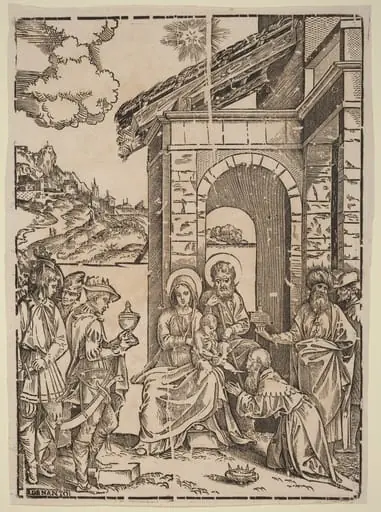 The Adoration of the Magi
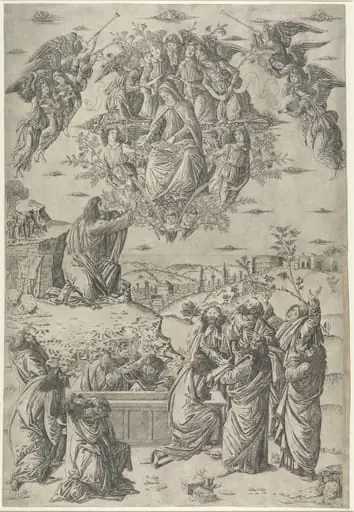 The Assumption of the Virgin
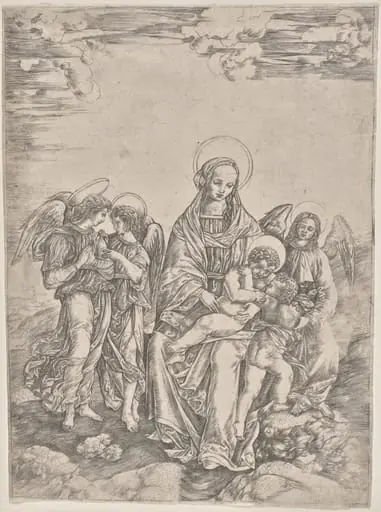 Virgin and Child with the Infant Saint John
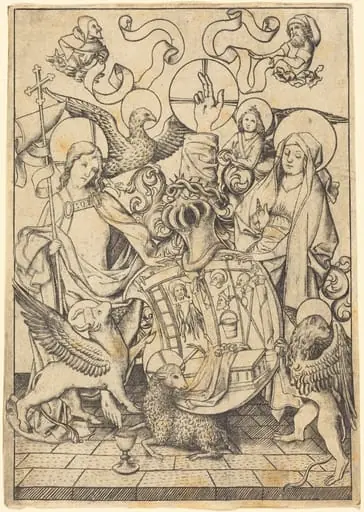 Coat of Arms of the Passion
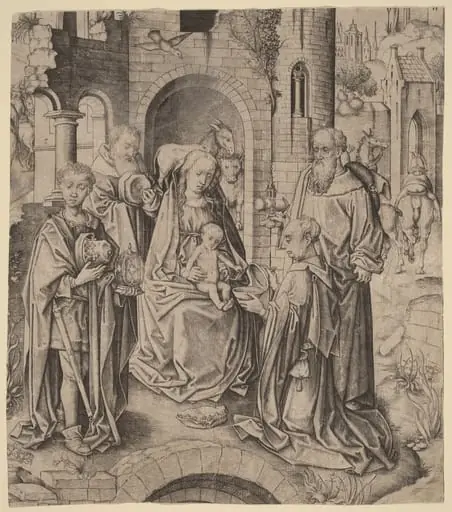 The Adoration of the Magi
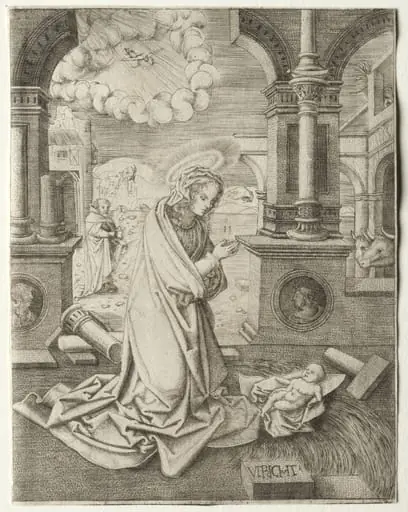 The Nativity
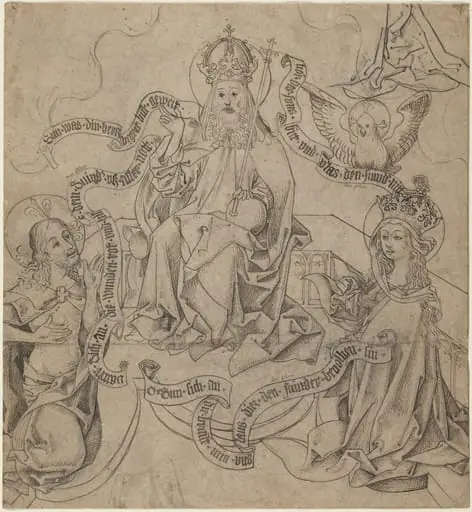 Christ and Mary Interceding with God the Father
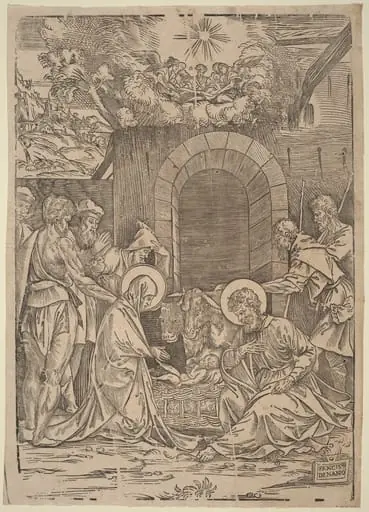 The Adoration of the Shepherds
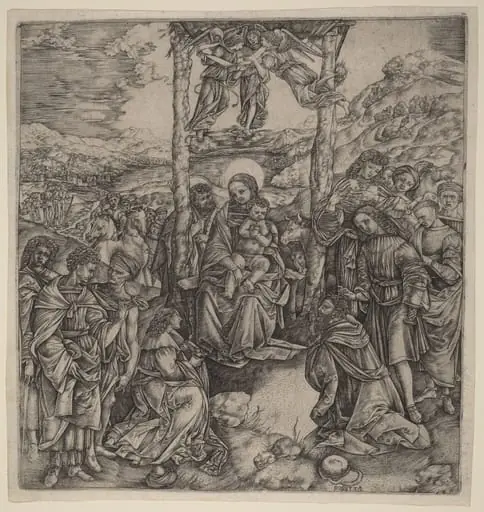 The Adoration of the Magi
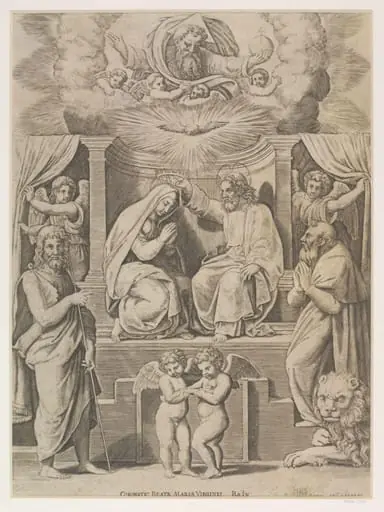 The Virgin Crowned by Jesus Christ
 The Adoration of the Magi
 Patron Saints of Bologna