Artwork
Coat of Arms of the Passion
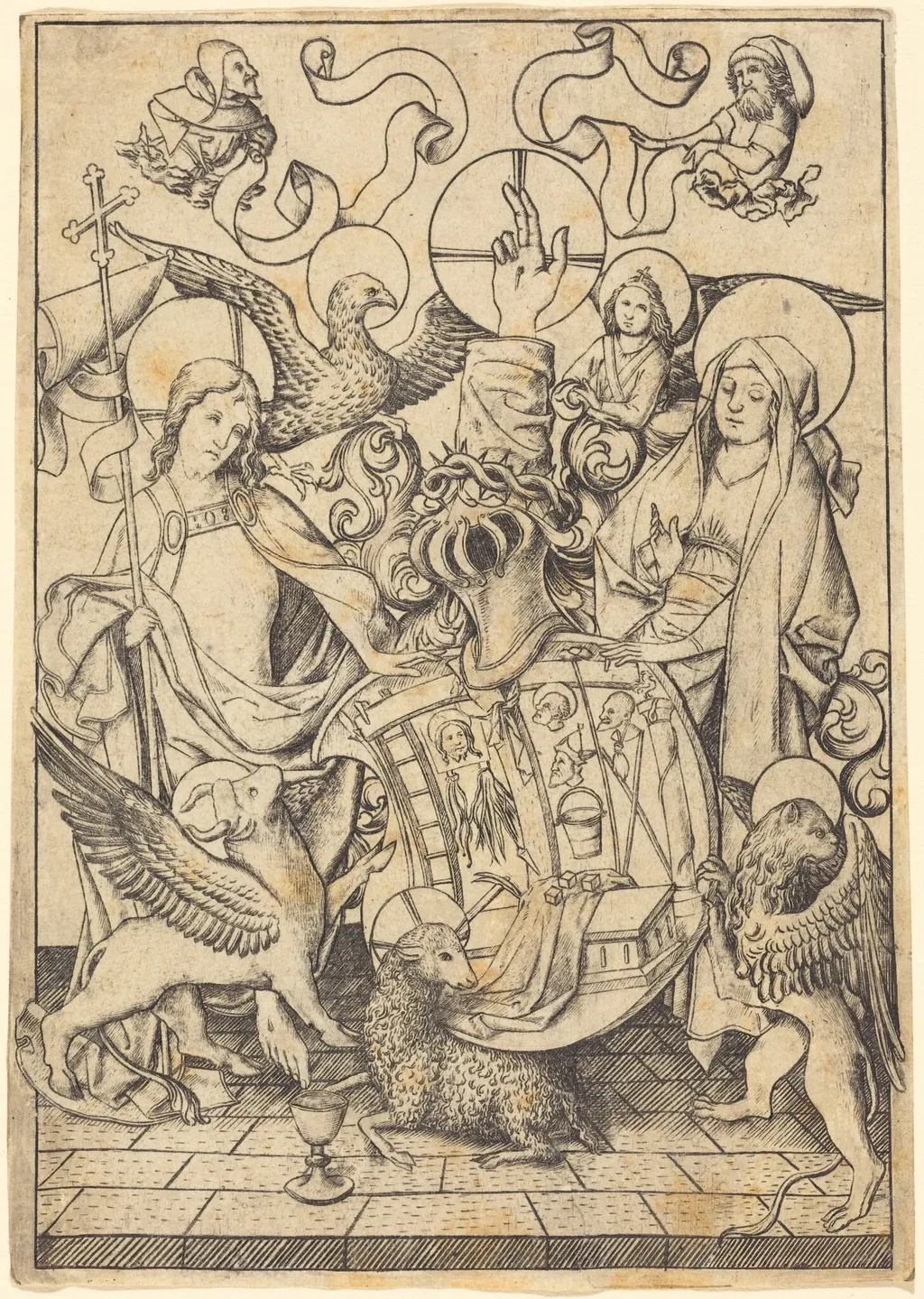
Coat of Arms of the Passion is an ink print by the Renaissance artist Master E.S.. It dates from 1458 and is held in the collection of the National Gallery of Art. Created around 1458 by an anonymous German engraver known as Master E.
About this work
Overview
, appears on the work, marking him as a pioneering figure in the field who helped establish engraving as a serious artistic medium in Northern Europe.
Created around 1458 by an anonymous German engraver known as Master E. S., this print is among the earliest significant works in the history of German printmaking. Executed in engraving on metal, it presents a dense, symbolic composition centered on the instruments of Christ’s suffering. The artist’s distinctive monogram, E. S., appears on the work, marking him as a pioneering figure in the field who helped establish engraving as a serious artistic medium in Northern Europe.
Subject & Meaning
The image functions as a heraldic allegory of the Passion, arranging sacred objects and figures in a structured, emblematic layout. At its core, a lamb—symbolizing Christ—lies beneath a winged being holding a cross-topped staff. Surrounding it are angels, hybrid creatures, and symbolic tools of the Crucifixion: the ladder, the spear, the sponge, and the jar of vinegar. Each element is arranged to convey theological meaning, transforming the narrative of Christ’s suffering into a visual emblem for contemplation and devotion.
Technique & Style
Master E. S. employed fine, precise lines carved into a metal plate to create intricate detail and tonal depth. Cross-hatching and parallel lines build shadow and volume without color, demonstrating an advanced command of the medium. The composition is tightly packed, with figures and objects overlapping in a rhythmic, almost crowded arrangement. The background’s wavy, cloud-like border frames the scene, enhancing its otherworldly character while maintaining a sense of order within the visual complexity.
History & Provenance
The engraving dates to the late 1450s, during a period when printmaking was emerging as a distinct art form in the Rhineland. Though the artist’s identity remains unknown, his monogram and stylistic consistency across a body of work allow scholars to attribute multiple prints to him. The work likely circulated among religious communities and collectors, serving both devotional and artistic purposes. No early ownership records are documented, but its survival in multiple impressions suggests it was widely reproduced and valued.
Context
Produced in the decades before Dürer’s rise, this engraving reflects the growing interest in detailed, devotional imagery in late medieval Germany. It aligns with contemporary religious practices that emphasized the physical suffering of Christ as a path to spiritual reflection. The use of heraldic structure to organize sacred symbols draws from both ecclesiastical tradition and the visual language of noble coats of arms, merging secular and sacred modes of representation in a novel way.
Legacy
Master E. S. laid foundational techniques for later German printmakers, influencing the development of fine-line engraving and symbolic composition. His work helped elevate printmaking from a craft to an art form capable of complex theological expression. Though overshadowed by later figures, his innovations in line, structure, and iconography contributed directly to the artistic language that would define the Northern Renaissance print tradition.
Artist & collection

Artist
Master E. S. (c. 1420 – c. 1468; previously known as the Master of 1466) is an unidentified German engraver, goldsmith, and printmaker of the late Gothic period. He was the first major German artist of old master prints…

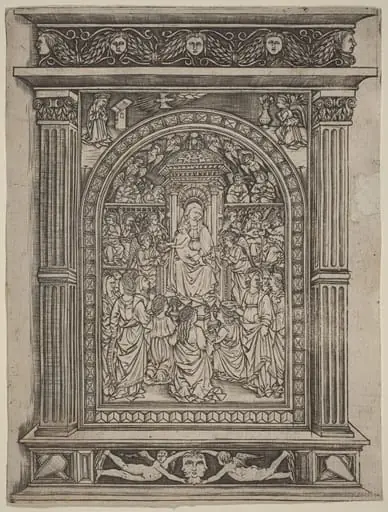 The Virgin and Child Enthroned, with Angels and Saints
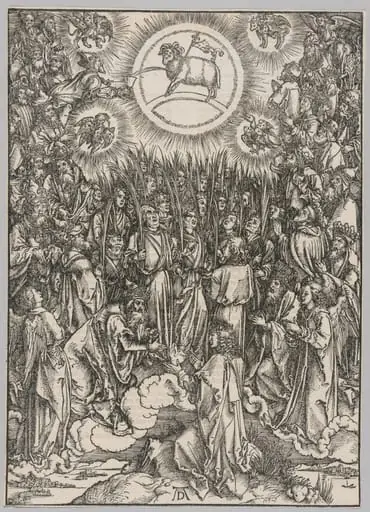 Apocalypse: The Adoration of the Lamb—The Hymn of the Chosen
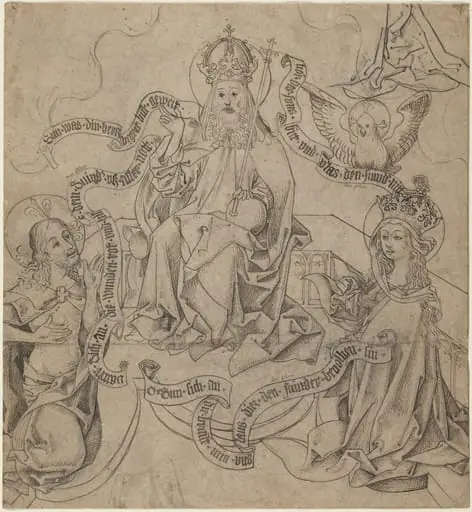 Christ and Mary Interceding with God the Father
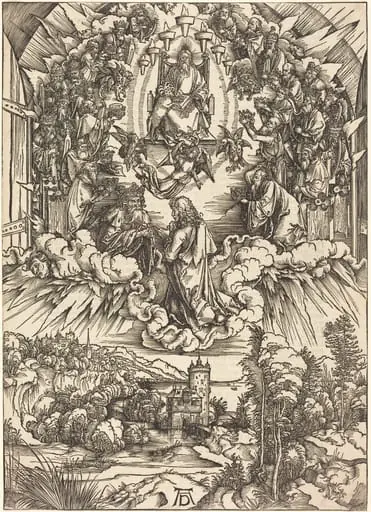 Saint John before God and the Elders
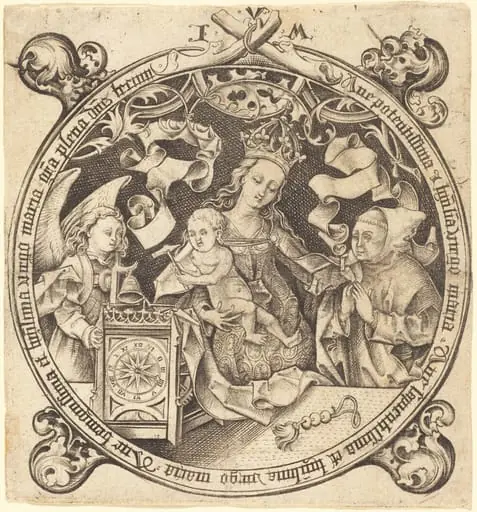 The Madonna with the Clock
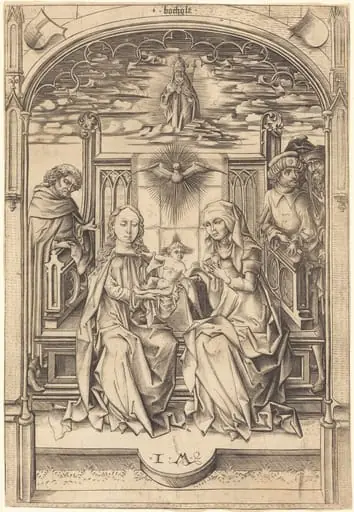 The Holy Family
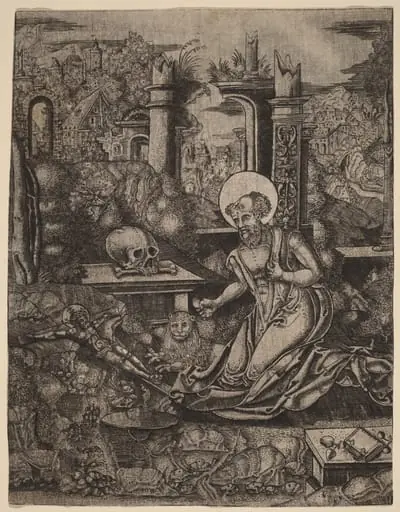 Saint Jerome
 St. Anne, the Virgin and Christ Child
 The Adoration of the Magi
 Adoration of the Magi
 The Madonna and Child with Saint Anne
 Saint Michael