Artwork
Kom Ombo
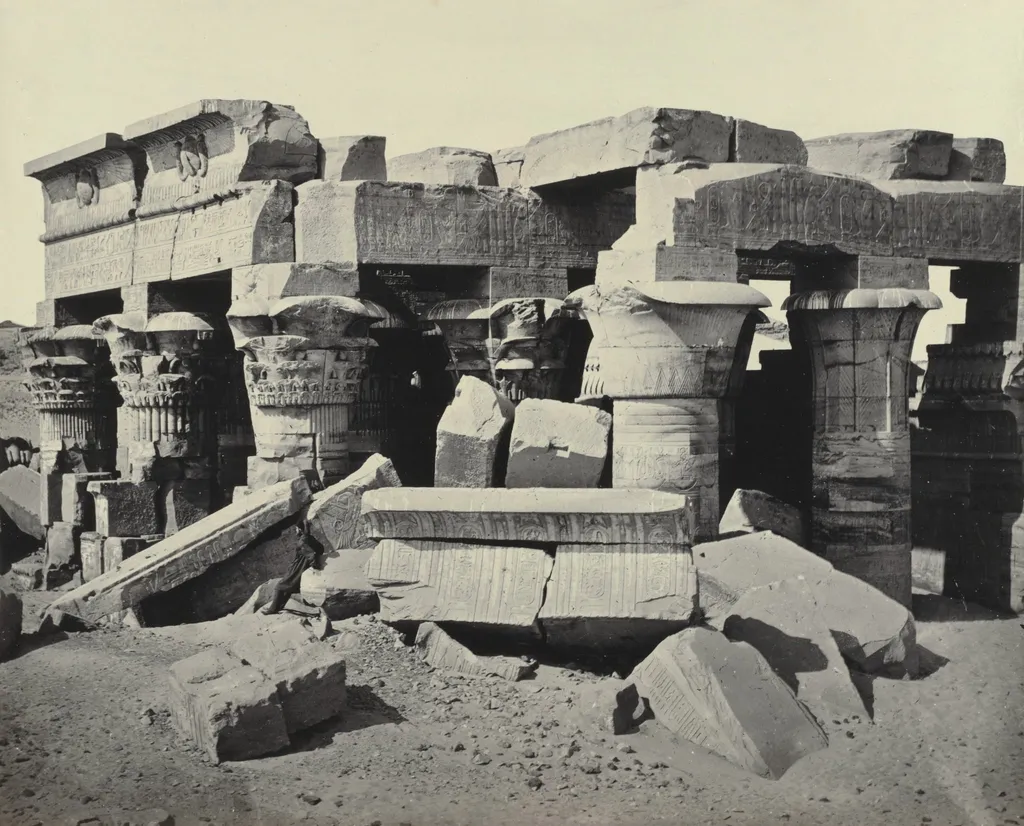
Kom Ombo is a photography by the Impressionist artist Francis Frith. It dates from 1858 and is held in the collection of the Cleveland Museum of Art.
About this work
You can learn more about photographic techniques like this by looking at the work of artist: Francis Frith (British, 1822–1898).
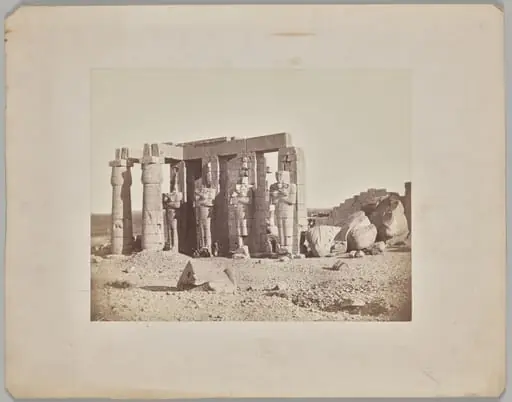
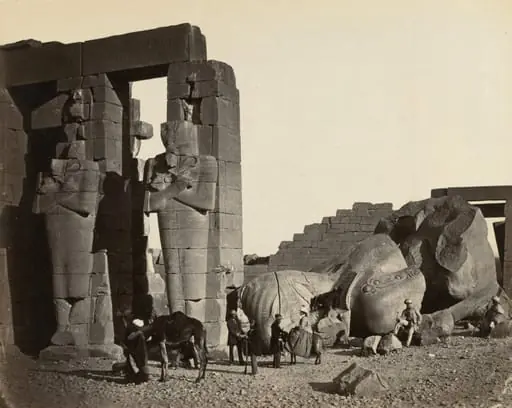
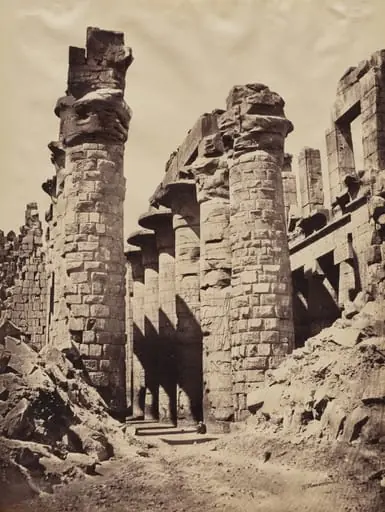
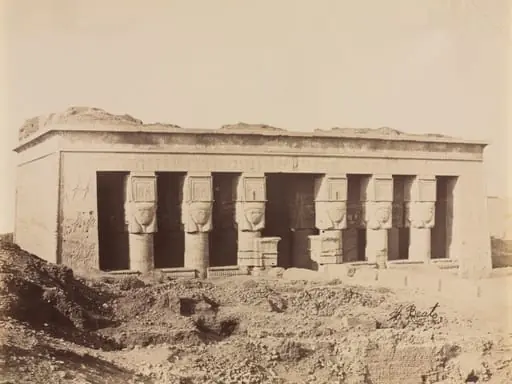
This painting shows a temple at Kom Ombo, with parts of it buried in sand.
The artist, Francis Frith, was inspired by another artist's drawings when choosing monuments to photograph. He wanted to show the accuracy of his depiction, rather than create an emotional impact. Frith's photos are notable for their attention to detail.
You can learn more about photographic techniques like this by looking at the work of artist: Francis Frith (British, 1822–1898).
Overview
Francis Frith’s mid‑nineteenth‑century photograph captures the ancient temple complex at Kom Ombo, Egypt, with its lower portions still submerged beneath desert sand. The image presents the ruin’s distinctive twin‑columned façade, emphasizing the contrast between the exposed stone and the surrounding dunes, and serves as a visual record of the site’s condition during the early period of Western archaeological interest.
Subject & Meaning
The composition focuses on the partially buried structure, evoking a sense of a monumental figure half‑concealed by time. Frith’s own description likened the scene to a colossal being restrained yet still imposing, suggesting both the endurance of the ancient architecture and its vulnerability to natural forces.
Technique & Style
Frith selected his viewpoint after studying the earlier sketches of Scottish painter David Roberts, adopting similar perspectives to frame the monument. His photographic practice prioritized precise representation over dramatization, employing careful exposure and composition to render architectural details faithfully, reflecting his belief that an accurate visual record outweighs aesthetic embellishment.
History & Provenance
Taken during Friday’s extensive travels in Egypt in the 1850s, the photograph entered his commercial catalog of Oriental images, which were widely distributed across Britain and Europe. Original prints were sold as cartes de visite and later compiled in bound albums, contributing to the Victorian public’s visual knowledge of Egyptian antiquities.
Context
The image belongs to a period when European explorers and artists were documenting ancient sites for both scholarly study and popular fascination. Frith’s work aligns with the broader Orientalist movement, yet his emphasis on factual accuracy distinguishes his photographs from more romanticized depictions prevalent at the time.
Artist & collection

Artist
Francis Frith was an English photographer and businessman. Francis Frith & Co., the company he founded in 1860 with the initial goal of photographing every town and village in England, quickly became the largest…