Artwork
Southern Portion of the Rock-cut Temple of Hathor, Abu Simbel
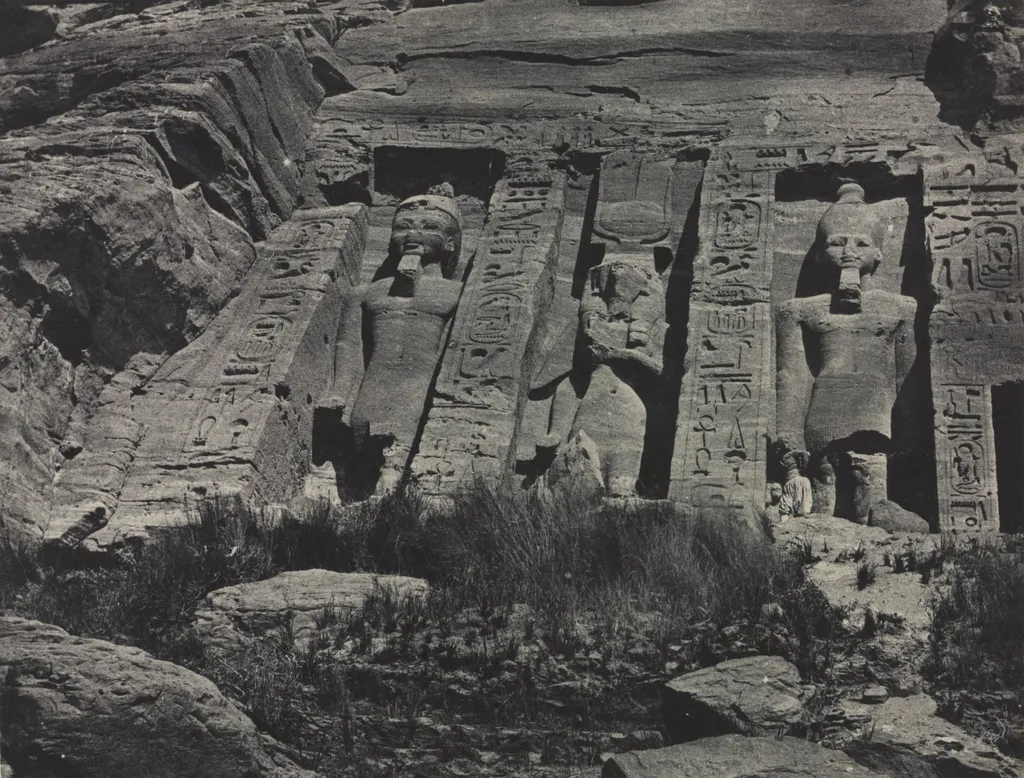
Southern Portion of the Rock-cut Temple of Hathor, Abu Simbel is a photography by the Impressionist artist Maxime Du Camp. It dates from 1850 and is held in the collection of the Cleveland Museum of Art.
About this work
He traveled with the writer Gustave Flaubert, and together they studied the ruins and writing on the walls.
You see a carved stone temple front with tall columns and a quiet courtyard. Figures in ancient dress are painted or carved into the stone walls. The sun hits part of the building, leaving other areas in shadow.
Maxime Du Camp took this image during a trip to Egypt in 1849. He was one of the first people to use photography to record old monuments. He traveled with the writer Gustave Flaubert, and together they studied the ruins and writing on the walls. His photos helped Western scholars learn more about these sites.
Look next at france, 19th century.
Overview
This early photograph captures the southern façade of the rock‑cut Temple of Hathor at Abu Simbel, showing its towering columns, a recessed courtyard and the relief figures that adorn the stone walls. Sunlight illuminates portions of the façade while other sections remain in shadow, emphasizing the depth of the carved architecture.
Subject & Meaning
The image records a segment of the temple dedicated to the goddess Hathor, whose iconography appears in the painted and carved figures that line the entrance. The composition highlights the interplay between natural light and the monument’s relief work, underscoring the ancient builders’ use of contrast to enhance visual narrative.
Technique & Style
Taken by Maxime Du Camp in 1849, the photograph employs the daguerreotype process, then a cutting‑edge method for documenting architecture. The monochrome tonal range captures fine detail in the stone carving while rendering the surrounding landscape in muted gradations, a characteristic approach of early documentary photography.
History & Provenance
Du Camp was dispatched by a scholarly society to photograph Egyptian monuments and their hieroglyphs, traveling with writer Gustave Flaubert. The image formed part of his 1852 album of Egypt, Nubia, Palestine and Syria, which circulated among European scholars and contributed to the emerging field of Egyptology.
Context
The photograph belongs to a period when European artists and scholars began systematic visual recording of ancient sites. Du Camp’s work set a precedent for later photographers such as Felice Beato, who adopted similar subjects and compositional choices while expanding the visual archive of the Near East.
Artist & collection

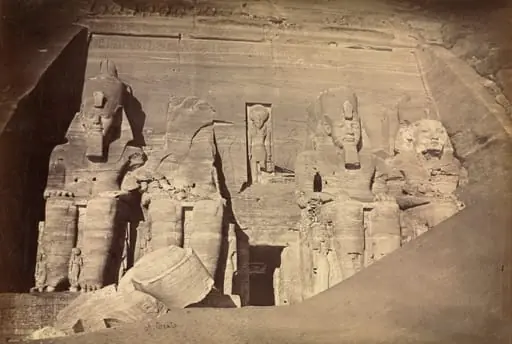 Temple of Ramesses II, Abu Simbel
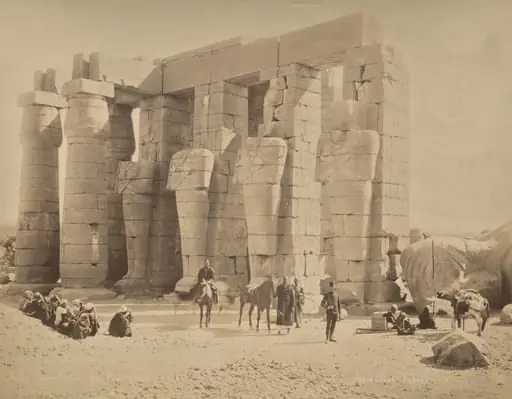 Les cariatides du Ramesseum 134
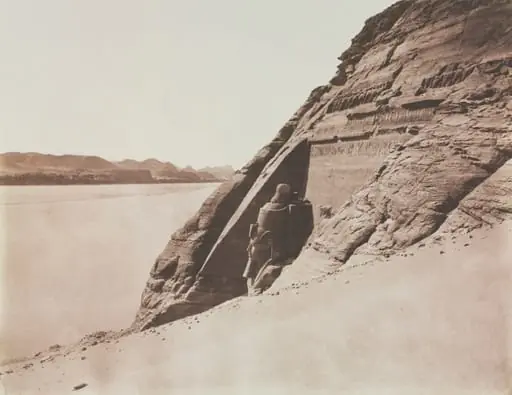 Large Speos - View taken from the Sand Slope (Temple of Ramesses II), Abu Simbel
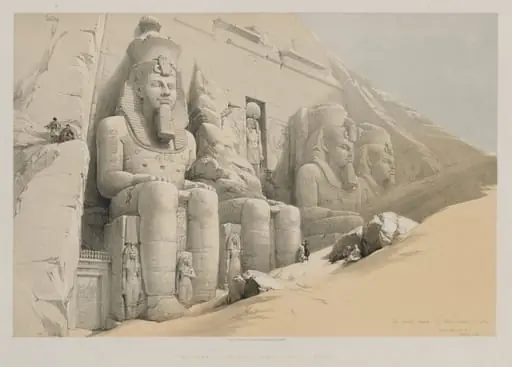 Egypt and Nubia, Volume I: The Great Temple of Aboo-Simble, Nubia
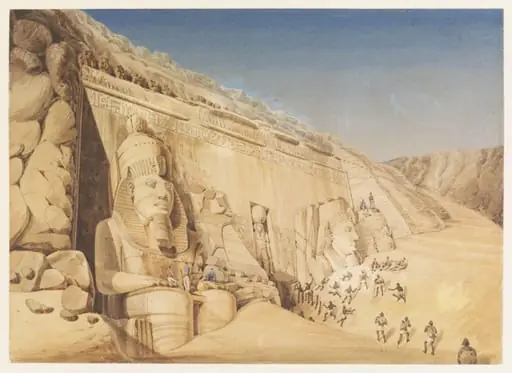 Excavation of the Great Temple of Ramesses II at Abu Simbel
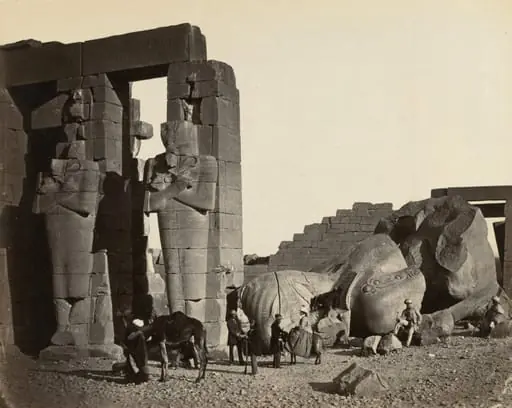 Fallen Statue at the Ramesseum, Thebes
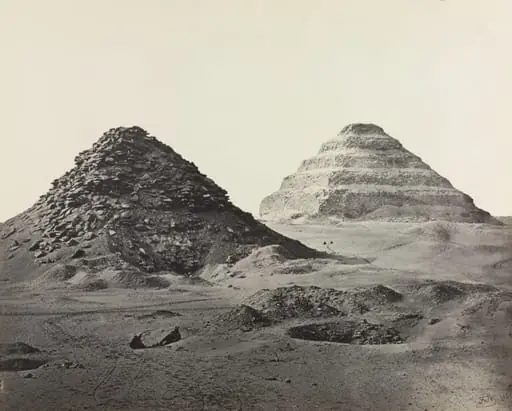 The Pyramids of Saqqara, from the Northeast
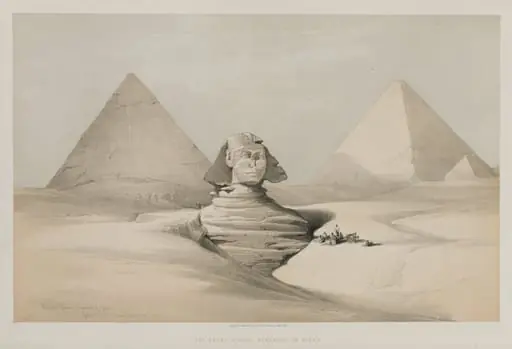 Egypt and Nubia, Volume I: The Great Sphinx, Pyramids of Gezeeh
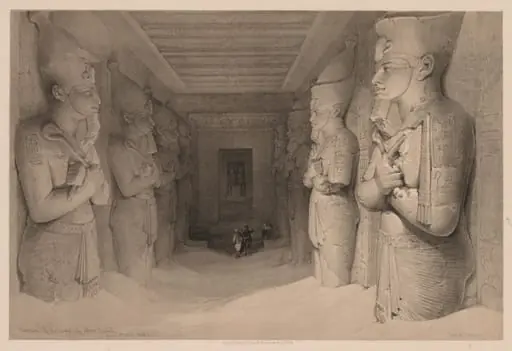 Egypt and Nubia: Volume I - No. 14, Interior of the Temple Aboo Simbel
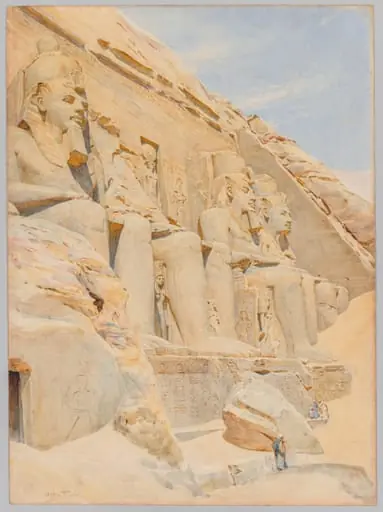 The Great Temple of Abu Simbel
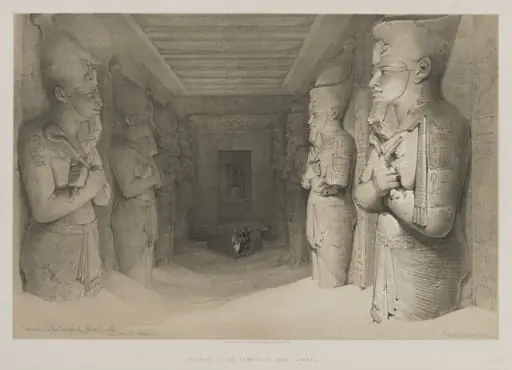 Egypt and Nubia, Volume I: Interior of the Temple of Aboo-Simbel