Artwork
A Backwater
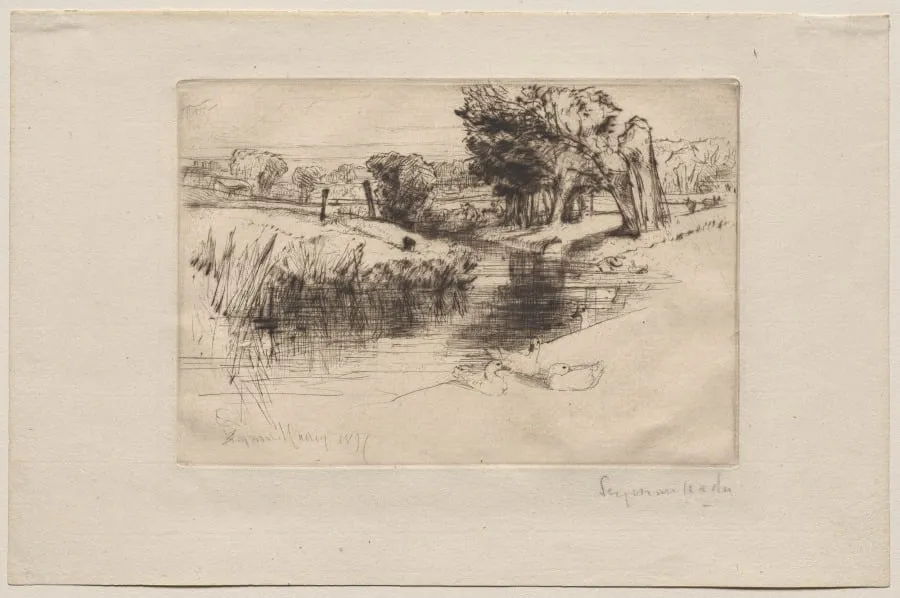
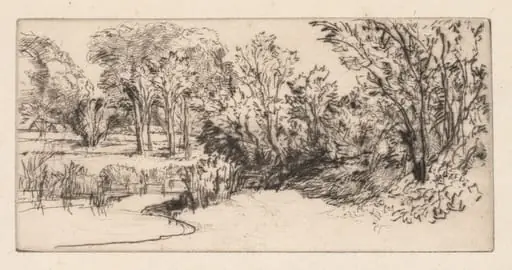
A Backwater is a print by the Impressionist artist Francis Seymour Haden. It dates from 1877 and is held in the collection of the Cleveland Museum of Art.
About this work
The loose, sketchy style makes the scene feel quick and alive, like a moment caught on the spot.
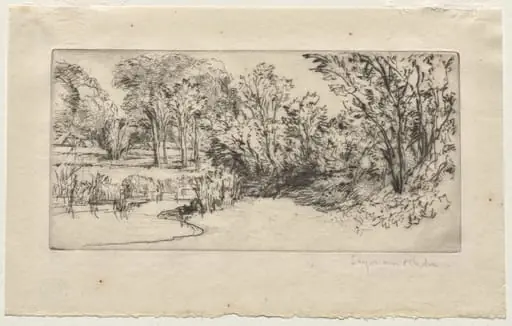
This sketch shows a quiet, muddy pond with a few trees and bushes around it. The water looks still, with some reeds and a small bird near the edge. A fence runs along the left side, and the whole scene is drawn in quick, sketchy lines.
The artist signed it in the corner, and the date "1877" is written in the bottom left. The loose, sketchy style makes the scene feel quick and alive, like a moment caught on the spot.
Check out Realism to see how artists focused on everyday scenes like this.
Overview
Francis Seymour Haden’s print A Backwater, dated 1877, depicts a tranquil, shallow pond surrounded by modest vegetation. The composition is anchored by a low fence on the left edge and a solitary bird perched near reeds at the water’s margin. The work is part of the Cleveland Museum of Art’s collection, where it is displayed as an example of Haden’s late‑career printmaking.
Subject & Meaning
The image captures an unremarkable rural scene—a muddy waterway edged by trees, bushes, and a simple fence—conveying the quietude of an ordinary landscape. By focusing on such a commonplace setting, Haden aligns with a realist impulse to observe and record everyday nature without romantic embellishment, inviting viewers to notice the subtle beauty of a still, overlooked place.
Technique & Style
Executed in a rapid, sketch‑like manner, the print employs loose lines that suggest movement and immediacy. Haden’s handling of ink emphasizes texture: the water’s surface appears glassy, while the foliage and reeds are rendered with quick, gestural strokes. This economical approach creates a sense of spontaneity, as if the scene were captured in a single, fleeting observation.
History & Provenance
Created in 1877, A Backwater bears Haden’s signature and date in the lower left corner, confirming its authenticity. The work entered the Cleveland Museum of Art’s holdings through acquisition (specific acquisition details are not publicly recorded), where it remains a representative piece of the artist’s print oeuvre from the late nineteenth century.
Artist & collection

 Kenarth
 The Little Longparish
 Near the Mill
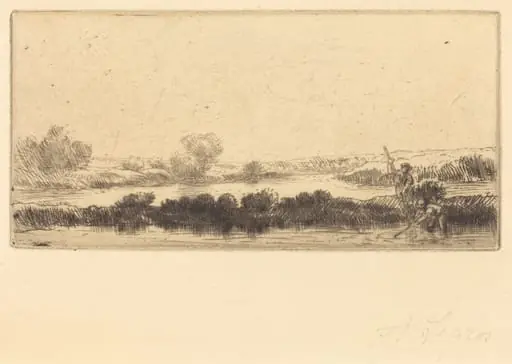 Landscape with Peat-bog; In the Marsh (Paysage des tourbieres; Dans les marais)
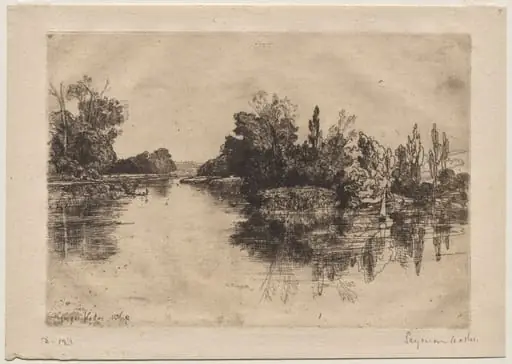 The Island, opposite Boyle's Farm
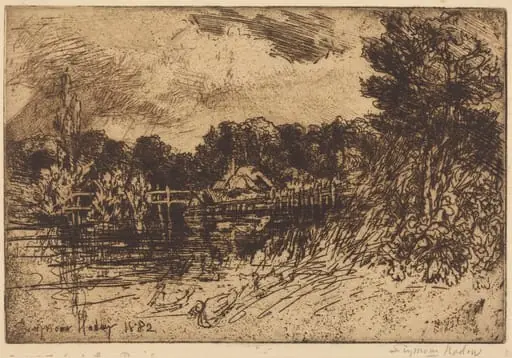 The Test at Longparish
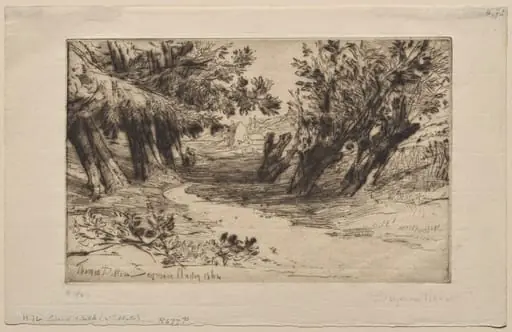 The Lovers' Walk (The Second Plate)
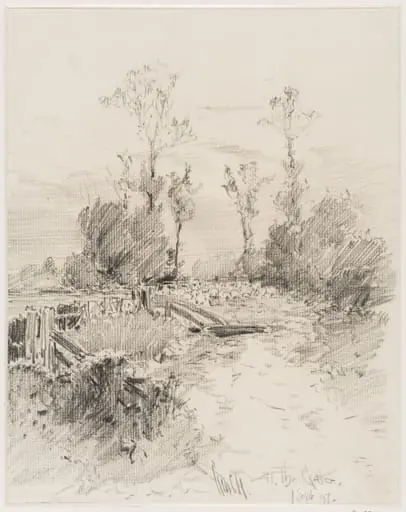 At the Gate, Kessingland.
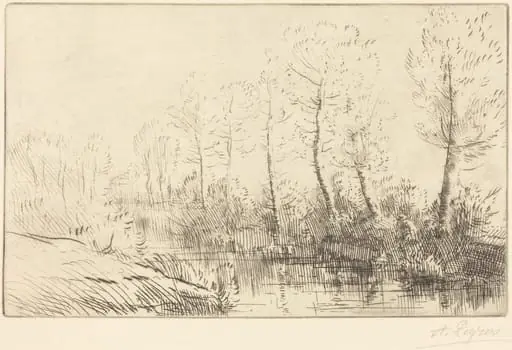 Birch Trees: Water's Edge Seen in Morning Light (Les bouleaux: Bord de l'eau, effet du matin
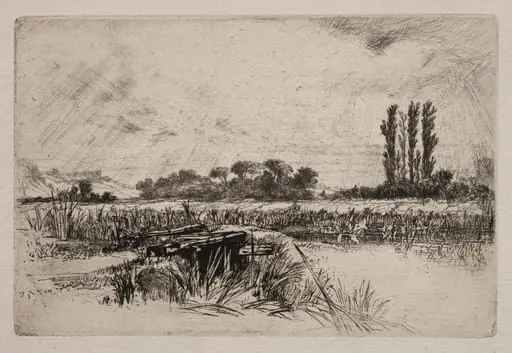 A Water Meadow