Artwork
The Lovers' Walk (The Second Plate)
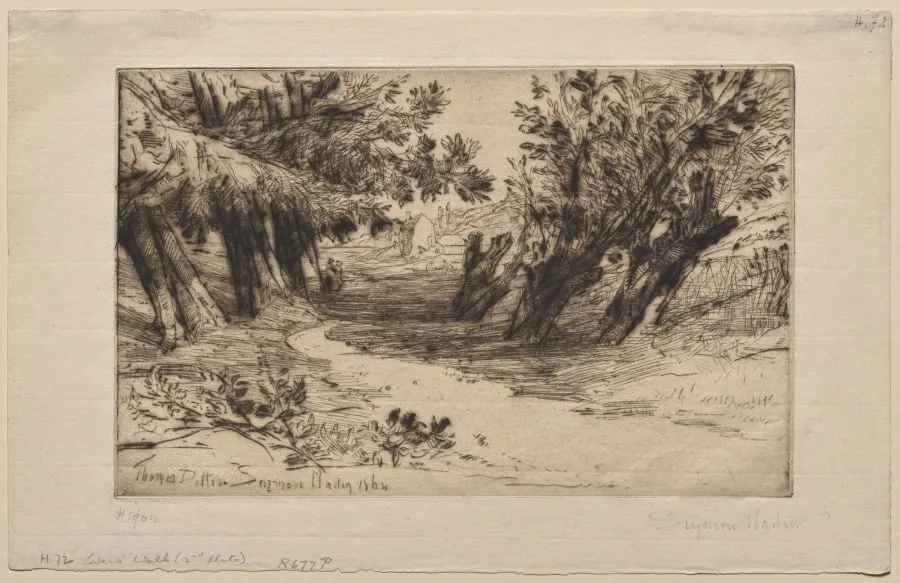
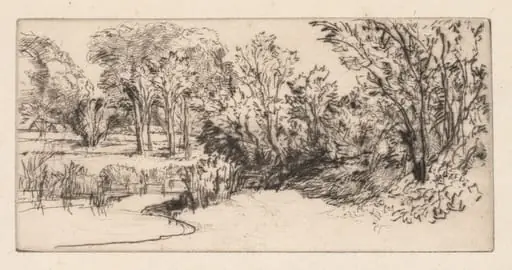
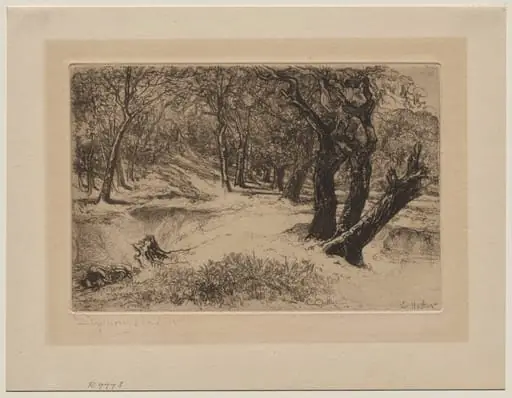
The Lovers' Walk (The Second Plate) is a print by the Impressionist artist Francis Seymour Haden. It dates from 1864 and is held in the collection of the Cleveland Museum of Art.
About this work
Overview
Its unpolished appearance suggests spontaneity, as if captured during a moment of observation rather than composed for formal display.
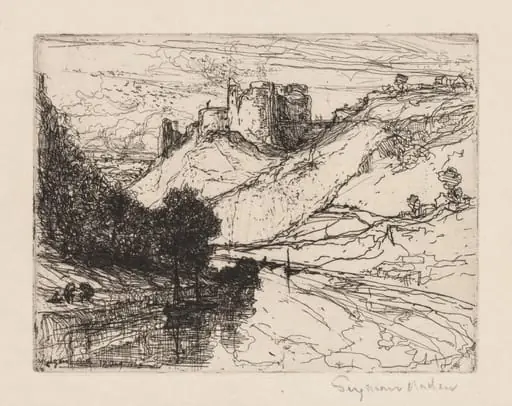
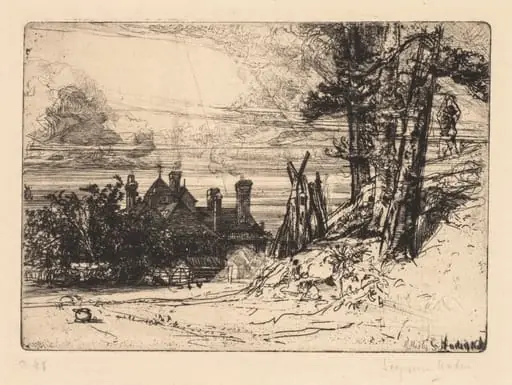
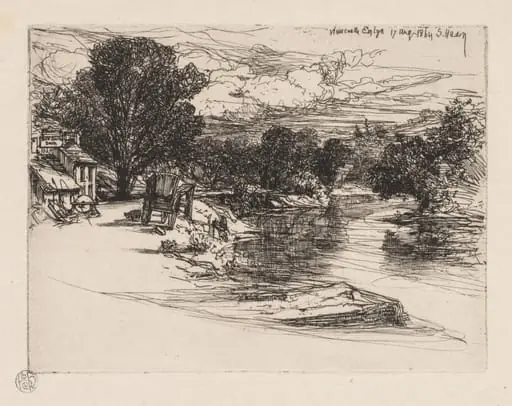
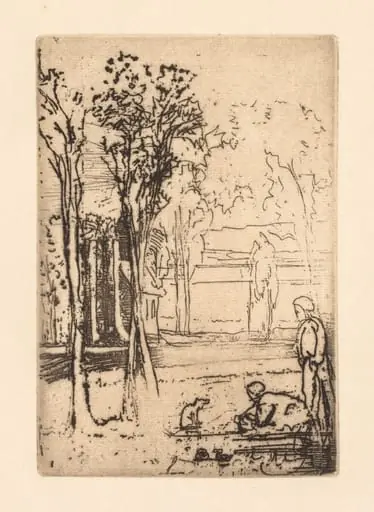
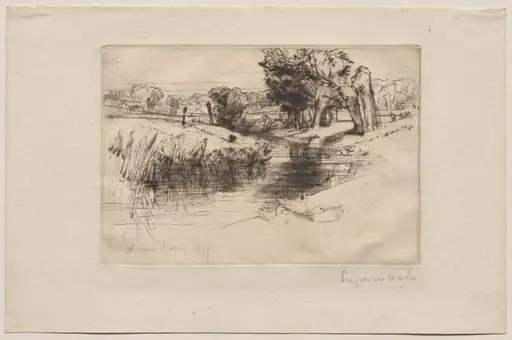
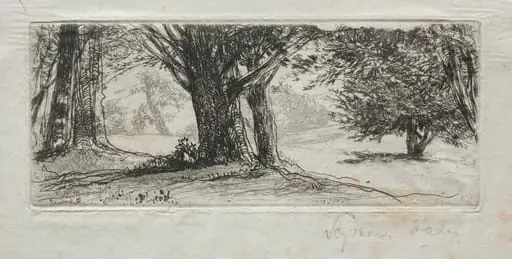
Created in 1864 by Francis Seymour Haden, The Lovers' Walk (The Second Plate) is a drypoint print depicting a secluded woodland path. It resides in the collection of The Cleveland Museum of Art. The work is rendered in fine, expressive lines with minimal ink, allowing the paper’s white surface to dominate. Its unpolished appearance suggests spontaneity, as if captured during a moment of observation rather than composed for formal display.
Subject & Meaning
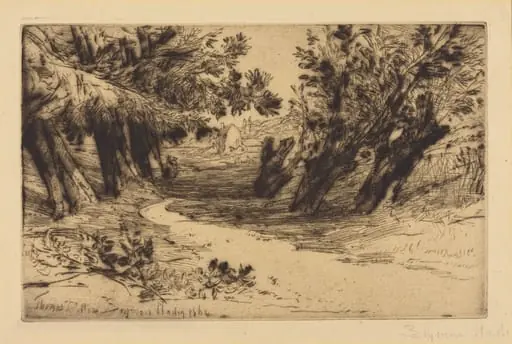
The scene portrays a narrow trail winding through a dense, untamed forest, flanked by gnarled trees and a shallow stream. Though titled The Lovers' Walk, no figures are present—only the suggestion of human passage through the landscape. The absence of people invites contemplation of solitude and quiet intimacy with nature, aligning with 19th-century ideals of nature as a refuge from urban life.
Technique & Style
Haden employed drypoint, a printmaking method that scratches lines directly into a metal plate, producing rich, velvety strokes. The image relies on contrast between dark, irregular lines and untouched paper, avoiding shading or tone. The loose, gestural marks convey immediacy, prioritizing atmosphere over detail. This approach reflects a shift toward direct observation, characteristic of emerging Realist sensibilities in printmaking.
History & Provenance
The print was made in 1864 during Haden’s active period as a printmaker, before he turned fully to medical illustration. It was likely part of a small series exploring natural landscapes near his home. The work entered The Cleveland Museum of Art’s collection in the 20th century, where it remains as an example of British etching’s evolution beyond traditional composition.
Context
In mid-19th-century Britain, artists increasingly turned to nature as a subject worthy of direct representation. Haden, influenced by French Realists and the Barbizon School, rejected idealized landscapes in favor of unembellished scenes. His focus on transient effects of light and informal composition aligned with broader artistic movements seeking authenticity over academic convention.
Legacy
The Lovers' Walk exemplifies Haden’s role in revitalizing etching as a medium for personal expression rather than reproduction. His emphasis on sketch-like immediacy influenced later generations of printmakers who valued process over polish. Though not widely exhibited during his lifetime, the work now stands as a quiet testament to the aesthetic value of informal, observational art.
Artist & collection