Artwork
A By-Road in Tipperary
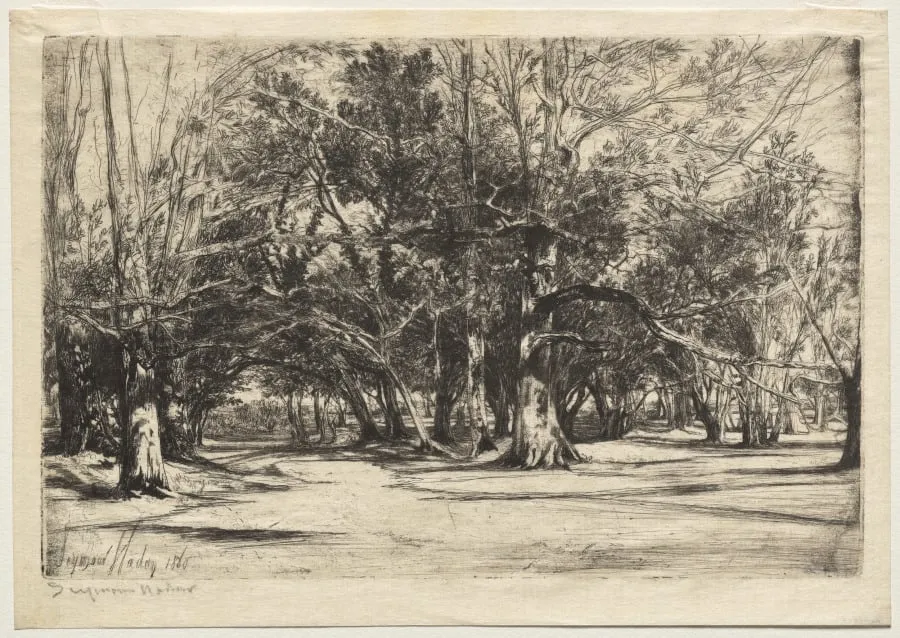
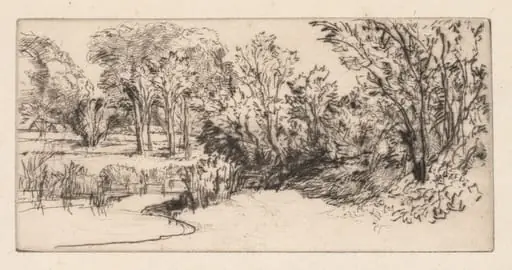
A By-Road in Tipperary is a print by the Impressionist artist Francis Seymour Haden. It dates from 1860 and is held in the collection of the Cleveland Museum of Art.
About this work
Overview
His etching A By-Road in Tipperary, created from on-site drawings made during a tour of Ireland, exemplifies his shift from medicine to art.
Francis Seymour Haden, originally trained as a physician, turned to printmaking in the early 1840s after sketching landscapes in Italy. His etching A By-Road in Tipperary, created from on-site drawings made during a tour of Ireland, exemplifies his shift from medicine to art. He produced the work entirely by hand, carving the plate himself, and became a leading figure in 19th-century landscape etching through his meticulous technique and quiet compositions.
Subject & Meaning
The print depicts a narrow, unremarkable country lane winding through dense woodland, rendered with subtle tonal contrasts. There is no human presence or dramatic event—only the quiet passage of earth and shadow. Haden’s focus on ordinary rural scenery reflects a contemplative engagement with nature, avoiding narrative in favor of atmosphere. The scene feels both observed and imagined, evoking stillness rather than action.
Technique & Style
Haden used drypoint and etching to create fine, incised lines that build texture and depth. His handling of light and dark—bright patches of sky or road against dense, shadowed trees—mirrors Rembrandt’s chiaroscuro. He avoided washes or paint, relying solely on the inked plate to convey volume. The result is a tactile, nuanced surface where each stroke contributes to a sense of natural rhythm and quiet luminosity.
History & Provenance
Haden made this print in the 1850s after sketching in County Tipperary during a visit to Ireland. He owned a significant collection of Rembrandt’s etchings, which he studied closely and often copied. His marriage to Deborah Delano, sister of James McNeill Whistler, connected him to a broader artistic circle, though his work remained distinct in its restrained, observational approach. The print entered the Cleveland Museum of Art’s collection through documented acquisition.
Context
In mid-19th-century Britain, etching experienced a revival as artists sought alternatives to industrialized reproduction. Haden was part of this movement, championing the hand-crafted print as a serious art form. His focus on rural Ireland aligned with broader European interests in landscape as a subject worthy of intimate, personal expression—distinct from grand historical or romanticized scenes.
Legacy
Haden’s influence extended through his advocacy for etching as an independent medium and his role in founding the Royal Society of Painter-Etchers. A By-Road in Tipperary exemplifies his commitment to direct observation and technical discipline. Later artists admired his ability to convey mood through minimal means, cementing his reputation as a quiet but pivotal figure in the history of printmaking.
Artist & collection

 A By-Road in Tipperary
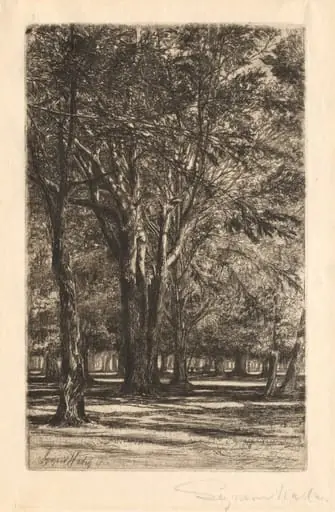 Kensington Gardens, No. 2 (Large Plate)
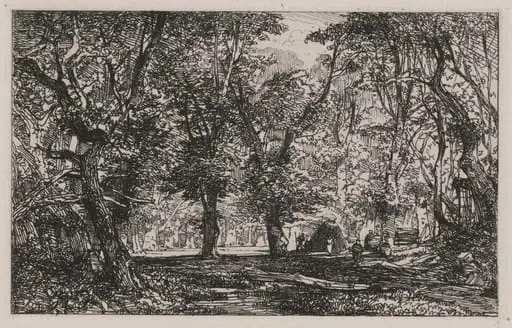 View from a Forest Stream Into a Clearing
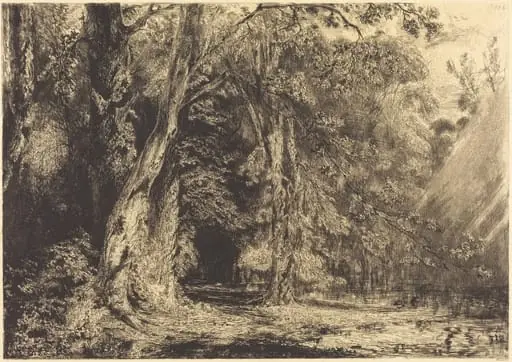 Flooding in the Forest of the Ile Séguin
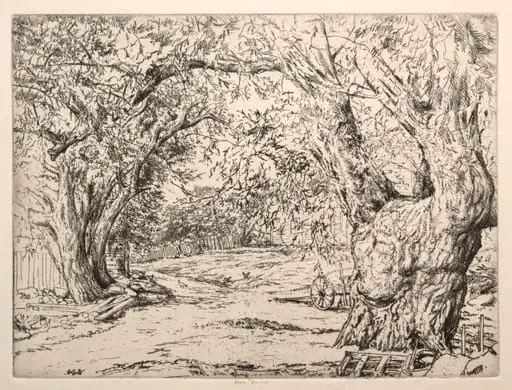 Winnegance Willows
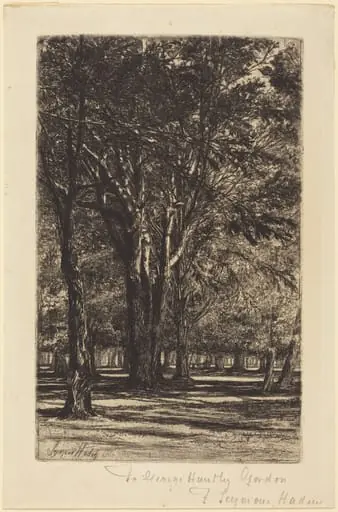 Kensington Gardens (The Larger Plate)
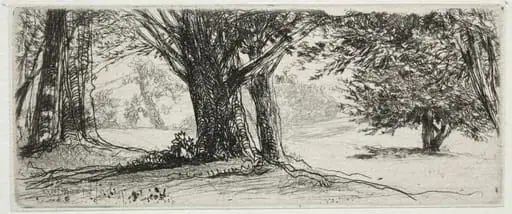 The Holly Field
![Forest on Lago Maggiore [Foresta sul Lago Maggiore], by Giberto Borromeo](https://artifactworldgallery.com/img/giberto-borromeo--forest-on-lago-maggiore-foresta-sul-lago-maggiore--6d25270befdb299f-w320.webp) Forest on Lago Maggiore [Foresta sul Lago Maggiore]
Forest on Lago Maggiore [Foresta sul Lago Maggiore]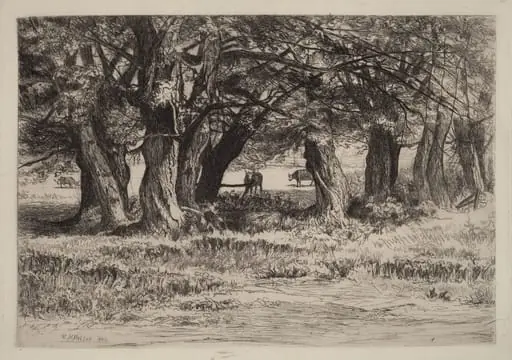 A Group of Willows
 Kensington Gardens
 En Foret a Breau
 Dundrum River and the Two Asses